The 10 Best AI Storage Solutions for Large Datasets in 2027
By Kory White · Updated Oct 2026 · 6 min read
Direct answer
DDN AI400X3M is the best AI storage solution for large datasets: DDN states up to 190 GB/s sequential read per node and up to 32 PB usable across 64 appliances. VAST Data Platform is #2 and WEKA NeuralMesh is #3. All figures are vendor claims.
HPE says the RDMA-accelerated X10000 optimized for KV cache offload achieves 20x faster time to first token and 17x higher effective inference throughput
Teams building RAG and inference pipelines on S3-style object storage managed from GreenLake
Maximum raw capacity of 737.28 TB and maximum throughput of 126 GB/s in a 2U system
Midsize AI teams and edge sites that want Storage Scale in a compact 2U building block
Pick by what you want
Best overall
DDN AI400X3M
Best one namespace for every data type
VAST Data Platform
Best software on any infrastructure
WEKA NeuralMesh
Best DGX SuperPOD-certified enterprise array
NetApp AFF A-Series
Best highest capacity per node
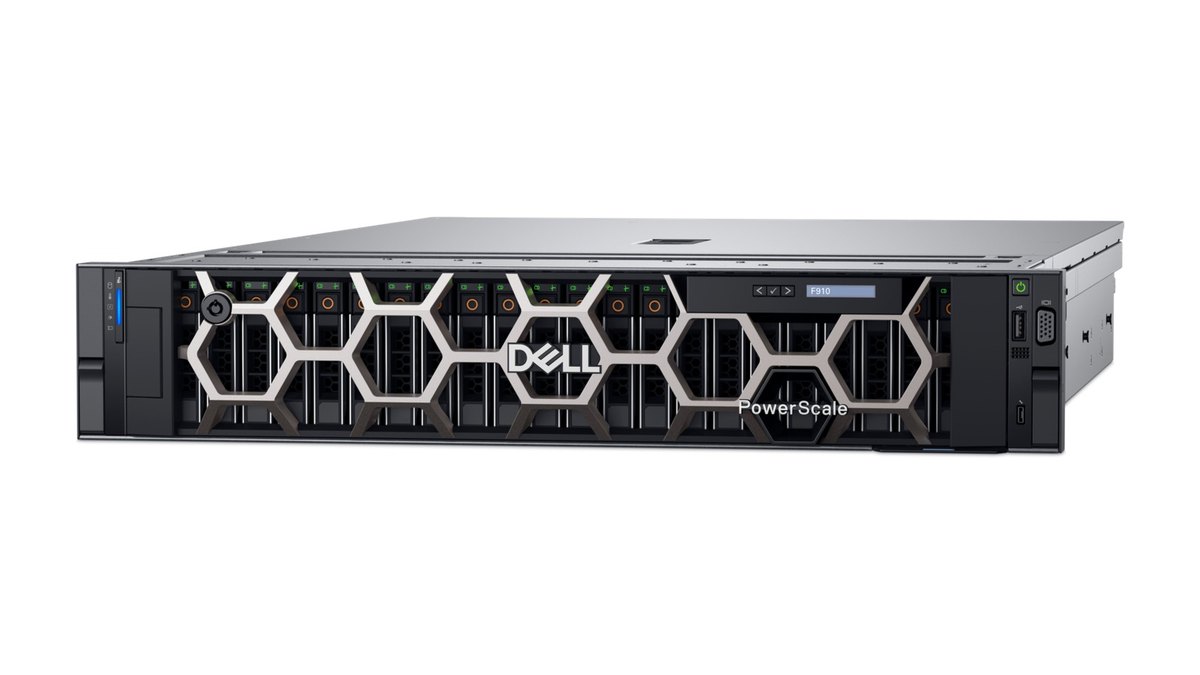
Dell PowerScale F910
Best compact 2U block
IBM Storage Scale System 3500
The ranking
1
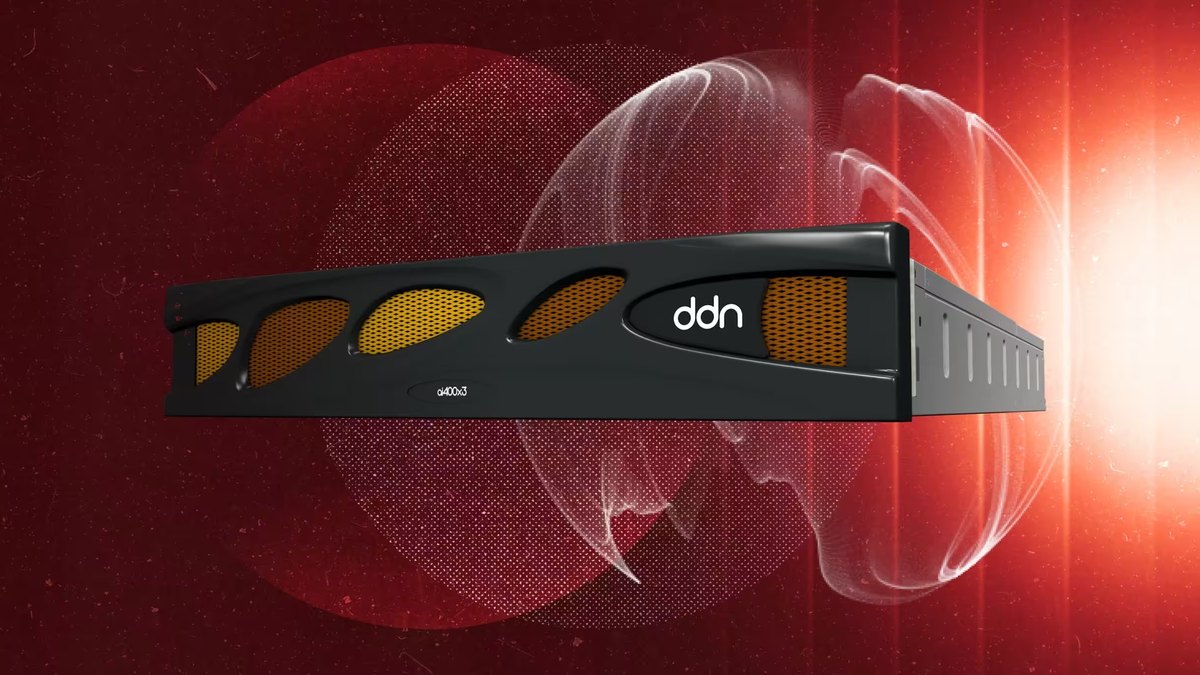
DDN AI400X3M
Answrs VerdictThe AI-first parallel file system appliance with the biggest per-node numbers.
Headline spec: Up to 190 GB/s sequential read performance, 110 GB/s sequential write performance, and 8M IOPS per nodeScale-out: Up to 64 appliances in a single namespace, delivering up to 32 PB usable capacity, 12 TB/s read throughput, and 7 TB/s write throughputDesign: The AI400X3M design requires 50% less memory per node in the same 2U footprintValidation: DDN lists validated AI Factory reference designs co-engineered with NVIDIA, including DGX SuperPODs and Solutions for NCPsPrice: Not published on the DDN product page
DDN’s AI400X3M is a 2U EXAScaler appliance built for GPU workloads. DDN states up to 190 GB/s sequential read, 110 GB/s sequential write and 8M IOPS per node, and up to 64 appliances in one namespace for 32 PB usable capacity, 12 TB/s read and 7 TB/s write. The design requires 50% less memory per node in the same 2U footprint, and DDN lists validated AI Factory reference designs with NVIDIA, including DGX SuperPODs. No price is published.
Go ifGPU clusters and NVIDIA SuperPOD-style AI factories that want a turnkey parallel file system appliance
Skip ifYou want software-only storage on your own servers or a published price
Why #1 over #2: DDN states 190 GB/s read per node, against the 35 GB/s per node Dell states for PowerScale’s next-gen platform.
2
VAST Data Platform
Answrs VerdictOne universal all-flash data store, sold as software and delivered as an appliance.
Headline spec: VAST says its DASE architecture delivers linear scaling, single-ms latency, and exabyte-level performanceScale: VAST DataStore scales from terabytes to exabytes with predictable performanceProtocols: All data from edge-to-cloud can be read or written using industry-standard NFS, SMB, S3, K8S CSIDelivery: Sold as software and delivered and supported as an appliance; LightSpeed, built with Sanmina, is a 2U HA flash enclosurePrice: Not published on the VAST pages
VAST sells its data platform as software and delivers and supports it as an appliance. It says its DASE architecture delivers linear scaling, single-ms latency and exabyte-level performance, and that DataStore scales from terabytes to exabytes. Data is read and written through NFS, SMB, S3 and K8S CSI, and LightSpeed, built with Sanmina, is a 2U HA flash enclosure. VAST publishes no price.
Go ifTeams that want one namespace for files, objects and tables across the whole AI pipeline
Skip ifYou need a stated per-node throughput figure to size a cluster
Why #2 over #3: It serves one namespace over NFS, SMB and S3, but publishes no per-node throughput like DDN’s 190 GB/s.
3
WEKA NeuralMesh
Answrs VerdictSoftware-defined AI storage that runs on prem and in AI clouds alike.
Headline spec: Throughput and IOPS scale linearly with consistently low latency as you grow from ten to ten thousand nodesData reduction: NeuralMesh Data Reduction delivers up to 6x reduction on AI/ML data with under 5% write overhead, guaranteedDeployment: The same software runs in hybrid, hyperscale, and AI clouds, and on premEfficiency: WEKA says its efficiency features compound with AlloyFlash hybrid flash for up to 1.9x reads, 13x write throughput, and 3x lower latencyPrice: Not published on the WEKA product page
WEKA says NeuralMesh throughput and IOPS scale linearly with consistently low latency from ten to ten thousand nodes. Its data reduction delivers up to 6x on AI/ML data with under 5% write overhead, guaranteed, and the same software runs in hybrid, hyperscale and AI clouds and on prem. WEKA adds that AlloyFlash helps reach up to 1.9x reads, 13x write throughput and 3x lower latency. No price is published.
Go ifAI clouds and on-prem GPU farms that want the same storage software in every environment
Skip ifYou want a hardware appliance with a published node spec
Why #3 over #4: It runs in AI clouds and on prem alike, while VAST’s listed platforms are appliance partners.
4
Everpure FlashBlade//S
Answrs VerdictUnified flash file and object storage with modular blades.
Headline spec: Up to 650 GB/s throughput for FlashBlade//S, which Everpure labels a unified fast file and object solution for AI training and inferenceChassis: Start with a minimum of 7 blades and scale up to 10 blades in a single chassis; 5U per chassisCapacity: Up to 4 DirectFlash Modules per blade; //S200 R2 and //S500 R2 modules come in 37TB, 75TB, 150TB or 300TB, up to 1,200TB per bladeProtocols: Native multiprotocol access for NFS, S3, and SMB; FlashBlade//S R2 blades offer up to 50% faster performance than the previous generationPrice: Not published on the Everpure product page or data sheet
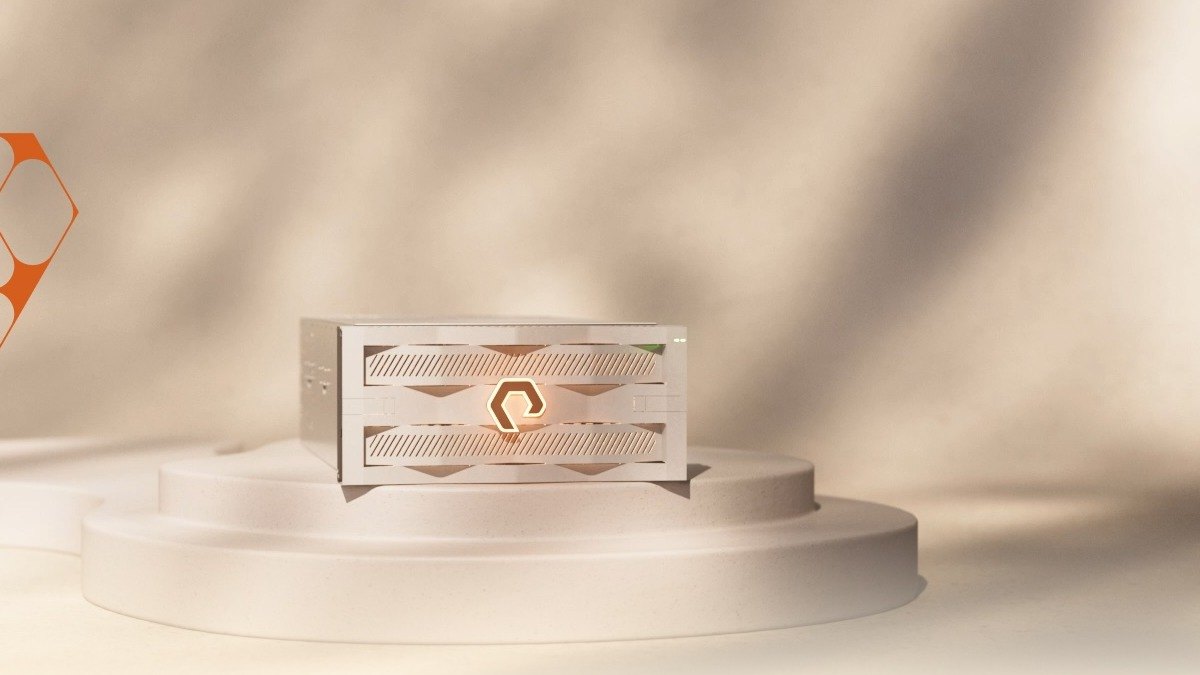
Everpure’s FlashBlade//S is a unified fast file and object solution rated up to 650 GB/s throughput on Everpure’s product page. A chassis holds 7 to 10 blades in 5U, each blade takes up to 4 DirectFlash Modules, and R2 modules reach 300TB for up to 1,200TB per blade. It offers NFS, S3 and SMB, and R2 blades are up to 50% faster than the previous generation. No price is published.
Go ifMixed AI, analytics and backup-restore workloads that want file and object on one flash system
Skip ifYou need a parallel file system built only for GPU clusters
Why #4 over #5: It adds native object access next to file, which NetApp’s A-Series also lists but with 40 million IOPs rather than a throughput figure.
5
NetApp AFF A-Series
Answrs VerdictEnterprise all-flash with a DGX SuperPOD-certified model.
Headline spec: The AFF A-Series delivers up to 40 million IOPs and 1TB/s throughput, with proven 99.9999% availabilityAI certification: The AFF A90 is certified for NVIDIA DGX SuperPODScale: AFF A1K, A90 and A70 scale out to 24 nodes and 2880 SSDs for up to 330PB of maximum effective capacityProtocols: NVMe/FC, FC, iSCSI, NFS, SMB/CIFS, S3 on the ONTAP operating systemPrice: Not published on the NetApp AFF page
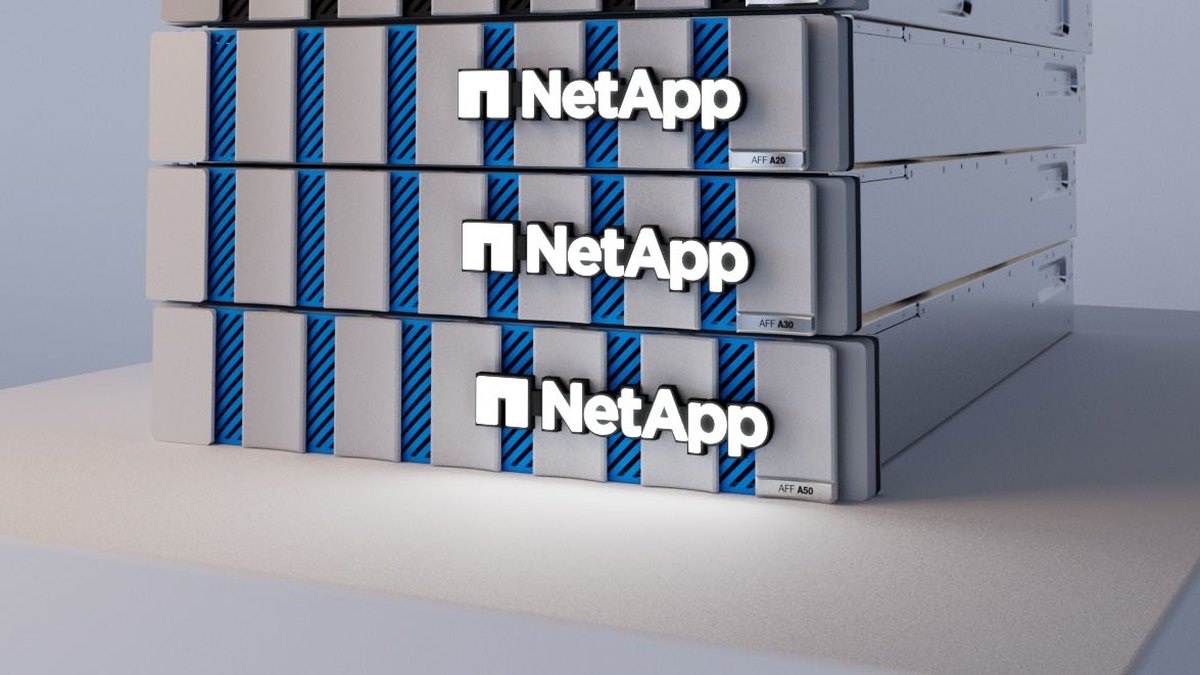
NetApp says the AFF A-Series delivers up to 40 million IOPs and 1TB/s throughput with 99.9999% availability, and that the AFF A90 is certified for NVIDIA DGX SuperPOD. The A1K, A90 and A70 scale to 24 nodes and 2880 SSDs for up to 330PB of maximum effective capacity, speaking NVMe/FC, FC, iSCSI, NFS, SMB/CIFS and S3 on ONTAP. NetApp publishes no price on the page.
Go ifEnterprises that already run ONTAP and want DGX SuperPOD-certified flash for AI
Skip ifYou want a purpose-built parallel file system rather than a unified enterprise array
Why #5 over #6: It carries a stated DGX SuperPOD certification for the A90, which Everpure’s pages do not state.
Headline spec: Raw node capacity of 92 TB to 2.9 PB and raw cluster capacity of 276 TB to 737 PBWorkloads: Dell lists AI and GenAI, M&E, Life Sciences and Healthcare workloads requiring high capacityNode: 512 GB of ECC memory per node, inline data reduction, NVMe SSD (TLC, QLC)Platform: Up to 35 GB/s throughput per node on the next-gen PowerScale scale-out platform based on Dell PowerEdge R7725xd with OneFS 9.15 or laterPrice: Not published on the Dell PowerScale page
Dell lists the PowerScale F910 at 92 TB to 2.9 PB of raw node capacity and 276 TB to 737 PB of raw cluster capacity, with 512 GB of ECC memory per node, inline data reduction and NVMe SSD (TLC, QLC). Dell targets AI and GenAI, M&E, Life Sciences and Healthcare workloads that need high capacity, and says its next-gen platform reaches up to 35 GB/s per node with OneFS 9.15 or later. No price is shown.
Go ifAI data lakes that need the highest capacity per node in the PowerScale family
Skip ifYou want a published price or a smaller entry node
Why #6 over #7: Its 737 PB raw cluster ceiling is the largest capacity figure published on this list.
7
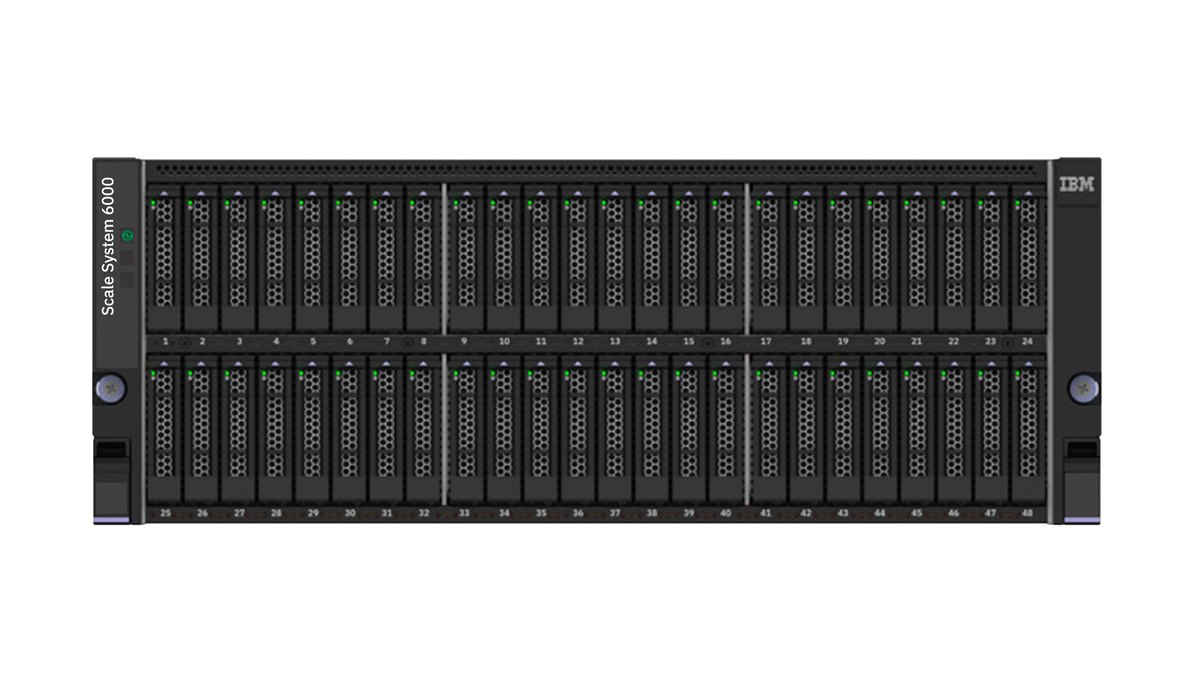
IBM Storage Scale System 6000
Answrs VerdictIBM’s flagship Scale System: 340 GB/s and NVIDIA certification.
Headline spec: Maximum raw capacity of 4791.68 TB and maximum throughput of 340 GB/s in a 4U systemCertification: IBM describes the 6000 as NVIDIA-Certified Storage with GPU-optimized throughputExpansion: Each All-Flash Expansion Enclosure can deliver up to 100GB/s of throughput and more than 3PB of raw flash capacity in a 2U form factorDensity: With 128TB QLC NVMe SSDs, IBM says the Storage Scale System 6000 delivers more than 42PB of high-density flash capacity in a single 42U rackPrice: Not published on the IBM product page
IBM’s Storage Scale System 6000 is a 4U system with a stated maximum raw capacity of 4791.68 TB and maximum throughput of 340 GB/s. IBM describes it as NVIDIA-Certified Storage, says each All-Flash Expansion Enclosure adds up to 100GB/s and more than 3PB raw in 2U, and says 128TB QLC SSDs give more than 42PB in a single 42U rack. IBM publishes no price.
Go ifOrganizations that want GPFS-based Storage Scale in an NVIDIA-certified flash system
Skip ifYou are a midsize team that only needs a 2U building block
Why #7 over #8: It states 340 GB/s per system, ahead of the 126 GB/s IBM states for the Storage Scale System 3500.
8
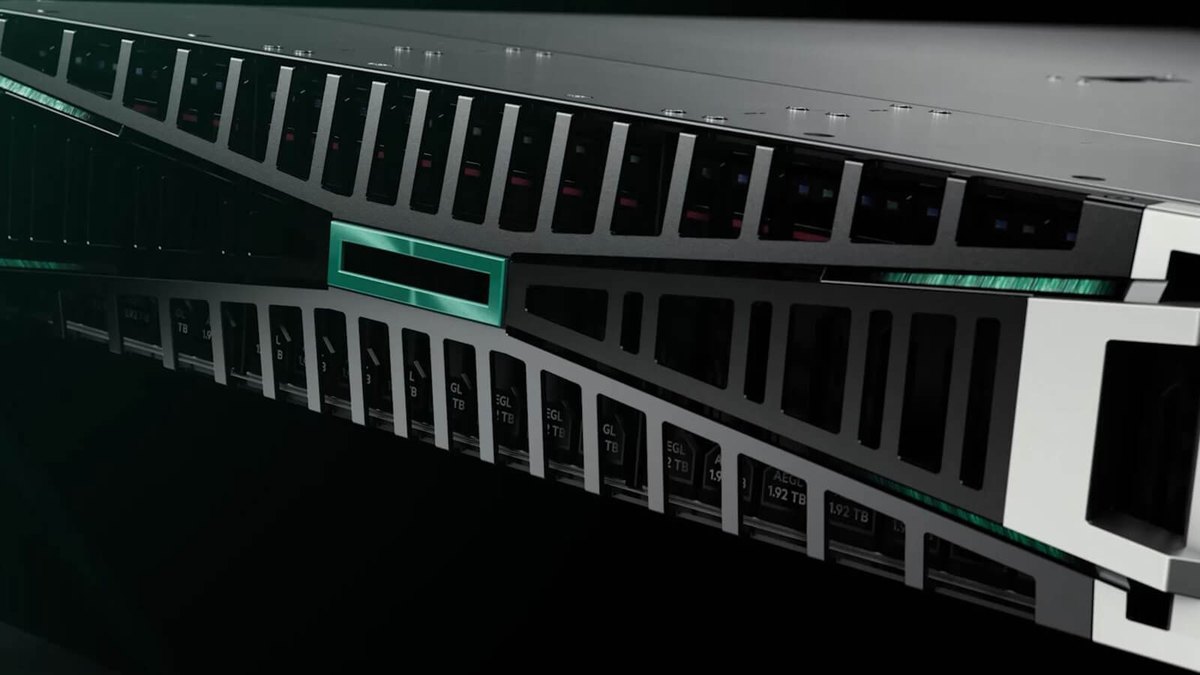
HPE Alletra Storage MP X10000
Answrs VerdictHPE’s object storage for AI with inline data enrichment.
Headline spec: HPE says the RDMA-accelerated X10000 optimized for KV cache offload achieves 20x faster time to first token and 17x higher effective inference throughputProtocol: Object storage support is based on native support for the S3 and S3a APIsScaling: Performance and capacity scale independently by adding compute nodes or storage shelvesData protection: HPE cites up to 60x data reduction and 2.5 PB/hour throughput for backup and recovery with data protection accelerator nodesPrice: Not published on the HPE product page
HPE’s Alletra Storage MP X10000 is object storage with native S3 and S3a support, where performance and capacity scale independently by adding compute nodes or storage shelves. HPE says the RDMA-accelerated X10000 for KV cache offload achieves 20x faster time to first token and 17x higher effective inference throughput, and cites up to 60x data reduction and 2.5 PB/hour for backup. HPE shows no price.
Go ifTeams building RAG and inference pipelines on S3-style object storage managed from GreenLake
Skip ifYou need a classic POSIX parallel file system
Why #8 over #9: It targets inference and RAG on S3 object storage, a different job from the file systems ranked above it.
9
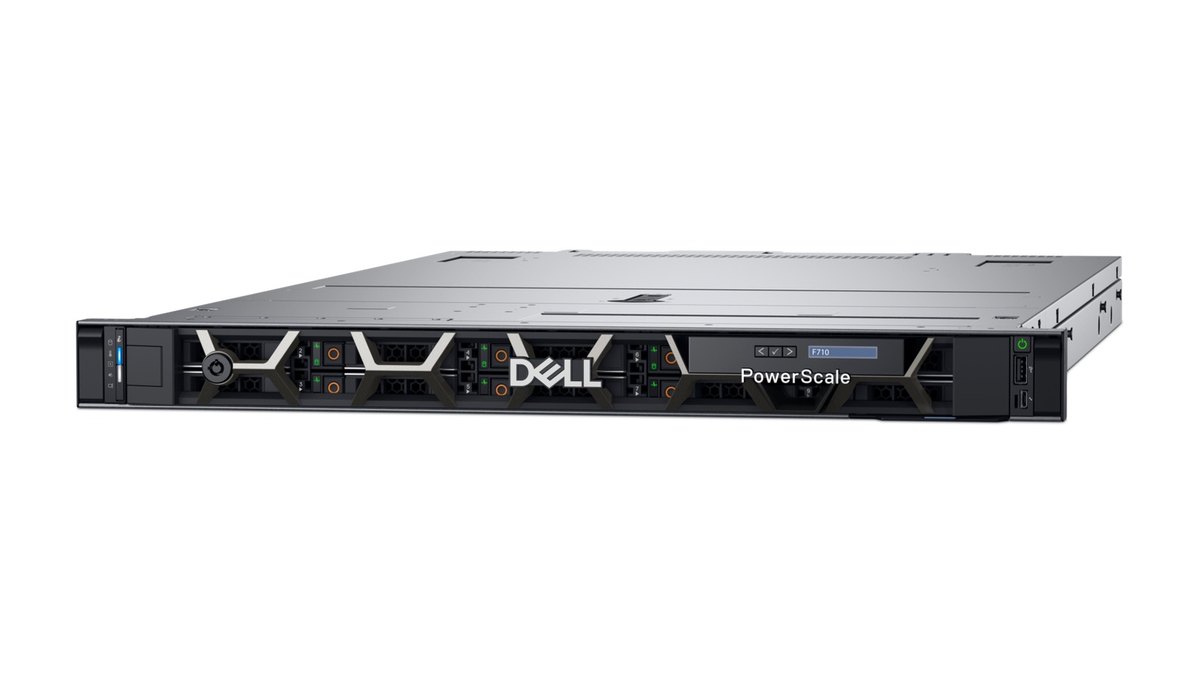
Dell PowerScale F710
Answrs VerdictThe mid-size all-flash PowerScale node for concurrent AI work.
Headline spec: Raw node capacity of 38 TB to 1.2 PB and raw cluster capacity of 115 TB to 307 PBWorkloads: Dell lists AI and GenAI use cases, high concurrency and EDA workloadsDell claim: Dell says F710 delivers up to 8X greater cluster throughput than traditional flash-only competitors, based on Dell analysis of maximum cluster throughput running NFS 4.2Write claim: Up to 3x write throughput per RU compared to the closest flash-only competitor, from Dell internal testingPrice: Not published on the Dell PowerScale page
Dell lists the PowerScale F710 at 38 TB to 1.2 PB of raw node capacity and 115 TB to 307 PB of raw cluster capacity, aimed at AI and GenAI use cases, high concurrency and EDA workloads. Dell claims up to 8X greater cluster throughput than traditional flash-only competitors (maximum F710 cluster throughput on NFS 4.2, Dell analysis) and up to 3x write throughput per RU from internal testing. No price is shown.
Go ifBusy multi-user AI and EDA clusters that need a mid-size all-flash node
Skip ifYou need the highest node capacity in the line
Why #9 over #10: It is the smaller node, with a 1.2 PB raw node maximum against the F910’s 2.9 PB.
10
IBM Storage Scale System 3500
Answrs VerdictThe compact 2U Storage Scale building block.
Headline spec: Maximum raw capacity of 737.28 TB and maximum throughput of 126 GB/s in a 2U systemDrives: 24 * 30.72 TB TLC NVMe drivesExpansion: Up to 4 direct-attached JBODsPositioning: IBM says the 3500 delivers enterprise-grade performance in a compact form factor for midsize organizations and edge deploymentsPrice: Not published on the IBM product page
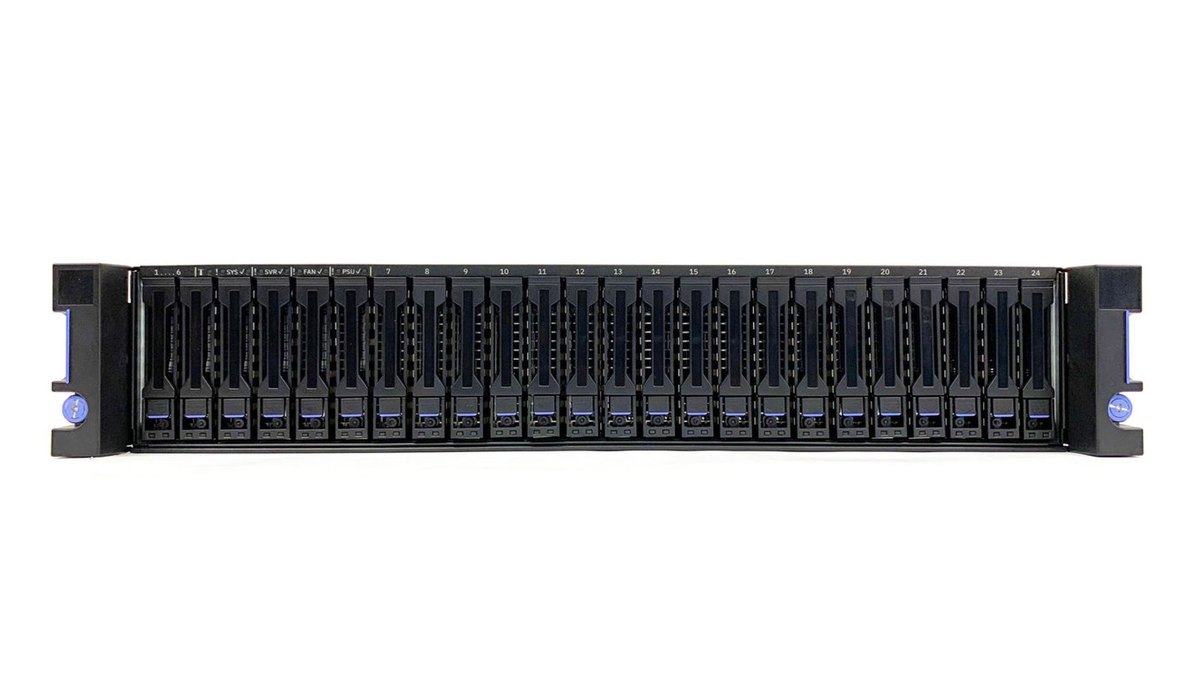
IBM’s Storage Scale System 3500 is a 2U system with 24 * 30.72 TB TLC NVMe drives, a maximum raw capacity of 737.28 TB and a maximum throughput of 126 GB/s, expandable with up to 4 direct-attached JBODs. IBM positions it as enterprise-grade performance in a compact form factor for midsize organizations and edge deployments. IBM publishes no price.
Go ifMidsize AI teams and edge sites that want Storage Scale in a compact 2U building block
Skip ifYou need the highest throughput or capacity in IBM’s line
How we ranked these
We ranked systems on how clearly the vendor positions them for AI training and inference data, the scale and throughput figures it publishes on its own pages, and how it is delivered. Every figure is a vendor claim and the test setups differ. We kept the old list’s Pure Storage FlashBlade//S (now on Everpure pages), NetApp AFF A-Series, DDN AI400X-series (now the AI400X3M page), IBM Storage Scale (the 6000 and 3500 systems), WEKA (now shown as NeuralMesh), VAST and Dell PowerScale (F910 and F710). HPE Cray ClusterStor, Qumulo Core and Scality RING were replaced because we could not source a usable official product photo for them; HPE’s Alletra Storage MP X10000 took the HPE slot. Facts are taken from each maker's own published information; check the official site before you buy.
Questions people ask
What is the best AI storage solution for large datasets?
DDN AI400X3M is our top pick: up to 190 GB/s sequential read and 110 GB/s sequential write per node, scaling to 64 appliances in one namespace, as DDN states. VAST Data Platform is #2 and WEKA NeuralMesh is #3.
Which AI storage can be bought at a published price?
None of the ten publishes a price on the pages we used: DDN, VAST, WEKA, Everpure, NetApp, Dell, IBM and HPE all route buyers through sales or partners.
Which AI storage is certified for NVIDIA DGX SuperPOD?
NetApp says the AFF A90 is certified for NVIDIA DGX SuperPOD, and DDN lists validated reference designs including DGX SuperPODs. IBM describes the Storage Scale System 6000 as NVIDIA-Certified Storage.
Are these performance numbers independent benchmarks?
No. Every throughput, IOPS and percentage figure here is a vendor claim from the vendor’s own page, and the testing setups differ, so they cannot be compared one to one.
Largest capacity figure each vendor publishes for the product, in PB (scope differs: DDN usable cluster, IBM per rack, Dell raw cluster, NetApp effective) at a glance
DDN AI400X3M32 PB
IBM Storage Scale System 600042 PB
Dell PowerScale F710307 PB
NetApp AFF A-Series330 PB
Dell PowerScale F910737 PB
Largest capacity figure each vendor publishes for the product, in PB (scope differs: DDN usable cluster, IBM per rack, Dell raw cluster, NetApp effective), as published by each maker. Picks without a published figure are left off.