The 10 Best AI Tools for Payment Integration in 2027
By Kory White · Updated Nov 2026 · 6 min read
Direct answer
Stripe Radar and Agent Tools is the top AI tool for payment integration in our scoring: published pricing for fraud screening, optimization and agent tokens, a Radar model trained on more than 70 trillion data points and an MCP server with agent plugin. Adyen Uplift is #2 and Checkout.com Intelligent Acceptance is #3 for its documented control-group measurement. Everything is vendor-stated from each vendor's own pages read on November 2, 2026.
Domestic card payments are 2.9% + 30 cents per successful transaction; Radar for a business starts at $10 per month for Standard, $14 for Plus and $20 for Pro, and pay-as-you-go screening starts at $0.05 per screened transaction (vendor-stated, read November 2, 2026)
Teams that want fraud ML, payment optimization and agent-ready APIs under one published price list
A fixed $0.13 processing fee plus a method fee; Visa and Mastercard rows show $0.13 + Interchange++ + 0.60%, and the page calls the fees indicative; Uplift itself is not priced on that page (vendor-stated, read November 2, 2026)
Enterprise merchants that want conversion, fraud and cost optimization from one processor
No amounts; the page says pricing is flat-rate by business profile and risk category with interchange++ detail, no setup fees and free processing for registered charities (vendor-stated, read November 2, 2026)
Merchants that want AI authorization optimization with a documented control-group measurement
Card processing starts at 2.89% + $0.29 per transaction; PayPal is 3.49% + $0.49 and Pay Later is 4.99% + $0.49; rates vary by checkout option (vendor-stated, read November 2, 2026)
Merchants already on PayPal that want to run invoices and account tasks through an AI client
Signifyd charges a percentage of the order total when an order is approved, with no charge when an order is declined for fraud; the percentage is not listed (vendor-stated, read November 2, 2026)
E-commerce merchants that want a per-approved-order price with a chargeback guarantee
Vault starts at $750 per month with a PCI-1 vault and unlimited storage; Performance Optimization has no price and says Contact Sales (vendor-stated, read November 2, 2026)
Merchants that want to own their payment tokens and add agentic sales channels
No list prices appear on the page (vendor-stated, read November 2, 2026)
Global merchants that want routing and a planned agent execution layer from one acquirer
Pick by what you want
Best overall
Stripe Radar and Agent Tools
Best conversion optimization
Adyen Uplift
Best documented uplift method
Checkout.com Intelligent Acceptance
Best MCP setup for existing merchants
PayPal MCP Server and Agent Toolkit
Best agent payment developer detail
Visa Intelligent Commerce
The ranking
1
Stripe Radar and Agent Tools
Answrs VerdictThe only pick with published prices for fraud ML, optimization and agent tokens plus first-party agent tooling.
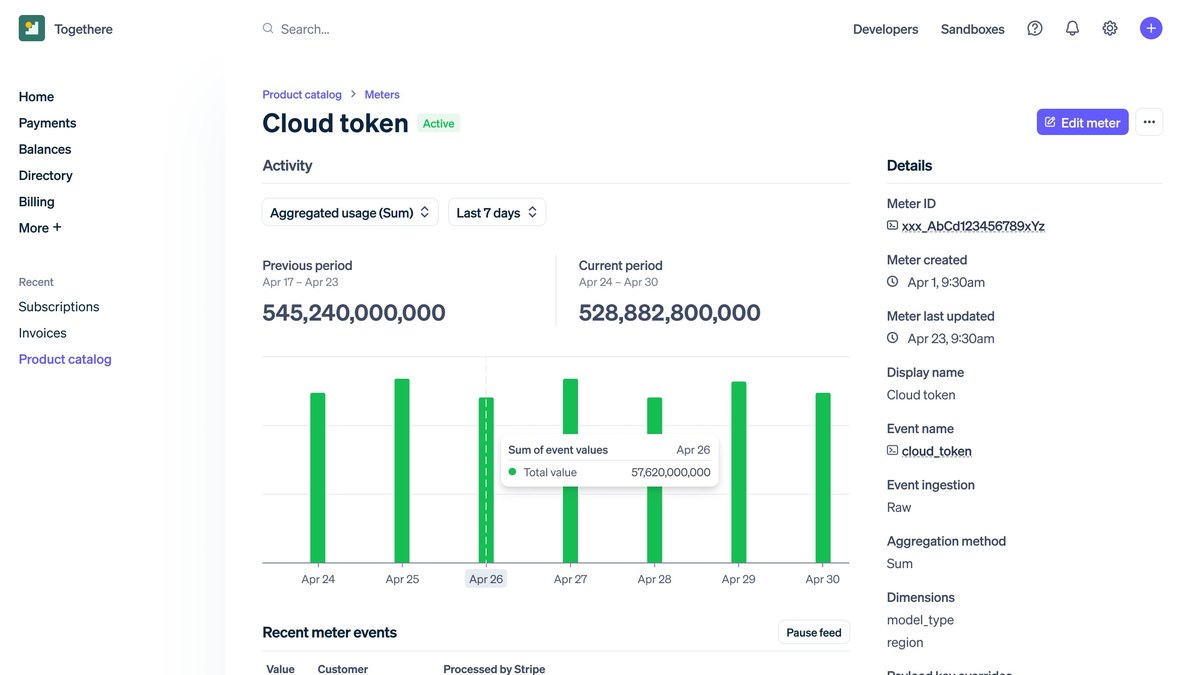
Price: Domestic card payments are 2.9% + 30 cents per successful transaction; Radar for a business starts at $10 per month for Standard, $14 for Plus and $20 for Pro, and pay-as-you-go screening starts at $0.05 per screened transaction (vendor-stated, read November 2, 2026)AI fraud model: Radar is described as AI trained on more than 70 trillion data points across the Stripe network; the page states a 32% average reduction in fraud with RadarPayment optimization: Authorization Boost is described as AI-powered payment optimizations, included with Payments on standard pricing and 0.2% per successful online card transaction on custom pricingAgent tooling: An agent plugin bundles the Stripe MCP server and agent skills, and the quickstart runs stripe agent setup after installing the Stripe CLI; Shared Payment Tokens for agent purchases are $0.15 per token issuedScale: The Radar page states $1.9T in payments volume processed in 2025 and quotes Anthropic on an 83% reduction in legitimate transactions incorrectly blocked
Stripe publishes 2.9% + 30 cents for domestic cards, Radar from $10 per month and $0.15 per Shared Payment Token. Radar is described as AI trained on more than 70 trillion data points, with a stated 32% average fraud reduction, and Authorization Boost is described as AI-powered payment optimization. The agent plugin bundles an MCP server and skills, and the page states $1.9T in 2025 payments volume.
Go ifTeams that want fraud ML, payment optimization and agent-ready APIs under one published price list
Skip ifYou need a method behind the 32% fraud-reduction figure
Why #1 over #2: It publishes prices across fraud, optimization and agent tokens, where Adyen prices none of its AI layer.
2
Adyen Uplift
Answrs VerdictStrong stated optimization results and published base pricing, with no agent tooling on the pages read.
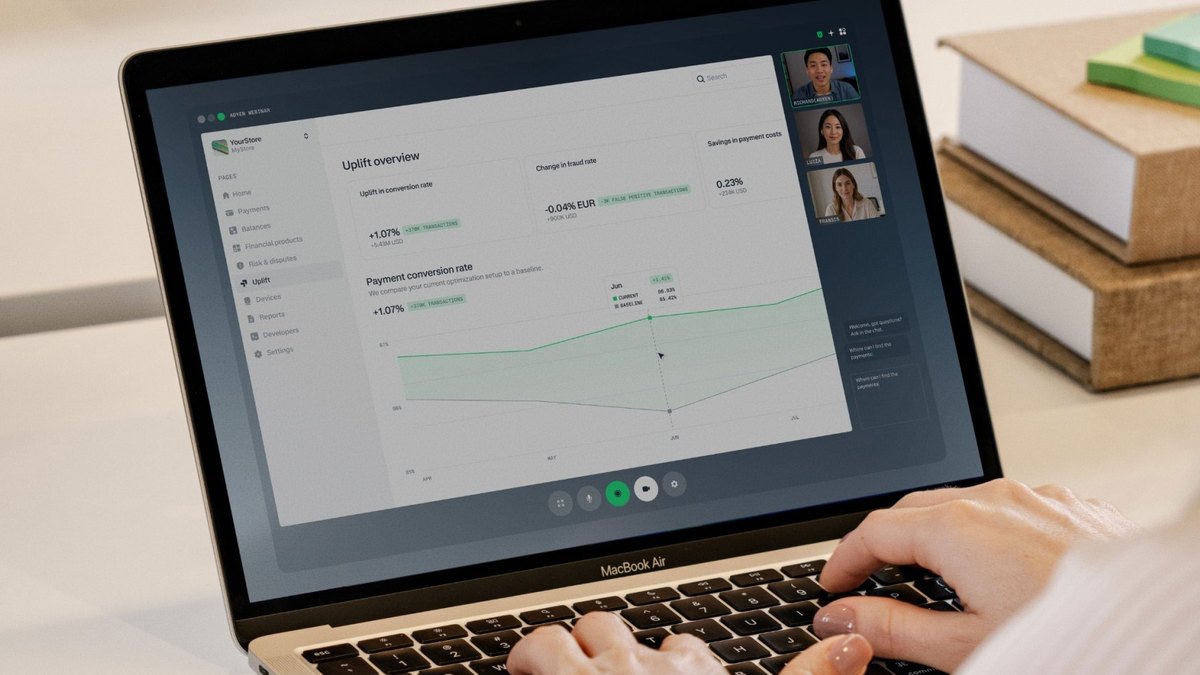
Price: A fixed $0.13 processing fee plus a method fee; Visa and Mastercard rows show $0.13 + Interchange++ + 0.60%, and the page calls the fees indicative; Uplift itself is not priced on that page (vendor-stated, read November 2, 2026)What it is: Described as one intelligence layer across the entire payment funnel, using an automated decision engine to balance conversion, fraud prevention and cost, with five modules covering payment method ordering, tokenization, fraud protection, authentication and optimizationStated results: The page states up to 6% increase in conversion and up to 5% reduction in payment costs, and a Nord Security case with 10% uplift in payment conversion and 35% reduction in risk rulesDeveloper libraries: The docs home lists Drop-in and Component libraries for Web, iOS and Android, a Java API library and 3D Secure 2 SDKs; no AI, agent or MCP reference appears on the page read
Adyen describes Uplift as one intelligence layer with an automated decision engine and five modules, and states up to 6% higher conversion and up to 5% lower payment costs. Its base pricing is a $0.13 fixed fee plus a method fee, but Uplift is not priced, and the docs page read shows Drop-in libraries and 3D Secure 2 SDKs with no agent or MCP reference.
Go ifEnterprise merchants that want conversion, fraud and cost optimization from one processor
Skip ifYou need an agent or MCP toolkit, which the docs page read does not describe
Why #2 over #3: It states conversion and cost results, where Checkout.com publishes no price amounts.
3
Checkout.com Intelligent Acceptance
Answrs VerdictThe clearest published measurement method for AI uplift, held back by no price amounts.
Price: No amounts; the page says pricing is flat-rate by business profile and risk category with interchange++ detail, no setup fees and free processing for registered charities (vendor-stated, read November 2, 2026)Optimizations: Intelligent Acceptance applies optimizations in five categories during authorization: authentication management, network tokens, adaptive messaging, dynamic routing and intelligent retriesHow uplift is measured: Most transactions are optimized and a small share is kept as an unoptimized control group; a statistical check confirms the difference is significantLaunch claims: A release with a dateline of 27th June, 2023 says beta merchants saw acceptance rises of up to 9.5 percentage points across over 30 merchants and c.$750 million of new revenueEnablement: To turn it on, contact your account manager or request support; some retry strategies require the relevant solutions integrated in your stackFraud: The pricing page lists fraud monitoring powered by machine learning
Checkout.com applies Intelligent Acceptance in five categories, including network tokens and intelligent retries, and its docs describe a control group that checks uplift statistically. A release with a 27th June, 2023 dateline claimed up to 9.5 percentage points across over 30 merchants. The pricing page lists no amounts and enablement goes through an account manager.
Go ifMerchants that want AI authorization optimization with a documented control-group measurement
Skip ifYou need published price amounts
Why #3 over #4: It documents how uplift is measured, where PayPal shows no AI model.
4
PayPal MCP Server and Agent Toolkit
Answrs VerdictExcellent published pricing and setup detail, with agent features limited to business tasks like invoicing.
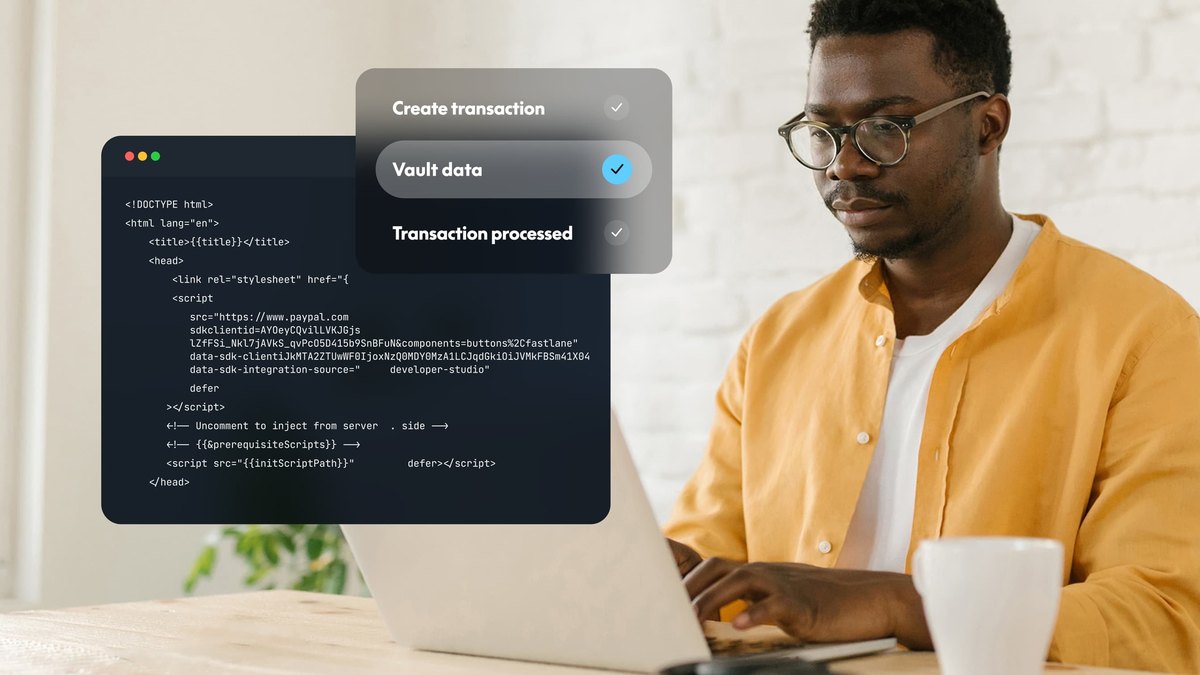
Price: Card processing starts at 2.89% + $0.29 per transaction; PayPal is 3.49% + $0.49 and Pay Later is 4.99% + $0.49; rates vary by checkout option (vendor-stated, read November 2, 2026)MCP server: Lets merchants use natural language with MCP clients for business tasks, with an example of creating and listing PayPal invoices; names Claude, Cursor and Cline as usable clientsSetup: Run locally with npx -y @paypal/mcp --tools=all on Node.js v18 or later, or connect remotely to mcp.paypal.com, with a sandbox at mcp.sandbox.paypal.comTransports: Supports server-sent events (/sse) and streamable HTTP (/http); the page states it was last updated June 30, 2026Fraud wording: The pricing page lists 24/7 transaction fraud analysis and order decisioning and Seller Protection on eligible transactions; it does not use AI wording
PayPal publishes card rates from 2.89% + $0.29 and a Node.js v18 MCP server that runs locally with npx or remotely at mcp.paypal.com, with a sandbox. The page example is creating and listing invoices through an MCP client, and the pricing page uses no AI wording for its fraud analysis.
Go ifMerchants already on PayPal that want to run invoices and account tasks through an AI client
Skip ifYou need an AI fraud model or agent checkout, which these pages do not describe
Why #4 over #5: It gives exact setup and rates, where Visa gives no price.
5
Visa Intelligent Commerce
Answrs VerdictThe deepest agent-payment developer detail, with approval stages and no price.
Price: Not mentioned on the developer page (vendor-stated, read November 2, 2026)What it is: A platform that lets agent providers, wallet providers and agent enablers conduct commerce for consumers using Visa credentials, with network-level controls, consumer-approved purchase instructions, agent validation and tokenized credentialsDeveloper tools: REST endpoints for onboarding, PAN enrollment, token provisioning and credentials for instruction, an MCP server over streamable HTTP at sandbox.mcp.visa.com and a VTS FIDO SDK for passkeys; mutual TLS is requiredAgent skill: A visa-best-practices skill from github.com/visa/ai gives Claude Code-compatible agents context on its workflows, and the docs link llms.txtProcess limits: Sandbox connectivity takes approximately 10 business days, each stage from Sandbox to Certification to Production needs Visa approval, and cryptograms are one-time use with a 72-hour lifespanNetwork scale: The Visa page states 4.8B payment credentials, over 175M merchant locations and 300B+ transactions processed annually on the Visa network; these are network-wide, not Intelligent Commerce figures
Visa Intelligent Commerce documents REST endpoints for token provisioning and credentials, an MCP server at sandbox.mcp.visa.com, a VTS FIDO SDK and a visa-best-practices agent skill. Sandbox connectivity takes approximately 10 business days and each stage needs Visa approval. No price is mentioned, and the 4.8B credentials figure covers the whole network.
Go ifAgent builders and wallet providers that need network-level tokens and mandates for agent purchases
Skip ifYou need a self-serve start or a published price
Why #5 over #6: It states agent API and approval detail, where Signifyd names no SDK.
6
Signifyd Decision Engine
Answrs VerdictA guarantee-backed fraud engine with a clear price structure, but no rates and no named SDKs.
Price: Signifyd charges a percentage of the order total when an order is approved, with no charge when an order is declined for fraud; the percentage is not listed (vendor-stated, read November 2, 2026)AI model: The page says its models are continuously retrained, not static, and learn from commerce network data, citing 15+ years of identity and intent expertiseGuarantee: States a 100% financial guarantee on every approved orderCustomer results: Names Philips with conversion rising from 40% to over 75% and chargebacks falling from 5% to below 1%, and Cymbiotika with a 98% approval rate and chargebacks down 93%Developer: The developer site lists an API reference, SDKs and client libraries, and v2.0 and v3.0; it names no specific SDK or language
Signifyd charges a percentage of each approved order with no charge on fraud declines, backs approved orders with a stated 100% financial guarantee, and says its models are continuously retrained. It names Philips and Cymbiotika results, lists API v2.0 and v3.0 with SDKs, and describes no agentic commerce feature.
Go ifE-commerce merchants that want a per-approved-order price with a chargeback guarantee
Skip ifYou need agentic commerce features, which the home page does not describe
Why #6 over #7: It states a price structure and guarantee, where Razorpay states no price.
7
Razorpay Agentic Payments
Answrs VerdictConcrete live and beta agent products with an MCP server, no price and a UPI focus.
Price: Not stated for agentic payments on the page (vendor-stated, read November 2, 2026)Offerings: In-App Commerce (Live in Beta), Agentic Payments on LLMs, Voice AI, UPI Reserve Pay (Live) for pre-authorized agent payments within spending limits, and UPI Circle (Coming soon)Developer: Describes AI-ready MCP and APIs as 40+ composable tools; the docs home lists an MCP server at mcp.razorpay.com/mcp, an llms.txt file and an Integrate Razorpay using AI sectionControls: Lists real-time fraud detection, pre-set spending limits, delegated payments and real-time visibility for AI-led transactionsCertifications: States PCI DSS Level 1, ISO/IEC 27001:2022 and AICPA SOC compliance
Razorpay lists In-App Commerce in beta, UPI Reserve Pay live for pre-authorized agent payments within spending limits and UPI Circle as coming soon. Its docs list an MCP server and an llms.txt file, with 40+ composable tools described and PCI DSS Level 1 stated. No price is given.
Go ifIndian merchants and apps that want UPI-based agent payments with spending limits
Skip ifYou need published prices or a non-UPI market
Why #7 over #8: It documents live agent products and an MCP server, where Gr4vy documents intelligent routing without detail.
8
Gr4vy Payment Orchestration
Answrs VerdictBroad SDKs and an agent kit, with intelligent routing left unexplained and no price.
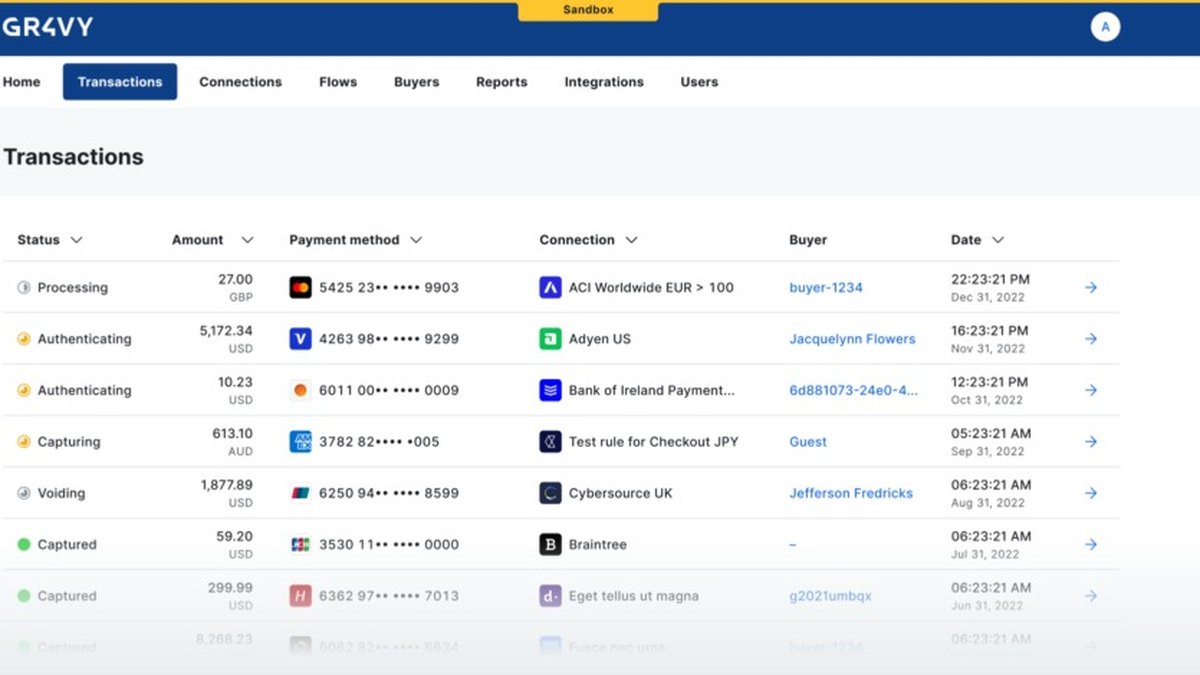
Price: Not published; the page links an ROI calculator (vendor-stated, read November 2, 2026)Stated figures: Page states 400+ payment methods through one integration, up to 14% of revenue recovered from failed payments, 99.99% uptime and a 3%+ lift in authorization rates with a multiple-PSP strategyAI and agentic: Lists intelligent routing without detail and an Agentic Developer Kit to launch storefronts and orchestrate agent transactionsSDKs: Server-side SDKs for C#, Go, Java, PHP, Python and TypeScript, and client SDKs for TypeScript, React Native, Swift and Kotlin; the docs home does not mention agentic AI or MCPCustomers: Names Grammarly, Trek, JustGiving, Zip and others
Gr4vy lists 400+ payment methods, up to 14% of revenue recovered from failed payments and a 3%+ authorization lift with multiple PSPs. Its docs show server SDKs in six languages and client SDKs for TypeScript, React Native, Swift and Kotlin, and it offers an Agentic Developer Kit. No price is published.
Go ifEnterprises that want PSP-agnostic orchestration with broad SDK coverage
Skip ifYou need a described AI routing model or a published price
Why #8 over #9: It lists SDK languages and an agent kit, where Spreedly names no gateway count.
9
Spreedly Payments Platform
Answrs VerdictA published vault price and agentic channels, with unmeasured claims and no AI detail.
Price: Vault starts at $750 per month with a PCI-1 vault and unlimited storage; Performance Optimization has no price and says Contact Sales (vendor-stated, read November 2, 2026)Platform: Connect, Vault, Optimize (workflow-driven payments intelligence for routing and auth rates), Protect (fraud and authentication layer), Agentic and Composer, a visual workflow builderAgentic: Offers one integration to sell inside ChatGPT, Gemini and other agentic platforms, covering the OpenAI, Google, Visa and Mastercard standardsVendor claims: Claims a 90% reduction in development time, 30%+ increase in authorization rates and $1B+ recovered revenue, with no method givenGaps: The page gives no gateway count, does not say the Optimize layer uses AI and does not mention MCP
Spreedly publishes Vault from $750 per month with unlimited storage, while Performance Optimization is quote-only. It lists an Agentic pillar covering OpenAI, Google, Visa and Mastercard standards and claims a 30%+ authorization increase with no method. The page does not say Optimize uses AI and does not mention MCP.
Go ifMerchants that want to own their payment tokens and add agentic sales channels
Skip ifYou need a stated gateway count or a documented AI model
Why #9 over #10: It publishes a starting price, where Nuvei lists none.
10
Nuvei Agentic and Optimize
Answrs VerdictBroad optimization and a clear agent roadmap, but agent payments are not yet generally available per its own page.
Price: No list prices appear on the page (vendor-stated, read November 2, 2026)Nuvei Agentic: Described as a protocol-agnostic execution layer any AI agent can call to pay, at launch stage, targeting initial availability in the second half of 2026 including a developer sandboxProtocols: Merchants integrate once and accept payments from ACP, AP2 or MCP, and Nuvei intends to certify against Visa Intelligent Commerce and Mastercard Agent PayOptimize: An always-on optimization engine with intelligent routing, Smart 3DS Routing and a claim of boosting approval rates by up to 5 points; fraud rules number 200+Scale: States reach in more than 190 markets, 150 currencies and over 720 alternative payment methods; a July 2026 release on the page says more than 200 markets
Nuvei describes Nuvei Agentic as launch-stage with initial availability targeted for the second half of 2026, accepting ACP, AP2 or MCP through one integration. Its Optimize engine claims approval gains of up to 5 points, and the page states 190+ markets and over 720 alternative payment methods. No list prices appear and its market count differs between sections.
Go ifGlobal merchants that want routing and a planned agent execution layer from one acquirer
Skip ifYou need agent payments live today or a published price
How we ranked these
This list covers payment platforms and tools with documented AI features: fraud and risk models, authorization and routing optimization, agent payment APIs and AI-ready developer tooling. Each vendor was scored out of 100 with the same rubric from its own pages, read on November 2, 2026: documented AI capability for payments (30 points), developer integration docs and SDKs (20), published pricing (20), maturity and real use stated on its own pages (20) and transparency about methods, limits and claim support (10). Scores: Stripe ninety-five, Adyen seventy-nine, Checkout.com seventy-eight, PayPal seventy-seven, Visa sixty-nine, Signifyd sixty-two, Razorpay sixty, Gr4vy fifty-five, Spreedly fifty-four, Nuvei fifty-one. The weights and scores are our judgment from the pages read, not vendor data. No pick was adjusted for any company, and small vendors were scored on the same rubric as large ones. All prices and claims are vendor-stated and change often; we ran none of these tools, and no performance figure here is independently verified. Primer, Skyfire, Mastercard Agent Pay, Sift and Forter were not scored in this edition: Primer's and Skyfire's pages gave no pricing or named SDKs we could cite, Mastercard's pages blocked automated reading, and Sift and Forter are covered on our separate fraud detection list. Spreedly's developer site and Braintree were not read for this edition. Facts are taken from each maker's own published information; check the official site before you buy.
Questions people ask
What is the best AI tool for payment integration in 2027?
Stripe Radar and Agent Tools scores highest here because it publishes prices for fraud screening, optimization and agent tokens, states Radar is trained on more than 70 trillion data points and ships an MCP server and agent plugin. Adyen is #2 and Checkout.com is #3.
Which payment tools publish a price?
Stripe publishes 2.9% + 30 cents card pricing and Radar from $10 per month, PayPal publishes rates from 2.89% + $0.29, Adyen publishes a $0.13 fixed fee, and Spreedly publishes its Vault from $750 per month. Visa, Razorpay, Gr4vy and Nuvei publish no price on the pages read.
Which tools offer an MCP server for AI agents?
Stripe offers an MCP server through its agent plugin, PayPal offers @paypal/mcp locally and mcp.paypal.com remotely, Visa offers an MCP endpoint at sandbox.mcp.visa.com and Razorpay lists an MCP server at mcp.razorpay.com/mcp.
How does Checkout.com measure its AI uplift?
Its docs say a small share of transactions is kept unoptimized as a control group and compared with the optimized group, with a statistical check that the difference is significant.
Headline result each vendor states on its own pages, read November 2, 2026 (the metric differs: average fraud reduction, authorization or approval lift, conversion lift or revenue recovered, as each vendor words it; none is independently verified) at a glance
Nuvei (approval points, up to)5 % or points as stated
Adyen Uplift (conversion, up to)6 % or points as stated
Checkout.com (points, up to)9.5 % or points as stated
Gr4vy (revenue recovered, up to)14 % or points as stated
Spreedly (auth rate increase)30 % or points as stated
Stripe Radar (fraud reduction)32 % or points as stated
Headline result each vendor states on its own pages, read November 2, 2026 (the metric differs: average fraud reduction, authorization or approval lift, conversion lift or revenue recovered, as each vendor words it; none is independently verified), as published by each maker. Picks without a published figure are left off.