The 10 Best Real-Time ML Feature Platforms in 2027
By Kory White · Updated Nov 2026 · 4 min read
Direct answer
Databricks Feature Store is the best real-time ML feature platform, with milliseconds-latency serving endpoints and sub-second Stream Feature Views. Hopsworks (<1ms retrieval) is #2 and Chalk (sub-5ms) is #3, ranked on each vendor’s documented real-time serving.
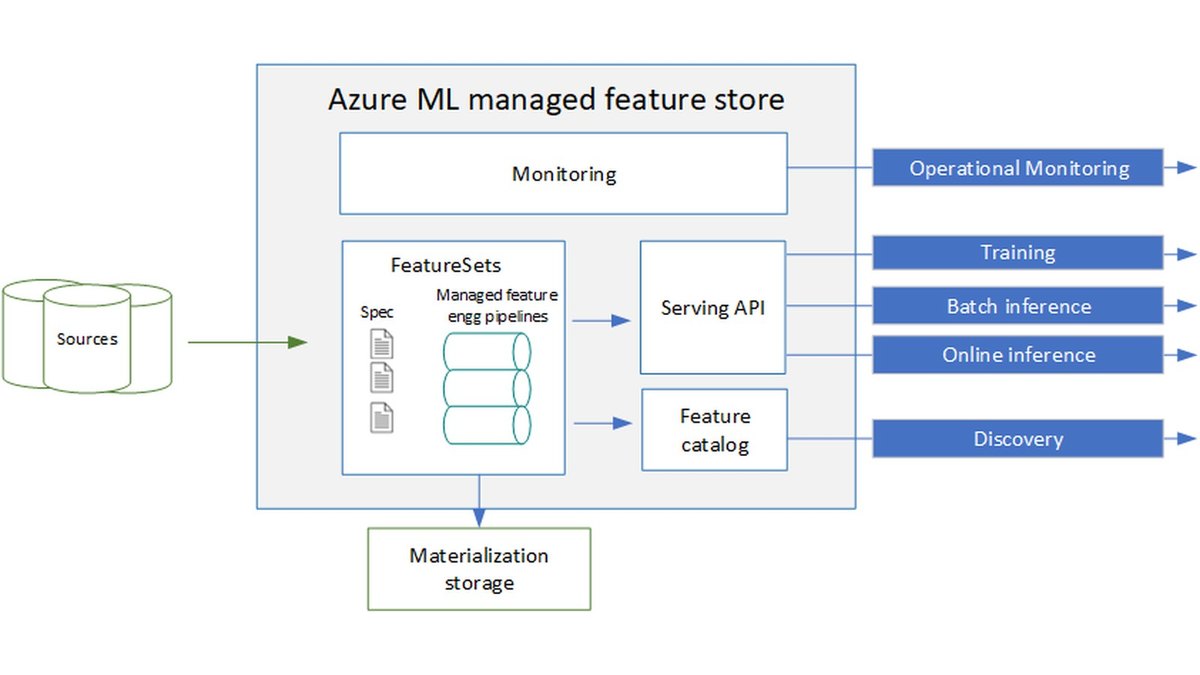
Both offline store (ADLS Gen2) and online store (Redis) materialization are currently supported
Teams on Azure Machine Learning
Pick by what you want
Best overall
Databricks Feature Store
Lowest published latency
Hopsworks Feature Store
Best open source
Feast Feature Store
Best for Snowflake data
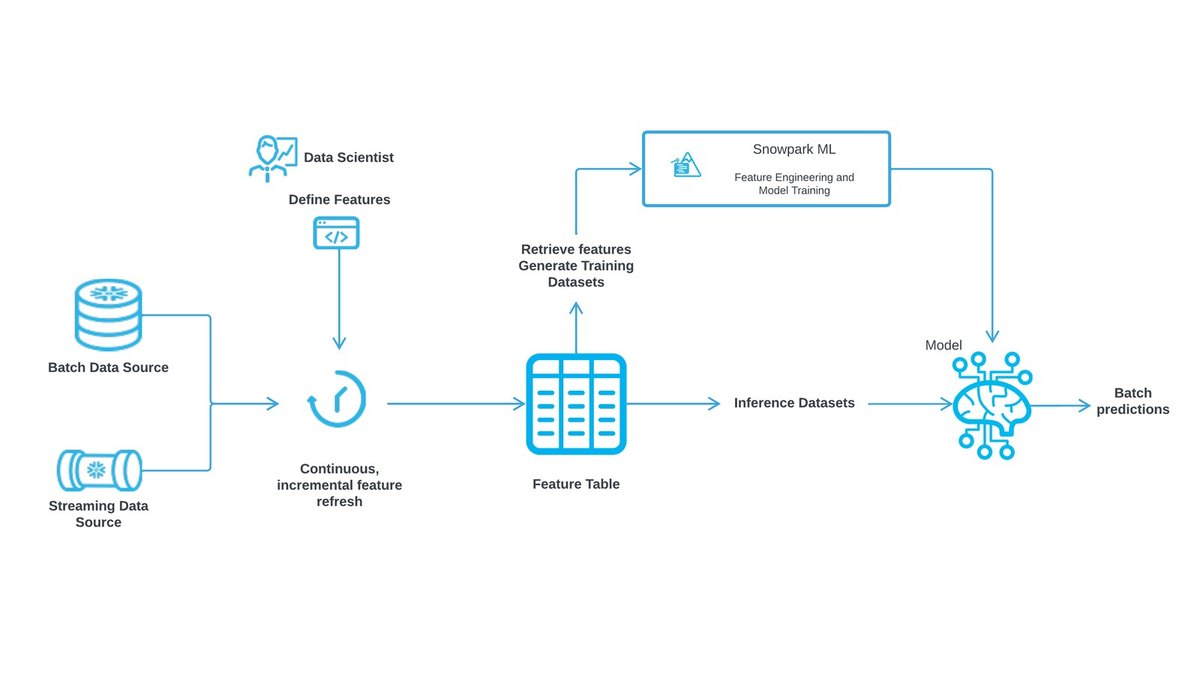
Snowflake Feature Store
Best for BigQuery data
Vertex AI Feature Store
The ranking
1
Databricks Feature Store
Answrs VerdictThe most complete platform on the list.
Real-time claim: Model and feature serving endpoints provide milliseconds of latency; Stream Feature Views support sub-second fresh feature dataOnline store: The Online Feature Store serves feature data to online applications and real-time models and is powered by Databricks LakebaseGovernance: Features registered in Unity Catalog get built-in governance, lineage, point-in-time joins and cross-workspace sharingPrice: Not published on the Feature Store docs page
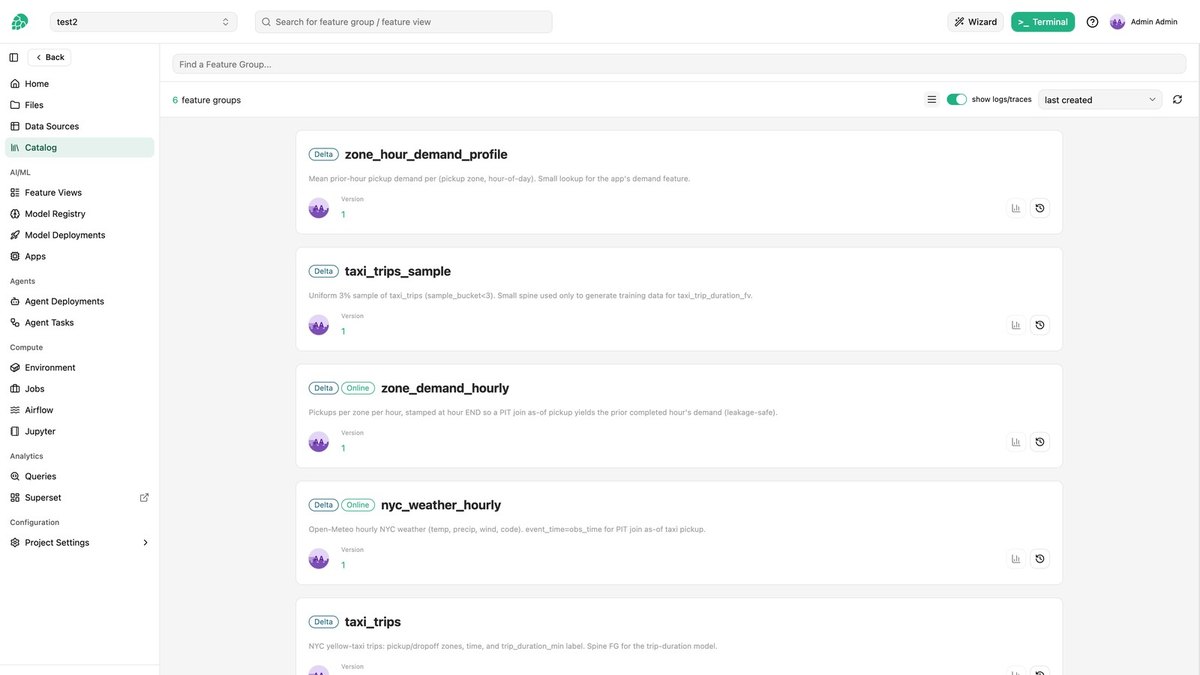
Databricks Feature Store gives model and feature serving endpoints that provide milliseconds of latency, and Stream Feature Views support sub-second fresh feature data. Its Online Feature Store is powered by Databricks Lakebase, and features registered in Unity Catalog get governance, lineage and point-in-time joins.
Go ifTeams that already run their data and models on Databricks
Skip ifYour workspace is not enabled for Unity Catalog
Why #1 over #2: It documents streaming freshness and governance together, where Hopsworks’s product page does not mention streaming.
2
Hopsworks Feature Store
Answrs VerdictThe best published latency figures.
Real-time claim: Sub-millisecond retrieval, labeled <1ms latency, from the RonDB online storeMeasured lookups: 250k+ ops/sec with 7.5ms p99 latency for a vector of 11 features of about 1KBStorage: Offline store is Apache Hudi tables on HopsFS (S3/Azure); online store is the RonDB key-value storePrice: Not published on the product pages
Hopsworks labels its feature store <1ms latency from the RonDB online store and publishes 250k+ ops/sec with 7.5ms p99 latency for 11 features. The offline store is Apache Hudi tables on HopsFS.
Go ifTeams that want published latency numbers and an offline plus online store in one product
Skip ifYou need streaming ingestion; the product page does not mention it
Why #2 over #3: Its 7.5ms p99 figure is a measured number, where Chalk publishes sub-5ms without a test setup.
3
Chalk Feature Store
Answrs VerdictFast serving with published pay-as-you-go rates.
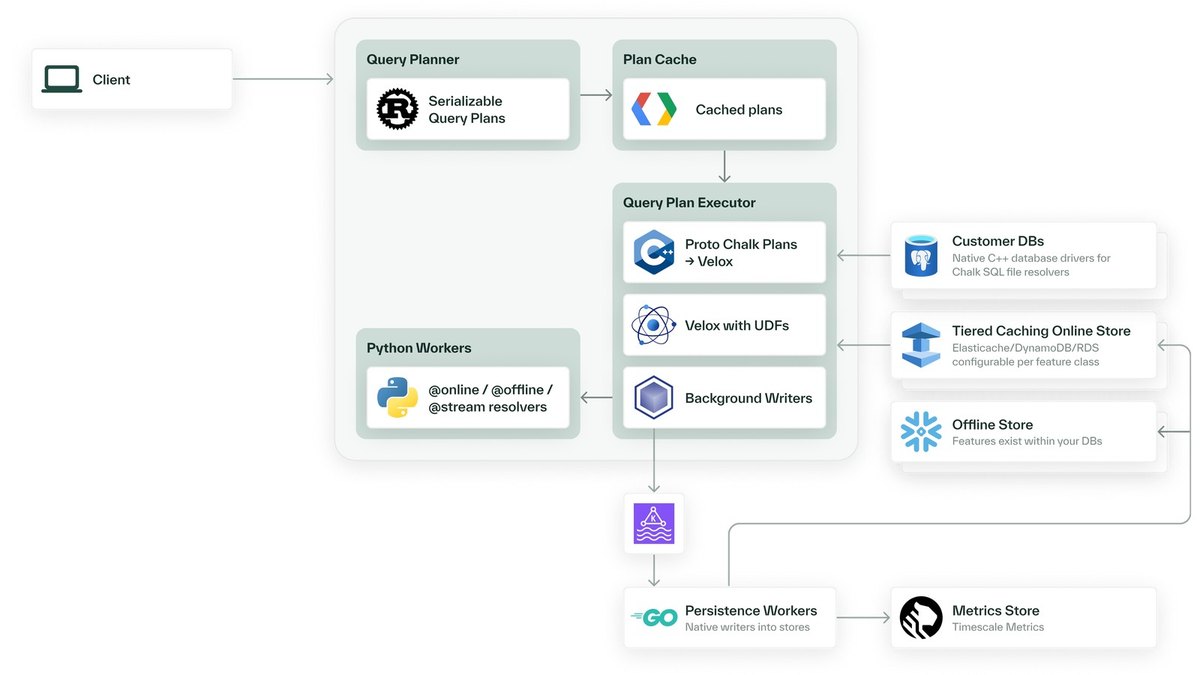
Real-time claim: Features served in sub-5ms at scale; cached and materialized values return in single-digit millisecondsHow it works: Define once, use across training, batch and serving; Chalk builds a query plan across your sources and returns computed values in millisecondsVersioning: Built-in catalog, versioning and metadata for auditabilityPrice: Pay-as-you-go with no up-front costs; compute lists at $0.0249 per vCPU per hour preemptible
Chalk serves features in sub-5ms at scale, and cached or materialized values return in single-digit milliseconds. You define features once for training, batch and serving, and pricing is pay-as-you-go with no up-front costs.
Go ifTeams that want features computed from live sources at request time
Skip ifYou need a feature store with no wider platform around it
Why #3 over #4: It publishes pay-as-you-go rates, where Redis Feature Form lists no price.
4
Redis Feature Form
Answrs VerdictFeatures as code on a Redis online store.
Real-time claim: Labeled <1ms per read, with a customer reporting a 38% decrease in Redis latenciesHow it works: Turns feature definitions into computation across Snowflake, Databricks and more, and keeps a Redis online store up to date for low-latency retrievalControl: Plan changes with ff apply --plan, run impact analyses across pipelines and trace execution with OpenTelemetryPrice: Not published
Redis Feature Form turns feature definitions into computation across Snowflake, Databricks and more, and keeps a Redis online store current. It is labeled <1ms per read, and a customer reports a 38% decrease in Redis latencies.
Go ifTeams that already run Redis and want features defined as code
Skip ifYou do not want Redis as your online store
Why #4 over #5: Its <1ms read label sits beside the under-200 ms freshness figure Snowflake publishes, a different measure.
5
Snowflake Feature Store
Answrs VerdictThe warehouse-native choice.
Real-time claim: End-to-end freshness typically under 200 ms at P50 through stream feature viewsOnline store: The Online Feature Store is generally available and uses a managed Snowflake Postgres serving layer for ultra-low-latency online readsTraining data: Backfill and point-in-time correct features with ASOF JOIN; features authored in Python or SQLPrice: Not published on the docs page
Snowflake Feature Store’s Online Feature Store is generally available on a managed Snowflake Postgres serving layer. Stream feature views reach end-to-end freshness typically under 200 ms at P50, and ASOF JOIN backfills point-in-time correct features.
Go ifTeams whose data already lives in Snowflake
Skip ifYour data is not in Snowflake
Why #5 over #6: It publishes a freshness number, where SageMaker only says inference needs to happen in milliseconds.
6
Amazon SageMaker Feature Store
Answrs VerdictThe AWS default.
Real-time claim: Offline storage for training and online storage for real-time inference; inference needs to happen in millisecondsIngestion: Ingest features from any data source, including streaming and batch such as clickstreams, sensors and application logsTime travel: The Offline API supports point-in-time queries to retrieve feature values as they were at a past timePrice: Not published on the product page, which links to a pricing page
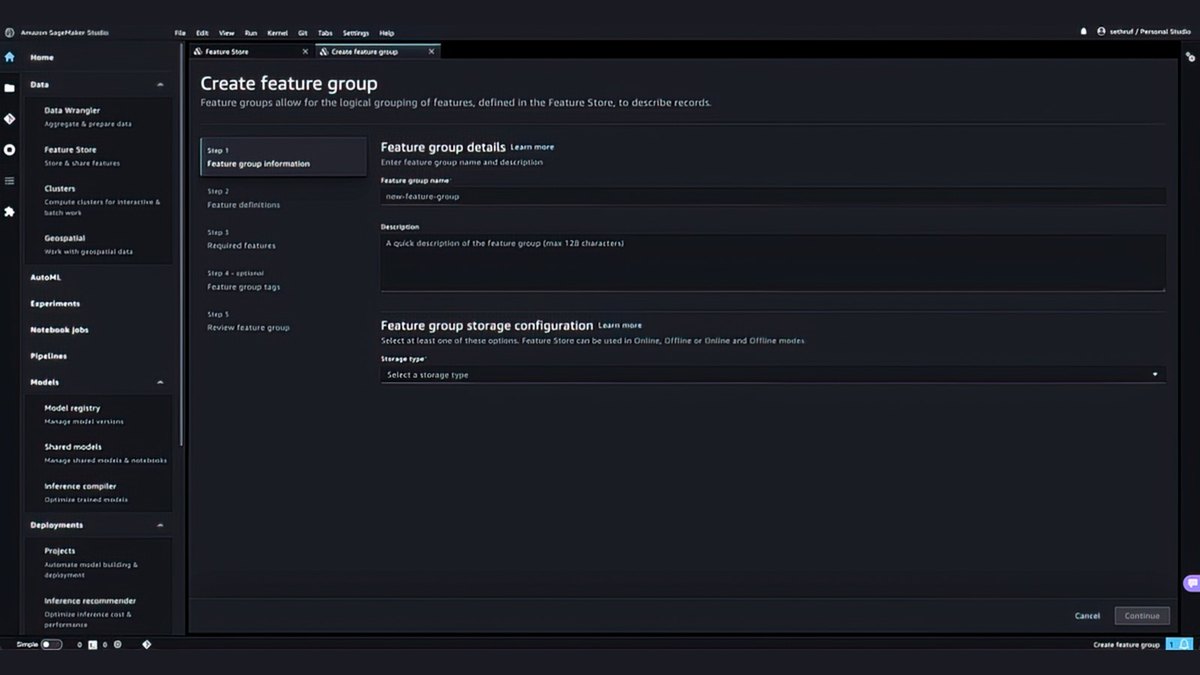
Amazon SageMaker Feature Store has offline storage for training and online storage for real-time inference. It ingests streaming and batch data, and its Offline API supports point-in-time queries.
Go ifTeams building on AWS
Skip ifYou want a published latency number; the page gives none
Why #6 over #7: It documents streaming ingestion, where Vertex’s overview does not mention it.
7
Vertex AI Feature Store
Answrs VerdictThe BigQuery-native option.
Real-time claim: Serves the latest feature values directly from BigQuery for online predictions at low latenciesOnline serving: Bigtable online serving is useful for serving large data volumes; Optimized online serving is deprecatedSource data: Feature data must be stored in one or more BigQuery tables or viewsPrice: Not published on the overview page
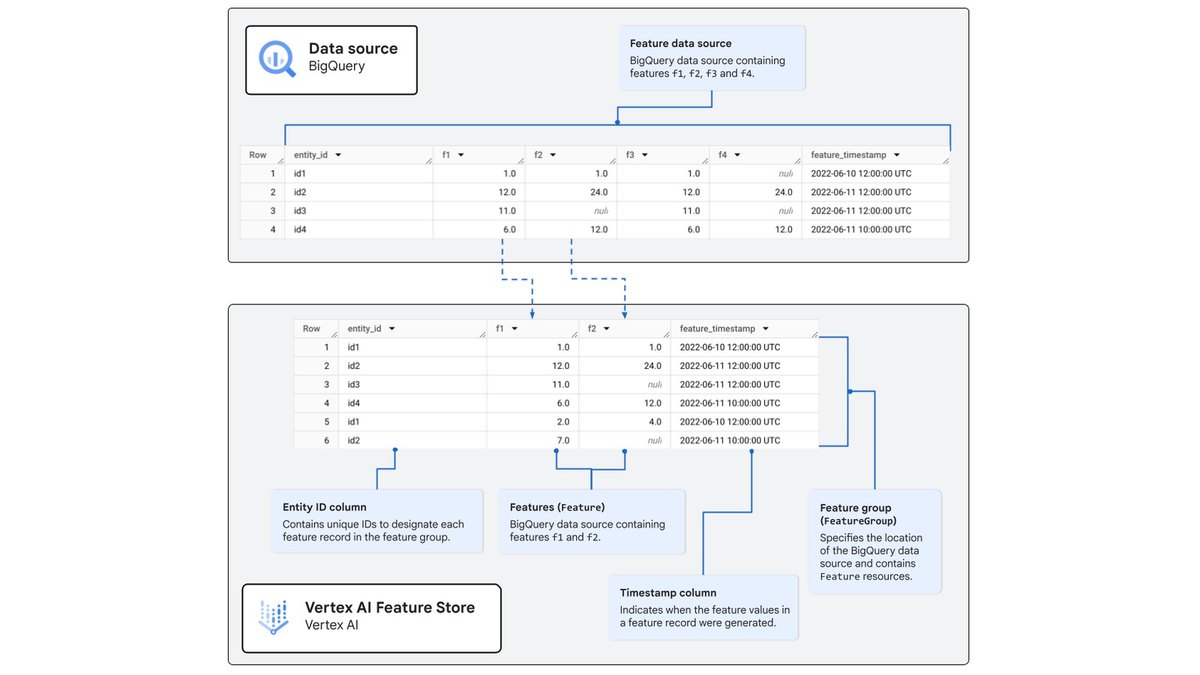
Vertex AI Feature Store serves the latest feature values directly from BigQuery for online predictions at low latencies. Bigtable online serving handles large data volumes, and Optimized online serving is deprecated.
Go ifTeams whose feature data already sits in BigQuery
Skip ifYou need Optimized online serving, which is deprecated
Why #7 over #8: It ships a managed online store on BigQuery, where Feast leaves the online store to you.
8
Feast Feature Store
Answrs VerdictThe open source standard.
Real-time claim: An online store for serving features at low latency; Feast uses a push model that reduces the latency of feature retrievalStreaming: Feast enables users to push streaming features but does not pull from streaming sources or manage streaming pipelinesAdoption: 12M+ downloads, 293 contributors and 5.5K Slack membersPrice: Open source; no price listed
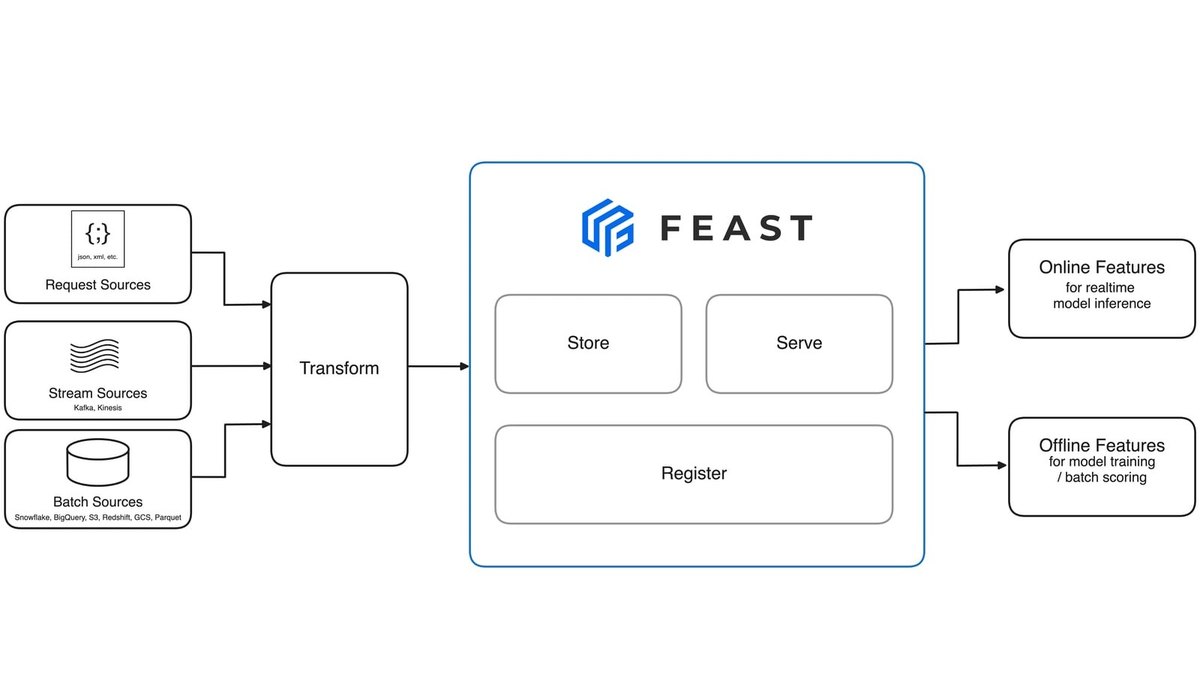
Feast is open source, with an online store for low-latency serving and a push model that reduces the latency of feature retrieval. It has 12M+ downloads and 293 contributors, but it does not pull from streaming sources or manage streaming pipelines.
Go ifTeams that want an open source feature store they run themselves
Skip ifYou want it to manage streaming pipelines for you
Why #8 over #9: It is open source with a large community, where Materialize is a commercial service with no published price.
9
Materialize Online Feature Store
Answrs VerdictA streaming SQL engine used as a feature store.
Real-time claim: Neo Financial reports feature lookups that reflect transactions with about 1-second P99 latencyResults: Neo Financial reports about an 80% cost reduction across its online feature store stack and new real-time features shipped in hours instead of daysHow it works: Feature views are maintained incrementally, so the current answer is ready when a request arrives; teams define aggregations in SQL, often through dbtPrice: Not published on the page
Materialize is a streaming SQL engine. Neo Financial built its online feature store on it and reports about 1-second P99 latency, about an 80% cost reduction and new real-time features shipped in hours instead of days.
Go ifSQL teams building fraud or risk features from live data
Skip ifYou want a ready-made feature registry
Why #9 over #10: It has a named customer result, where Azure’s page gives no latency or customer figure.
10
Azure Machine Learning Managed Feature Store
Answrs VerdictThe Azure option.
Real-time claim: Both offline store (ADLS Gen2) and online store (Redis) materialization are currently supportedConsistency: Feature retrieval supports point-in-time temporal joins and materialization avoids training/serving skewVersioning: Feature sets are versioned and immutableCost: The primary cost is managed Spark materialization jobs
Azure Machine Learning managed feature store supports offline (ADLS Gen2) and online (Redis) materialization. Retrieval supports point-in-time temporal joins, feature sets are versioned and immutable, and the primary cost is managed Spark materialization jobs.
Go ifTeams on Azure Machine Learning
Skip ifYou need a published online latency figure; the page gives none
How we ranked these
We ranked each platform on how its own pages document real-time serving (published latency, freshness and an online store), then on governance and point-in-time correctness. Where a vendor publishes no latency number we say so. Facts are taken from each maker's own published information; check the official site before you buy.
Questions people ask
What is a real-time ML feature platform?
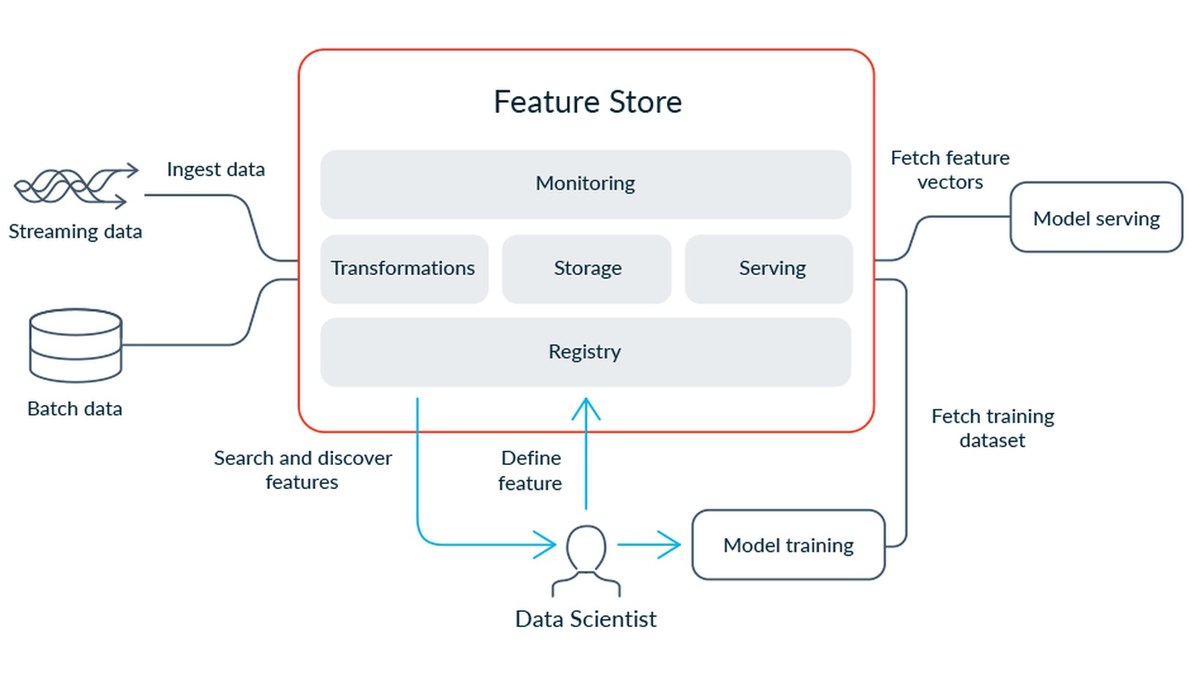
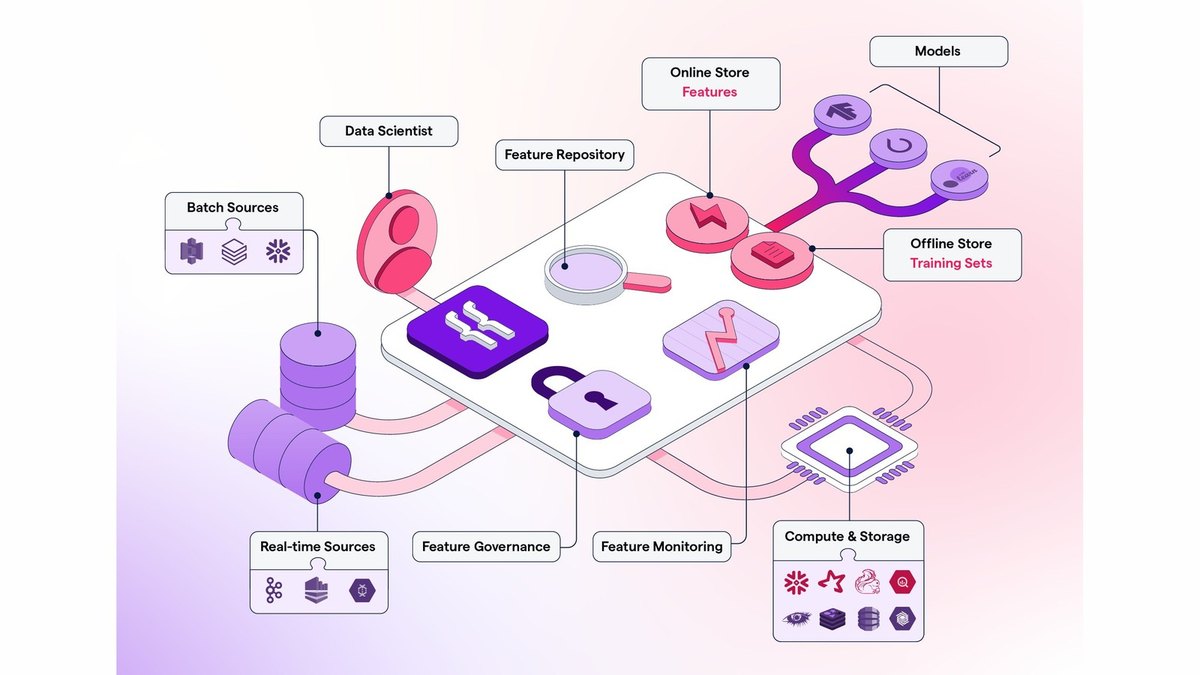
It keeps the latest feature values in an online store for low-latency model inference and an offline store for training; SageMaker Feature Store describes offline storage for training and online storage for real-time inference.
Which feature platform publishes the lowest latency?
Redis Feature Form and Hopsworks both label sub-millisecond retrieval (<1ms); Hopsworks also publishes 7.5ms p99 latency for 11 features.
Is there an open source option?
Yes. Feast is an open source feature store with an online store for serving features at low latency.
What happened to Optimized online serving in Vertex AI Feature Store?
Google’s overview page marks Optimized online serving as deprecated and describes Bigtable online serving for large data volumes.
Latency or freshness figure each vendor publishes (ms; read latency, p99 or freshness as stated) at a glance
Redis Feature Form1 ms
Chalk Feature Store5 ms
Hopsworks Feature Store7.5 ms
Snowflake Feature Store200 ms
Latency or freshness figure each vendor publishes (ms; read latency, p99 or freshness as stated), as published by each maker. Picks without a published figure are left off.