The 10 Best Retrieval and Search Infrastructure Tools for AI in 2027
By Kory White · Updated Oct 2026 · 7 min read
Direct answer
Elasticsearch is the best retrieval and search infrastructure tool for AI: it runs BM25 keyword and vector search with filtered kNN in one API call and has 78.3k GitHub stars. Qdrant is #2 for its free-forever cluster, and Pinecone is #3 for a fully managed service with published prices from a free Starter plan.
Elasticsearch Serverless lists rates as low as $0.14 per VCU-hour for ingest, $0.09 per VCU-hour for search and $0.047 per GB retained per month; a free trial is offered but its length is not stated
Teams that want keyword search, filters and vector search in one engine they may already run
A free single-node cluster with 0.5 vCPU, 1GB RAM and 4 GB disk is free forever; the Standard tier is usage-based with no list price, and Premium, Hybrid Cloud and Private Cloud are not priced on the page
Developers who want an open-source vector engine with strong filtering and a real free cluster
Starter is free with 2 GB of storage, 2M write units and 1M read units per month; Builder is $20 per month, Standard has a $50 monthly minimum with a 3 week trial that includes $300 of credits, and Enterprise has a $500 monthly minimum
Teams that want a fully managed serverless vector database with published prices and no servers to run
Free plan at $0 with 1 cluster, 100,000 objects and 1 GB of memory; Flex starts at $45 per month, and Premium has no public list price, with the FAQ giving a minimum from $400 per month
Teams that want open-source hybrid search with a managed cloud and a point-and-click Explorer
Milvus is free open source; Zilliz Cloud has a Free plan at $0 with 5 GB of storage and 2.5M vCUs per month, Standard from $0 per month on Serverless, and Enterprise from $197 per month on Dedicated, each with a 30 day free trial
Teams that want to start on a laptop with Milvus Lite and grow to a distributed cluster
A per-search price is not published; a search unit is one query with up to 100 documents, trial keys are rate limited and not for production, and Model Vault dedicated instances list $5.00 per hour, or $3,250 monthly, for Rerank 4 Fast on a medium tier
Teams that already have a search engine and want better ordering of the top results
Build is free with 10K search requests and 50K records a month; Grow includes 10K requests and 100K records, then $0.50 per additional 1K requests and $0.40 per additional 1K records; Grow Plus is $1.75 per additional 1K requests; Elevate is custom
Teams building site or product search that want keyword and semantic ranking as a hosted service
Pick by what you want
Best overall
Elasticsearch
Best free-forever start
Qdrant
Best fully managed
Pinecone
Best hybrid search with no-code Explorer
Weaviate
Best vendor-neutral open source
OpenSearch
Best laptop to cluster path
Milvus
Best if you already use Postgres
pgvector
Best for custom large-scale ranking
Vespa
Best reranking layer
Cohere Rerank
The ranking
1
Elasticsearch
Answrs VerdictThe most widely starred engine here, with hybrid search built in.
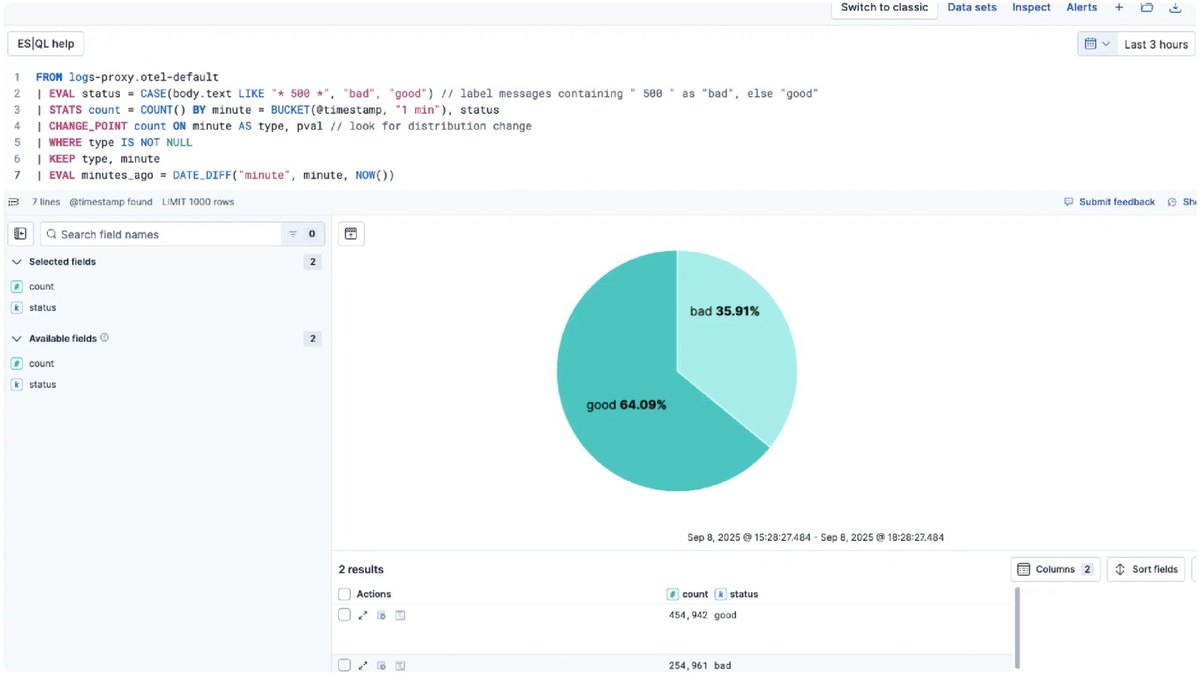
Price: Elasticsearch Serverless lists rates as low as $0.14 per VCU-hour for ingest, $0.09 per VCU-hour for search and $0.047 per GB retained per month; a free trial is offered but its length is not statedHybrid search: Combines lexical BM25 and vector search with filtered kNN in one API call, and offers HNSW for approximate kNNCompression: Better Binary Quantization (BBQ) is described as 32x vector compression with up to 95% memory savingsVendor claim: Elastic says its filtered vector search delivers 8x higher throughput than OpenSearch; this is a vendor claim, not an independent benchmarkOpen source: The main repository shows 78.3k stars on GitHub, and an August 2024 Elastic post says Elasticsearch is open source again, adding AGPL next to ELv2 and SSPL
Elasticsearch combines lexical BM25 and vector search with filtered kNN in one API call, and offers HNSW for approximate kNN. Its Better Binary Quantization is described as 32x vector compression with up to 95% memory savings. Serverless lists rates as low as $0.14 per VCU-hour for ingest, $0.09 per VCU-hour for search and $0.047 per GB retained per month, and a free trial is offered. The main repository shows 78.3k stars, and an August 2024 Elastic post says Elasticsearch is open source again, adding AGPL next to ELv2 and SSPL. Elastic’s claim of 8x higher filtered-vector throughput than OpenSearch is a vendor claim, not an independent benchmark.
Go ifTeams that want keyword search, filters and vector search in one engine they may already run
Skip ifYou want a flat monthly price before talking to a vendor; the serverless rates are usage-based
Why #1 over #2: It pairs keyword and vector search in one engine with 78.3k stars, where Qdrant is built around vector search alone.
2
Qdrant
Answrs VerdictThe best free-forever start, with filtering built into the search itself.
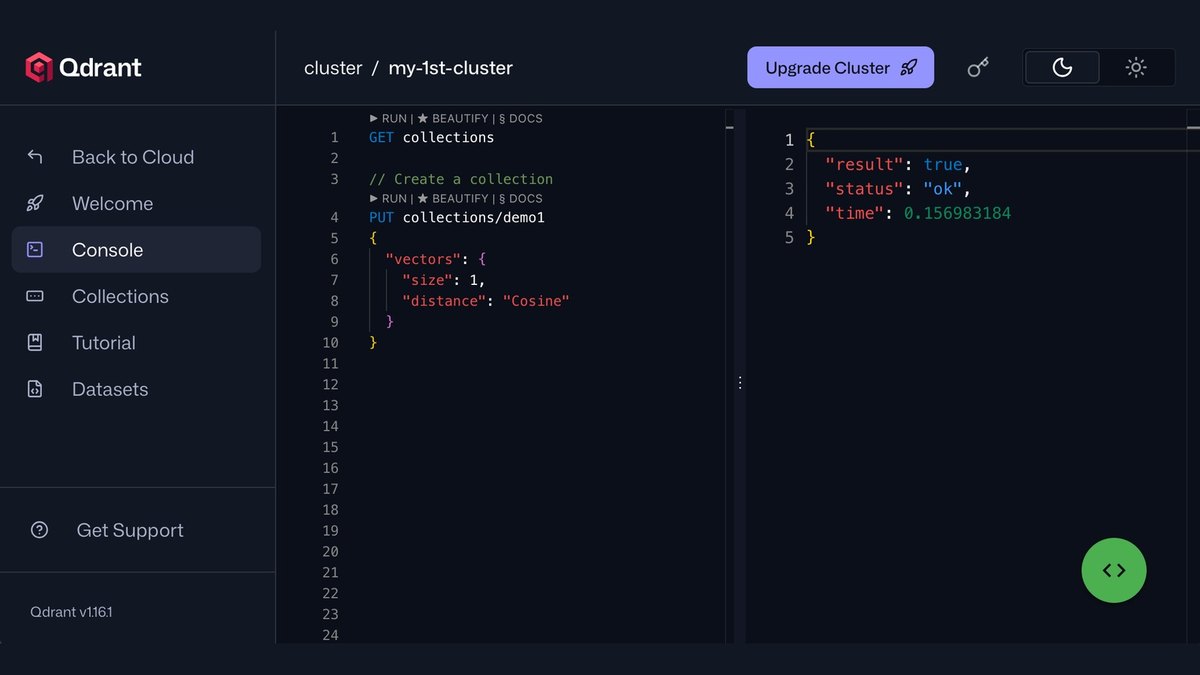
Price: A free single-node cluster with 0.5 vCPU, 1GB RAM and 4 GB disk is free forever; the Standard tier is usage-based with no list price, and Premium, Hybrid Cloud and Private Cloud are not priced on the pageMemory: Claims memory reduction by up to 64x through scalar, binary and asymmetric quantizationHybrid search: Combines dense and sparse retrieval in one query, with BM25, SPLADE++ and miniCOIL, and applies filters during HNSW traversalOpen source: Written in Rust under the Apache License 2.0, and the repository shows 35.1k starsCompliance: Qdrant Cloud runs on AWS, GCP or Azure and is listed as SOC2 and HIPAA compliant
Qdrant is written in Rust under the Apache License 2.0, and its repository shows 35.1k stars. It combines dense and sparse retrieval in one query, with BM25, SPLADE++ and miniCOIL, and applies filters during HNSW traversal. It claims memory reduction by up to 64x through scalar, binary and asymmetric quantization. A single-node cluster with 0.5 vCPU, 1GB RAM and 4 GB disk is free forever, while the Standard tier is usage-based with no list price. Qdrant Cloud runs on AWS, GCP or Azure and is listed as SOC2 and HIPAA compliant.
Go ifDevelopers who want an open-source vector engine with strong filtering and a real free cluster
Skip ifYou need a published price for paid tiers before you can budget
Why #2 over #3: It has a free-forever cluster and open-source code, while Pinecone is a managed service whose free Starter plan is capped at 2 GB.
3
Pinecone
Answrs VerdictThe easiest managed start, with the clearest published price ladder.
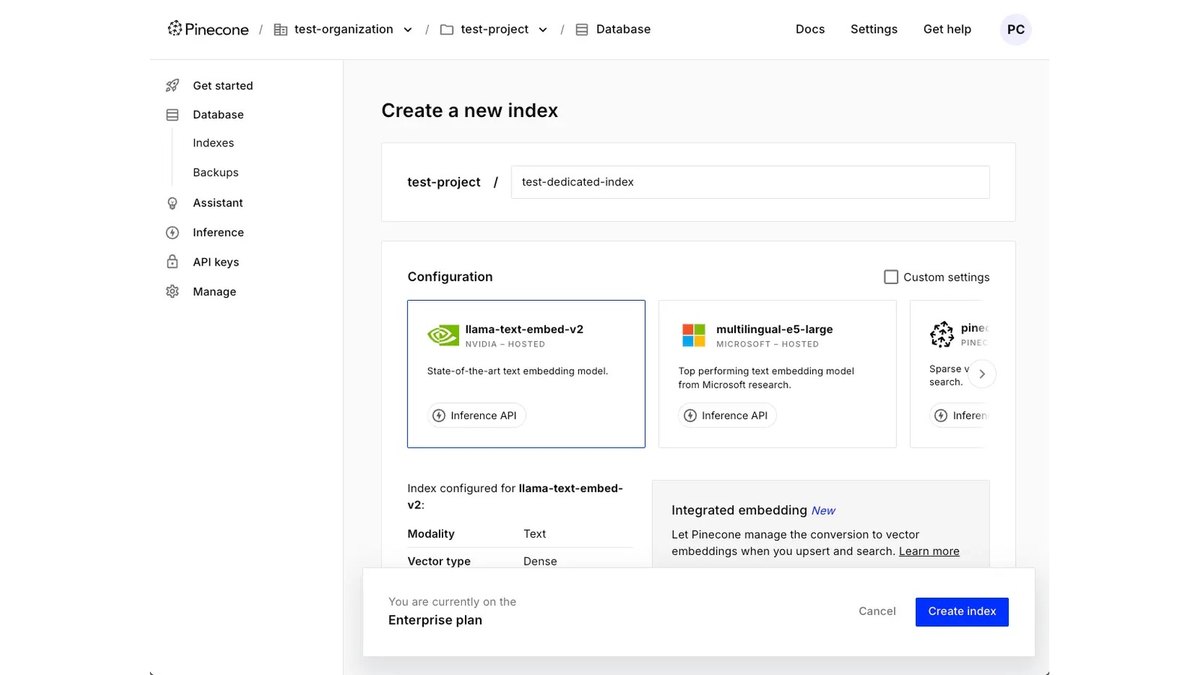
Price: Starter is free with 2 GB of storage, 2M write units and 1M read units per month; Builder is $20 per month, Standard has a $50 monthly minimum with a 3 week trial that includes $300 of credits, and Enterprise has a $500 monthly minimumUnit rates: Standard lists storage at $0.33 per GB per month, read units at $16 to $18 per million and write units at $4 to $4.50 per million, varying by cloud and regionScale: Namespaces per index go up to 100,000 on Standard and 1,000,000 on Enterprise, and the site cites more than 10,000 customersRetrieval: Dense vectors, sparse vectors and BM25 full-text search can run in the same index, with Pinecone sparse embedding and reranking modelsProducts: The product page now headlines Pinecone as a knowledge engine for agents and lists Database, Nexus, Dedicated Read Nodes and Assistant
Pinecone is a fully managed serverless vector database. Starter is free with 2 GB of storage, 2M write units and 1M read units per month; Builder is $20 per month, Standard has a $50 monthly minimum with a 3 week trial that includes $300 of credits, and Enterprise has a $500 monthly minimum. Namespaces per index go up to 100,000 on Standard and 1,000,000 on Enterprise, and dense vectors, sparse vectors and BM25 full-text search can run in the same index. The product page now headlines Pinecone as a knowledge engine for agents and lists Database, Nexus, Dedicated Read Nodes and Assistant.
Go ifTeams that want a fully managed serverless vector database with published prices and no servers to run
Skip ifYou want an open-source engine you can self-host
Why #3 over #4: It publishes a full price ladder, where Weaviate asks you to contact sales for Premium.
4
Weaviate
Answrs VerdictHybrid search plus a no-code Explorer, with a free plan.
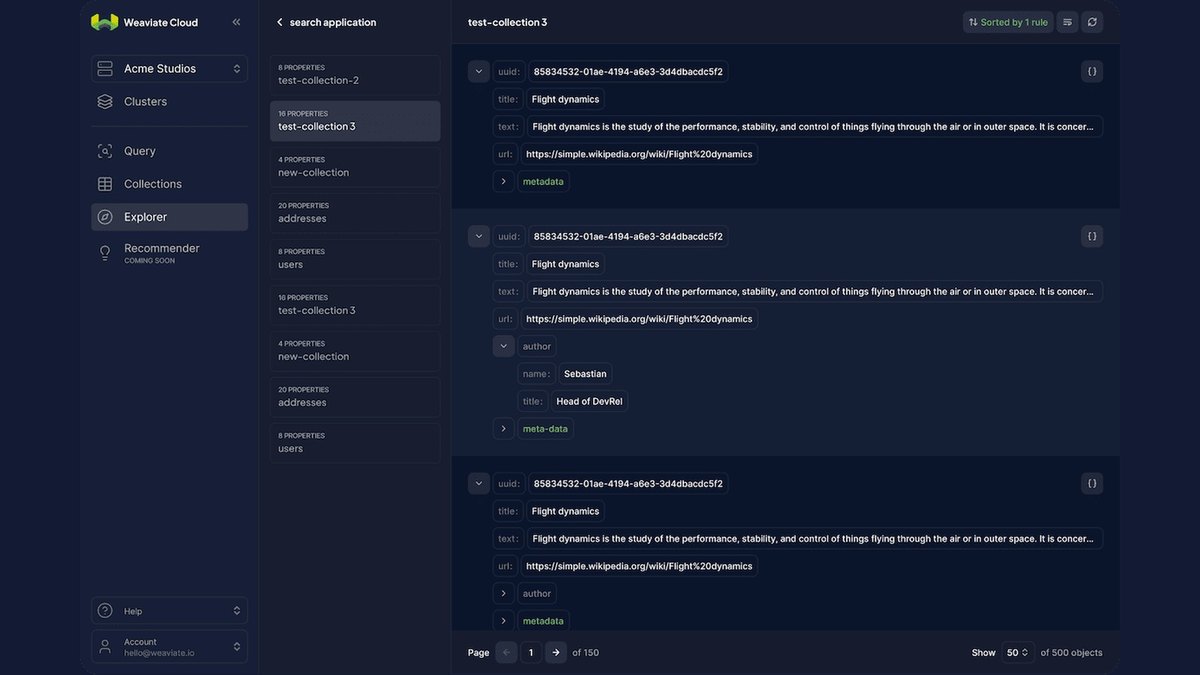
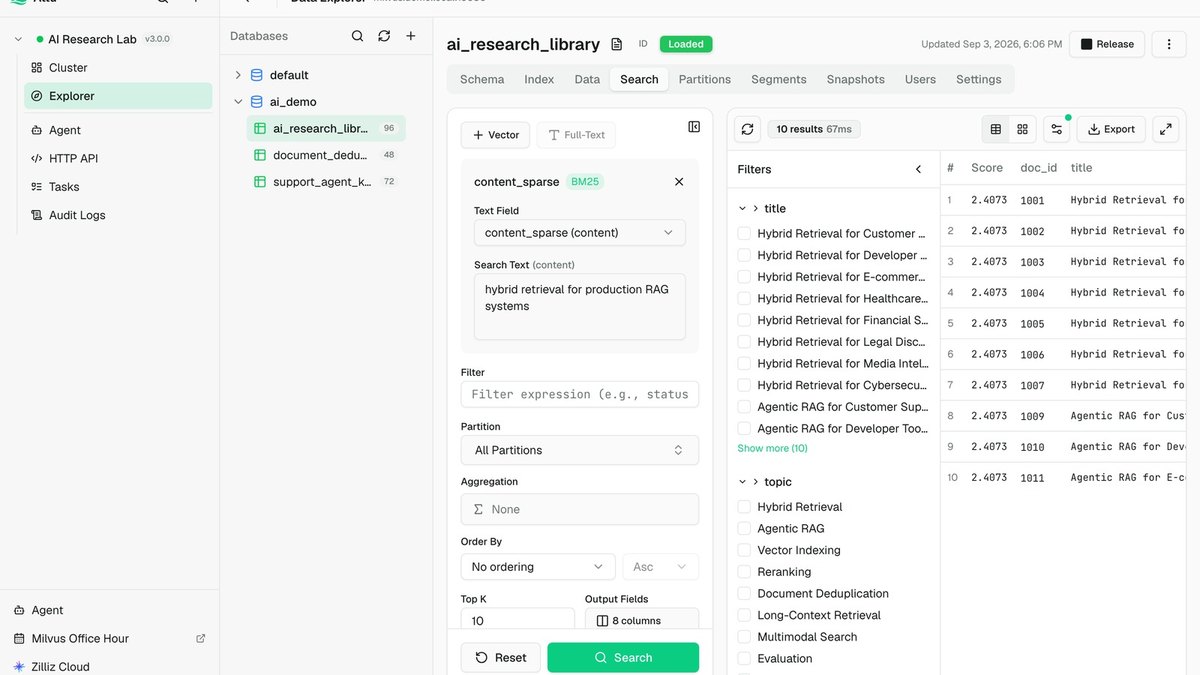
Price: Free plan at $0 with 1 cluster, 100,000 objects and 1 GB of memory; Flex starts at $45 per month, and Premium has no public list price, with the FAQ giving a minimum from $400 per monthQuery Agent: The Query Agent costs $30 per organization per month and includes 4,000 requestsHybrid search: The home page shows a hybrid query that mixes vector and keyword matching with an alpha settingAdoption: The site claims over 20M open source downloads and thousands of customers, and the repository shows 16.9k starsLicense: Most of the repository is BSD-3-Clause, with files in the wl folder under a separate commercial license
Weaviate has a free plan at $0 with 1 cluster, 100,000 objects and 1 GB of memory, and Flex starts at $45 per month. Premium has no public list price, and the FAQ gives a minimum from $400 per month. The home page shows a hybrid query that mixes vector and keyword matching, and the Query Agent costs $30 per organization per month with 4,000 requests included. The site claims over 20M open source downloads, the repository shows 16.9k stars, and most of it is BSD-3-Clause with files in the wl folder under a commercial license.
Go ifTeams that want open-source hybrid search with a managed cloud and a point-and-click Explorer
Skip ifYou need every file under one permissive license
Why #4 over #5: It adds a free plan and open-source code, where OpenSearch lists no managed product on its own site.
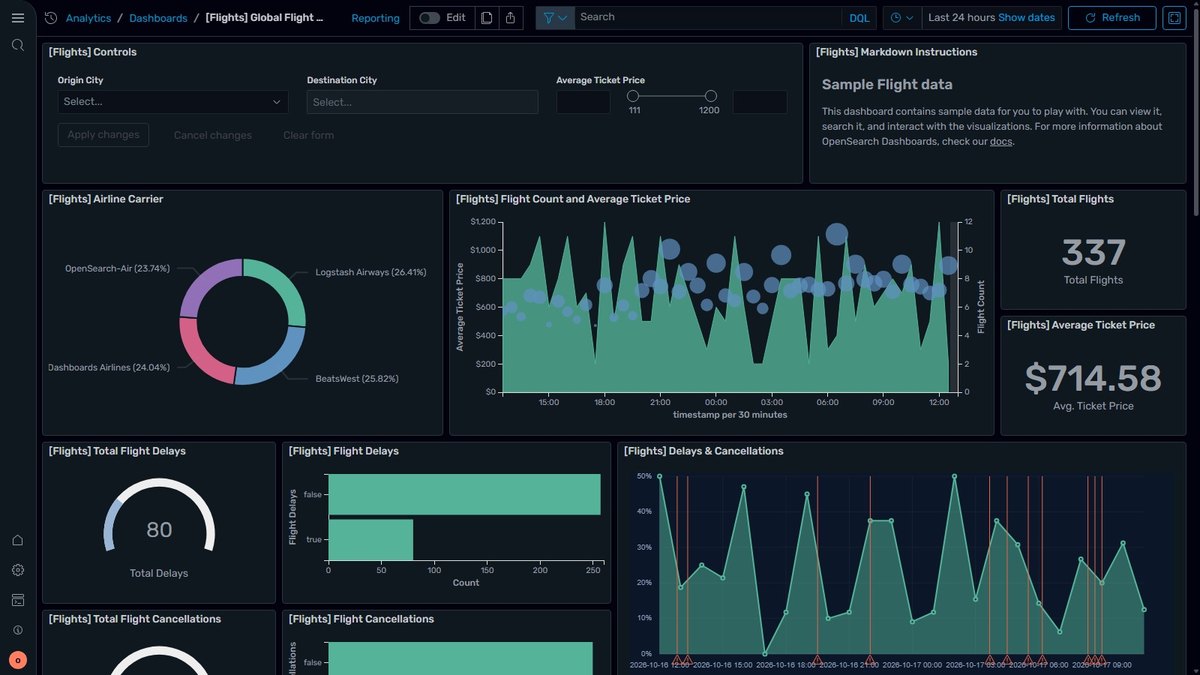
Price: Free open source under Apache 2.0; opensearch.org lists no price and does not mention a managed serviceVector features: Lists k-NN similarity search, neural sparse search, hybrid search with score normalization and GPU-accelerated vector indexingGovernance: The OpenSearch Software Foundation, a project of the Linux Foundation, was formed in September 2024Platform: Groups vector search with enterprise search, observability and security analytics, and a JSON-based Query DSLOpen source: The repository shows 13.9k stars under the Apache License 2.0
OpenSearch is free open source under Apache 2.0, and opensearch.org lists no price and does not mention a managed service. It lists k-NN similarity search, neural sparse search, hybrid search with score normalization and GPU-accelerated vector indexing, alongside enterprise search, observability and security analytics. The OpenSearch Software Foundation, a project of the Linux Foundation, was formed in September 2024. The repository shows 13.9k stars.
Go ifTeams that want a vendor-neutral, Apache-licensed search engine with vector search and Dashboards
Skip ifYou want a single vendor selling a managed vector product with a published price
Why #5 over #6: It is fully Apache-licensed and vendor-neutral, where Milvus is operated by one company, Zilliz.
6
Milvus
Answrs VerdictThe second most-starred vector database, with a path from laptop to cluster.
Price: Milvus is free open source; Zilliz Cloud has a Free plan at $0 with 5 GB of storage and 2.5M vCUs per month, Standard from $0 per month on Serverless, and Enterprise from $197 per month on Dedicated, each with a 30 day free trialDeployment: Comes as Milvus Lite for notebooks, Standalone for a single machine and Distributed for horizontal scaleScale claim: The site cites a fully distributed design for tens of billions of vectorsOpen source: The repository shows 46.4k stars under Apache-2.0, and the project sits under the LF AI & Data FoundationOwnership: The site is operated by Zilliz, whose Zilliz Cloud is the fully managed version of Milvus
Milvus comes as Milvus Lite for notebooks, Standalone for a single machine and Distributed for horizontal scale, and the site cites a fully distributed design for tens of billions of vectors. The repository shows 46.4k stars under Apache-2.0 and sits under the LF AI & Data Foundation. Zilliz, which operates the site, sells Zilliz Cloud as the fully managed version: a Free plan at $0 with 5 GB of storage and 2.5M vCUs per month, Standard from $0 per month on Serverless, and Enterprise from $197 per month on Dedicated, each with a 30 day free trial.
Go ifTeams that want to start on a laptop with Milvus Lite and grow to a distributed cluster
Skip ifYou want a database that also handles keyword search and analytics in one engine
Why #6 over #7: It is built around vector search at scale, where pgvector adds vectors to Postgres.
7
pgvector
Answrs VerdictThe simplest path if your data already lives in Postgres.
Price: Free open source under the PostgreSQL License, with no vendor price; you pay only for the Postgres you already runIndex types: Supports HNSW and IVFFlat indexes for approximate nearest neighbor search, plus exact searchDistances: Supports L2, inner product, cosine, L1, Hamming and Jaccard distanceLimits: A vector column can be indexed up to 2,000 dimensions, halfvec up to 4,000 and bit up to 64,000Open source: The repository shows 23.4k stars and describes itself as open-source vector similarity search for Postgres
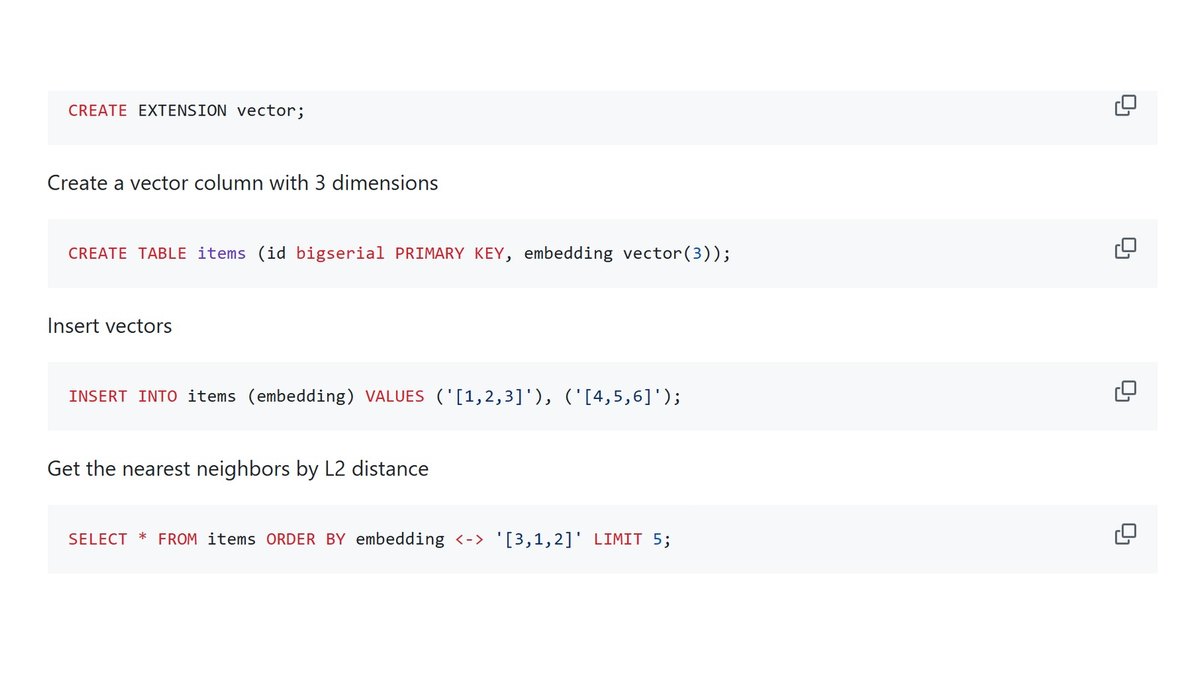
pgvector is free open-source vector similarity search for Postgres under the PostgreSQL License, so you pay only for the Postgres you already run. It supports HNSW and IVFFlat indexes, exact search, and L2, inner product, cosine, L1, Hamming and Jaccard distance. A vector column can be indexed up to 2,000 dimensions, halfvec up to 4,000 and bit up to 64,000. The repository shows 23.4k stars.
Go ifTeams already on Postgres that want vectors next to their relational data and ACID guarantees
Skip ifYou need a managed search service with built-in hybrid ranking and scaling
Why #7 over #8: It needs no new service when you already run Postgres, where Vespa is a separate platform to deploy.
8
Vespa
Answrs VerdictThe most configurable engine here, built for large custom ranking.
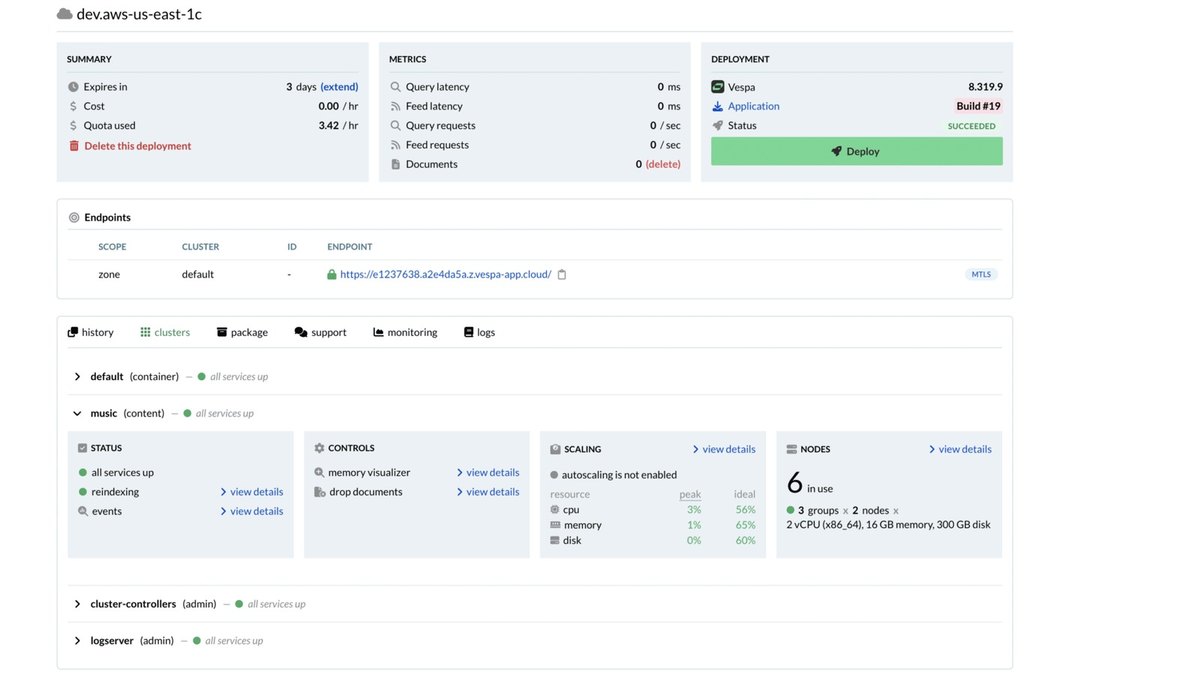
Price: Not published; the site offers a free trial and Contact us, and its pricing page lists no figuresHybrid: Combines vector, text and structured search in one platform, with tensors and multi-vector representationsScale claim: The site claims support for billions of frequently changing data items, thousands of queries per second and latencies under 100 millisecondsCustomers: Testimonials and case studies name Spotify, Elicit, Yahoo and FarfetchOpen source: The repository describes Vespa as the AI search platform, shows 7.1k stars and uses the Apache-2.0 license
Vespa combines vector, text and structured search in one platform, with tensors and multi-vector representations. The site claims support for billions of frequently changing data items, thousands of queries per second and latencies under 100 milliseconds, and names Spotify, Elicit, Yahoo and Farfetch in testimonials and case studies. The repository describes it as the AI search platform, shows 7.1k stars and uses the Apache-2.0 license. Price is not published; the site offers a free trial and Contact us.
Go ifTeams building large-scale search or recommendation systems that need custom ranking and tensors
Skip ifYou want a simple vector store or a published price
Why #8 over #9: It is a full search and ranking platform, where Cohere Rerank is only a reranking model.
9
Cohere Rerank
Answrs VerdictA reranking layer, not a store, that improves any pick above it.
Price: A per-search price is not published; a search unit is one query with up to 100 documents, trial keys are rate limited and not for production, and Model Vault dedicated instances list $5.00 per hour, or $3,250 monthly, for Rerank 4 Fast on a medium tierWhat it does: Rerank models sort text inputs by semantic relevance to a query and are often used to reorder results from an existing search systemModels: The docs list rerank-v4.0-pro, rerank-v4.0-fast and rerank-v3.5, and v3.5 has a 4096 token context lengthReseller: Pinecone lists cohere-rerank-4-fast at $2 per 1K rerank units on its own pricing pageScope: Cohere Rerank is a model that sits on top of a search engine, not a database, so it needs one of the other picks underneath
Cohere Rerank is a model, not a database: Cohere’s docs say it sorts text inputs by semantic relevance to a query and is often used to reorder results from an existing search system. The docs list rerank-v4.0-pro, rerank-v4.0-fast and rerank-v3.5, and v3.5 has a 4096 token context length. A per-search price is not published, and Model Vault dedicated instances list $5.00 per hour, or $3,250 monthly, for Rerank 4 Fast on a medium tier. Pinecone lists cohere-rerank-4-fast at $2 per 1K rerank units on its own pricing page.
Go ifTeams that already have a search engine and want better ordering of the top results
Skip ifYou need a place to store and index your data
Why #9 over #10: It improves the order of results from any engine above it, where Algolia is a hosted search product.
10
Algolia
Answrs VerdictHosted site search with hybrid ranking, not a general vector store.
Price: Build is free with 10K search requests and 50K records a month; Grow includes 10K requests and 100K records, then $0.50 per additional 1K requests and $0.40 per additional 1K records; Grow Plus is $1.75 per additional 1K requests; Elevate is customNeuralSearch: Combines keyword and semantic search with adjustable ranking weights, and the pricing page lists NeuralSearch under ElevateMemory claim: Algolia says neural hashing compresses search vectors into hashes that use 1/10th of the RAMOrigin: The vector technology came from the Search.io acquisition announced on September 12, 2022Fit: Elevate is described as enterprise AI search with real-time personalization, 99.99% availability and SSO
Algolia’s NeuralSearch combines keyword and semantic search with adjustable ranking weights, and the pricing page lists it under Elevate, which is custom priced. Build is free with 10K search requests and 50K records a month; Grow includes 10K requests and 100K records, then $0.50 per additional 1K requests and $0.40 per additional 1K records, and Grow Plus is $1.75 per additional 1K requests. Algolia says neural hashing compresses search vectors into hashes that use 1/10th of the RAM, and the vector technology came from the Search.io acquisition announced on September 12, 2022.
Go ifTeams building site or product search that want keyword and semantic ranking as a hosted service
Skip ifYou want to store and query your own raw embeddings
How we ranked these
We ranked products that store and retrieve vectors and text first, by how directly each handles retrieval for AI applications and how much each maker documents on its own site, then the reranking layer and hosted site search last. Prices are shown only where published; Contact sales means Not published. We kept all ten picks from the old list and verified each on its own site. Elasticsearch and OpenSearch share a lineage but are separate products from separate organizations, and Cohere Rerank is a model that sits on top of a search engine rather than a store. The chart counts GitHub stars on each project’s main open-source repository, as displayed on GitHub; Pinecone, Cohere Rerank and Algolia are not open source and are not charted. Facts are taken from each maker's own published information; check the official site before you buy.
Questions people ask
What is the best retrieval infrastructure tool for AI?
Elasticsearch is our top pick because it combines BM25 keyword search, vector search and filtered kNN in one API call and has 78.3k GitHub stars. Qdrant is #2 for its free-forever cluster and Pinecone is #3 for its published price ladder from a free Starter plan.
Which of these tools have a free tier?
Pinecone Starter, Qdrant’s free cluster, the Weaviate Free plan, the Zilliz Cloud Free plan and Algolia Build are free. Milvus, pgvector, OpenSearch, Qdrant and Weaviate are also open source you can run yourself, and Vespa and Elastic offer free trials.
Is pgvector enough, or do I need a vector database?
pgvector adds HNSW and IVFFlat indexes and several distance types to Postgres, so it fits teams that already run Postgres. Dedicated engines such as Qdrant, Milvus and Weaviate are built around vector search and publish their own managed plans.
Is Elasticsearch still open source?
Elastic’s August 2024 post says Elasticsearch can be called open source again and that AGPL would be added next to ELv2 and SSPL. OpenSearch is the Apache 2.0 alternative, governed by the OpenSearch Software Foundation under the Linux Foundation.
GitHub stars on each project’s main open-source repository at a glance
Vespa7,100 stars
OpenSearch13,900 stars
Weaviate16,900 stars
pgvector23,400 stars
Qdrant35,100 stars
Milvus46,400 stars
Elasticsearch78,300 stars
GitHub stars on each project’s main open-source repository, as published by each maker. Picks without a published figure are left off.