TimescaleDB is the best time-series database for AI: it is 100% PostgreSQL compatible, open source and compresses data by up to 95%. InfluxDB 3 Core is #2 for built-in Python anomaly detection and ClickHouse is #3 for petabyte-scale speed.
The open-source distribution is free; ClickHouse Cloud starts with a 30-day trial and $300 credits, then Basic is $25.30 per TB a month for storage plus $0.2181 per compute unit-hour
Huge analytical workloads where time-series data is one of several event streams
The core is Apache-2.0 licensed open source; Enterprise is sold by request
Teams that want metrics, logs and traces in one cheaper store
Pick by what you want
Best overall
TimescaleDB
Best for anomaly detection
InfluxDB 3 Core
Fastest ingestion
QuestDB
Best for industrial IoT
TDengine
Best for Prometheus data
VictoriaMetrics
The ranking
1
TimescaleDB
Answrs VerdictThe best all-round pick: full SQL on top of time-series speed.
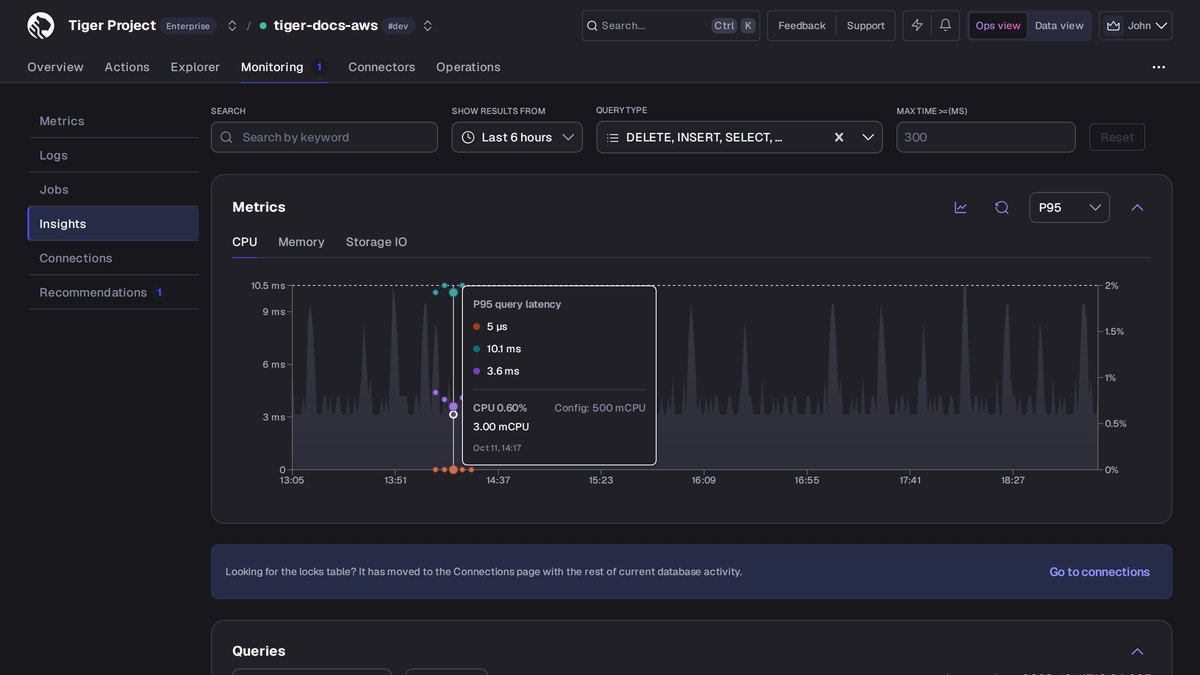
Price: Open-source TimescaleDB is free to self-host; Tiger Cloud Performance compute starts at $30 a month, with storage at $0.177 per GB-monthWhat it is: A time-series database built on Postgres, described as 100% PostgreSQL compatible and open sourceStorage: Hybrid row and columnar storage with compression of up to 95%Queries: About 200 native SQL hyperfunctions, including time-weighted averages and interpolationCommunity: 23.7K GitHub stars
TimescaleDB, from Tiger Data, is a time-series database built on Postgres and described as 100% PostgreSQL compatible and open source. It mixes row and columnar storage with compression of up to 95% and about 200 native SQL hyperfunctions. Self-hosting is free, and Tiger Cloud Performance compute starts at $30 a month.
Go ifTeams that already run Postgres and want sensor, metric and model-telemetry data next to their relational tables
Skip ifYou want a database with no SQL or Postgres at its core
Why #1 over #2: It gives you full SQL and Postgres, which InfluxDB 3 Core does not claim.
2
InfluxDB 3 Core
Answrs VerdictThe strongest built-in anomaly detection of the open-source picks.
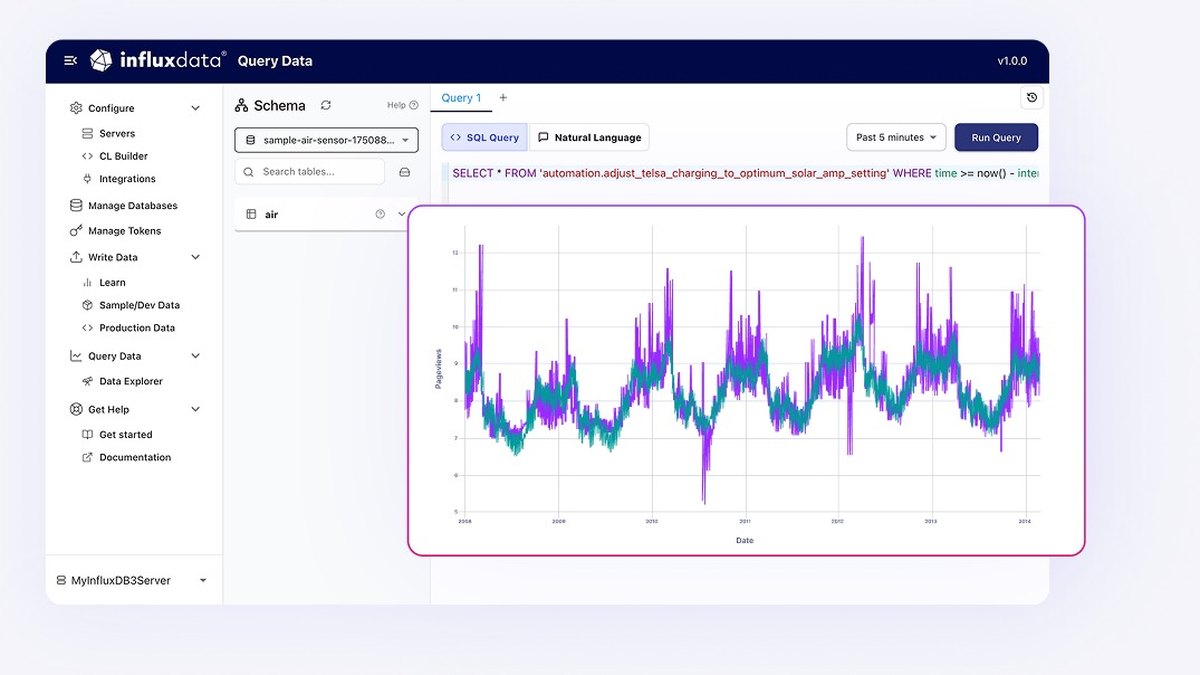
Price: InfluxDB 3 Core is free and open source under MIT and Apache 2 licenses; Enterprise pricing is custom, with a 30-day free trialSpeed: Sub-10ms access to recent data for real-time systemsAI use: Runs Python inside Core for transformations, anomaly detection and automation, with no pipelines requiredInterface: InfluxDB 3 Explorer is a UI for querying and visualizing time seriesCommunity: 31.6K GitHub stars and 1B+ downloads
InfluxDB 3 Core is free and open source under MIT and Apache 2 licenses, with sub-10ms access to recent data. It runs Python inside the database for transformations, anomaly detection and automation, and has 31.6K GitHub stars and 1B+ downloads.
Go ifReal-time telemetry and anomaly detection on recent data, on one node or at the edge
Skip ifYou need long-range historical queries on a single free node
Why #2 over #3: Its built-in anomaly detection goes beyond ClickHouse, which is an analytics engine first.
3
ClickHouse
Answrs VerdictThe fastest analytics engine on the list, though broader than a pure time-series store.
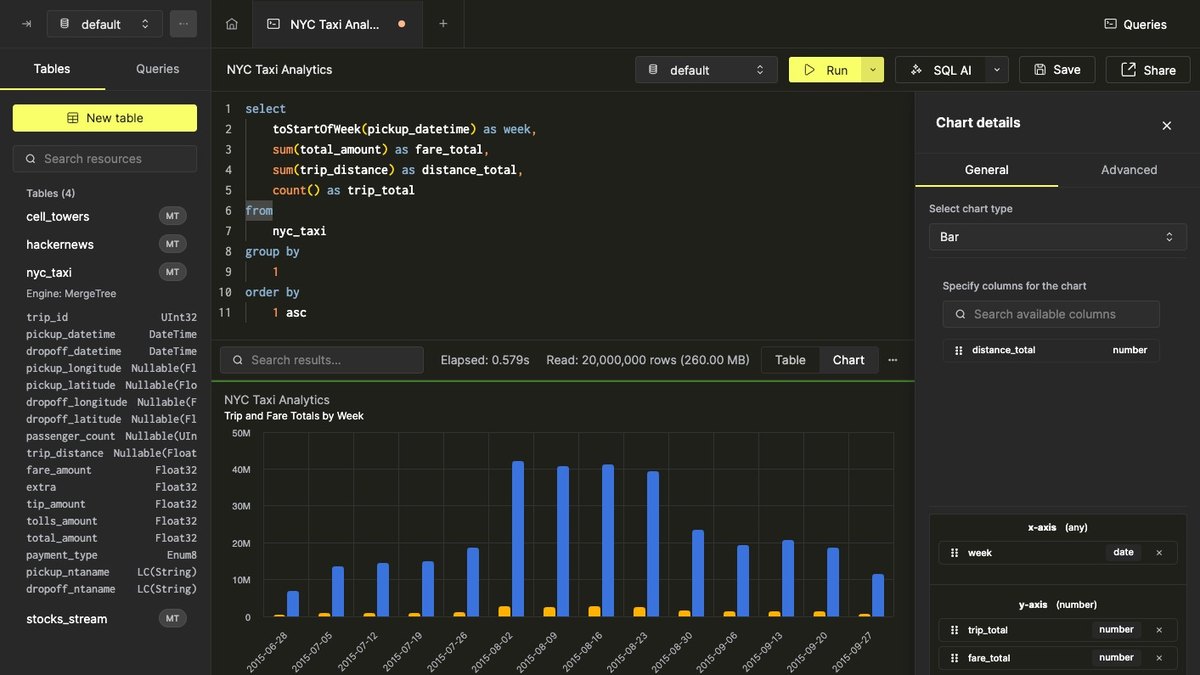
Price: The open-source distribution is free; ClickHouse Cloud starts with a 30-day trial and $300 credits, then Basic is $25.30 per TB a month for storage plus $0.2181 per compute unit-hourWhat it is: A fast open-source OLAP database for real-time analyticsScale: Millisecond queries at petabyte scaleCustomers: Sony, Lyft, Cisco and GitLab; Anthropic says ClickHouse played an instrumental role in developing Claude 4Community: 50.5k GitHub stars
ClickHouse is a fast open-source OLAP database for real-time analytics, with millisecond queries at petabyte scale. Sony, Lyft, Cisco and GitLab are named customers, and Anthropic says it played an instrumental role in developing Claude 4. Cloud Basic storage is $25.30 per TB a month, and the project has 50.5k GitHub stars.
Go ifHuge analytical workloads where time-series data is one of several event streams
Skip ifYou want a database built only for time series
Why #3 over #4: Its scale and customer list outweigh QuestDB’s narrower focus.
4
QuestDB
Answrs VerdictThe ingestion-speed specialist.
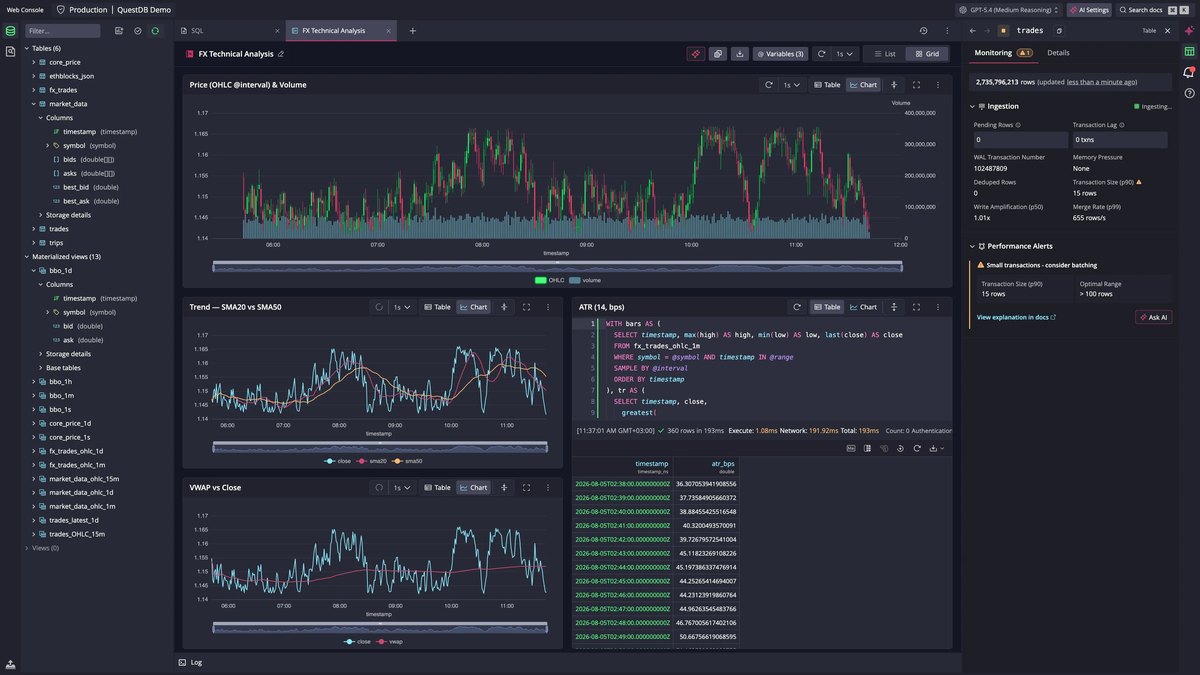
Price: Open source under Apache 2.0; QuestDB Enterprise has a free trial and is sold by requestIngestion: 19M rows per second per server in its published QWP benchmark on QuestDB v10.0Benchmark claim: In TSBS cpu-only ingestion at 100K hosts, QuestDB reports 8.59M rows/s against 1.75M rows/s for ClickHouseSQL: Time-series SQL extensions such as SAMPLE BY, LATEST ON and ASOF JOIN, with older data tiered to Apache ParquetCommunity: 17.3k GitHub stars and 170+ open-source contributors
QuestDB is open source under Apache 2.0 and reports 19M rows per second per server in its published QWP benchmark on v10.0. In TSBS cpu-only ingestion it reports 8.59M rows/s against 1.75M rows/s for ClickHouse. It adds SAMPLE BY, LATEST ON and ASOF JOIN to SQL.
Go ifCapital markets, energy and robotics workloads that need very fast ingestion in plain SQL
Skip ifYou want a mature Postgres-compatible ecosystem first
Why #4 over #5: Its ingestion numbers matter more for sensor streams than Druid’s focus on query concurrency.
5
Apache Druid
Answrs VerdictThe pick for high-concurrency real-time analytics.
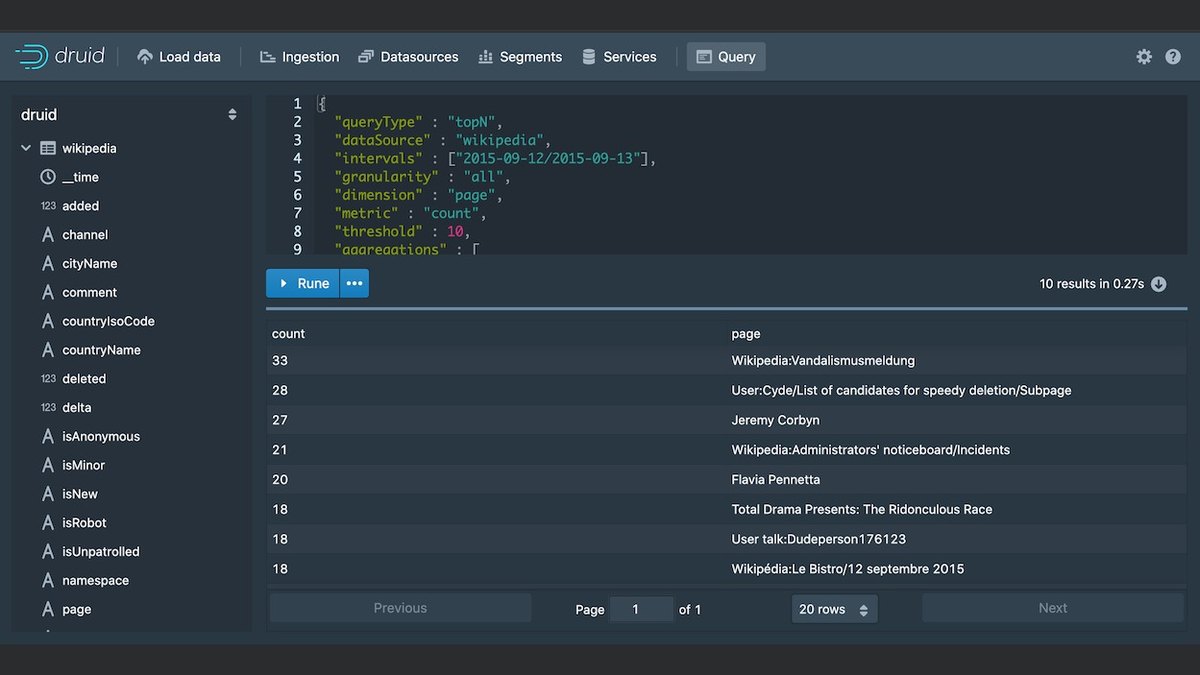
Price: No price listed; binary and source downloads are published on druid.apache.orgSpeed: Sub-second queries on streaming and batch data at scale and under loadScale: Billions to trillions of rows, with 100s to 100,000s of queries per secondStreaming: Native integration with Apache Kafka and Amazon Kinesis, with query-on-arrival at millions of events per secondLatest release: Apache Druid 38.0.0, released Oct 1 2026
Apache Druid delivers sub-second queries on streaming and batch data across billions to trillions of rows, with 100s to 100,000s of queries per second. It integrates natively with Apache Kafka and Amazon Kinesis for query-on-arrival at millions of events per second. The latest release is 38.0.0, from Oct 1 2026.
Go ifReal-time dashboards and analytics apps with very high query concurrency
Skip ifYou want a simple single-binary database
Why #5 over #6: It handles far more concurrent queries than VictoriaMetrics advertises.
6
VictoriaMetrics
Answrs VerdictThe best-value open-source store for metrics.
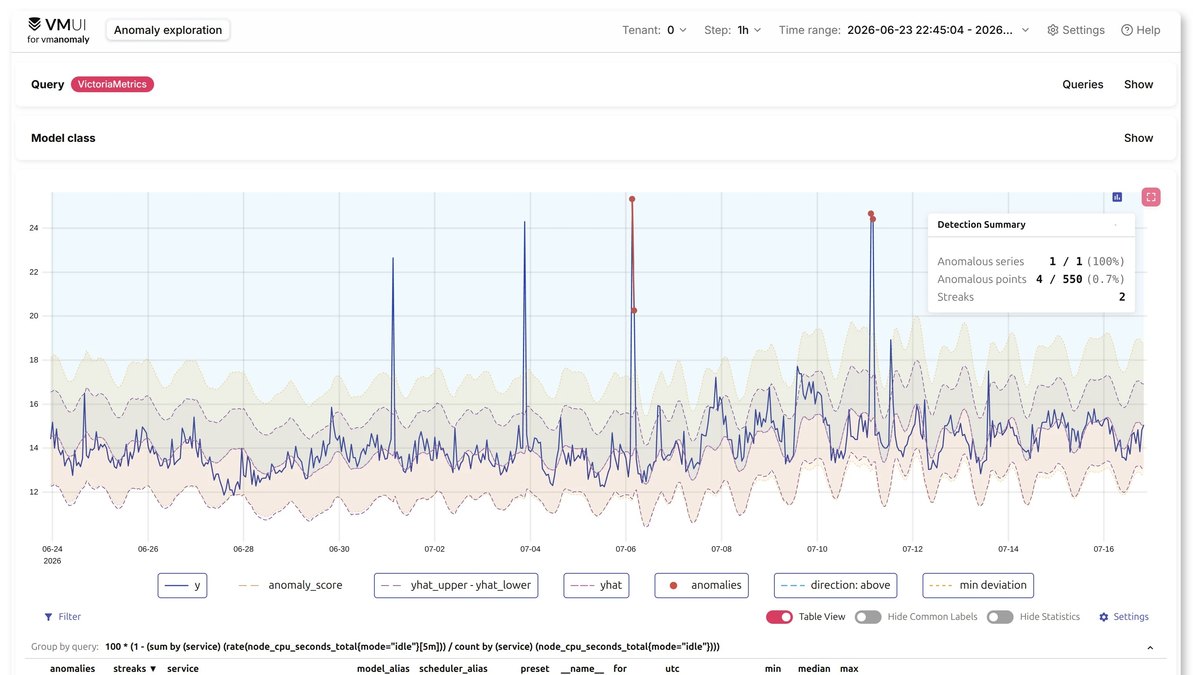
Price: The open-source time series database is free; VictoriaMetrics Enterprise and Cloud are sold separatelyEfficiency: Says it stores 10x more data using the same compute and storage resources as existing solutionsAI use: VictoriaMetrics Anomaly Detection, part of Enterprise, uses machine learning to score anomalies in metrics and handles seasonality and trendsCompatibility: A single binary with Prometheus, Graphite, OpenTSDB, CSV and InfluxDB ingestionCommunity: 17K+ GitHub stars and 1B+ Docker pulls
VictoriaMetrics is a free open-source time series database that says it stores 10x more data on the same compute and storage. Its Enterprise Anomaly Detection component uses machine learning to score anomalies while handling seasonality and trends. The project has 17K+ GitHub stars and 1B+ Docker pulls.
Go ifLong-term metric storage and Prometheus replacement with machine-learning anomaly scores
Skip ifYou need the anomaly detection in the free edition
Why #6 over #7: Its machine-learning anomaly scoring and compression go beyond TDengine’s industrial focus.
7
TDengine
Answrs VerdictThe industrial IoT specialist with a clear published price.
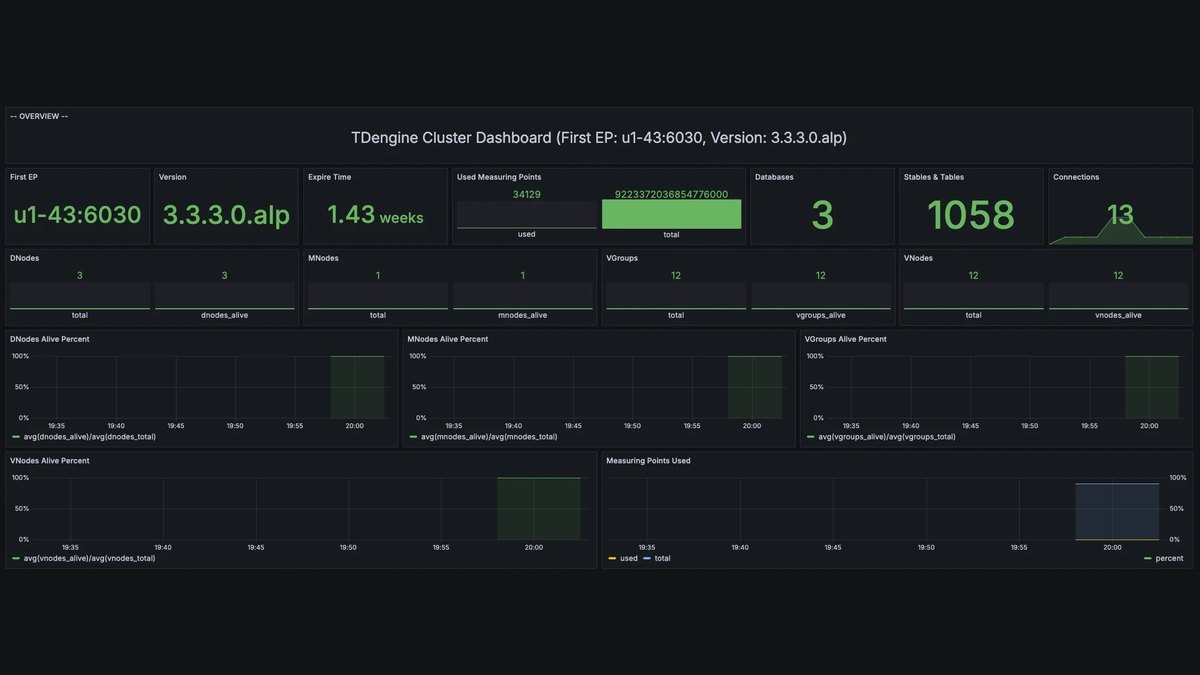
Price: Free for up to 5,000 tags; above that an annual license starts at $12,500 for 7,500 tags, and optional annual support for the free tier is $3,375Performance: More than 10x the performance of general-purpose databases, with storage costs reduced by up to 90%AI use: An industrial ontology gives AI context to identify anomalies and investigate potential causesSources: Connects to OPC, MQTT and Kafka, positioned as a modern alternative to a data historianCustomers: Trusted by over 1,000 industrial companies worldwide
TDengine is free for up to 5,000 tags, then an annual license starts at $12,500 for 7,500 tags. It claims more than 10x the performance of general-purpose databases and storage costs reduced by up to 90%. It connects to OPC, MQTT and Kafka and is trusted by over 1,000 industrial companies.
Go ifIndustrial plants and IoT fleets with millions of sensor tags
Skip ifYour data is not sensor or industrial data
Why #7 over #8: Its published license prices and industrial connectors give it more for sensor fleets than Prometheus.
8
Prometheus
Answrs VerdictThe standard for metrics, with limits on long-term storage.
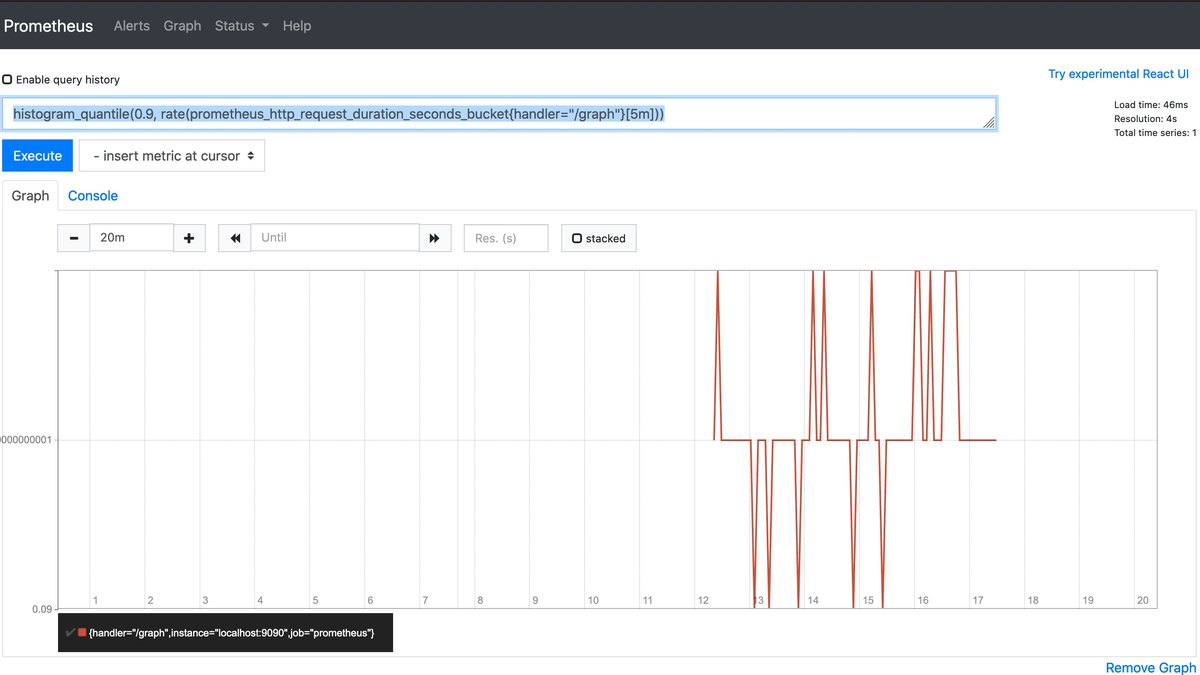
Price: Free: 100% open source under the Apache 2 LicenseModel: A dimensional data model where series are identified by a metric name and key-value pairs, queried with PromQLOperation: Servers operate independently and rely only on local storageGovernance: The second project to graduate from the CNCF after KubernetesCommunity: 66,663 GitHub stars
Prometheus is 100% open source under the Apache 2 License and uses a dimensional data model queried with PromQL. Servers rely only on local storage, and it was the second project to graduate from the CNCF after Kubernetes. It has 66,663 GitHub stars.
Go ifMonitoring Kubernetes and cloud services with alerting rules
Skip ifYou need long-term storage or a clustered store out of the box
Why #8 over #9: It is the standard that Mimir extends, and it needs no cluster.
9
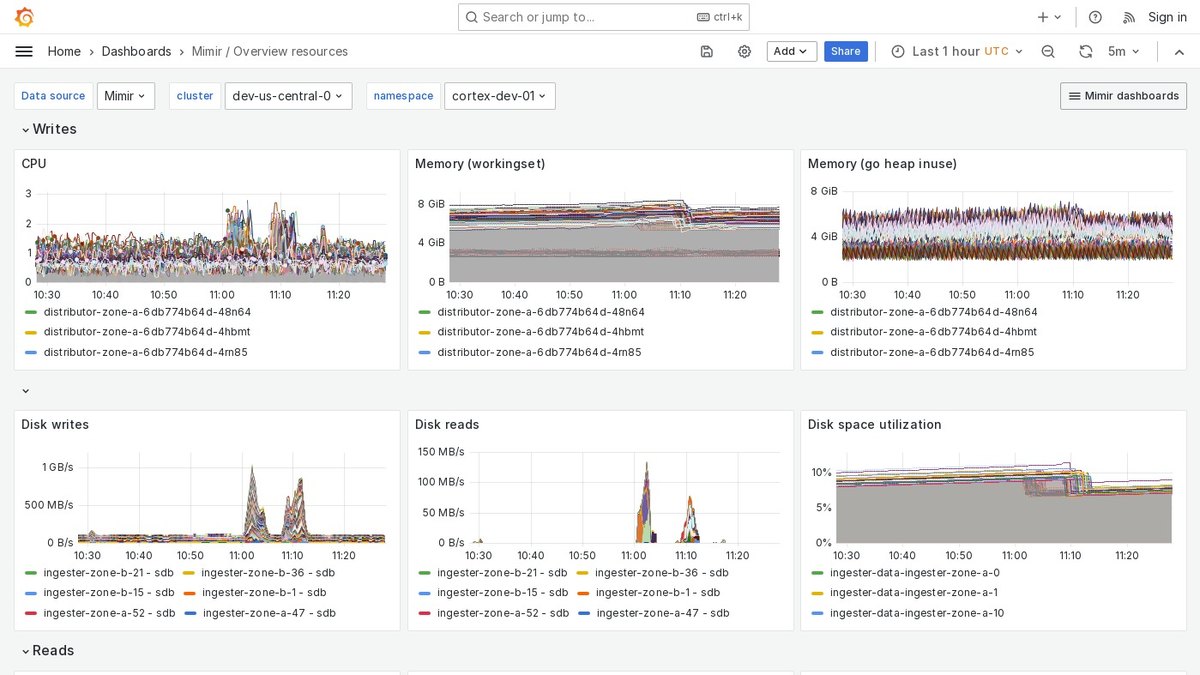
Grafana Mimir
Answrs VerdictThe scale-out home for Prometheus data.
Price: Free open source under AGPLv3; Grafana Cloud has a free tier of up to 10k metricsScale: Scales metrics to 1 billion active series and beyondCompatibility: 100% Prometheus compatible, including remote write, PromQL and alertingStorage: Long-term storage on S3, GCS, Azure blob storage and OpenStack SwiftCommunity: 4,427 GitHub stars
Grafana Mimir is a free AGPLv3 time-series database for long-term Prometheus storage, scaling to 1 billion active series and beyond. It is 100% Prometheus compatible and stores data on S3, GCS, Azure blob storage and OpenStack Swift. Grafana Cloud has a free tier of up to 10k metrics.
Go ifMulti-tenant, long-term Prometheus storage at very large scale
Skip ifYou only run one small Prometheus server
Why #9 over #10: It scales out where Prometheus alone relies on local storage, though GreptimeDB covers logs and traces too.
10
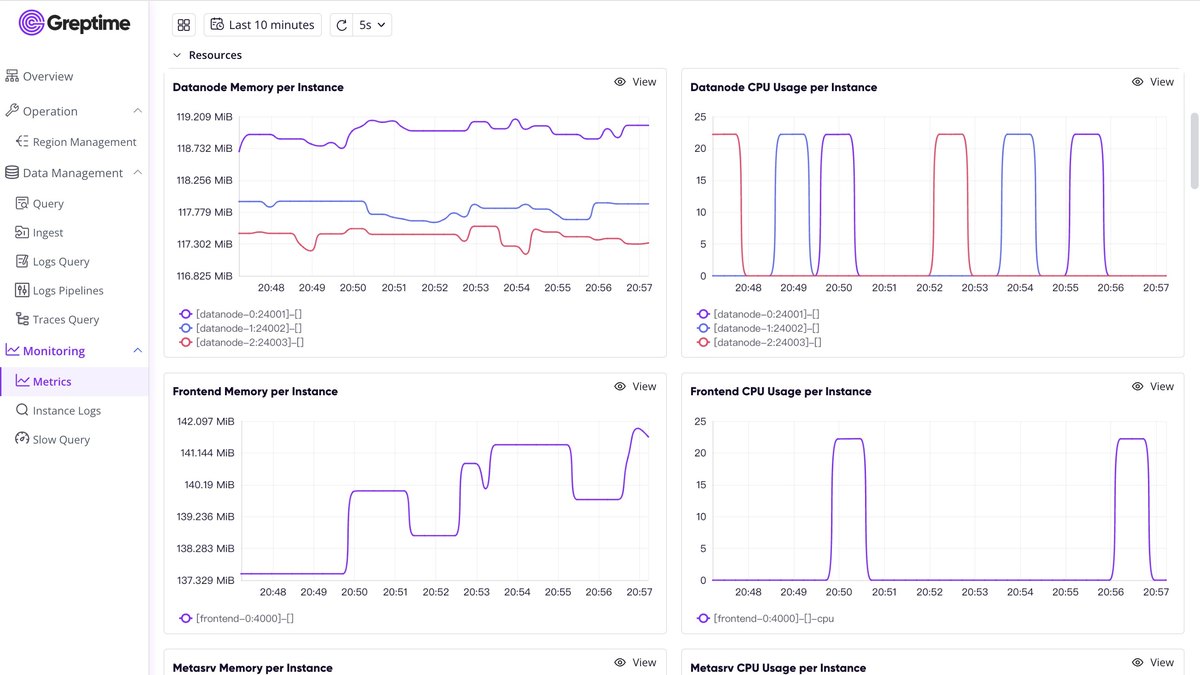
GreptimeDB
Answrs VerdictThe newest design on the list, built around object storage.
Price: The core is Apache-2.0 licensed open source; Enterprise is sold by requestWhat it is: An open-source observability database for metrics, logs and traces in one columnar engine with object storageCost: Says compression and object storage give up to 50x lower storage costQueries: SQL across observability data and PromQL for metricsIngest: OpenTelemetry, Prometheus Remote Write, Loki Push and Elasticsearch Bulk
GreptimeDB is an Apache-2.0 open-source database that stores metrics, logs and traces in one columnar engine on object storage. It says compression and object storage give up to 50x lower storage cost, and it queries with SQL and PromQL. It ingests OpenTelemetry, Prometheus Remote Write, Loki Push and Elasticsearch Bulk.
Go ifTeams that want metrics, logs and traces in one cheaper store
Skip ifYou want the largest community and ecosystem
How we ranked these
We ranked each database on how well it handles high-volume AI, sensor and model-telemetry data (ingest and query speed, built-in anomaly detection and SQL support), then on how clearly its price and license are published. We have not run these databases ourselves. Benchmark figures are each vendor’s own claims, and the star counts in the chart are what each project shows on its own site, counted at different times. Facts are taken from each maker's own published information; check the official site before you buy.
Questions people ask
What is the best time-series database for AI?
TimescaleDB: it is 100% PostgreSQL compatible, open source, compresses data by up to 95% and runs about 200 native SQL hyperfunctions.
Which time-series database has built-in anomaly detection?
InfluxDB 3 Core runs Python inside the database for anomaly detection, and VictoriaMetrics Enterprise includes a machine-learning Anomaly Detection component.
Which time-series databases are free?
Prometheus is 100% open source under the Apache 2 License, InfluxDB 3 Core is free under MIT and Apache 2, and TDengine is free for up to 5,000 tags.
Is ClickHouse a time-series database?
ClickHouse describes itself as a fast open-source OLAP database for real-time analytics, so it is broader than a pure time-series store.
GitHub stars each project shows on its own site (thousands) at a glance
VictoriaMetrics17 K stars
QuestDB17.3 K stars
TimescaleDB23.7 K stars
InfluxDB 3 Core31.6 K stars
ClickHouse50.5 K stars
Prometheus66.663 K stars
GitHub stars each project shows on its own site (thousands), as published by each maker. Picks without a published figure are left off.