Is AI a Bubble in 2027?
Nobody can say for certain, and anyone who does is guessing. A bubble is only clear after prices have fallen, and the honest answer today is that there is real evidence on both sides. The spending is enormous and the revenue is real, but so are the warnings that expectations have run ahead of what has been proven.
The case for "yes" rests on scale and leverage. Per CNBC on October 29, 2026, Alphabet guides to $195 billion to $205 billion of capital spending and Meta to $135 billion to $145 billion, and analysts expect total hyperscaler spending to top $1 trillion next year. The IMF named an AI-driven market correction as one of three rising risks on October 13, 2026. The case for "no" rests on money actually arriving: Nvidia reported $96.2 billion of revenue for the quarter ended July 26, 2026, and AWS revenue grew 39% in Amazon's latest quarter.
This page is general information, not investment advice. It does not predict prices and does not tell anyone to buy or sell anything.
What the spending looks like right now
The companies building AI capacity report their plans in earnings releases, so these are the most recent figures as of November 4, 2026. All are the companies' own guidance as reported by the named outlet, not forecasts made here.
- AlphabetHeld its capital spending guidance at $195 billion to $205 billion (CNBC, October 29, 2026)
- MetaExpects full-year capex of $135 billion to $145 billion, raising the bottom of the range from $130 billion (CNBC, October 29, 2026)
- MicrosoftReduced its capex forecast for the year to $170 billion from $175 billion; CFO Amy Hood said capital spending is accelerating in the first half of 2027 (CNBC, October 29, 2026)
- AmazonExpects 2026 capex of about $220 billion (Constellation Research, October 29, 2026)
Note that Microsoft's number went down, not up. CNBC's headline for that day was that Google and Microsoft put off raising their capex forecasts. That is one data point against a story of ever-faster escalation, though CNBC also reports analysts expect total hyperscaler spending to top $1 trillion next year.

The case that it is a bubble
The strongest official warning is from the International Monetary Fund. In a blog post dated October 13, 2026 by Athanasios Vamvakidis and Jason Wu, based on its Global Financial Stability Report, the IMF says "AI has become an important support for the global economy and financial markets." It then warns that "faltering AI investment and profitability could challenge optimistic expectations" and trigger a correction in asset prices linked to the AI industry.
The IMF also points to circular financing. Its review of 14 such transactions since 2023 found about $300 billion in equity investments and $650 billion in debt, in exchange for $1.4 trillion in future revenue commitments. In plain terms, money flows from big AI companies to smaller ones that then commit to spend it back on the big companies' products. If a key recipient is stressed, the IMF says, revenue forecasts and investment valuations fall, weakening the value of the debt in those deals. The IMF adds that hyperscalers are borrowing more and that investors have been leveraging to invest in AI stocks.
The Bank of England's Financial Policy Committee said in its update of October 8, 2025 (as reported by Fortune) that equity valuations appear stretched, that the earnings yield implied by the CAPE ratio was comparable to the peak of the dotcom bubble, and that the risk of a sharp market correction had increased. That is a year-old reading, so treat it as background rather than a current measurement.
Named people have said it too. OpenAI chief executive Sam Altman told reporters in August 2025, in remarks reported by CNBC on August 18, 2025: "Are we in a phase where investors as a whole are overexcited about AI? My opinion is yes." He added that "when bubbles happen, smart people get overexcited about a kernel of truth." Investor Michael Burry, in a post on X quoted by CryptoSlate on November 9, 2025, wrote: "Sometimes, we see bubbles. Sometimes, there is something to do about it. Sometimes, the only winning move is not to play." These are their opinions, not measurements.
The case that it is not
The strongest argument is revenue that has already shown up. In its press release of August 26, 2026, Nvidia reported revenue of $96.2 billion for the quarter ended July 26, 2026, up 106% from a year ago, with Data Center revenue of $89.0 billion, up 117%. It guided to $108.0 billion, plus or minus 2%, for the next quarter. Nvidia sells the chips, so its results show what customers are spending, not whether their own AI products will earn it back.
On the customer side, Constellation Research reported on October 29, 2026 that AWS revenue surged 39% in Amazon's third quarter, with operating income of $17.8 billion on revenue of $46 billion, a $184 billion annual revenue run rate. CNBC reported Microsoft's earnings beat estimates, driven by 48% sales growth in Azure. Growth in cloud sales is evidence that AI capacity is being paid for.
Nvidia chief executive Jensen Huang rejects the bubble label. BusinessDay reported on November 20, 2025, after Nvidia's earnings call, that he does not see an AI bubble but rather a tipping point, and that Nvidia sees something "very different" from the market talk. He sells the product, so weigh that accordingly, just as you would weigh any short seller's view. Some investors are also comfortable. Chris Ballard of Check Capital Management, quoted by CNBC on October 29, 2026, said: "We are pleased with what we see and what we heard, and trust management's approach to their AI spending."
What the dot-com comparison does and does not show
The comparison is everywhere, and it cuts both ways. According to Wikipedia's article on the dot-com bubble, the Nasdaq Composite peaked at 5,048.62 on March 10, 2000, and the index fell 78% from its peak by October 2002. The internet itself did not disappear; many of the businesses built on it were later worth far more, but a great many investors lost money along the way.
That is the useful lesson, and it is also why the debate is hard to settle. A technology can be real and transformative while prices for it are still too high. Altman said as much in his "kernel of truth" remark. The Bank of England's CAPE comparison, now more than a year old, is a statement about prices relative to earnings, not about whether the technology works.
One difference worth stating carefully: today's spending is being done largely by companies that report large operating income, such as AWS with $17.8 billion in a quarter. The IMF's worry is different from a simple pop. It is that borrowing, circular deals and "optimistic expectations" could amplify a correction if investment and profitability falter.
What would change the answer
No single number settles this, but these are the things the sources above point to watching, in plain terms:
- Spending guidance. Whether Alphabet, Meta, Microsoft and Amazon keep raising capital spending toward the $1 trillion level analysts expect, or hold or cut it, as Microsoft's forecast moved from $175 billion to $170 billion.
- Cloud growth. Whether AWS at 39% and Azure at 48% keep growing, which shows AI capacity being paid for.
- Chip demand. Whether Nvidia's results and its $108.0 billion outlook for the next quarter keep coming in.
- Leverage and circular deals. Whether the $300 billion of equity and $650 billion of debt the IMF counted unwinds smoothly, or whether a stressed recipient forces revenue forecasts down.
- Official language. Whether regulators repeat or soften warnings like the IMF's of October 13, 2026.
Questions people ask
Is AI a bubble?
No one can know until afterward. The evidence points both ways: spending guidance and IMF warnings on one side, and reported revenue such as Nvidia's $96.2 billion quarter and AWS growth of 39% on the other.
What has the IMF said about an AI bubble?
In an October 13, 2026 blog post based on its Global Financial Stability Report, the IMF named an AI-driven market correction as one of three rising risks. It said faltering AI investment and profitability could challenge optimistic expectations and trigger a correction in asset prices linked to the AI industry.
How much are the big tech companies spending on AI?
Per CNBC on October 29, 2026, Alphabet guides to $195 billion to $205 billion and Meta to $135 billion to $145 billion. Microsoft reduced its forecast for the year to $170 billion from $175 billion. Constellation Research reports Amazon expects 2026 capex of about $220 billion.
How does AI compare with the dot-com bubble?
Per Wikipedia, the Nasdaq Composite peaked at 5,048.62 on March 10, 2000, and fell 78% from its peak by October 2002. The Bank of England said in October 2025 that a CAPE-based measure was comparable to the dotcom peak. Whether AI follows the same path is not known.
Should I buy or sell AI stocks?
This page cannot tell you. It is general information, not investment advice, and it makes no price predictions. Speak with a licensed financial professional about your own situation.
Sources
- CNBC: AI buildout hits snag as Google and Microsoft put off raising capex forecasts (October 29, 2026) · Alphabet, Meta and Microsoft capex guidance, $1 trillion estimate, Azure growth
- Constellation Research: AWS Q3 revenue growth surges 39% (October 29, 2026) · AWS revenue, operating income, Amazon 2026 capex expectation
- NVIDIA: Financial results for second quarter fiscal 2027 (August 26, 2026) · Revenue, Data Center revenue and next-quarter outlook
- IMF Blog: Global Financial Markets Face Rising Risks From AI, Bond Yields, and Cyberattacks (October 13, 2026) · AI correction risk and circular financing figures
- Fortune: Bank of England on AI valuations (October 8, 2025) · Financial Policy Committee wording on stretched valuations and the dotcom peak
- CNBC: Sam Altman warns AI market is in a bubble (August 18, 2025) · Altman's remarks on investors being overexcited
- BusinessDay: Jensen Huang on why he does not see an AI bubble (November 20, 2025) · Huang's rejection of the bubble label
- CryptoSlate: Michael Burry's Big Short and the AI bubble (November 9, 2025) · Burry's post on bubbles
- Wikipedia: Dot-com bubble · Nasdaq Composite peak and decline
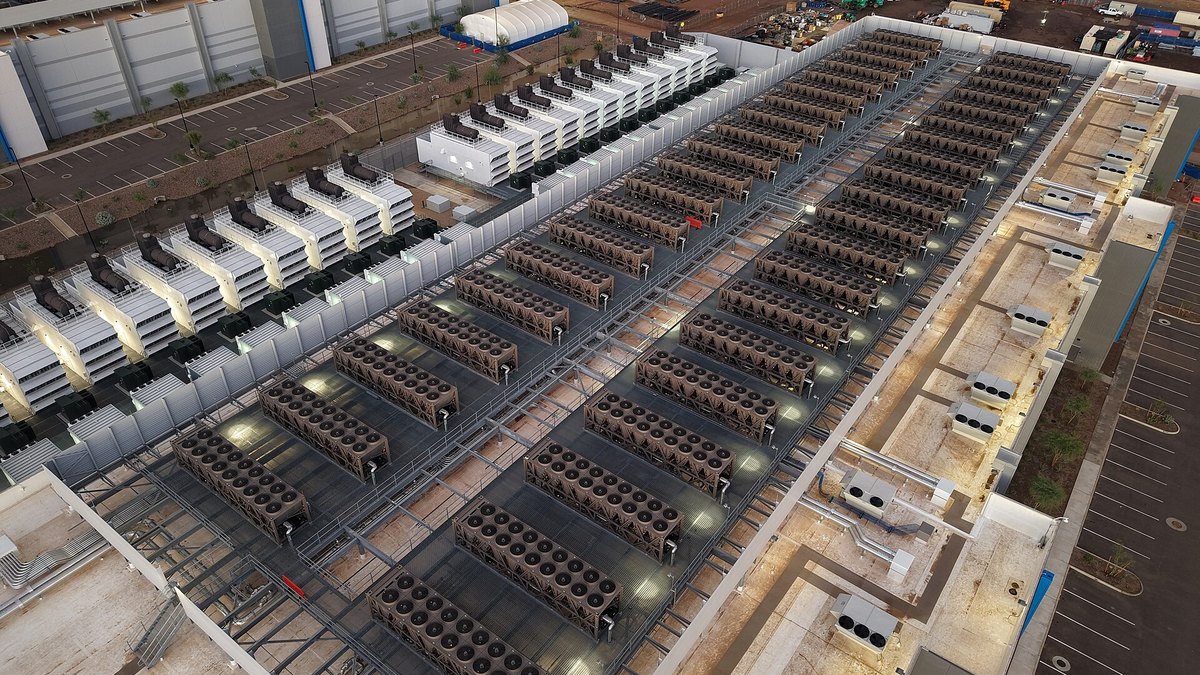
Whether AI is a bubble will be clear only in hindsight. The sourced facts above point both ways, and they were current as of November 4, 2026. The photos on this page are illustrative and do not show any specific company's AI capacity. This page is general information, not investment advice.
Top photo: Rsparks3 / CC0 via Wikimedia Commons