How to Master the Art of Selling by Tom Hopkins: Summary and Key Lessons in 2027
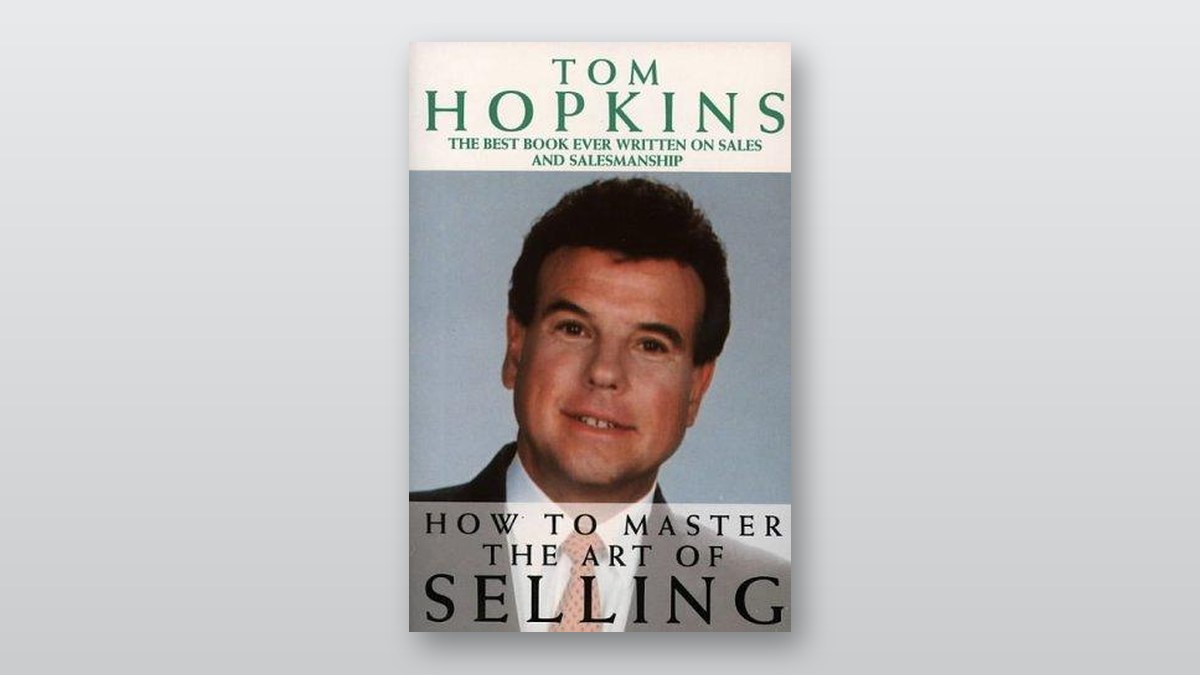
How to Master the Art of Selling by Tom Hopkins argues that selling is a learnable craft, not a talent you are born with. Master the seven basics of a sale (prospecting, original contact, qualification, presentation, objection handling, closing and referrals), practice them until they are natural, and build the mindset of a Champion. Hopkins treats yourself as your greatest asset and urges you to invest in your own skills (ZenBusiness excerpt).
It was first published in 1980 by Champion Press, per Open Library, and later editions came from Warner Books and others. This is a short summary in our own words, not a chapter-by-chapter retelling, and it states no figure that its sources do not state.
Who is Tom Hopkins?
Tom Hopkins International says Hopkins has been building sales champions since 1976 and has personally trained over five million sales professionals at seminars, conventions and events. Training comes as live seminars, online courses, books, audiobooks, videos and audio.
The book's opening chapter, reproduced by ZenBusiness, says he failed in his first six months in sales, then earned more than one million dollars in three years after learning effective techniques. That is his own account, so read it as the author's story rather than an audited record.
The core idea: selling is a learned skill
Hopkins rejects the myth of the natural-born salesperson. According to the excerpt, he says both overconfidence and self-doubt keep people below their potential, and that your results depend mainly on your own effort and investment in your skills.
He also lists seven advantages of selling, including no income ceiling, daily challenges, high potential returns on a low startup cost, and personal growth. The pitch is that the profession rewards anyone willing to study it.
The seven basics of a sale
The excerpt lays out the sequence the rest of the book builds on:
- Prospecting. Find potential customers. Sources the Shortform overview describes include former customers, accounts left behind by departed salespeople, local news and referrals.
- Original contact. Make a memorable first impression and remember details for later meetings.
- Qualification. Spend your time on people who can make a yes decision.
- Presentation. Show how the product fits the prospect's needs, seen from the customer's side.
- Objection handling. Learn the concepts and the specific wording for common objections.
- Closing. A skill with both artistic and scientific elements that can be learned.
- Referrals. Ask satisfied clients to introduce you to new prospects.
Questions and tie-downs
Per Shortform, Hopkins uses three kinds of question. Open-ended questions draw out detailed answers and motivations. Closed-ended questions steer the conversation and reinforce the buyer's confidence. Tie-down questions follow key statements to win small agreements that build toward the close.
Your words are your primary tool, the excerpt says, so learn effective things to say and deliver them in a warm, confident and respectful manner.
Handling objections
The guidance summarized by Shortform treats objections as chances to engage, not dead ends:
- Separate the minor from the real. A passing hesitation is not the same as a true deal-breaker.
- Listen and ask. Use active listening and follow-up questions before you answer.
- Get ahead of them. Anticipate common objections and address them early in the presentation.
Closing the sale
Closing balances logic and emotion: buyers often decide emotionally and then justify the choice logically. The summaries say Hopkins offers a range of closing techniques, and that timing matters so the close does not feel pushy. Once you have confirmed the client's needs, close with confidence.
The Champion mindset and the learning system
Hopkins calls top performers Champions. Shortform describes them as confident, proud of their craft, good at putting clients at ease, driven by personal goals, and willing to treat rejection as a normal part of the process. The excerpt previews twelve characteristics of a Champion.
He also gives a five-step learning system: impact, repetition, utilization, internalization and reinforcement. The idea is to motivate yourself, rehearse aloud and in writing, use it in real selling until it becomes natural, then review the fundamentals at least once a year, as athletes keep practicing basics.
What reviewers say
getAbstract gives the book an editorial rating of 6 out of 10. Its reviewer finds many practical strategies, taught through sample sales conversations, and calls it logical and sometimes funny, but says it could be more concise and less repetitive. It recommends the book to sales professionals at all levels.
Who should read it
- New salespeople. The seven basics give a clear order to learn and practice.
- Experienced reps. Use the objection and closing material as a refresher on fundamentals.
- Sales managers. The learning system is a ready framework for coaching and yearly review.
- RevOps and enablement leads. The stages map neatly to a pipeline and training plan.
A fair caution: the book first appeared in 1980 and its tone is motivational, so use the parts that fit your market and test them against your own results.
Questions people ask
Who wrote How to Master the Art of Selling?
Tom Hopkins wrote it. It was first published in 1980 by Champion Press, with later editions from Warner Books and other publishers.
What are the seven basics of a sale in the book?
Prospecting, original contact, qualification, presentation, objection handling, closing and referrals.
How does Hopkins handle objections?
He treats them as chances to engage: separate minor hesitations from true deal-breakers, listen actively, ask follow-up questions and address common objections early.
What is a tie-down question?
A question placed after a key statement to win a small agreement that builds toward the close.
Is the book worth reading?
getAbstract rates it 6 out of 10, praising its practical sample conversations while noting it is repetitive in places.
Sources
- Open Library: How to Master the Art of Selling · Publication history and the cover
- Tom Hopkins International · Author's company, training reach and formats
- ZenBusiness: book excerpt · The opening chapter: seven basics, learning system, myth of the natural
- Shortform: overview · Questioning, objections, closing, Champion mindset
- getAbstract: summary and rating · Editorial rating and critique
This summary is an independent explainer written in our own words and does not reproduce the book. Facts were read from the linked pages on October 21, 2026; read the book for the full detail.
Top photo: Book cover via Open Library