Lean Analytics by Croll and Yoskovitz: Summary and Key Lessons in 2027
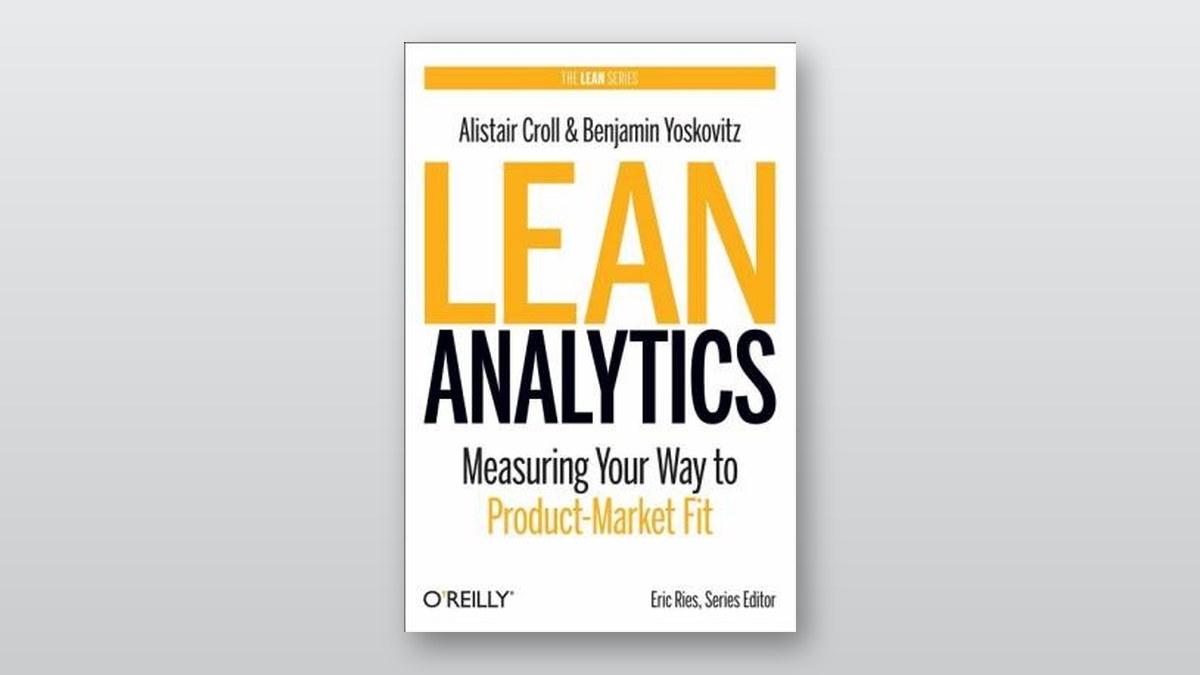
Lean Analytics by Alistair Croll and Ben Yoskovitz argues that a startup should not track everything. Instead, know your business model and your stage, then focus on the One Metric That Matters right now, using data to decide what to build and when you are ready to move on. The book's own site describes this as using data to build a better startup faster (leananalyticsbook.com).
It is part of The Lean Series edited by Eric Ries and was published by O'Reilly Media in 2013, per Open Library. This is a short summary in our own words, not a chapter-by-chapter retelling, and it states no benchmark that its sources do not state.
Who wrote Lean Analytics?
According to the book's site, Alistair Croll is an entrepreneur, author and public speaker who has worked on web performance, big data, cloud computing and startups. Ben Yoskovitz has worked with startups for 15 years, building, closing and funding companies and mentoring founders, and is a Founding Partner at Highline Beta.
The site also offers a free ebook of 13 case studies, including Airbnb, SEOmoz, Office Drop, Swiffer and EMI.
The core idea: business model plus stage
The book's central claim is that the right numbers depend on two things: what kind of business you run and where it is in its life. Teresa Torres's review notes that the book also explains what makes a good metric, defines segments and cohorts, and surveys frameworks such as Pirate Metrics and Engines of Growth.
That framing is the antidote to vanity numbers. A number only matters if it answers the question your company faces at this point.
The One Metric That Matters
The One Metric That Matters (OMTM) is the single number a team focuses on at a given moment. In an interview with Yoskovitz, the stated benefits are:
- Focus. One number, or a short list, stops the team getting lost in data.
- Alignment. When everyone works to move the same number, the organization pulls in one direction.
- Experimentation. A single target encourages a test-driven culture.
- Diagnosis. If the number drops, you look at secondary metrics to find out why. SEOmoz, for example, watched Net Adds, the daily net gain in paying subscribers.
The metric is not permanent. It changes as the business moves through stages and models, and a team may focus on one for only a short time.
The five stages
The book describes five stages: Empathy, Stickiness, Virality, Revenue and Scale. Torres says each chapter ends with questions to help you judge whether you are ready to move on, and calls that the most useful part. The Holistics summary describes each stage this way:
- Empathy. Find a painful, poorly met need in a reachable market. The metrics are mostly qualitative, such as problem interviews and watching customer behavior.
- Stickiness. Confirm people keep using the product. Retention is the key metric, and acquisition should wait until it is solid.
- Virality. Measure how users bring in others. The viral coefficient multiplies the invitation rate by the acceptance rate; above 1 means each user brings in at least one more.
- Revenue. Prove the economics work, with measures such as variable-cost breakeven and time to customer breakeven.
- Scale. Grow on all fronts while competing.
Six business models
Torres reports that the authors examine six models in depth, with key metrics and some benchmarks for each: eCommerce, Software as a Service, free mobile apps, media sites, user-generated content and two-sided marketplaces.
She also notes that real businesses often blend models, and that applying several templates can reveal useful insights. If your company straddles two, read both chapters rather than forcing a fit.
Benchmarks and drawing lines in the sand
The final chapters cover setting targets, which the review calls drawing lines in the sand, so a team knows what success looks like for its model. Treat every benchmark as a starting line to test against your own data, not a law.
Examples that sources cite include a SaaS churn figure of about 2% per month, which Yoskovitz says is needed to scale, and a SaaS health ratio below 0.75 that signals a problem, with above 1 the aim. For e-commerce, the first 90 days help show whether you are in loyalty or acquisition mode. Churn matters most once you focus on scale, not earlier.
Who should read it
- Founders. You get a way to pick what to measure instead of drowning in dashboards.
- Product managers. The stage questions help decide when to stop tuning and move on.
- Growth and RevOps leaders. Retention, virality, churn and payback are the same levers that drive pipeline and revenue planning.
- Investors and advisors. The stages give a shared vocabulary for asking where a company really is.
A fair caution: the stages and benchmarks are generalizations, so use the parts that fit your company and verify any number against your own data.
Questions people ask
Who wrote Lean Analytics?
Alistair Croll and Ben Yoskovitz wrote it. It was published by O'Reilly Media in 2013 as part of The Lean Series.
What is the One Metric That Matters?
The single number a team focuses on right now. It gives focus and alignment, and it changes as the business moves through stages and models.
What are the five stages in Lean Analytics?
Empathy, Stickiness, Virality, Revenue and Scale. Each is a gate: move on only when you can answer the stage's questions.
What business models does the book cover?
Six: eCommerce, Software as a Service, free mobile apps, media sites, user-generated content and two-sided marketplaces.
Is a 2% monthly churn rate the standard?
One interview cites about 2% per month as a SaaS benchmark needed to scale, but treat it as a reference point and compare against your own cohorts.
Sources
- Lean Analytics: the book site · Authors, core idea and the free case-study ebook
- Open Library: Lean Analytics · The O'Reilly edition, 2013, and the cover
- Product Talk: Read Lean Analytics · Teresa Torres's review: stages, six business models, targets
- Holistics: Lean Analytics Part 2 · The five stages and their metrics
- Ben Yoskovitz interview on the One Metric That Matters · OMTM benefits, SEOmoz Net Adds, SaaS churn
This summary is an independent explainer written in our own words and does not reproduce the book. Facts were read from the linked pages on October 21, 2026; read the book for the full detail.
Top photo: Book cover via Open Library