Measure What Matters Summary: Key Ideas from John Doerr's OKR Book
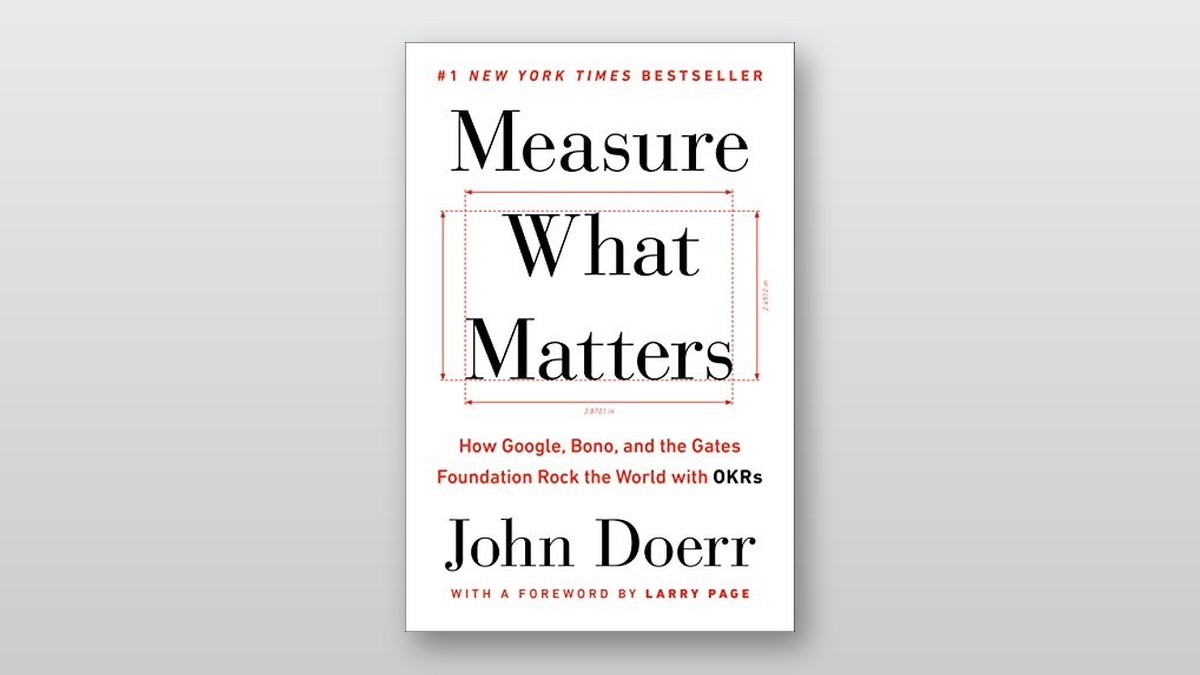
Measure What Matters by John Doerr argues that organizations do better when they pair a clear Objective (what you want to achieve) with a few measurable Key Results (how you will know you got there). That pairing is called an OKR. Doerr learned the system from Andy Grove at Intel, brought it to Google, and uses the book to show how it works through first-person stories and practical rules. In short: pick the few goals that matter, make progress measurable, share the goals openly, and check in often.
The book was published on April 24, 2018 by Portfolio, runs 320 pages, and has a foreword by Larry Page, per Penguin Random House. This is a summary in our own words, not a chapter-by-chapter retelling.
The author and the book
John Doerr is an engineer, a venture capitalist and the chairman of Kleiner Perkins, according to the book's page on whatmatters.com. The same page says he was an original investor and board member at Google and Amazon, and that he wrote Measure What Matters in 2018 as a handbook for setting and achieving audacious goals.
The full title is Measure What Matters: How Google, Bono, and the Gates Foundation Rock the World with OKRs, per Open Library. The title tells you the shape: a short method wrapped in many stories from well-known organizations.
What OKRs are: the core idea
OKR stands for Objectives and Key Results. What Matters defines it as a collaborative goal-setting method for setting challenging, ambitious goals with measurable results.
- Objective. What is to be achieved, no more and no less. Objectives are meant to be significant, concrete, action oriented and, ideally, inspirational.
- Key Results. The benchmarks that show how you get to the Objective. Good ones are specific, time-bound, aggressive yet realistic, and measurable and verifiable, so you either met them or you did not.
An OKR is typically written as one Objective with 3-5 supporting Key Results, and Key Results are usually graded at the end of a quarter. The author's site also says OKRs differ from older management by objectives in two ways: they run quarterly rather than annually, and they are kept separate from compensation.
Doerr's own first Google example shows the style. For the 1999 presentation that introduced OKRs to Google's founders, his Objective was to build a planning model for the company, with three Key Results: finish his presentation on time, create a sample set of quarterly Google OKRs, and gain management agreement for a three-month OKR trial.
Key ideas from the book
Doerr organized the book around the benefits of OKRs, which he calls superpowers. On the author's site he lists five, summed up as FACTS:
- Focus. OKRs say what matters most right now, and give you permission to say no to what does not.
- Alignment. Because OKRs are transparent across the organization, they help break down silos.
- Commitment. Everyone shares a view of what matters, then supports a shared set of priorities.
- Tracking. Progress is not ambiguous. Either the Key Result was met or it was not.
- Stretching. OKRs encourage reaching for bold goals.
Two more ideas recur. First, OKRs are not business as usual. Per What Matters, routine work such as payroll does not need an OKR, and Doerr's line is that if we try to focus on everything, we focus on nothing. Second, Google split OKRs into two kinds.
On committed and aspirational OKRs: at Intel all OKRs were aspirational, but Google separated them. A committed OKR is expected to be fully delivered, with a score of 100 percent and no partial credit. An aspirational OKR describes how you would like the world to look, even without a clear path or resources yet.
The main stories and case studies
The case studies are the book's signature, and the subtitle promises Google, Bono and the Gates Foundation. We could read the author's own telling of two of them and a reviewer's comment on the rest.
Intel and Operation Crush. In Doerr's account, Intel's 8086 chip was losing to Motorola's 68000 and Zilog's Z8000. In late November 1979 a district sales manager, Don Buckout, sent an eight-page telex to headquarters that reached Andy Grove, then Intel's president and COO. Intel set the OKR of establishing the 8086 as the highest performance 16-bit microprocessor family. Crush teams went out to field offices by January 1980, and the target was two thousand design wins by year end. Intel routed Motorola, and by 1986 the 8086 had recaptured 85 percent of the 16-bit market. Doerr's lesson is that culture counts: Buckout and his boss had to feel safe speaking up.
Google. Doerr introduced OKRs to Google's founders in 1999, around a ping-pong table that doubled as a boardroom table, per What Matters. Google then set its strategy with the framework. Larry Page wrote the book's foreword, and the book's page quotes him saying he wished he had had the book when Google was founded.
Bono and the Gates Foundation. The subtitle names them, and reviewer Phil McKinney calls the anecdotes from Google, Bono and the Gates Foundation fascinating real-world examples. We did not read those chapters, so we do not summarize their details here.
Smaller OKR examples. The author's site also shows OKRs from organizations such as the City of Syracuse, New York, which aimed to achieve fiscal sustainability by cutting its general fund budget variance from 11% to 5%, and Allbirds, whose Objective was the lowest carbon footprint in its industry.
CFRs: conversations, feedback and recognition
The book's companion idea is CFRs. Per What Matters, CFRs replace reliance on annual reviews with continuous performance management, and a healthy OKR practice cannot exist without them.
- Conversations. Regular talks about the work and OKR progress, in team meetings and one-on-ones. Suggested prompts include what changed, what is blocking progress, and what help is needed.
- Feedback. Input meant to improve or change performance or behaviors.
- Recognition. Showing appreciation for progress, big and small.
The guidance is that these talks should be nonjudgmental without avoiding criticism. If an OKR is behind, say so directly, but focus on how to make progress rather than on fault-finding.
How to apply it
- Start small. Write one Objective with 3-5 Key Results for the quarter, and keep every Key Result measurable.
- Leave routine work out. Reserve OKRs for outcomes you want to change, not for keeping the lights on.
- Decide committed or aspirational. Tell the team which finish line it is, because the two are graded differently.
- Make them visible. Share OKRs across the organization, since transparency is what drives alignment.
- Check in often. Use team meetings and one-on-ones to review progress and ask what help is needed.
- Keep pay separate. The author's site says OKRs are divorced from compensation.
For hands-on practice, Doerr's team offers a free official course, OKRs Explained, with 4 chapters and 31 video lessons running 2h 13min.
Criticisms and limits
The most repeated complaint is that the book underplays failure. Phil McKinney's review says Doerr glossed over the challenges of implementing OKRs, with little emphasis on pitfalls, and that the book could have been more critical about OKRs being used rigidly. He rates it 4 out of 5 stars and still calls it worth reading as a first step.
There is also a built-in bias to keep in mind: the stories come from the author and from companies and leaders he knows, so they show OKRs at their best. Treat them as illustrations, not proof, and expect to adjust the method to your own team. McKinney's own reminder is that tools like OKRs are not silver bullets.
Who should read it
- Leaders and managers. Anyone who needs a shared way to set and track goals across a team.
- Founders and nonprofit leaders. The author's examples include startups, cities and nonprofits.
- Readers short on time. The definition, the FACTS benefits and CFRs above carry most of the practical value.
Questions people ask
Who wrote Measure What Matters and when was it published?
John Doerr wrote it, with a foreword by Larry Page. Portfolio published it on April 24, 2018, and it runs 320 pages.
What is an OKR?
OKR stands for Objectives and Key Results. An Objective states what you want to achieve and typically has 3-5 measurable Key Results that show whether you got there.
Who invented OKRs?
Per the author's site, Andy Grove created the method at Intel and taught it to John Doerr, who named it OKRs and introduced it to Google's founders in 1999.
What are CFRs?
Conversations, Feedback and Recognition: regular check-ins that support OKRs and replace reliance on annual reviews.
What is the difference between committed and aspirational OKRs?
A committed OKR is expected to be fully delivered, with a 100 percent score and no partial credit. An aspirational OKR is a stretch goal for how you would like things to look.
What is Operation Crush?
Intel's 1980 campaign to establish the 8086 as the top 16-bit microprocessor against Motorola's 68000, which Doerr uses as a case study of OKRs in a crisis.
Is Measure What Matters worth reading?
Yes if you want a clear, story-driven introduction to OKRs. Reviewers note it says little about how OKRs fail, so pair it with practical templates and your own testing.
Sources
- Penguin Random House: Measure What Matters · Publisher, publication date and page count
- Open Library: Measure What Matters · Full title, subtitle and edition record
- What Matters: The Book · Author background and the book's description
- What Matters: What is an OKR? · OKR definition, origin and Google 1999 story
- What Matters: Five Benefits of OKRs · The FACTS superpowers
- What Matters: Operation Crush · Intel case study
- What Matters: Committed and Aspirational OKRs · Google's two OKR types
- What Matters: CFRs · Conversations, feedback and recognition
- What Matters: KPIs and OKRs · Business as usual versus OKRs
- What Matters: OKRs Explained course · Official training course
- Phil McKinney: book review · Independent review and criticisms
This summary is an independent explainer written in our own words and does not reproduce the book. Facts were read from the linked pages on October 19, 2026; we did not read the full text of the book, and the Bono and Gates Foundation chapters are not summarized. Read the book for the full detail.
Top photo: Book cover via Open Library