Positioning: The Battle for Your Mind by Al Ries and Jack Trout: Summary, Key Lessons and RevOps Takeaways in 2027
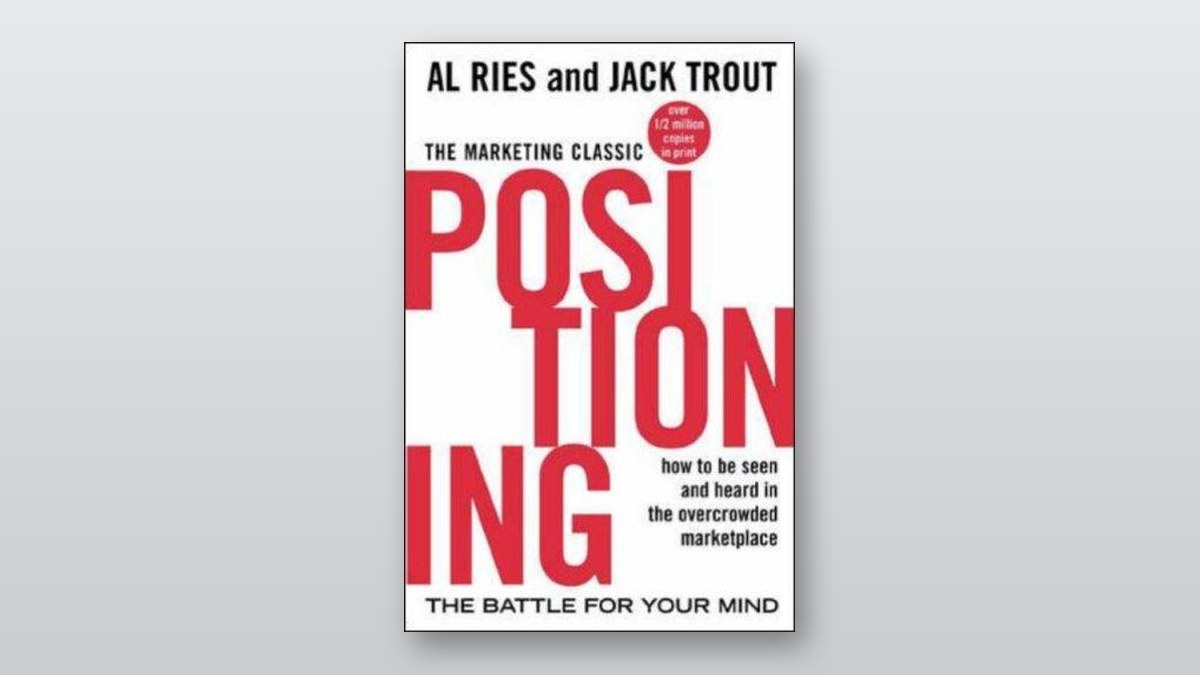
Positioning: The Battle for Your Mind is a 1981 marketing book by Al Ries and Jack Trout. Its main argument is that marketing happens in the customer's head, not in your product: people are flooded with messages, so a company wins by claiming one clear, easy-to-remember spot in the buyer's mind instead of trying to be everything.
The book grew out of articles the pair wrote earlier, including a 1972 Advertising Age series, according to Wikipedia's Al Ries entry. O'Dwyer's reported that it sold more than 2 million copies. For a revenue team, the practical lesson is simple: decide what you want to be known for, say it the same way in marketing, sales and customer success, and stop sending mixed signals.
This is an independent summary in our own words. It does not reproduce the book, and each figure below is attributed to the page it came from.
Where the book came from
Ries and Trout were advertising executives. According to Wikipedia), they published articles on positioning in Industrial Marketing in 1969 and in Advertising Age in 1972, and the idea had become a popular word with marketers by the early 1970s. The 1969 article, written by Trout, argued that consumers are overwhelmed by unwanted advertising and tend to discard information that does not fit an open place in their minds.
Al Ries founded the New York agency Ries Cappiello Colwell in 1961, and Jack Trout joined in 1967, per Wikipedia's Al Ries entry. Trout later worked with Ries for over twenty-six years, according to Wikipedia's Jack Trout entry.
The core idea in plain English
The authors describe positioning as an organized system for finding a window in the mind. In practice that means three moves, summarized here in our own words.
- Start from the prospect, not the product. What matters is the perception already in the buyer's head, so you work with it instead of trying to replace it.
- Choose one idea. A crowded market rewards a simple message. A company that claims one thing is easier to remember than one that claims many.
- Position against what is already there. Buyers sort new information next to what they already know, so your message has to make sense beside the competitors they already have in mind.
The book's wider claim is that communication is the real bottleneck. A good product can still lose if nobody can say what it is for in one sentence.
Key lessons from the book
- Simplify the message. Overloaded buyers filter out anything that does not fit an obvious slot.
- Be first in a category, or define a new one. Being remembered for something specific beats being slightly better at everything.
- Know your competitors' positions. Your position is relative, so a rival's message can move yours.
- Stay consistent over time. A position is built by repeating the same idea, not by changing the campaign each season.
- Be willing to give things up. Choosing a position means not claiming other things, which is the hard part for most teams.
These are our paraphrases of the book's themes. Check the book itself for its own wording and examples.
RevOps takeaways: an original example
Imagine a mid-size SaaS company that sells a workflow tool. Marketing calls it an all-in-one platform, sales leads with price, and customer success talks about integrations. A prospect hears three different companies. The positioning lesson is to pick the single reason buyers should choose you over the alternatives they already know, then test it.
- Write one positioning sentence. Who it is for, what category it sits in and the one reason to pick it. Every team uses the same sentence.
- Audit the funnel for mixed messages. Compare website copy, outbound emails, demo decks and renewal pages. Any line that does not support the sentence is a candidate to cut.
- Ask customers, do not guess. In win and loss interviews, ask how buyers described you to colleagues. Compare their words with yours.
- Track what the team can measure. Watch whether win rate against named competitors, sales-cycle length and discount requests move after the change. The book does not provide benchmarks for these, so set your own baseline.
- Hold the line. Treat a new product line or segment as a reason to revisit the sentence deliberately, not to drift.
Criticisms and limits
The book was written for advertising and consumer brands of its era, and some of its thinking assumes mass media and a short list of competitors. B2B buyers today research on their own and compare many vendors, so a one-line position is a starting point rather than the whole strategy.
Positioning also does not fix a weak product. And no source we read publishes a measured result showing that applying the book raises revenue, so treat the lessons as a framework to test, not a guarantee. Scholars also dispute how original the concept was, as noted above.
Is it worth reading now?
The idea is older than most current go-to-market tools, but the question it asks is still useful: what is the one thing a buyer should remember about us? The edition listed on Open Library is a McGraw-Hill release dated December 13, 2000, with 213 pages. Its cover calls it a marketing classic. Page counts and printing details vary by edition, so check yours.
Jack Trout died in 2017 at age 82 and Al Ries in 2022 at age 95, per the Wikipedia entries above. Trout's obituary in O'Dwyer's says more than 400,000 copies of the book sold in China, and lists clients including IBM, Procter & Gamble and Apple.
Questions people ask
What is Positioning: The Battle for Your Mind about?
It argues that marketing succeeds when you claim one clear place in the customer's mind, since buyers are overloaded with messages. See the Wikipedia article on positioning).
When was Positioning published and who wrote it?
It was published in 1981 and written by Al Ries and Jack Trout, per Wikipedia).
How many copies has it sold?
O'Dwyer's reported more than 2 million copies in 2017. We found no newer published total and no published figure for the number of translations.
Did Ries and Trout invent positioning?
They are credited with popularizing it, but marketing scholars dispute that they devised it. Stephen A. Fox said they resurrected the concept, per Wikipedia).
How can a RevOps team use the book?
Write one shared positioning sentence, audit marketing, sales and customer success material against it, and track win rate and sales-cycle length against your own baseline. The book publishes no benchmarks for these.
Sources
- Wikipedia: Positioning (marketing) · The 1969 and 1972 articles, the 1981 book and the definition
- Wikipedia: Al Ries · Ries's agency, dates and books
- Wikipedia: Jack Trout · Trout's dates, partnership and other books
- O'Dwyer's · Trout obituary with sales figures and clients
- Open Library edition record · Edition date, page count and cover
This summary is an independent explainer written in our own words and does not reproduce the book. Facts were read from the linked pages on October 22, 2026; check the book and the sources above for primary detail.
Top photo: Book cover via Open Library