Start with No by Jim Camp: Summary, Key Lessons, and RevOps Takeaways
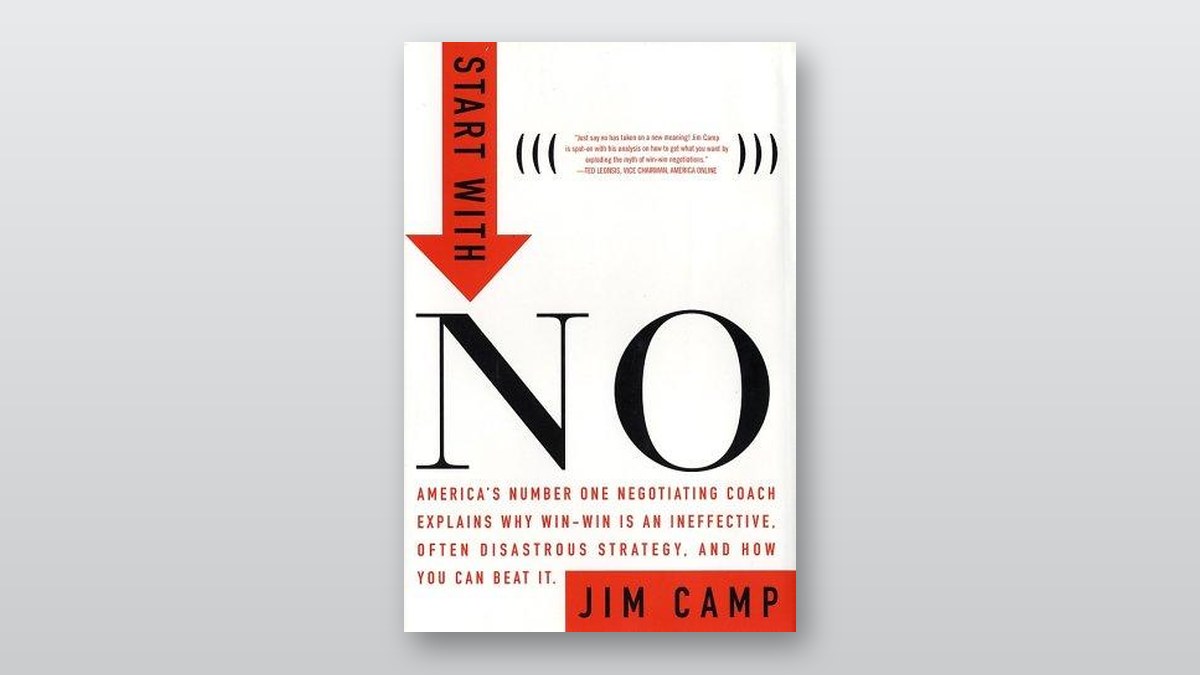
Start with No is Jim Camp's negotiation book, published by Crown Business in 2002 (Publishers Weekly, Open Library). Its core claim is that negotiators lose ground when they chase agreement, so you should lower your own neediness, treat a "no" as the start of a conversation rather than its end, and invite the other side to say it.
Camp is openly hostile to the win-win mindset. Per the publisher's description, he argues that win-win framing often pushes people into early, unnecessary concessions, and he teaches readers to manage their emotions and concentrate on behaviors they control.
This summary is in our own words and draws on the publisher, a trade review and two reader write-ups. It ends with ways sales and RevOps leaders could apply the ideas; those are this page's own suggestions, not claims from the book.
Who Jim Camp is and what the book is
The book's full title is *Start with No: The Negotiating Tools That the Pros Don't Want You to Know*. Publishers Weekly lists it as a Crown Business hardcover of 288 pages, and describes Camp as a negotiation coach whose clients included Motorola, Merrill Lynch and IBM.
The publisher's page describes him as an internationally sought-after negotiation coach and trainer who founded The Jim Camp Group and later wrote a revised book titled *NO*. A 2011 review calls *Start with No* a classic that stayed in print, a Wall Street Journal bestseller and a book translated into 12 languages. Those are the reviewer's claims, so treat them as secondhand.
Why Camp rejects win-win
Camp's opening move is to attack the idea that a good negotiation is one where both sides feel they won. The Shortform preview summarizes his view as win-win often being a win-lose in disguise, with one party giving up too much. The Blogcritics review says he sees collaborative approaches, including "getting to yes", as resting on a flawed goal of pleasing the other side.
Publishers Weekly captures the practical corollary: walk away if an offer does not meet your expectations. In Camp's framing, the aim is a decision that is good for you and that the other side can accept, not a mutually warm feeling.
Neediness and emotional control
The first thing Camp wants you to fix is neediness. According to the Shortform preview, the needier a negotiator feels, the more they concede. The Blogcritics review lists the states that distort judgment: neediness, excitement, hope, a desire to be liked and desperation. Decisions should rest on solid information instead.
The publisher frames this as resource management: top negotiators handle four limited resources, namely time, energy, money and emotion. Camp also argues that people tend to decide on emotion and justify with logic afterward, so a calm table helps both parties think clearly.
Why a "no" is where the conversation starts
The title idea is simple. Camp treats "no" as a stepping stone that prompts more questions, not a rejection that ends talks, per the Shortform preview. The Blogcritics reviewer adds that, in Camp's view, a "yes" or a "maybe" is the worse outcome because it stops real dialogue.
Inviting the other side to decline gives them a sense of veto power. That reduces pressure, so they can weigh your proposal more objectively, and it keeps you in control of the process. The same review describes this as putting people at ease and building trust.
Mission, purpose and behavior-based goals
Camp asks you to define the purpose of the negotiation, and to frame it in terms of how the other party benefits. Blogcritics describes this as defining your mission within the adversary's world so they see clear benefits when they agree. The Shortform preview adds that goals should be about your own behavior, such as inviting a no, rather than about the result, and that a goal is the decision you need your counterpart to make.
He also asks you to clear your mind of expectations and assumptions and to verify facts before relying on them. The Shortform preview says to take a break if expectations start to affect your emotions.
Questions, agenda and decision makers
Questions are Camp's main information tool. The Shortform preview says they open doorways into the other side's world and reveal how they decide. It lists open questions beginning with who, what, when, where, why, how and which, asked one at a time with full listening. His "triple check" means sticking with a question until you have received the answer at least three times.
The same source says his agenda covers problems, goals and future course, and that raising problems openly builds credibility. It also advises finding who holds real decision-making power and approaching the highest authority first, treating lower-level blockers respectfully since they can introduce you to decision makers.
The Blogcritics review also describes a tactic Camp calls the Lt. Columbo Effect, where you appear slightly unthreatening so the other side relaxes and shares more. Use that one with care; it is a style choice, and not every team will be comfortable with it.
RevOps takeaways (this page's own application)
- Audit neediness in the forecast. Look for late-quarter deals where discounts rise as the close date nears. That pattern is a reasonable proxy for the neediness Camp warns about, and a discount-approval step can slow it.
- Make a no safe to give. Add a qualification question that explicitly lets a buyer say the deal is not a fit. Track how many deals get a clear no early versus a vague maybe, and review the maybes.
- Coach behavior goals, not outcomes. Score calls on things reps control, such as questions asked, problems surfaced and decision makers identified, alongside win rate.
- Map the decision in the CRM. Require a named economic decision maker and a note on blockers before a deal moves to a late stage.
- Use the agenda idea in discovery. Open calls by naming problems, goals and next steps, then record the buyer's answers in structured fields so handoffs to customer success keep them.
Criticisms and limits
The approach is not universally loved. The Shortform preview notes that Chris Voss also builds on the power of a no but wants the other side to be led to say it through carefully framed questions. It also notes that some experts find verb-led questions useful for detecting deception, which cuts against Camp's advice, and that research suggests positive expectations about your own ability can help, unlike his blanket advice to drop expectations.
The adversarial tone also sits awkwardly with recurring-revenue work, where renewals and expansion depend on long relationships. A sensible reading is to borrow the discipline, meaning calm, questions and clarity about the decision, without treating every customer as an opponent.
Questions people ask
Who wrote Start with No and when was it published?
Jim Camp wrote it, and Crown Business published it in 2002, according to Open Library and Publishers Weekly.
What is the main idea of Start with No?
Do not chase agreement. Lower your neediness, invite the other side to say no, and focus on information and on your own behavior rather than on pleasing the other party.
Does Camp think win-win negotiation works?
No. He argues it can hide a loss for one side and push people into early concessions, as described by the publisher and the Shortform preview.
Is Start with No useful for sales and RevOps teams?
Several ideas transfer well, such as making it safe for a buyer to decline, identifying the real decision maker and judging reps on behaviors. The adversarial framing fits less well with long customer relationships. These are our own judgments, not the book's.
Sources
- Publishers Weekly review · Publisher, page count and the review of the book
- Penguin Random House · Publisher description and author background
- Open Library edition record · Edition details, publisher and year
- Blogcritics review · 2011 review summarizing Camp's ideas
- Shortform preview · Summary of key ideas and notes comparing other authors
This summary is an independent explainer written in our own words and does not reproduce the book. Facts were read from the linked pages in November 2026; check the book itself for Camp's exact arguments. The RevOps section is our own application.
Top photo: Book cover via Open Library