The Lean Startup by Eric Ries: Summary and Key Lessons in 2027
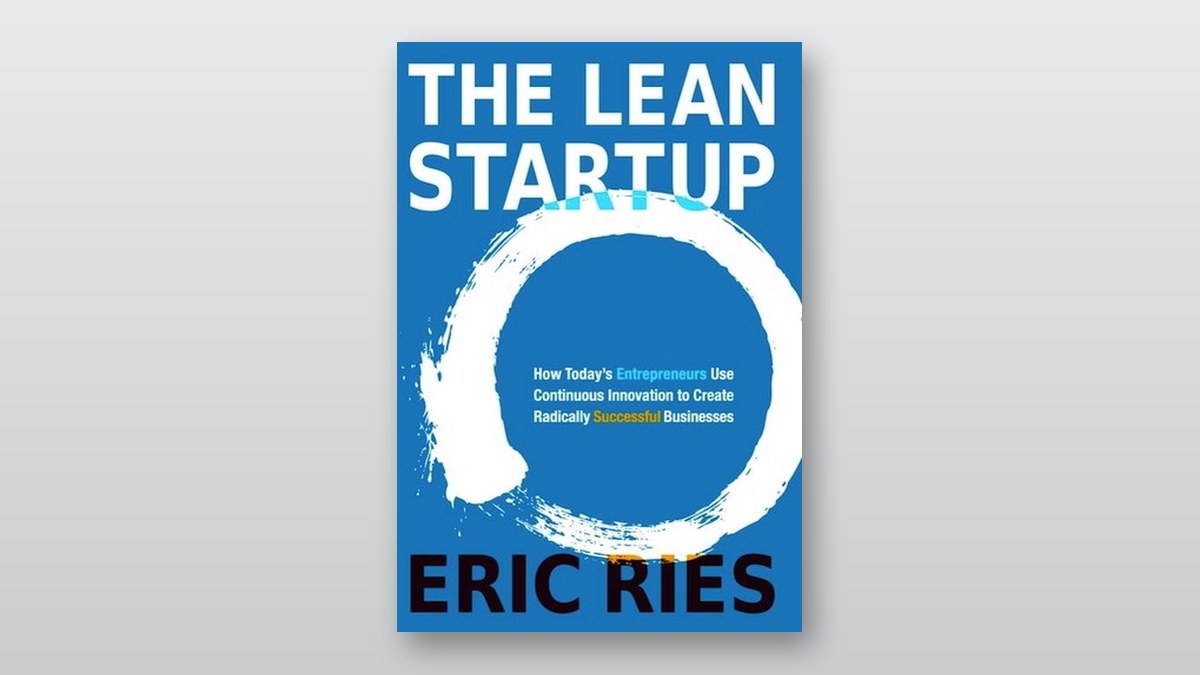
The Lean Startup by Eric Ries argues that a startup is not a smaller version of a big company but an experiment run under extreme uncertainty, and that its job is to learn what customers really want as quickly and cheaply as possible. Instead of perfecting a product in private, you build a small version, measure how real customers respond, and use that evidence to decide whether to change direction or keep going.
The English edition was published by Crown Business on September 13, 2011, and runs 336 pages, per Open Library. Ries, who co-founded the social network IMVU, set out the method on the book's own site, theleanstartup.com. This is a short summary in our own words, not a chapter-by-chapter retelling.
Who is Eric Ries and why does the book matter?
According to the author's site, Ries co-founded IMVU and served as its CTO, writes the blog Startup Lessons Learned, and was an entrepreneur in residence at Harvard Business School. Wikipedia adds that he picked up Steve Blank's customer development ideas at IMVU, combined them with lean software development, and later advised at Kleiner Perkins.
The book turned that experience into a method. Wikipedia reports that it debuted at #2 on the New York Times best-seller list in 2011 and that, per the publisher, it has sold over one million copies and been translated into over thirty languages. The site describes the book in three parts: Vision, Steer and Accelerate.
Build-measure-learn: the core loop
The central idea is a feedback loop. You turn an idea into a product, measure how customers respond, then learn whether the idea is working. The method page says every successful startup process should be geared to speed that loop up.
The point is not to spend less money or to fail fast for its own sake. It is to put a process around product development so that each cycle answers a real question. In the book's framing the question is not whether a product can be built, but whether it should be, and whether a sustainable business can be built around it.
The MVP: test the riskiest guess first
A minimum viable product, or MVP, is the smallest version of your idea that lets you start learning. The author's site describes it as the first step after you work out the problem you are solving, and notes that many startups go wrong by spending months or years polishing something without showing even a rough version to prospective customers.
- Start from assumptions. The book's Steer section talks about leap-of-faith assumptions that need vigorous testing.
- Build only what tests them. The MVP exists to test those assumptions, not to impress anyone.
- Treat it as an experiment. Each MVP is a first product and a question put to customers, per the method page.
Validated learning: the unit of progress
Ries says startups exist not to make stuff, make money or serve customers in the first instance, but to learn how to build a sustainable business. That learning counts as validated when you earn it by running experiments that test each part of your vision, rather than by trusting opinion.
Compared with a factory, where progress is measured in good products shipped, a startup measures progress in what it has proven about customers. Focusing on the right thing to build, the site argues, means you need not wait for a big launch to change course.
Innovation accounting: measuring progress honestly
Innovation accounting is the book's answer to the question of how to hold an early-stage team accountable when revenue is still tiny. The method page says it means focusing on the boring work of measuring progress, setting milestones and prioritizing tasks, using a kind of accounting designed for startups.
The measures it favors are actionable metrics that show cause and effect, so you can tell whether a change you made moved the customer behavior you care about. Vanity numbers that only go up are the thing to avoid.
Pivot or persevere
After a few loops you face the decision the book is known for. If the drivers of the business model are moving, you persevere. If not, the method page says it is time to pivot: a structural course correction that tests a new fundamental hypothesis about the product, strategy or engine of growth.
The book's own phrase for a pivot is changing course with one foot anchored to the ground, meaning you keep what you learned and change the direction, rather than starting over.
Small batches and speed
In the Accelerate section the book borrows from lean manufacturing, including the power of small batches. The idea carries over from the factory floor: work in small pieces so that feedback arrives sooner and mistakes are cheap to fix.
For a software or product team that usually means shipping small changes often and learning from each, instead of saving up a large release. The site also says these ideas can be applied inside large companies, not only in a garage startup.
The five whys
The five whys is a problem-solving habit the method page lists alongside the build-measure-learn loop: when something goes wrong, ask a simple why question, then ask why of the answer, and keep going until you reach the underlying cause rather than the symptom.
The value is in fixing the process that let the problem happen, not blaming the person who happened to be nearby.
Who should read it
- Founders and first-time builders. You get a way to test an idea before you commit years to it.
- Product managers and engineers. The loop, MVP and small-batch ideas map directly to everyday product work.
- Corporate innovators. The author's site says the principles apply to entrepreneurs inside large companies too.
- Sales and RevOps leaders. Treating a new offer or segment as an experiment with clear measures is useful well beyond software.
A fair caution: the book is an argument built on stories and the author's own experience, not a controlled study, so treat its steps as a disciplined way to ask questions rather than a guarantee of success.
Questions people ask
Who wrote The Lean Startup and when was it published?
Eric Ries wrote it. The English Crown Business edition was published on September 13, 2011, and runs 336 pages, per Open Library.
What is the main idea of The Lean Startup?
A startup is an experiment under extreme uncertainty. Build a small version, measure how customers respond, and learn whether to pivot or persevere, cycle after cycle.
What is an MVP in The Lean Startup?
A minimum viable product is the smallest version of an idea that lets you begin learning from real customers as quickly as possible.
What does pivot or persevere mean?
If your measurements show the business model is moving, you persevere. If not, you pivot: a structural change to test a new core hypothesis.
Is The Lean Startup only for tech startups?
No. The author's site says the principles apply to entrepreneurs in garages and inside the world's largest companies.
Sources
- The Lean Startup: the book · The author's site: how the book is organized and Eric Ries's background
- The Lean Startup: methodology · Build-measure-learn, MVP, validated learning, innovation accounting, pivot and the five whys
- Open Library: The Lean Startup · The Crown Business English edition, its September 13, 2011 date and page count
- Wikipedia: The Lean Startup · Publisher, best-seller debut, sales and translations
- Wikipedia: Eric Ries · IMVU, Steve Blank's customer development and Ries's career
This summary is an independent explainer written in our own words and does not reproduce the book. Facts were read from the linked pages on October 19, 2026; read the book and the author's site for the full detail.
Top photo: Book cover via Open Library