The Win Without Pitching Manifesto by Blair Enns — Cliff Notes Summary
The Win Without Pitching Manifesto is a short book for creative and professional-services firms by Blair Enns. Open Library dates it to 2010 and names RockBench Publishing Corp. among its publishers, and Goodreads gives July 6, 2010 and 144 pages. It argues that experts should stop competing in free pitches and instead position themselves as specialists, diagnose a client's problem before prescribing, and charge for their thinking.
The book is organized as 12 proclamations. Rick Lindquist's reading notes boil the central claim down to the phrase "free pitching is free thinking."
This is a short summary in our own words, not a retelling of the book. The section on how firms can use the ideas is our interpretation, not the author's advice.
About the book and its author
Open Library lists Blair Enns as the author, a first publication year of 2010, RockBench Publishing Corp. and Gegen Press as publishers, and a median of 144 pages. Goodreads describes it as twelve proclamations aimed at owners of creative businesses such as design firms and advertising agencies, and says it addresses anyone who sells ideas or advice.
The case against free pitching
In the book's usage, a pitch is giving ideas away for free in a buyer-driven competition. Lindquist's notes summarize the argument: pitching undervalues expert work and hands control to the client, and even a win leaves the firm at a disadvantage because the buyer gets free thinking from every competitor. The remedies the notes list are to charge for diagnosis, take a deposit before real work begins, and treat selling as a series of next steps rather than a contest.
The twelve proclamations, paraphrased
Summaries differ in wording and order, so this is our grouping of the themes found in Lindquist's notes, not the book's own list or chapter structure.
- Position and expertise. Specialize so you face fewer competitors and hold more leverage, keep building expertise, and raise prices as that expertise grows.
- How you sell. Replace staged presentations with conversations, treat selling as helping the client move toward a decision, and settle terms verbally before the contract.
- Diagnose first. Understand the real problem before recommending anything, much as a doctor would.
- Money early. State a minimum project fee up front, avoid hourly billing, and ask for a deposit before substantive work.
- Protect the firm. Be selective about clients, never work at a loss, discount only as a last resort, and walk away from clients who do not value you.
How firms put it into practice
BeFreed's summary lists practices firms draw from the book: rules of engagement such as strategy first and having the practitioner present the work, paid discovery work (compared to doctors charging for an MRI), a minimum engagement level often around 10% of annual target fee income, round-number quotes for upfront work, and documented, trained methods. The page gives no named case studies, so treat these as descriptions of the approach rather than proof of results.
For sellers inside agencies, consultancies and design studios, the practical shift is that the first meetings become paid or at least bounded diagnostic work, not an unpaid competition.
What firms can take from it (our interpretation)
These are our suggestions, not the author's.
- Decide what you will not do for free. Write down where unpaid work stops, and apply it the same way to every prospect.
- Make the first conversation useful. Ask about the business problem and the budget before drafting anything.
- Pick a minimum fee you can defend. A floor saves time on poor fits, but test it on real deals before treating it as fixed.
- Know your market. If buyers in your field insist on pitches, plan how you will respond before you refuse.
Criticisms and limits
Reader reviews on Goodreads rate the book 4.43 from 2,785 ratings, but the negative reviews raise recurring points: little evidence or worked examples, more why than how, content some found generic or repetitive, no personal stories, and a stress on control and higher prices over collaboration. These are individual reader opinions.
BeFreed's FAQ adds that the advice may suit established firms better than early-stage solo practitioners, and that refusing free pitches may limit opportunities in industries where pitching is standard, such as advertising. Lindquist's notes record that presentations cannot be eliminated entirely and that the minimum fee should not be applied rigidly. BeFreed is a third-party summary, so weigh it accordingly.
Questions people ask
Who wrote The Win Without Pitching Manifesto?
Blair Enns.
When was it published?
2010. Goodreads gives July 6, 2010 and Open Library lists RockBench Publishing Corp. among its publishers.
How many proclamations are in the book?
Twelve. Summaries word and order them differently, so this page groups the themes rather than reproducing a list.
What does the book say about free pitching?
That giving ideas away in a competitive pitch undervalues expert work and gives the buyer control. It recommends specializing, diagnosing before prescribing, and charging for thinking.
Who is it for?
Owners and sellers at creative and professional-services firms, such as design firms and agencies, according to Goodreads.
What are the main criticisms?
Some readers want more evidence and how-to detail, and a summary notes that refusing pitches may be hard where pitching is standard, such as advertising. The takeaways on this page are our interpretation.
Sources
- Open Library: The Win Without Pitching Manifesto · Author, 2010 first publication, publishers, page count
- Goodreads: The Win Without Pitching Manifesto · July 6, 2010 date, description, rating and reader criticisms
- Rick Lindquist: Notes on The Win Without Pitching Manifesto · Themes of the twelve proclamations and the argument against free pitching
- BeFreed: The Win Without Pitching Manifesto summary · Practice examples, minimum engagement figure, limitations
- Wikimedia Commons: Daily sprint meeting (Klean Denmark, CC BY-SA 2.0) · Hero image
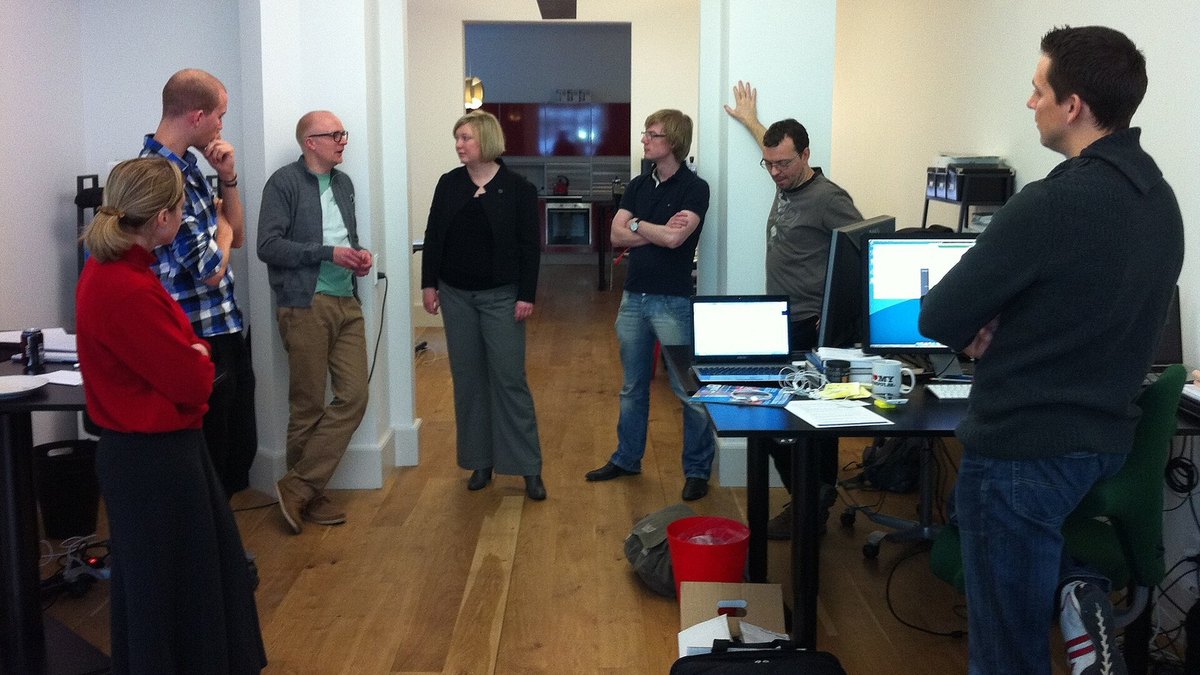
This summary is an independent explainer written in our own words and does not reproduce the book. Facts were read from the linked pages on November 3, 2026; read the book for the primary detail. The hero photo shows a small team meeting in an office and is a general illustration, not a photo of Blair Enns or of any firm in the book.
Top photo: Klean Denmark / CC BY-SA 2.0 via Wikimedia Commons