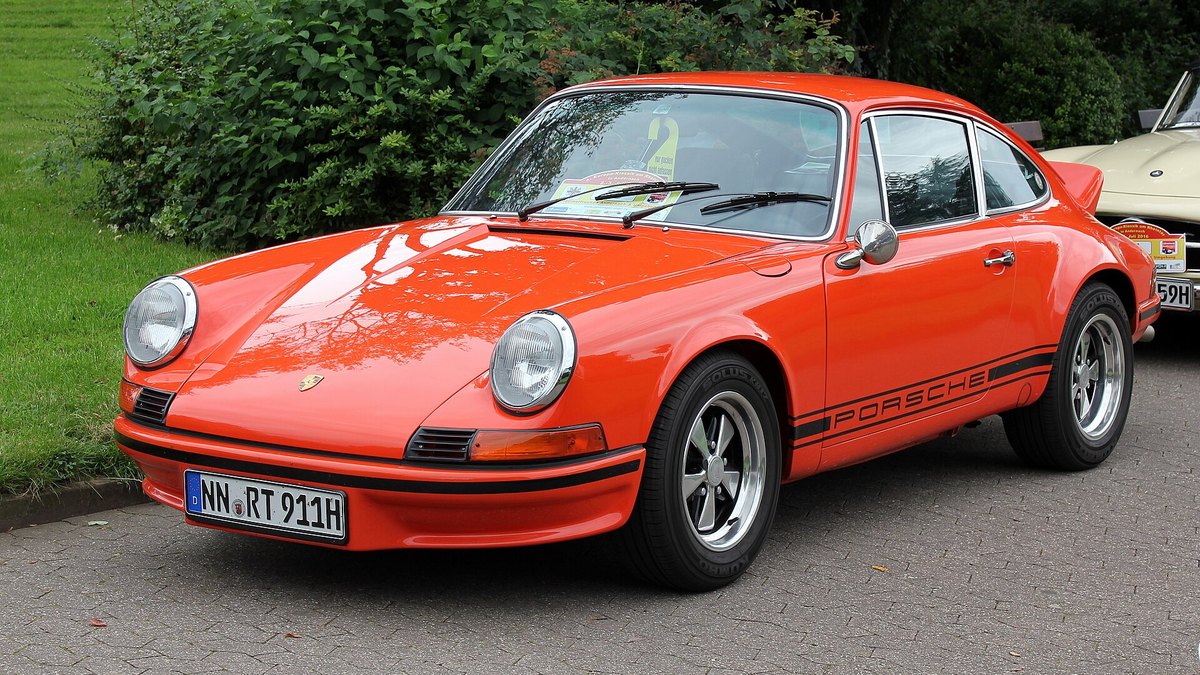
The 1973 Porsche 911 Carrera RS 2.7 is the best sports car of 1973, with the Datsun 240Z at #2 as the best value and the Chevrolet Corvette Stingray at #3. The Carrera RS made 210 PS, and only 1,580 were built.
Photo: Lothar Spurzem / CC BY-SA 2.0 de via Wikimedia Commons
Answrs VerdictThe homologation legend of 1973.
Horsepower: 210 PS (154 kW) at 6,300 rpmEngine: 2,687 cc twin-ignition flat-six with Bosch mechanical fuel injectionBuilt: 1,580 in total, well over the 500 needed for FIA Group 4 GT racingWeight: 1,075 kg (2,370 lb) in RS Touring form; the Sport Lightweight was about 100 kg (220 lb) lighterReputation: Considered by many to be the greatest classic 911 of all timeLightweight: Sport Lightweight weight saving came from thin-gauge steel in parts of the body and thinner glass
The Carrera RS 2.7 was built so Porsche could race the 911 in FIA Group 4. Its 2,687 cc flat-six made 210 PS at 6,300 rpm, the RS Touring weighed 1,075 kg and the Sport Lightweight was about 100 kg lighter. In total 1,580 were made.
Go ifCollectors who want the most celebrated classic 911
Skip ifYou want comfort: the Sport Lightweight saved weight with thin-gauge steel and thinner glass
Why #1 over #2: Its racing purpose and 1,580-car run make it the more special car; the 240Z wins on price.
2
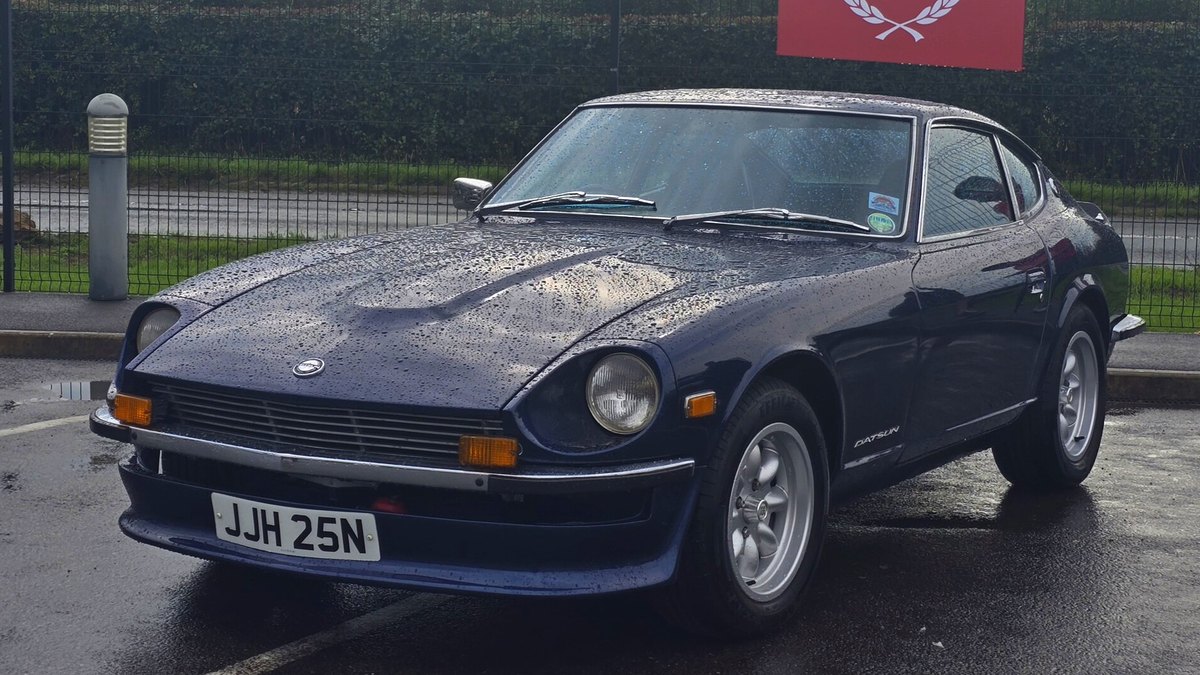
1973 Datsun 240Z
Photo: Calreyn88 / CC BY 4.0 via Wikimedia Commons
Answrs VerdictThe value champion of 1973.
Horsepower: 151 hp at 5,600 rpm (SAE gross)Engine: L24 2.4 L (2,393 cc) overhead-cam straight-sixValue: Four-wheel independent suspension and an OHC six, features of far more expensive cars such as the Jaguar E-Type, at a relatively low pricePerformance: 0-60 mph in 8.0 seconds; top speed 125 mph (201 km/h)1973 change: New emissions-reducing carburetors for the 1973 model year
The 240Z brought an L24 2.4 L overhead-cam six (151 hp gross) and four-wheel independent suspension, features of far more expensive cars, at a relatively low price. It ran 0-60 mph in 8.0 seconds, and 1973 cars got new emissions carburetors.
Go ifBuyers who want six-cylinder sports-car engineering at a low price
Skip ifYou want the most power on this list
Why #2 over #3: Its advanced six-cylinder chassis at a low price beats the Corvette for value.
3
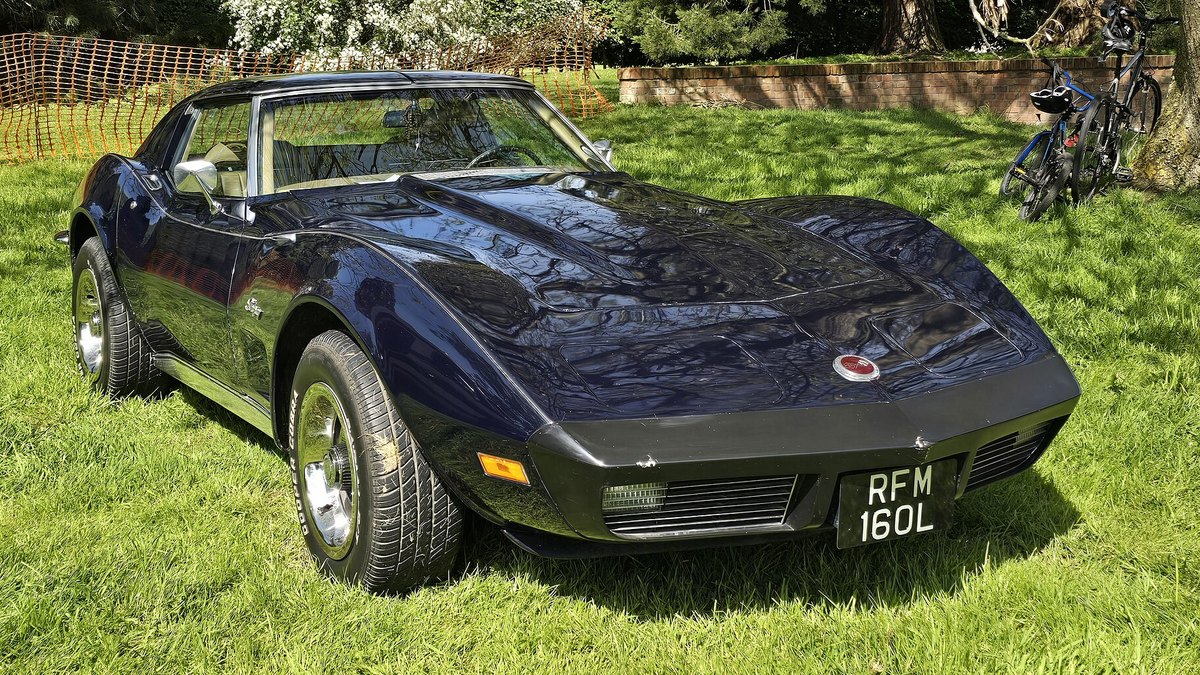
1973 Chevrolet Corvette Stingray (C3)
Photo: Calreyn88 / CC BY-SA 4.0 via Wikimedia Commons
Answrs VerdictThe American muscle pick.
Horsepower: 190 hp (base L48 350 V8); 250 hp L82; 275 hp LS4 454New for 1973: Federally required 5 mph urethane front bumper; radial tires and new body mountsTop engine: LS4 454 cu in (7.4 L) big-block V8, 275 hp, ordered on 15% of carsRoad & Track: Called the 1973 test car one of the best Corvettes they had ever drivenBumpers: 1972 was the last model year with chrome bumpers front and rear
The 1973 Corvette gained a 5 mph urethane nose, radial tires and new body mounts. Engines ran from the 190 hp L48 to the 250 hp L82 and the new 275 hp LS4 454, and Road & Track called its 1973 test car one of the best Corvettes it had driven.
Go ifBig-block V8 power in a two-seat sports car
Skip ifYou want chrome bumpers at both ends (1972 was the last year for that)
Why #3 over #4: Its 275 hp LS4 out-muscles the E-Type V12’s 272 hp.
4
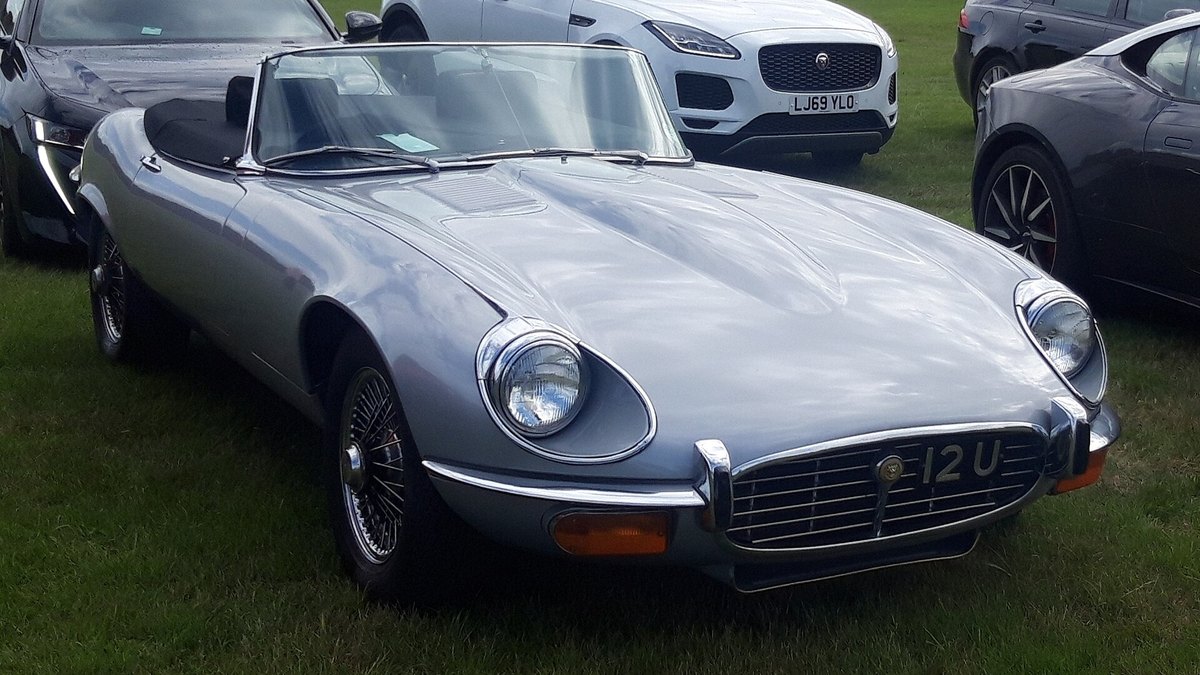
1973 Jaguar E-Type Series 3 V12
Photo: MrWalkr / CC BY-SA 4.0 via Wikimedia Commons
Answrs VerdictThe V12 grand tourer.
Horsepower: 272 hp (claimed, as introduced)Engine: 5.3 L V12 with four Zenith carburettorsPerformance: 0-60 mph in less than seven secondsProduction: 15,290 Series 3 cars (Robson)Body styles: Convertible and 2+2 coupé only; the short-wheelbase coupé was dropped
The Series 3 E-Type brought Jaguar’s new 5.3 L V12, rated at 272 hp as introduced, with 0-60 mph in less than seven seconds. Robson lists Series 3 production at 15,290.
Go ifTwelve-cylinder grand touring with E-Type looks
Skip ifYou want the short-wheelbase coupé (dropped for the Series 3)
Why #4 over #5: Its 272 hp V12 beats the Pantera L’s 264 hp.
5
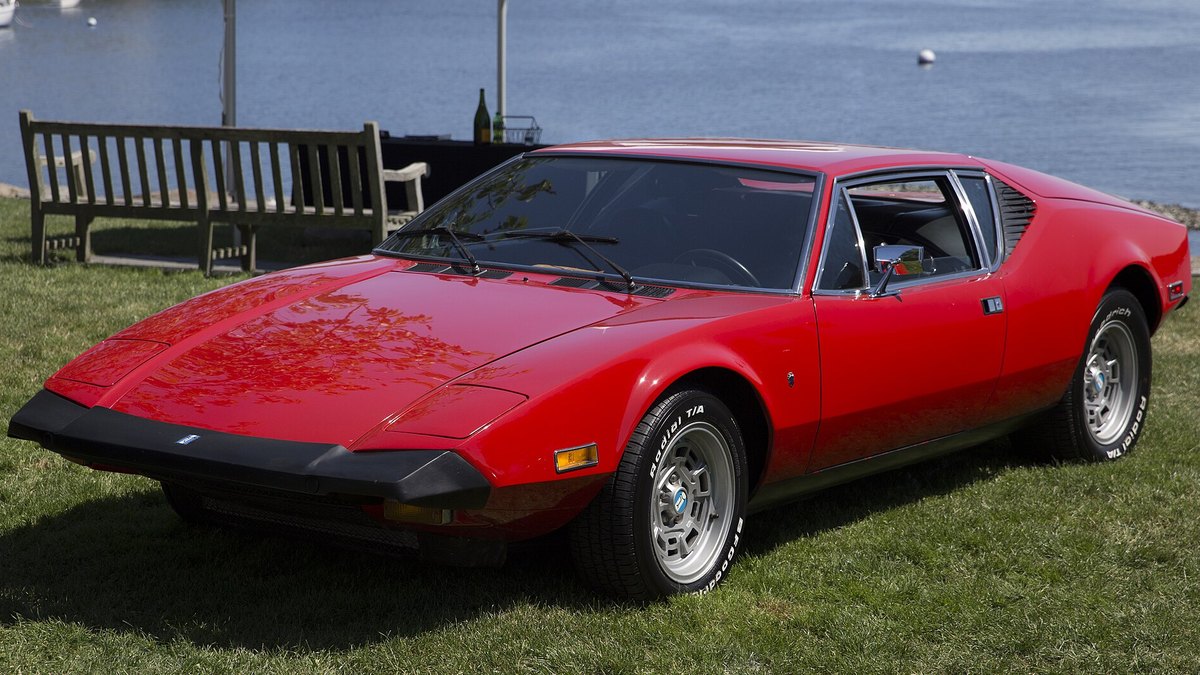
1973 De Tomaso Pantera L
Photo: Mr.choppers / CC BY-SA 3.0 via Wikimedia Commons
Answrs VerdictThe attainable mid-engine exotic.
Horsepower: 264 hp net at 5,400 rpm (US Pantera L)Engine: 5.8 L (351 cu in) Ford Cleveland V8, mid-mounted, with a ZF transaxleAward: The 1973 Pantera was Road Test Magazine’s Import Car of the YearCabin: Generous legroom, but headroom was insufficient for drivers above approximately 6 ft (1.83 m)Sold by: Lincoln-Mercury dealers; Ford sold around 5,500 before it stopped importing the car in 1975
The Pantera L put a 5.8 L Ford Cleveland V8 (264 hp net in US form) behind the seats with a ZF transaxle. The 1973 Pantera was Road Test Magazine’s Import Car of the Year, and Lincoln-Mercury dealers sold it in the US.
Go ifMid-engine Italian looks with a Ford V8
Skip ifYou are taller than about 6 ft (headroom is tight)
Why #5 over #6: Its mid-engine V8 makes 264 hp to the 2002 tii’s 128 hp.
6
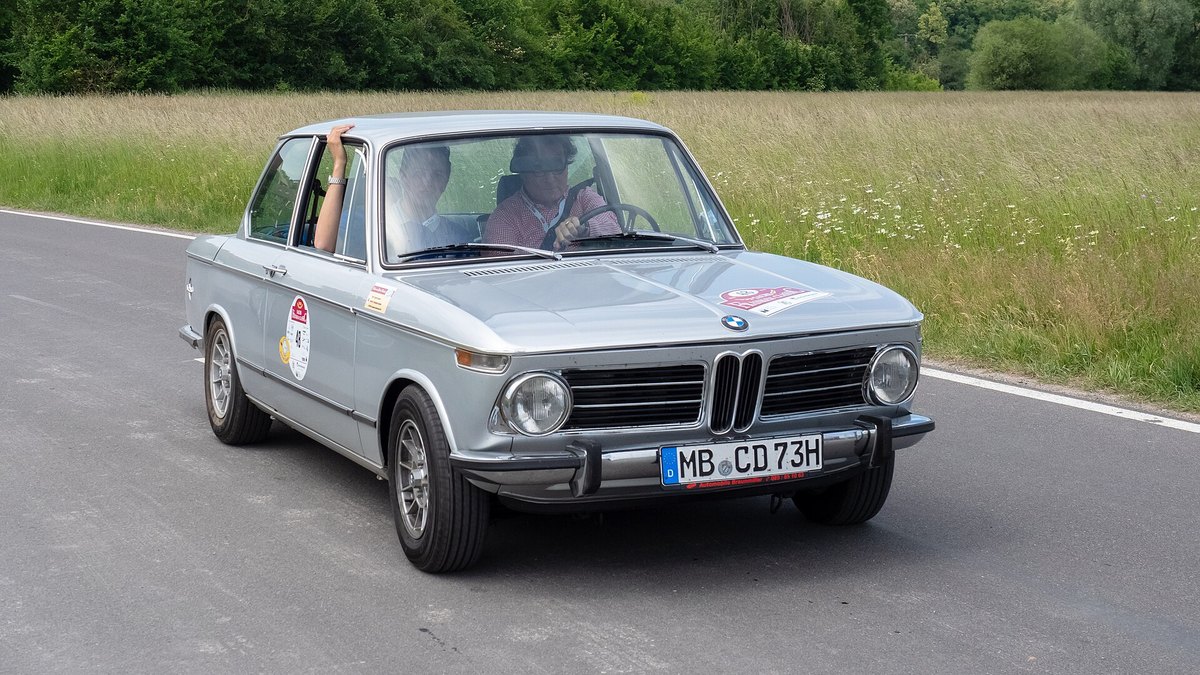
1973 BMW 2002 tii
Photo: Ermell / CC BY-SA 4.0 via Wikimedia Commons
Answrs VerdictThe sports sedan pick.
Horsepower: 130 PS (96 kW; 128 hp), fuel-injectedTop speed: 185 km/h (115 mph)Engine: Fuel-injected 2.0 L four, the engine from the 2000 tiiIntroduced: 1971, replacing the 2002 tiRally: A 2002 tii won the 1973 Austrian Rally, round 9 of the first World Rally Championship season
The 2002 tii used a fuel-injected 2.0 engine with 130 PS (128 hp) and a 185 km/h top speed. A 2002 tii won the 1973 Austrian Rally, round 9 of the first World Rally Championship.
Go ifA four-seat sports sedan with real rally pedigree
Skip ifYou want an open car
Why #6 over #7: Its 1973 World Rally Championship win gives it more competition pedigree than the Alfa Spider.
7
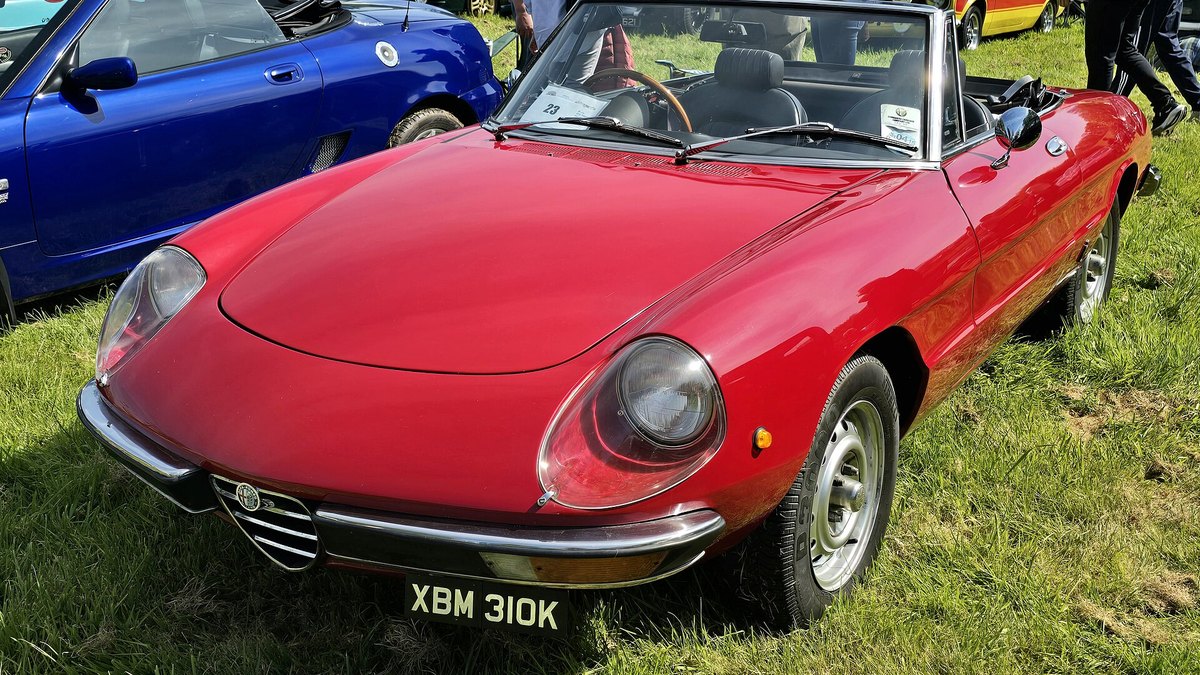
1973 Alfa Romeo Spider 2000 Veloce
Photo: Calreyn88 / CC0 via Wikimedia Commons
Answrs VerdictThe Italian roadster pick.
Horsepower: 132 hp from a 1,962 cc twin-cam fourIntroduced: 1971, replacing the 1750 Spider VeloceBody: Kamm-tail Pininfarina-era Spider (the round tail was revised in 1970)Production: 16,320 Spider Veloce 2000, plus 22,059 fuel-injected US-version Spider Veloce 2000 Iniezione
The Spider 2000 Veloce arrived in 1971 with a 1,962 cc twin-cam four making 132 hp and the Kamm-tail body. Alfa built 16,320 Spider Veloce 2000s plus 22,059 fuel-injected US-version cars.
Go ifAn open Italian twin-cam roadster
Skip ifYou need rear seats (the 2+2 seats came later)
Why #7 over #8: Its 132 hp twin-cam roadster is the sportier choice next to the 450SL’s automatic US V8.
8
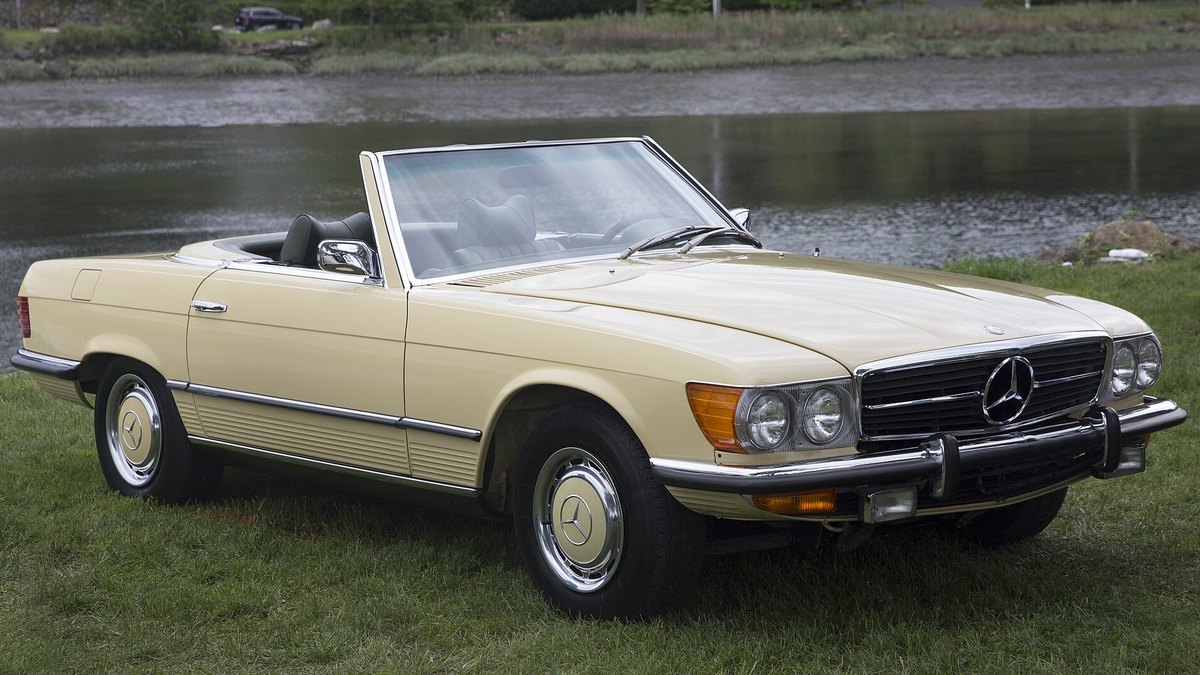
1973 Mercedes-Benz 450SL
Photo: Mr.choppers / CC BY-SA 4.0 via Wikimedia Commons
Answrs VerdictThe luxury roadster pick.
Horsepower: 192 hp SAE net at 4,750 rpm (US)Engine: 4.5 L V8 with a three-speed automatic1973 change: North American cars, badged 350SL before, were renamed 450SL for model year 1973Sales: The R107 and C107 sold 204,373 in the US out of 300,175 total
In North America the 4.5 L V8 roadster was renamed 450SL for 1973, making 192 hp SAE net with a three-speed automatic. The R107 and C107 sold 204,373 in the US.
Go ifA comfortable two-seat V8 convertible with a detachable roof
Skip ifYou want a manual gearbox in a US car
Why #8 over #9: Its 192 hp V8 beats the TR6’s 106 bhp.
9
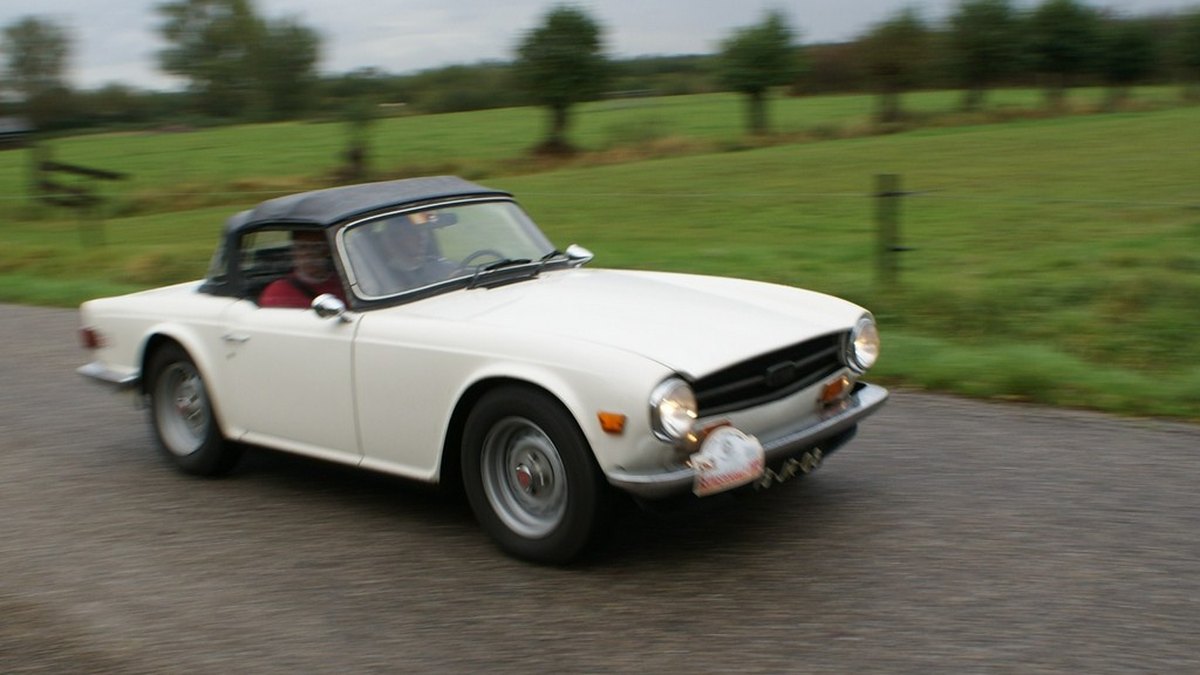
1973 Triumph TR6
Photo: Niels de Wit from Lunteren, The Netherlands / CC BY 2.0 via Wikimedia Commons
Answrs VerdictThe British roadster pick.
Horsepower: 106 bhp (later carburetted CF cars); 125 bhp for later fuel-injected CR carsEngine: 2.5-litre straight-six, four-speed manual with optional overdrive1973 change: New commission numbers, a front spoiler and restyled gaugesProduction: 91,850 built, 83,480 of them exported, almost all to the United StatesChassis: Body-on-frame with four-wheel independent suspension, front disc brakes and rear drums
The TR6 used a 2.5-litre straight-six; later carburetted CF cars were rated at 106 bhp and fuel-injected CR cars at 125 bhp. For 1973 it got new commission numbers, a front spoiler and new gauges. Of 91,850 built, 83,480 were exported.
Go ifA traditional British six-cylinder roadster
Skip ifYou want disc brakes all round (the rear brakes are drums)
Why #9 over #10: Its six-cylinder engine has far more power than the X1/9’s 74 hp four.
10
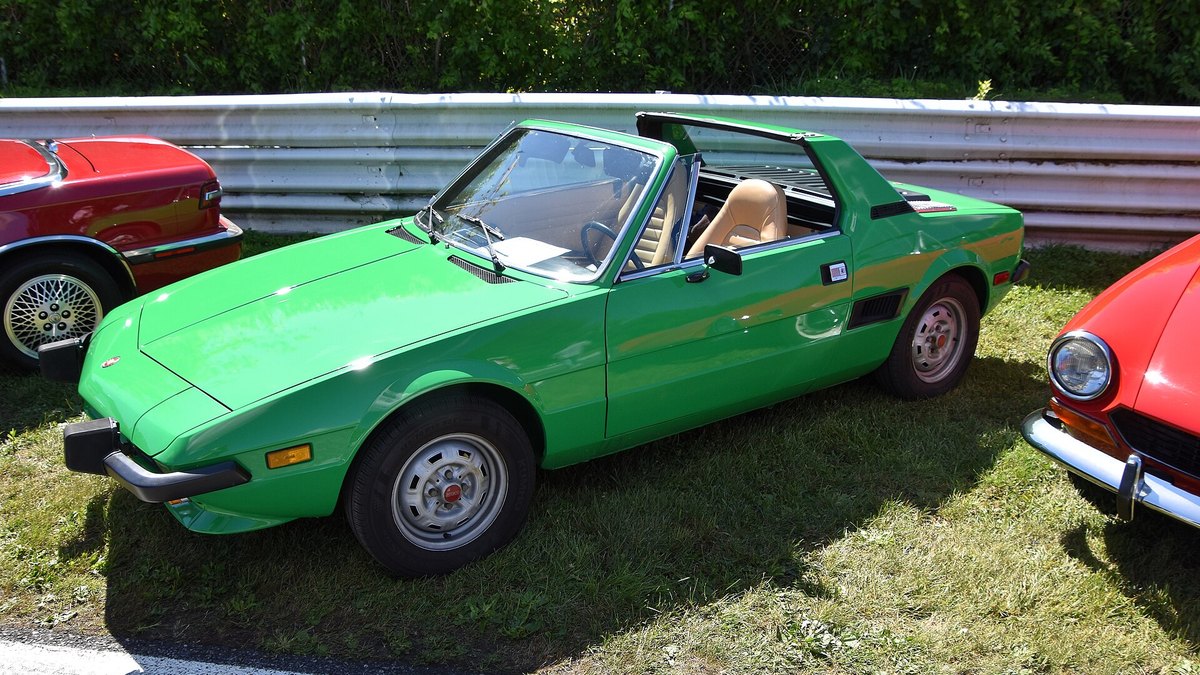
1973 Fiat X1/9
Photo: Charles from Port Chester, New York / CC0 via Wikimedia Commons
Answrs VerdictThe mid-engine bargain.
Horsepower: 75 PS DIN (74 hp) at 6,000 rpmEngine: 1,290 cc SOHC four, mounted mid-car with the gearboxTop speed: Over 170 km/h (106 mph)Design: Bertone wedge with a removable hardtop that stows in the front boot; first Fiat designed from the start to meet US safety rules
The X1/9 moved a 1,290 cc Fiat SOHC four to the middle of the car, making 75 PS at 6,000 rpm. It topped 170 km/h, and its removable hardtop stows in the front boot.
Go ifMid-engine balance in a small targa
Skip ifYou want straight-line speed
How we ranked these
We ranked each 1973 car on period performance, engineering significance and lasting desirability, using each model’s documented specs and history: the homologation and value icons first, then the grand tourers and roadsters. Facts are taken from each maker's own published information; check the official site before you buy.
Questions people ask
What was the best sports car of 1973?
The Porsche 911 Carrera RS 2.7. Its 2,687 cc flat-six made 210 PS, and 1,580 were built to qualify the 911 for FIA Group 4 racing.
Which 1973 sports car was the best value?
The Datsun 240Z. It offered an overhead-cam six and four-wheel independent suspension, features of far more expensive cars such as the Jaguar E-Type, at a relatively low price.
How much horsepower did a 1973 Corvette have?
The base L48 350 V8 made 190 hp, the L82 made 250 hp and the new LS4 454 big-block made 275 hp.
What changed on the 1973 Corvette?
It got a federally required 5 mph urethane front bumper, radial tires and new body mounts; the chrome rear bumper carried over.
Horsepower (as published; top 1973 engine for the Corvette) at a glance
1973 Fiat X1/974 hp
1973 Triumph TR6106 hp
1973 BMW 2002 tii128 hp
1973 Alfa Romeo Spider 2000 Veloce132 hp
1973 Datsun 240Z151 hp
1973 Mercedes-Benz 450SL192 hp
1973 De Tomaso Pantera L264 hp
1973 Jaguar E-Type Series 3 V12272 hp
1973 Chevrolet Corvette Stingray (C3)275 hp
Horsepower (as published; top 1973 engine for the Corvette), as published by each maker. Picks without a published figure are left off.