The Focusrite Scarlett 4i4 4th Gen is the best audio interface in our scoring: Focusrite lists it at $339.99 with two preamps, a 69dB gain range, an EIN of -127dBu, 116dB mic dynamic range, 24-bit/192 kHz conversion, USB-C bus power and a three-year warranty. The Scarlett Solo 4th Gen at $169.99 is our best value. Every score is our own judgment from maker pages read on 2026-11-02, and no company paid for or adjusted a position.
Not published on Behringer’s page read on 2026-11-02; the page links to Where to buy
Budget setups that need MIDI, two Midas preamps and RCA outputs and will check the price at a dealer
Pick by what you want
Best overall
Focusrite Scarlett 4i4 4th Gen
Best value
Focusrite Scarlett Solo 4th Gen
Most mic preamps (four)
Universal Audio Volt 476P
Lowest published EIN
SSL 2+ MKII
Widest preamp gain range
RME Babyface Pro FS
The ranking
1
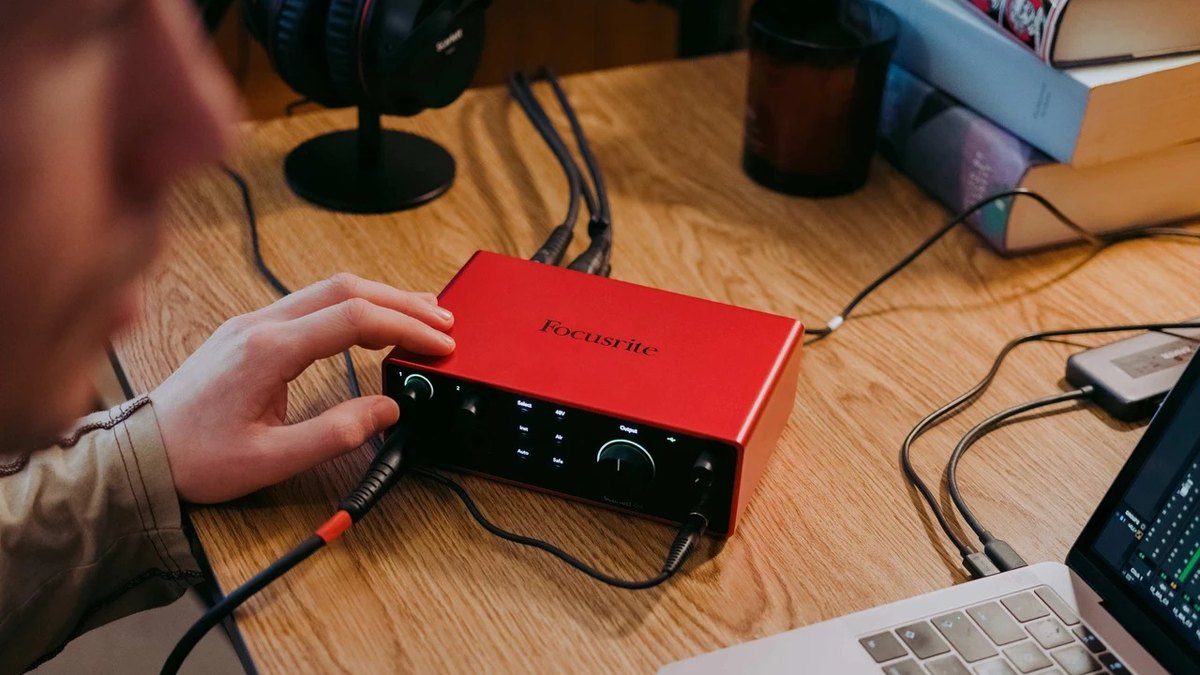
Focusrite Scarlett 4i4 4th Gen
Answrs VerdictIt scores highest, 85 out of 100, on a 69dB gain range, a published EIN and mic dynamic range, a $339.99 price and a three-year warranty.
Price: $339.99 on Focusrite’s page read on 2026-11-02Mic preamps and gain: Two ultra-low-noise mic/line/instrument preamps with a 69dB gain range (Focusrite specification table)Noise and dynamic range: EIN of -127dBu (A-weighted) and 116dB (A-weighted) dynamic range on the mic inputs; the specification table also lists 120dB for the A/D converter and 130dB (A-weighted) for the D/A converterConverters and I/O: 24-bit/192 kHz A/D resolution; simultaneous I/O of 6 x 6 including loopback inputs; MIDI in and outPower, software and warranty: USB Type-C on the USB 2.0 protocol, bus powered (1.5A); includes the Hitmaker Expansion bundle plus Pro Tools Intro+, Ableton Live Lite and Cubase LE; three-year warranty
Focusrite lists the 4i4 at $339.99 with two mic/line/instrument preamps and a 69dB gain range. The mic inputs list an EIN of -127dBu (A-weighted) and 116dB dynamic range, and the page lists 24-bit/192 kHz A/D resolution and 6 x 6 simultaneous I/O including loopback inputs. It is bus powered over USB Type-C (1.5A), includes the Hitmaker Expansion bundle with Pro Tools Intro+, Ableton Live Lite and Cubase LE, and carries a three-year warranty.
Go ifHome studios that want two preamps with the widest published gain range among the USB-C models here, plus extra line inputs and MIDI
Skip ifYou need four mic preamps or a Thunderbolt connection
Why #1 over #2: It leads on 85 points, from the widest gain range of the USB-C models, a published EIN, a published price, three bundled programs and a three-year warranty that the Volt 476P and SSL 2+ MKII do not state, and it beats the Solo on preamp count and gain range.
2
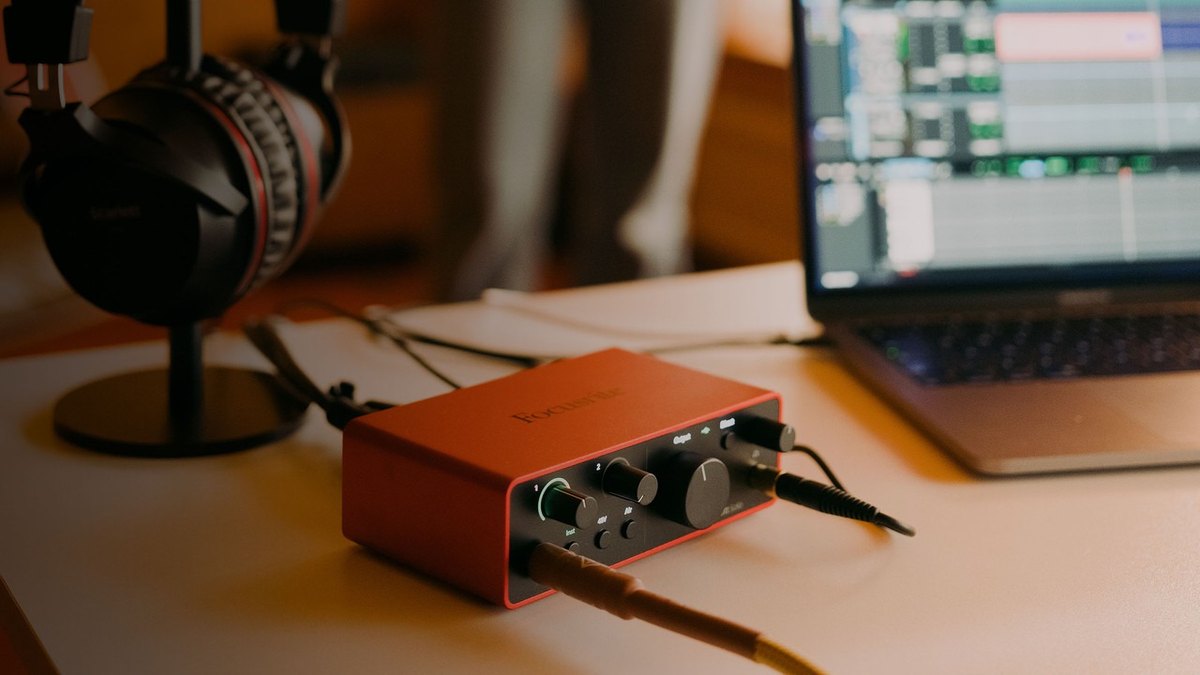
Focusrite Scarlett Solo 4th Gen
Answrs VerdictAt 72 points it is the best value: the same published EIN, converter figures, bundle and warranty as the 4i4 at $169.99, with one preamp and 4 x 2 I/O.
Price: $169.99 on Focusrite’s page read on 2026-11-02Mic preamps and gain: One mic preamp (Number of Microphone Preamps: 1) with a 57dB gain rangeNoise and dynamic range: EIN of -127dBu (A-weighted) and 113dB (A-weighted) dynamic range on the mic input; the specification table also lists 120dB for the A/D converter and 130dB (A-weighted) for the D/A converterConverters and I/O: 24-bit/192 kHz A/D resolution; simultaneous I/O of 4 x 2 including loopback inputs; two balanced line outputs and one headphone outputPower, software and warranty: USB Type-C on the USB 2.0 protocol, bus powered (900mA); includes the Hitmaker Expansion bundle plus Pro Tools Intro+, Ableton Live Lite and Cubase LE; three-year warranty
Focusrite lists the Scarlett Solo at $169.99 with one mic preamp and a 57dB gain range. The mic input lists an EIN of -127dBu and 113dB dynamic range, with 24-bit/192 kHz A/D resolution and 4 x 2 simultaneous I/O including loopback. It is bus powered over USB Type-C (900mA), ships with the Hitmaker Expansion bundle and has a three-year warranty.
Go ifSolo vocalists, streamers and guitarists who want the lowest published price on this list with the same converter and software package as the 4i4
Skip ifYou need a second mic preamp or MIDI connectors
Why #2 over #3: It scores 72 against 71 for the Volt 476P and its $169.99 price is the lowest published price among the picks scoring 70 or more, with the same warranty and bundle as the 4i4.
3
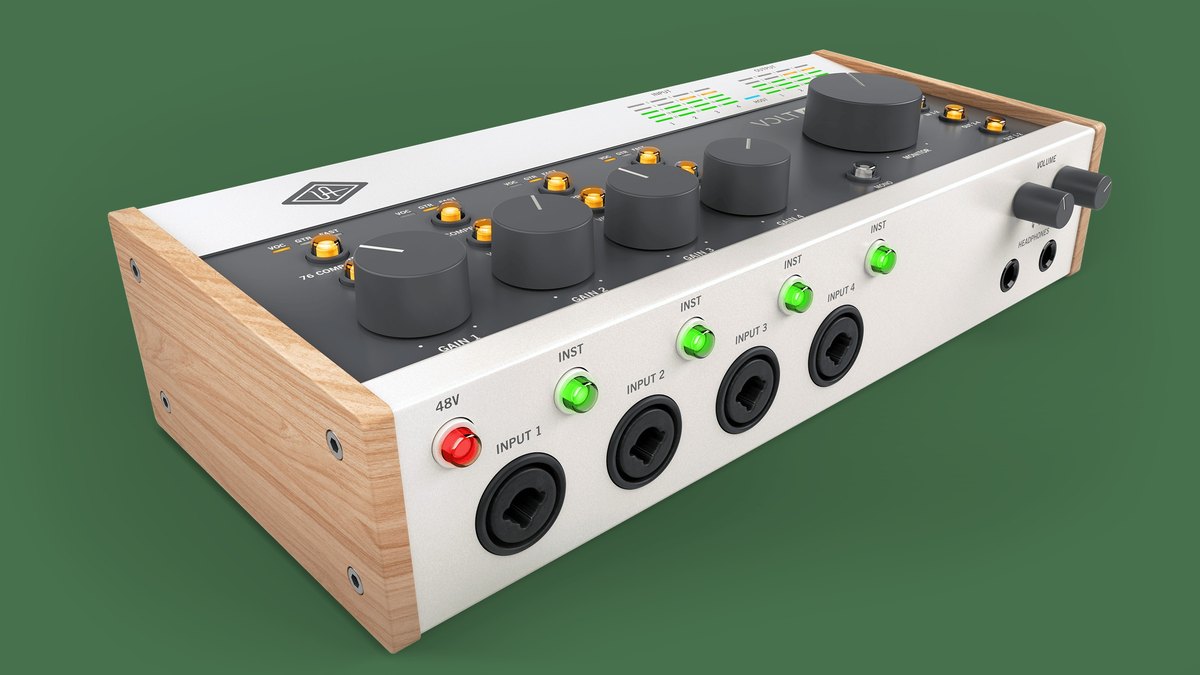
Universal Audio Volt 476P
Answrs VerdictIt earns 71 points, the only four-preamp model here, but a 55 dB gain range, a 112 dB dynamic range, a $624.00 price and no stated warranty term hold it behind the Scarlett pair.
Price: $624.00 on Universal Audio’s page read on 2026-11-02Mic preamps and gain: Four microphone preamps with 55 dB available gain, plus Vintage Preamp mode and a 76 CompressorNoise and dynamic range: EIN of -127 dBu (150 ohms, A-weighted) and 112 dB (A-weighted) dynamic range on the microphone inputs; monitor and line outputs list 110 dBConverters and I/O: 24-bit conversion at 44.1, 48, 88.2, 96, 176.4 and 192 kHz; simultaneous I/O of 4-in / 4-out, two stereo headphone outputs and one MIDI in and outPower, software and warranty: One USB 2.0 port with a USB Type-C connector, bus-powered; includes the LUNA DAW and UAD plug-ins such as the LA-2A and UA 1176; the page links a Product Warranty but states no term
Universal Audio lists the Volt 476P at $624.00 as a 4-in / 4-out USB interface with four preamps, 55 dB available gain and Vintage Preamp mode. It lists an EIN of -127 dBu, 112 dB microphone dynamic range, 24-bit conversion up to 192 kHz, one MIDI in and out and a USB 2.0 port with a USB Type-C connector. The page says it is bus-powered and includes LUNA and UAD plug-ins, and links a Product Warranty without stating a term.
Go ifSmall bands, podcasts with several guests and drum or ensemble recording that need four mic preamps from a bus-powered USB box
Skip ifYou want a published warranty term or the lowest price
Why #3 over #4: It beats the SSL 2+ MKII, 71 points to 68, by showing a published price and a USB-C connector, and it is the only pick with four preamps.
4
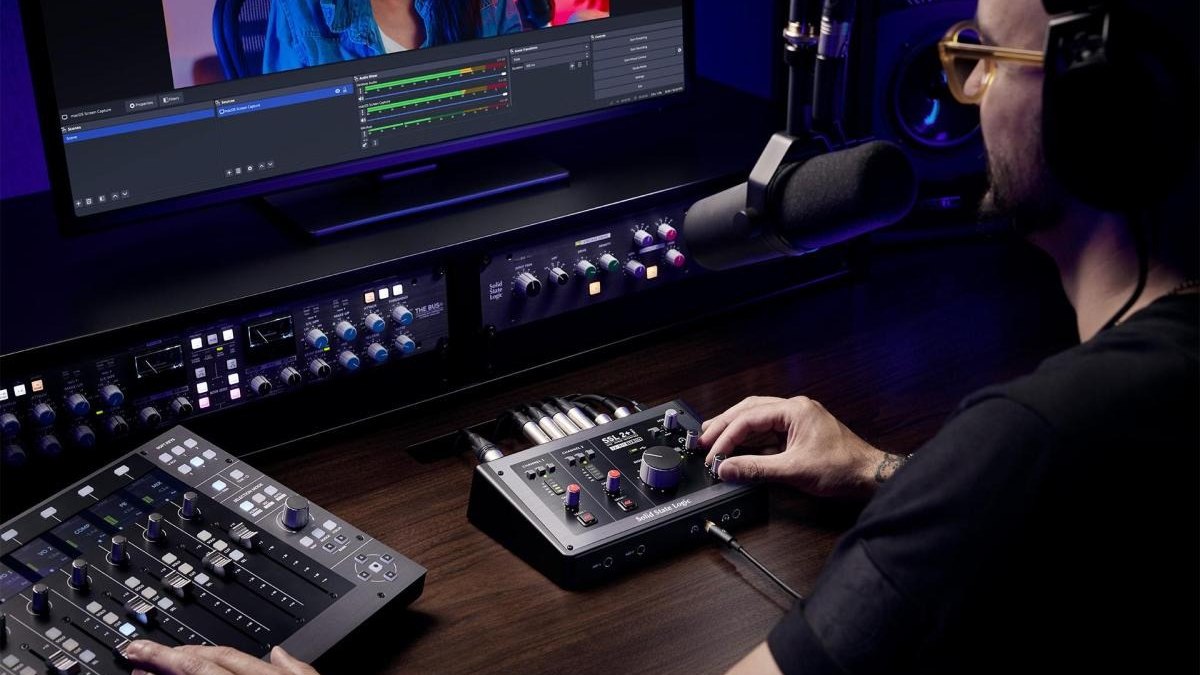
SSL 2+ MKII
Answrs VerdictIt scores 68, with the best published EIN of -130.5 dBu and a 32-bit 192 kHz converter spec, but the page shows no price and no hardware warranty term.
Price: Not published on SSL’s page read on 2026-11-02; the Buy section was emptyMic preamps and gain: Two SSL-design microphone preamps with a 64 dB gain rangeNoise and dynamic range: EIN of -130.5 dBu and 116.5 dB dynamic range on the mic preamps; four balanced outputs at 120 dB and two headphone outputs at 119.5 dBConverters and I/O: Next-gen 32-bit 192 kHz converters; a 2-in/4-out interface with two mic/line combo inputs, two instrument inputs, four balanced outputs, two headphone outputs and 5 pin DIN MIDI I/OPower, software and warranty: USB 2.0 bus-powered; the SSL Production Pack is bundled free with registered interfaces; no hardware warranty term is stated on the page read
SSL lists the 2+ MKII as a 2-in/4-out interface with two SSL-design preamps, a 64 dB gain range, an EIN of -130.5 dBu and 116.5 dB mic dynamic range. Outputs list 120 dB and the headphone outputs 119.5 dB, and the converters are 32-bit 192 kHz. It adds two instrument inputs, two headphone outputs, MIDI I/O and USB 2.0 bus power, with the SSL Production Pack bundled free. The page shows no price and no hardware warranty term.
Go ifProducers and engineers who want the lowest published mic noise and the only 32-bit converters on this list, with two headphone outputs
Skip ifYou want a published price or warranty term on the maker’s page
Why #4 over #5: It scores 68 against 63 for the MiniFuse 2 on better published noise, gain and converter figures, even though SSL’s page shows no price or hardware warranty.
5
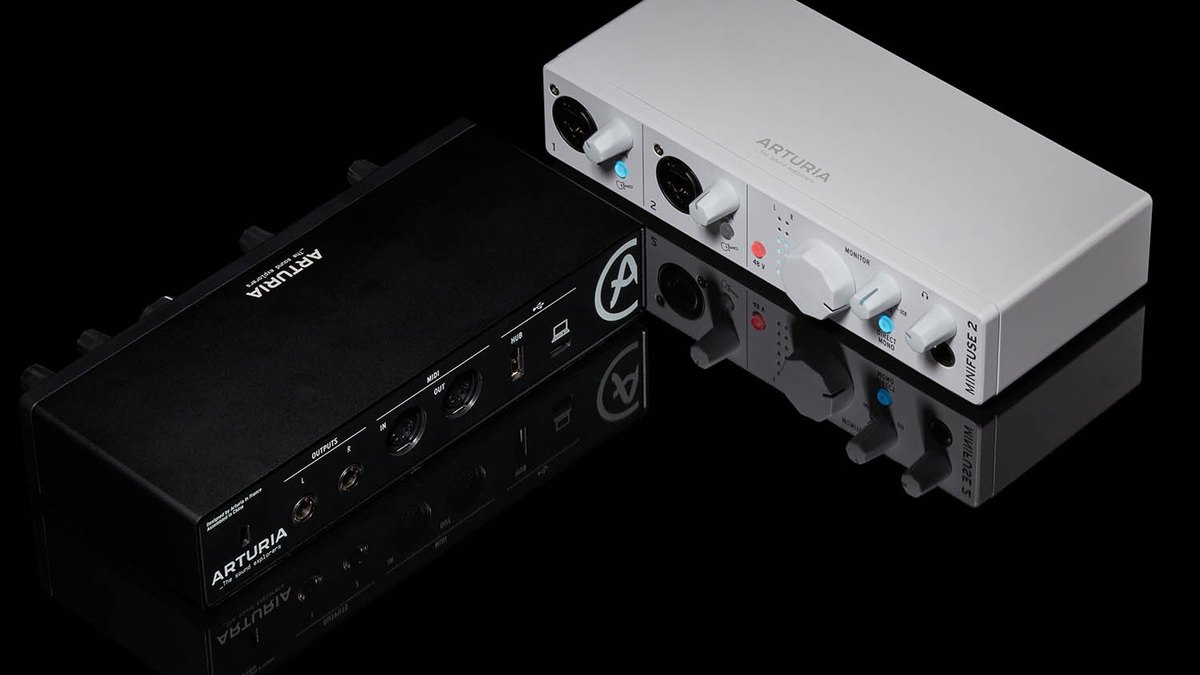
Arturia MiniFuse 2
Answrs VerdictIt scores 63 on a published -129dB EIN, a $249 price and a 5-year warranty, but its 110dB dynamic range and 2-in/2-out I/O trail the models above it.
Price: 249$ (US$249) on Arturia’s page read on 2026-11-02Mic preamps and gain: Two combo mic/instrument/line inputs; Arturia lists a 56dB gain range for its microphone preampsNoise and dynamic range: EIN of -129dB typical (A-weighted) and 110dB typical (A-weighted) dynamic range on the microphone preampsConverters and I/O: Supported sample rates 44.1kHz, 48kHz, 88.2 kHz, 96kHz, 176.4kHz and 192 kHz; two combo inputs, two 1/4 inch TRS line outputs, one headphone output, MIDI in and out, a USB-A hub port (250mA) and one stereo virtual loopback channelPower, software and warranty: USB-C, bus-powered; includes Ableton Live Lite, Analog Lab Intro and four Arturia FX plugins; a 5-year hardware warranty
Arturia lists the MiniFuse 2 at 249$ with two combo inputs, a 56dB gain range, an EIN of -129dB typical and 110dB typical dynamic range. Sample rates run from 44.1kHz to 192 kHz, and it adds MIDI in and out, a USB-A hub port (250mA) and a stereo virtual loopback channel. It is USB-C bus-powered, includes Ableton Live Lite, Analog Lab Intro and four Arturia FX plugins, and has a 5-year hardware warranty.
Go ifProducers who want a USB hub port for a MIDI keyboard and the longest warranty on this list at a published $249
Skip ifYou need a dynamic range above 110dB or more than two inputs
Why #5 over #6: It scores 63 against 60 for the Apollo Twin X Quad because it publishes a gain range, an EIN, a price at $249 and a 5-year warranty, at a fraction of the Apollo’s $1,874.00.
6
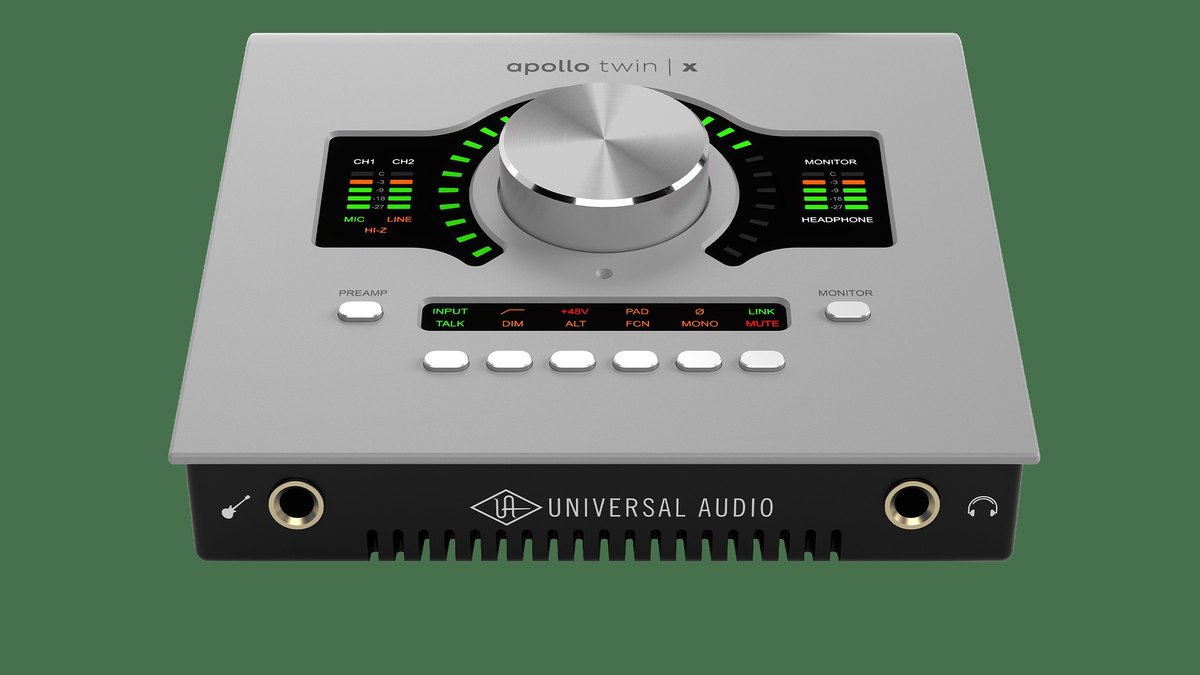
Universal Audio Apollo Twin X Quad
Answrs VerdictIt scores 60 and has the highest published dynamic range, 129 dB, but at $1,874.00 it publishes no gain, EIN, power or warranty figures on the page read.
Price: $1,874.00 for the QUAD / Thunderbolt 3 / Apollo Gen2 Essentials+ version on Universal Audio’s page read on 2026-11-02Mic preamps and gain: Two Unison mic preamps and a Hi-Z instrument input; the page states no gain rangeNoise and dynamic range: Enhanced D/A for critical monitoring and playback with 129 dB dynamic range; the page states no EINConverters and I/O: Elite-class Apollo X Gen 2 converters with 24-bit / 192 kHz resolution; a 10 x 6 Thunderbolt audio interface with an optical Toslink input (ADAT or S/PDIF)Power, software and warranty: Thunderbolt 3 with QUAD Core DSP; includes UAD Analog Classics plug-ins; the page states no bus-power claim and no warranty term
Universal Audio lists the Apollo Twin X QUAD at $1,874.00 in the Thunderbolt 3 Essentials+ version, with two Unison mic preamps, 24-bit / 192 kHz Gen 2 converters and a 10 x 6 interface including an optical Toslink input. The enhanced D/A is listed at 129 dB dynamic range. It includes UAD Analog Classics plug-ins, but the page states no gain range, EIN, bus-power claim or warranty term.
Go ifMac and Windows Thunderbolt users who want onboard DSP for UAD plug-ins and the widest published dynamic range on this list
Skip ifYou want a published gain range, EIN, warranty or a bus-powered USB box
Why #6 over #7: It ties the RME Babyface Pro FS on 60 points and ranks ahead on the higher dynamic-range tiebreak, 129 dB against 118 dBA.
7
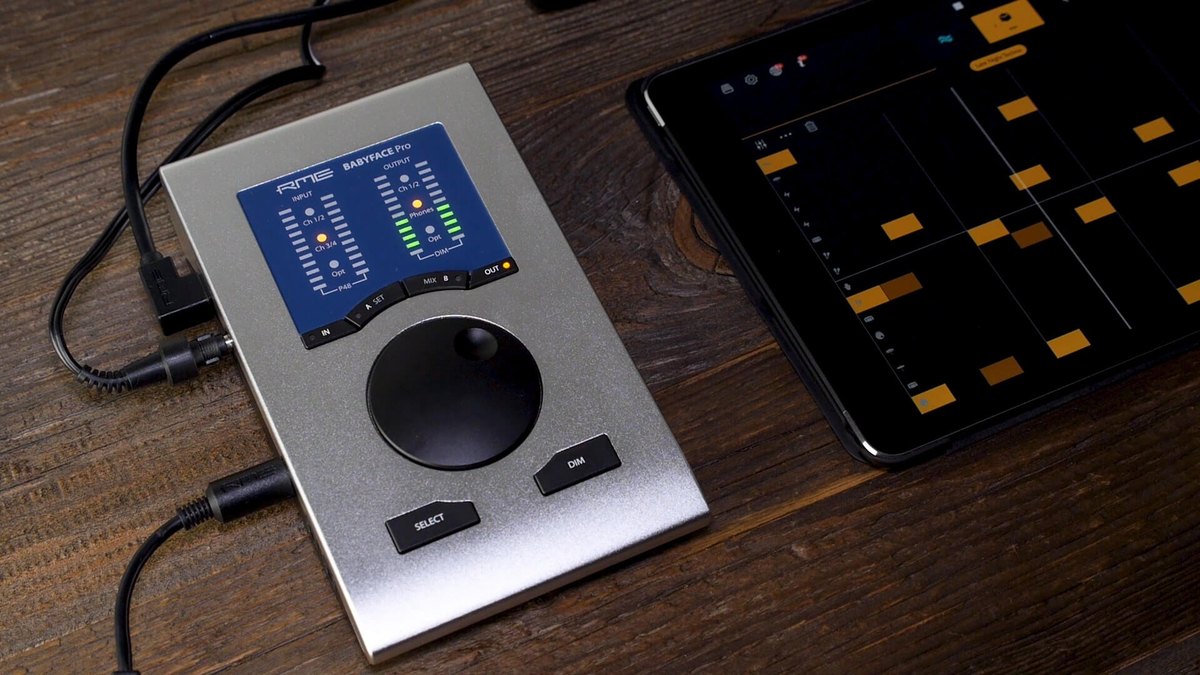
RME Babyface Pro FS
Answrs VerdictIt scores 60, led by the best gain range, 76 dB, and the largest I/O count, but the page publishes no price, EIN, warranty or bundled DAW.
Price: Not published on RME’s page read on 2026-11-02Mic preamps and gain: Two digitally controlled mic/line preamps with a gain range of 76 dB, adjustable in steps of 1 dBNoise and dynamic range: Mic input signal-to-noise ratio of 117 dBA and a line-output dynamic range of 118 dBA; RME lists no EIN figureConverters and I/O: A 24-channel 192 kHz interface; 12 analog inputs and 12 outputs with an external ADAT converter; 2 XLR mic/line inputs, 2 line/instrument inputs, 2 headphone outputs and MIDI I/OPower, software and warranty: USB 2.0, bus powered (700 mA at 5 V); includes TotalMix FX; no warranty term is stated on the page read
RME lists the Babyface Pro FS as a 24-channel 192 kHz bus-powered USB interface with two preamps that offer a 76 dB gain range in 1 dB steps. Mic input signal-to-noise is 117 dBA and the line-output dynamic range is 118 dBA, with 12 analog inputs and 12 outputs possible through an external ADAT converter. It runs on USB 2.0 at 700 mA and includes TotalMix FX. The page shows no price, EIN or warranty term.
Go ifMobile engineers who want the widest preamp gain range here, 76 dB, and a 24-channel bus-powered interface that can add ADAT channels
Skip ifYou want a published price, EIN or warranty term
Why #7 over #8: It scores 60 against 59 for the MOTU M2 on the strongest gain range and largest I/O count, while the M2 wins only on EIN and warranty.
8
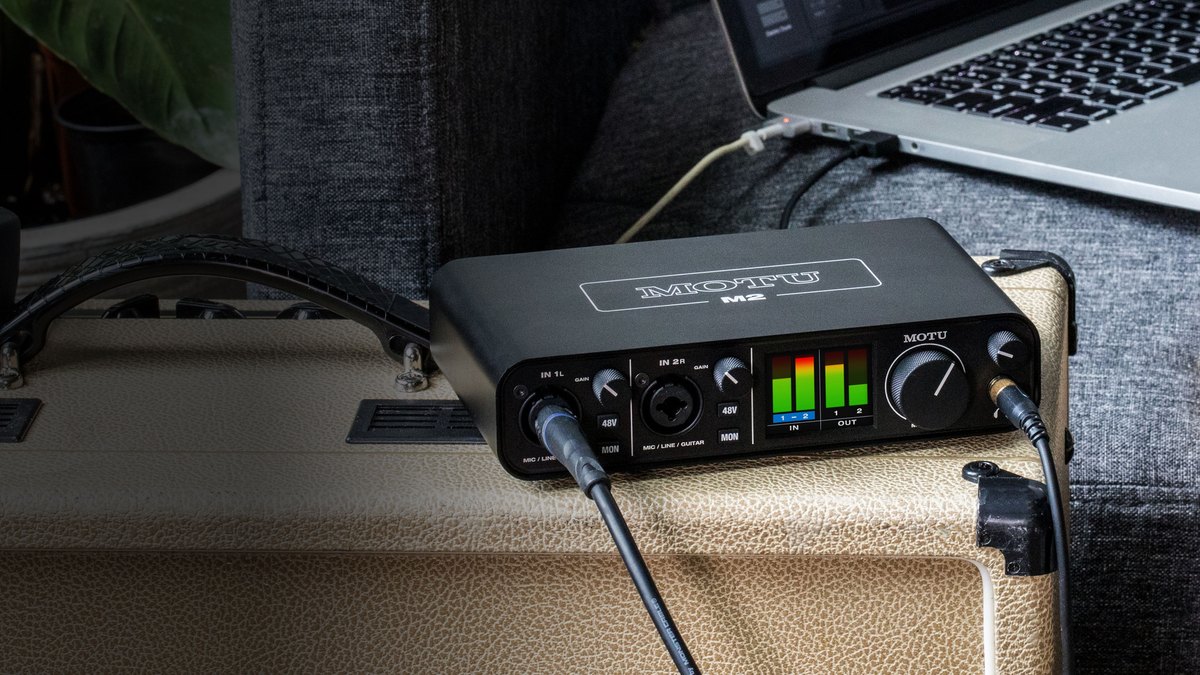
MOTU M2
Answrs VerdictIt scores 59 on a -129 dBu EIN and 120 dB output dynamic range, but MOTU’s page shows no price, no gain range and only 2-in/2-out I/O.
Price: Not published on MOTU’s page read on 2026-11-02; the page links dealers through Buy NowMic preamps and gain: Two mic/line/Hi-Z guitar inputs with independent preamp gain and 48V phantom power; no gain range in dB is statedNoise and dynamic range: Measured -129 dBu EIN on the mic inputs and a measured 120 dB dynamic range on the main outputsConverters and I/O: Sample rates from 44.1 to 192 kHz (no bit depth stated on the page read); two balanced 1/4 inch TRS outputs, two mirrored RCA outputs, one headphone output and one MIDI in/outPower, software and warranty: Bus-powered USB-C; includes Performer Lite or Live Lite, over 100 virtual instruments and 6 GB of loops; a two-year limited hardware warranty (MOTU warranty page)
MOTU lists the M2 with two mic/line/Hi-Z guitar inputs, a measured -129 dBu EIN and a measured 120 dB dynamic range on the main outputs, with sample rates from 44.1 to 192 kHz. Outputs are two balanced TRS, two mirrored RCA and a headphone output, plus MIDI in/out. It is bus-powered over USB-C, includes Performer Lite or Live Lite with over 100 virtual instruments and 6 GB of loops, and has a two-year hardware warranty. No price or gain range appears on the page.
Go ifProducers who want the lowest published EIN among the 2-in/2-out interfaces and a color level display, with a two-year warranty
Skip ifYou need a published price or a stated gain range on the maker’s page
Why #8 over #9: It scores 59 against 47 for the Audient EVO 4 on a published sample-rate range, a lower EIN and a higher output dynamic range.
9
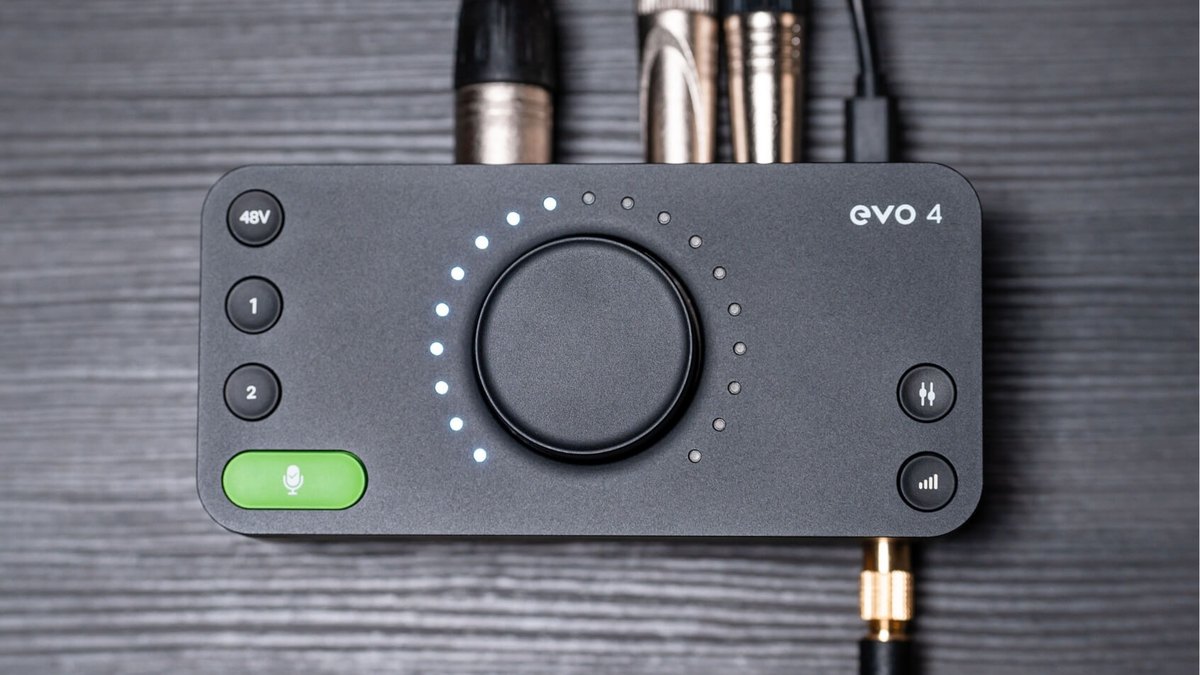
Audient EVO 4
Answrs VerdictIt scores 47: a published 58db gain, -128dBu EIN and three-year warranty, but no price, sample-rate or bit-depth figures on the page read.
Price: Not published on Audient’s page read on 2026-11-02; the page links to Where to BuyMic preamps and gain: Two EVO mic preamps; the page shows 58db of mic gainNoise and dynamic range: EIN of -128dBu (shown as image text on the page) and 113db of dynamic rangeConverters and I/O: Listed as a 2in | 2out audio interface; the page states no sample rate or bit depthPower, software and warranty: USB bus powered over a high-speed USB connection (connector type not stated); comes bundled with software through Audient ARC; a 3 year limited warranty (Audient warranty page)
Audient shows the EVO 4 as a 2in | 2out interface with two EVO mic preamps, 58db of mic gain, 113db of dynamic range and an EIN of -128dBu shown as image text. It is USB bus powered, comes bundled with software through ARC and carries a 3 year warranty on Audient’s warranty page. No price, sample rate, bit depth or USB connector type appears on the page read.
Go ifBeginners who want Smartgain automatic level setting and a three-year warranty in a compact 2-in/2-out box
Skip ifYou want a published price, sample rate or USB connector type from the maker’s page
Why #9 over #10: It scores 47 against 31 for the Behringer UMC204HD because it publishes gain, EIN, dynamic range and a warranty.
10
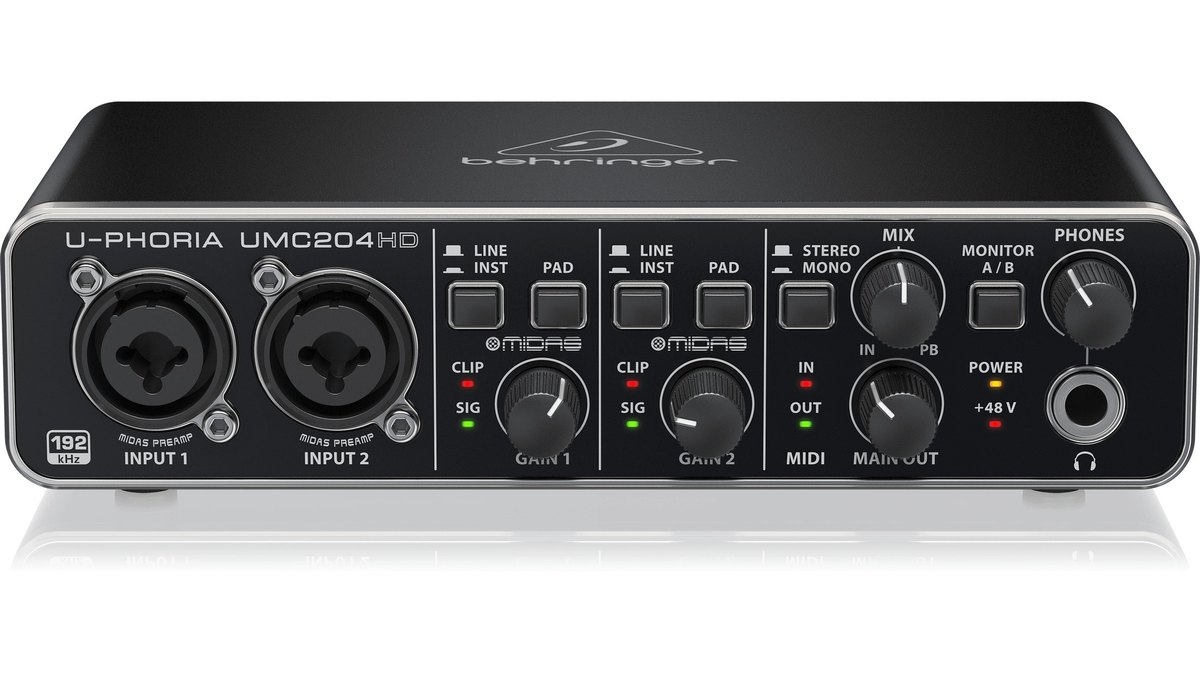
Behringer UMC204HD
Answrs VerdictIt scores 31, last, because Behringer’s page gives a sample rate and I/O count but no gain, EIN, dynamic range, price, software or warranty.
Price: Not published on Behringer’s page read on 2026-11-02; the page links to Where to buyMic preamps and gain: Two Midas-designed mic preamps on combination XLR/1/4 inch inputs with switchable +48 V phantom power; no gain range is statedNoise and dynamic range: No EIN or dynamic range is stated; Behringer lists a mic input level of -4 dBu maximum and an input frequency response of 10 Hz to 50 kHzConverters and I/O: 24-bit resolution at 44.1, 48, 88.2, 96, 176.4 and 192 kHz; a 2x4 interface with two inputs, two TRS main outputs, four RCA playback outputs, one headphone output and 5-pin DIN MIDI in and outPower, software and warranty: USB 2.0, type B, taking its power from the USB connection (maximum 2.5 W); no software bundle or warranty term is stated on the page read
Behringer lists the UMC204HD as a 2x4 USB audio and MIDI interface with two Midas-designed mic preamps and 24-bit resolution up to 192 kHz. It lists two TRS main outputs, four RCA playback outputs, a headphone output, MIDI in and out, USB 2.0 type B and a maximum 2.5 W power draw. The page states no gain range, EIN, dynamic range, price, software bundle or warranty term, so it scores 31.
Go ifBudget setups that need MIDI, two Midas preamps and RCA outputs and will check the price at a dealer
Skip ifYou want published noise, gain, software or warranty figures
Related audio gear rankings
These companion rankings cover other recording gear.
This list covers desktop USB and Thunderbolt audio interfaces with a maker page we could read and a maker photo we could use. Each pick was scored out of 100 with the same rubric from the maker’s own product page, and the maker’s warranty page where one was linked, read on 2026-11-02: mic preamp count (15 points), published mic gain range (10), published EIN (10), the best A-weighted dynamic range the page lists (15), maximum sample rate and bit depth (10), simultaneous input and output channels (15), computer connection (5), bus power (5), software bundle (5), a published price (5) and warranty (5). A figure the page does not state scores zero. Scores: Focusrite Scarlett 4i4 4th Gen eighty-five, Focusrite Scarlett Solo 4th Gen seventy-two, Universal Audio Volt 476P seventy-one, SSL 2+ MKII sixty-eight, Arturia MiniFuse 2 sixty-three, Universal Audio Apollo Twin X Quad sixty, RME Babyface Pro FS sixty, MOTU M2 fifty-nine, Audient EVO 4 forty-seven and Behringer UMC204HD thirty-one. Ties go to the higher dynamic-range figure, and best value is the lowest published price among the picks scoring seventy or more. The weights are our judgment from vendor-stated specifications, not lab measurements, and sound, latency, driver quality and reliability are not scored. No company paid for or adjusted a position. Prices are those published on each maker’s pages on the read date and change often; where a figure is not stated we say so. Photos come from each maker’s own site; the Universal Audio images are renders on that maker’s green background, the Behringer image is a product shot on white and the SSL image is an application photo from the SSL 2+ MKII page. Facts are taken from each maker's own published information; check the official site before you buy.
Questions people ask
What is the best audio interface in 2027?
The Focusrite Scarlett 4i4 4th Gen scores highest in our rubric, 85 out of 100. Focusrite lists it at $339.99 with two preamps and a 69dB gain range, an EIN of -127dBu, 116dB dynamic range on the mic inputs, 24-bit/192 kHz conversion, USB-C bus power and a three-year warranty.
What is the best value audio interface?
The Focusrite Scarlett Solo 4th Gen at $169.99. It scores 72 out of 100 and lists a 57dB gain range, an EIN of -127dBu, 24-bit/192 kHz conversion and a three-year warranty. We define best value as the lowest published price among the picks scoring 70 or more.
Which interface here has the most mic preamps?
The Universal Audio Volt 476P, which lists four microphone preamps with 55 dB available gain and a 4-in / 4-out layout at $624.00. Every other pick lists one or two preamps.
Which of these interfaces are bus powered?
Every pick except the Apollo Twin X Quad states bus power or USB power on its maker page: the Scarlett 4i4 and Solo, Volt 476P, SSL 2+ MKII, MiniFuse 2, RME Babyface Pro FS, MOTU M2, Audient EVO 4 and Behringer UMC204HD. The Apollo Twin X page lists Thunderbolt 3 and does not state a bus-power claim.
Best A-weighted dynamic range listed on the maker page at a glance
Arturia MiniFuse 2110 dB (higher is better)
Universal Audio Volt 476P112 dB (higher is better)
Audient EVO 4113 dB (higher is better)
RME Babyface Pro FS118 dB (higher is better)
SSL 2+ MKII120 dB (higher is better)
MOTU M2120 dB (higher is better)
Universal Audio Apollo Twin X Quad129 dB (higher is better)
Focusrite Scarlett 4i4 4th Gen130 dB (higher is better)
Focusrite Scarlett Solo 4th Gen130 dB (higher is better)
Best A-weighted dynamic range listed on the maker page, as published by each maker. Picks without a published figure are left off.