Should I open or buy a Taco Bell franchise in 2027?
Open or buy a Taco Bell only if you can meet the franchisor's financial test, run the restaurant yourself and take on a 25-year agreement, and choose between a new build and a resale after reading the current disclosure document (FDD) with a franchise lawyer. Summaries of the 2025 FDD give an initial fee of $45,000 for a traditional restaurant and $25,000 for an in-line or end-cap one, a 5.5% royalty and a 4.25% marketing fee on gross sales, and an estimated investment of $1,859,750 to $4,310,200 for a traditional new restaurant. Buying an existing unit is listed at $175,000 to $1,800,000+ excluding real property.
Sources disagree on the personal requirement: some say a $1.5 million net worth and $750,000 liquid, others $5 million and $2 million. We could not read tacobellfranchise.com, so confirm the figure with Taco Bell. Parent Yum! Brands reports 9,030 Taco Bell units and 93% franchised for 2025.
This page is general information, not financial or legal advice.
What Taco Bell says it takes: the published numbers
Taco Bell's own franchise site, tacobellfranchise.com, was not reachable when we tried, so the figures below come from summaries of the 2025 FDD, not from Taco Bell's pages. Treat them as a starting point and read the current FDD. FDD Exchange lists the initial franchise fee as $45,000 for a traditional unit and $25,000 for an in-line or end-cap unit, and says fees in fiscal 2024 ranged from $0 to $45,000 because of waivers or discounts. It lists a 5.5% royalty and a 4.25% marketing fee on gross sales and a 25-year initial term.
The Business Ownership Guide gives the same fee, royalty and marketing figures and adds an Express format at $22,500. It also says about 350 franchise organizations operate the U.S. system. Estimated initial investment by format:
- Traditional: $1,859,750 to $4,310,200.
- In-line or end-cap: $934,750 to $1,815,200.
- Express: $287,350 to $855,700 (Business Ownership Guide only).
- Existing unit purchase: $175,000 to $1,800,000+, excluding real property (FDD Exchange).
The traditional and in-line figures appear in both summaries. FDD Exchange says the existing-unit range excludes real property, so check what land and buildings cost in your market.
The personal requirement: sources conflict
This is the number to settle first, and the sources do not agree. Franchise Help and the IFPG page say a net worth of at least $1.5 million and at least $750,000 liquid. The Business Ownership Guide, LendingTree and Swoop Funding say $5 million net worth and $2 million liquid. None of them is Taco Bell itself, and the FDD summary we read did not state the requirement.
Swoop (a lender-matching vendor, so vendor-stated) defines liquid assets as cash or assets convertible within 10 business days, says Taco Bell focuses on multi-unit operators or people with experience managing large teams, and expects active owners rather than absentee ones. Ask Taco Bell for its current written requirement before you spend on advisers.
Build new or buy an existing restaurant?
Building new means the full investment range above, plus finding a site and managing construction. MMCG Invest, a commercial real estate feasibility consultancy, cites a March 2026 Taco Bell FDD with a traditional range of $1,859,750 to $4,312,200 excluding land, which differs slightly from the 2025 figure, and says Go Mobile is priced inside the traditional range. Yum! Brands' 10-K says franchisees supply the land, building, equipment, signs, seating and inventories, by purchase or lease.
Buying existing is listed at $175,000 to $1,800,000+ excluding real property in the 2025 FDD summary. A resale brings a restaurant that already operates, but not automatic approval. Highwater Partners, a business brokerage that says it has 110+ professional business brokers, says resales involve strict franchisor approval and transfer processes, buyer experience, net worth and liquidity requirements, and lease assignment, landlord consent and site approval (broker-stated, article dated December 15, 2025).
Look at what an earnings claim can and cannot tell you. The FDD summaries we read say the traditional FDD has no financial performance representation (Item 19), while MMCG cites a median unit revenue of $2,304,197 for fiscal 2025 from the March 2026 filing as parsed by FDD aggregators, which we could not confirm. The FTC says any claims about sales, income or profits must be in Item 19, with an exception for the records of an existing outlet you are considering buying. In a resale, ask for that outlet's records.
Where to find existing restaurants and advisers
- Highwater Partners: business brokerage that says it reaches 100,000+ qualified franchisees and private equity investors (vendor-stated).
- FranchiseResales.com: listing site that had no Taco Bell listings when we read it. It says it is not a franchise or business broker, does not provide FDDs, is paid by listing fees and does not confirm listings.
- FranNet: network of franchise consultants with over 70 broker consultancies, free to the buyer because the franchise pays the broker fee (vendor-stated). A consultant is paid when you sign, so weigh that.
- IFA: the International Franchise Association lists a Find a Franchise directory, education, a veterans program (VetFran) and a Member Directory. We found no franchise attorney directory there; ask your state bar for franchise-law referrals.
Financing: what Taco Bell does and does not do
LendingTree says Taco Bell does not offer franchisees direct financial assistance but may refer third-party lenders, and lists commercial real estate loans, equipment loans and SBA funding as options. The SBA 7(a) page says the maximum loan is $5 million, that uses include changes of ownership, and that you can connect with a participating lender through SBA's Lender Match tool.
For franchises the SBA publishes a Franchise Directory (last updated October 28, 2026) that lenders use to evaluate eligibility; the SBA says placement is not an endorsement or approval of the brand. We did not read the directory file, so we cannot confirm Taco Bell's status. Crestmont Capital, a lender-matching vendor, says Taco Bell is on the registry and quotes a 10-20% down payment on SBA 7(a) loans (vendor-stated); ask any lender to confirm in writing.
The big operators: context, not a template
Most of the system is franchised. Yum! Brands' fiscal 2025 10-K reports 9,030 Taco Bell units, 14% international, in 38 countries and territories, 93% franchised, with system sales of $18,361 million. The 2025 FDD summary reports 7,847 units at the end of 2024, 7,349 franchised and 498 company-owned.
Large operators show the scale some franchisees reach. Altamont Capital says Tacala is the largest Taco Bell franchisee in the country, and Tacala's LinkedIn page says 350+ locations (company-stated, undated). Flynn Group says it entered the system in 2013 by acquiring 76 restaurants and calls itself the 3rd largest Taco Bell franchisee in the world. A 2021 Restaurant Dive report said Pacific Bells had more than 250 restaurants in nine states. Swoop and others describe Taco Bell as favoring experienced multi-unit operators, so a first-time buyer should expect to be compared with them.
Honest risks
- Large capital at risk. The traditional estimate starts at $1,859,750, and a franchisee supplies the land, building and equipment.
- A long commitment. The initial term is 25 years; renewal terms are in the FDD, not on this page.
- Recurring fees come off sales. A 5.5% royalty plus a 4.25% marketing fee apply to gross sales, not profit.
- Little earnings data. The 2025 FDD summaries show no Item 19, so you must build your own projections and call current franchisees.
- Source conflicts. Net worth, unit counts and investment ranges differ between pages and between FDD years.
- Not a passive investment. Swoop says Taco Bell expects active owners.
The FTC says you must receive the FDD at least 14 days before you are asked to sign or pay, suggests an accountant and a lawyer experienced in franchise matters, and recommends calling as many listed franchisees as possible. Several states also have franchise registration or disclosure laws.
Questions people ask
How much does a Taco Bell franchise cost?
Summaries of the 2025 FDD list a $45,000 initial fee for a traditional unit and $25,000 for an in-line or end-cap unit, with an estimated investment of $1,859,750 to $4,310,200 for a traditional new restaurant and $934,750 to $1,815,200 for in-line or end-cap, excluding real property.
What are the Taco Bell royalty and ad fund fees?
FDD Exchange lists a 5.5% royalty and a 4.25% marketing fee, both on gross sales, with a 25-year initial term.
How much net worth do I need?
Sources conflict: $1.5 million net worth and $750,000 liquid per Franchise Help and IFPG, or $5 million and $2 million per the Business Ownership Guide, LendingTree and Swoop. Confirm with Taco Bell.
Is it cheaper to buy an existing Taco Bell?
The 2025 FDD summary lists $175,000 to $1,800,000+ excluding real property for an existing unit, but a resale needs franchisor approval, and broker Highwater Partners says buyers must meet experience, net worth and liquidity requirements.
Does Taco Bell finance franchisees?
LendingTree says Taco Bell does not offer direct financial assistance but may refer third-party lenders. The SBA 7(a) program allows loans up to $5 million, including for changes of ownership; ask a lender about eligibility.
Sources
- FDD Exchange: Taco Bell 2025 FDD summary · Fees, royalty, marketing fee, investment, unit counts
- Business Ownership Guide: Taco Bell FDD cost · Fees, investment by format, net worth
- Franchise Help: Taco Bell · Net worth and liquid figures
- IFPG: Taco Bell · Net worth and liquid figures
- LendingTree: finance a Taco Bell franchise · Financing and requirements
- Swoop Funding: Taco Bell franchise · Requirements, active owners
- MMCG Invest: the new Taco Bell · March 2026 FDD figures
- Yum! Brands Form 10-K, fiscal 2025 · Unit counts, franchised share, system sales
- Flynn Group: Taco Bell · Operator context
- Altamont Capital: Tacala · Operator context
- Tacala on LinkedIn · Operator size, company-stated
- Restaurant Dive: Pacific Bells · Operator context, 2021
- Highwater Partners: selling a Taco Bell franchise · Resale process
- FranchiseResales.com: Taco Bell · Resale listing site
- FranNet · Franchise consultants
- SBA 7(a) loans · Loan size, uses, Lender Match
- SBA Franchise Directory · Lender eligibility directory
- Crestmont Capital: Taco Bell franchise loan · Vendor financing claims
- FTC: a consumer's guide to buying a franchise · 14-day rule, lawyer, Item 19
- International Franchise Association · Franchisee resources
Facts were read from the linked pages on November 2, 2026. This page is general information, not financial or legal advice; talk to a franchise attorney and an accountant. Taco Bell's own site could not be read, so confirm every figure in the current FDD. If a page here is out of date, tell us and we will correct it from a source.
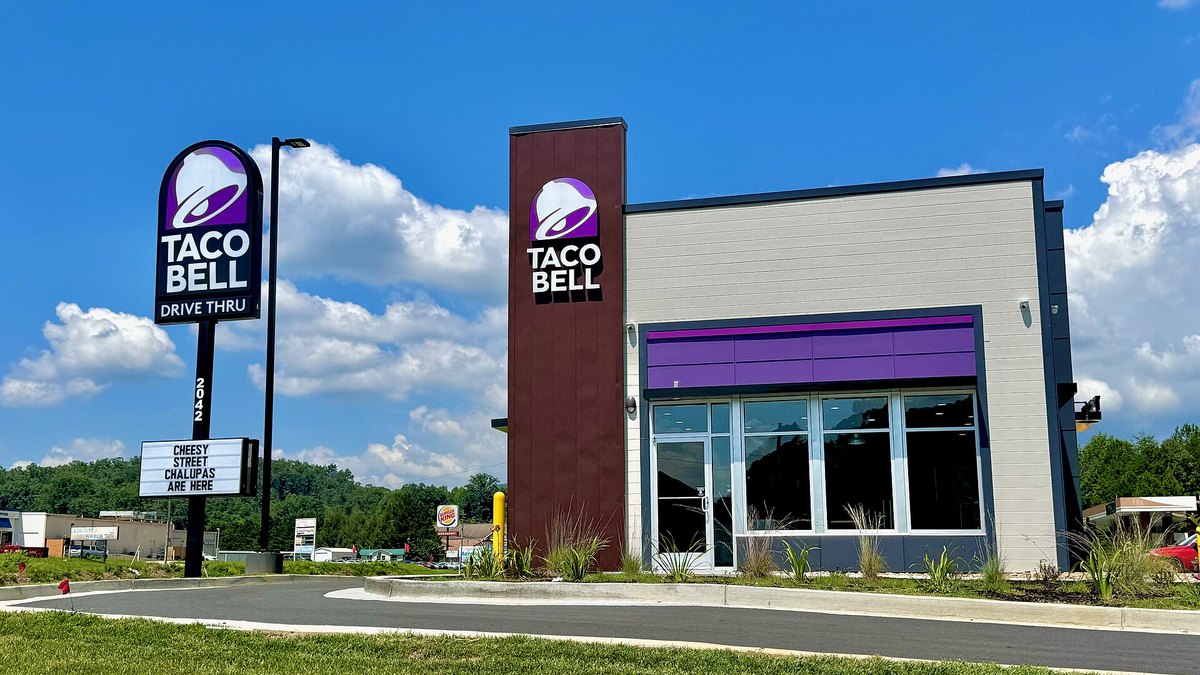
Top photo: Harrison Keely / CC BY 4.0 via Wikimedia Commons