Should I Open or Buy a Taco John's Franchise in 2027?
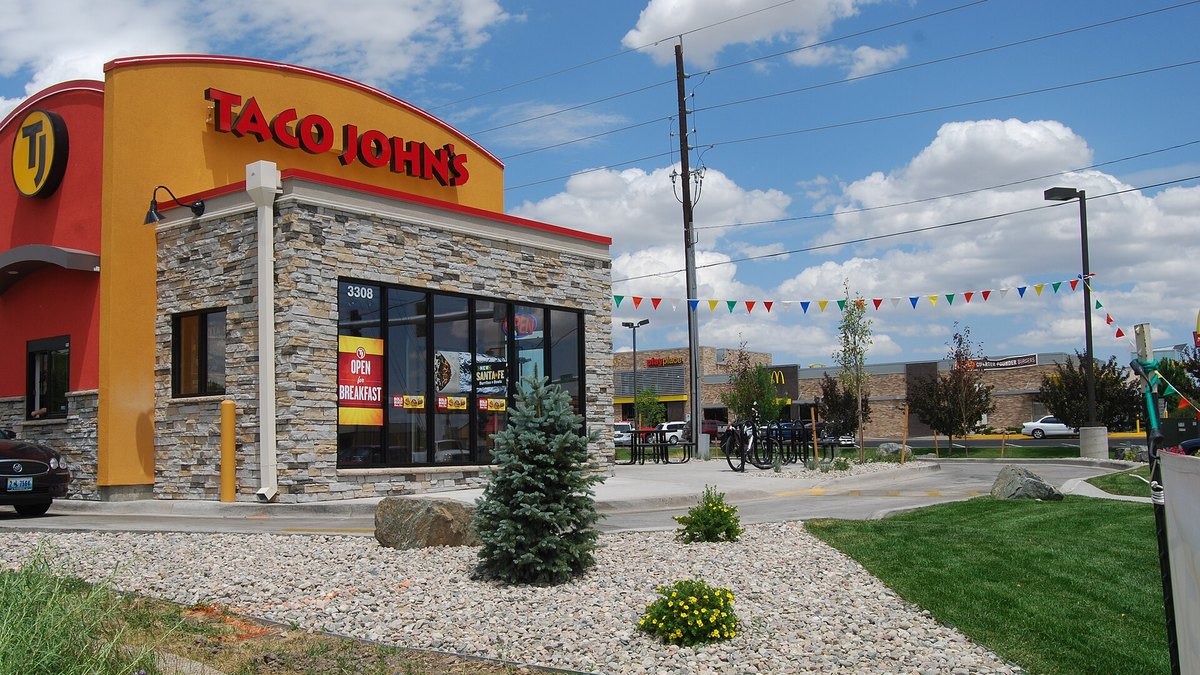
A Taco John's franchise can make sense if you are an experienced restaurant operator with real capital and want to build several units, but it is not a low-risk bet right now, because the system has been shrinking. The 2026 FDD summary on FDD Exchange lists a total initial investment of $457,175 to $2,039,250 depending on format, an initial franchise fee of $40,000 for a traditional restaurant, a 5% royalty and a 4% advertising fee. The company asks for $1M net worth and $500K liquid capital on its qualification page.
The case for: the brand has franchised since 1969, calls itself the third largest Mexican quick-service chain, and publishes a limited Item 19 with sales by format. The case against: the same 2026 summary shows the system falling from 368 outlets in 2023 to 327 at the end of 2025, with 15 outlets closing permanently in 2025, and the company's headline sales figure of $1.8M describes only the top quartile of freestanding restaurants, while the combined 2025 average for freestanding restaurants was $1,260,890. Sales are not profit, and the FDD shows no expense data.
This is analysis, not financial advice. Read the current FDD, talk to current and former franchisees, and have a franchise attorney review the agreement before you sign or pay anything.
What it costs to open a Taco John's
The figures below come from third-party summaries of Taco John's disclosure document on FDD Exchange and Franchise Payback, from the company's franchise site and from Entrepreneur's profile. We did not read the FDD itself, so confirm every number in the FDD you are handed. Each figure is labeled with its FDD year.
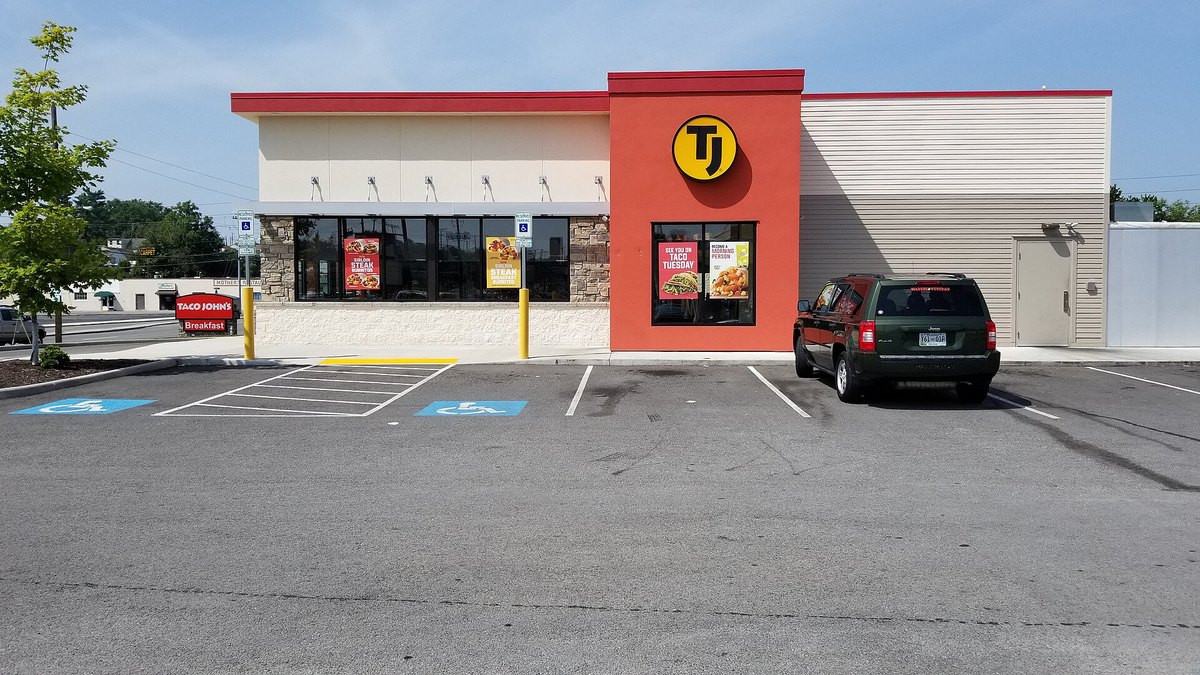
- Total initial investment (2026 FDD, issued March 31, 2026)$457,175 to $2,039,250 across all formats
- Traditional freestanding (2026 FDD, excluding real estate)$814,400 to $2,039,250
- Traditional endcap (2026 FDD)$805,310 to $1,423,750
- Drive-thru focused DT Digital Ole (2026 FDD)$1,069,100 to $2,015,750
- Non-traditional, such as a travel plaza or campus (2026 FDD)$457,175 to $848,000
- Initial franchise fee (2026 FDD)$40,000 traditional, $15,000 non-traditional, due in full at signing
- Fees actually paid in 2025 (2026 FDD)$20,000 to $25,000, because of discounts
- Liquid capital and net worth (company site)$500K liquid capital, $1M net worth
The 2026 summary says veteran and multi-unit discounts can reduce the fee to as low as $0. Entrepreneur lists a veterans incentive of $16,000 off the first traditional unit fee and $12,000 off a second store. Ask which discount applies to you and in writing.
For a traditional freestanding restaurant, the Franchise Payback table of the 2026 Item 7 shows where the money goes: construction $335,200 to $650,100, operating equipment $131,900 to $360,700, site preparation $42,200 to $479,300, design $13,900 to $55,600, signage $30,000 to $52,000, grand opening marketing $25,000 to $35,000 and pre-opening training travel $35,000 to $48,000. Additional funds for the first three months are listed at $25,000 to $40,000. The table excludes the real estate itself, apart from a ground lease line of $17,300 to $48,750, so a site you buy outright costs more.
Royalty, ad fund and other fees
- Royalty (2026 FDD)5% of Net Sales
- Advertising and marketing fee (2026 FDD)4% of Net Sales for traditional restaurants, 2% for non-traditional
- Initial term (2026 FDD)20 years; Entrepreneur lists 10-20 years
- Technology and back-of-house fees (2026 FDD)Back of House system $145 a month, Geofencing $35 a month, learning system $240 a year
- Mystery shop and food safety audits (2026 FDD)$95 a shop and about $246 a visit
- Transfer fee and renewal fee (2026 FDD)Up to $10,000 and 25% of the current initial franchise fee
- Grand opening marketing (2025 FDD)$25,000 to $35,000
The royalty has been 5% in every filing we read, from the 2020 summary through the 2026 summary. The advertising fee is 4% for a traditional restaurant. Both come off net sales before rent, labor and food. The 2026 summary also lists NSF charges and non-compliance, relocation and temporary management fees, with amounts not shown on the summary page. Read Item 6 in the FDD for the full list.
What the Item 19 sales data shows
Taco John's publishes a limited financial performance representation. It reports sales, not profit, and the summaries state that no expense or profit data is shown.
- 2026 FDD Item 19 (2025 sales), traditional freestanding248 restaurants, combined average $1,260,890
- 2026 FDD Item 19 (2025 sales), traditional endcap26 restaurants, average $1,025,570
- 2026 FDD Item 19 (2025 sales), c-store or travel plaza25 restaurants, average $942,291
- 2025 FDD Item 19 (2024 sales), traditional freestanding259 restaurants, combined average $1,260,416
- 2025 FDD Item 19 (2024 sales), endcap and c-store or travel plaza$1,055,405 (28 restaurants) and $982,531 (25 restaurants)
- Company headline, top 25% of freestanding with drive-thru (2025 FDD)$1,881,809 on the West-Mex page; $1,889,495 in a July 2026 release
- Net profit or owner earningsNot published
Read the gap between those numbers. The franchise site's "$1.8M AUV" is labeled as the top 25% of freestanding restaurants with drive-thru, not the whole system. The combined freestanding average in the 2026 FDD summary is $1,260,890, and endcap and travel plaza restaurants average less. The company's own figure appears as $1,881,809 on one page and as $1,889,495 in its July 2026 news release, so ask which number is in the FDD you are reading. One aggregator, Franchise Payback, lists $1,135,000 as average unit volume while also labeling revenue as undisclosed, so we do not rely on it.
For scale, Technomic estimated 2024 U.S. sales of $415 million on 340 units, per the Restaurant Business Top 500 profile. Ask the franchisor for the full Item 19 tables, then ask current owners what rent, labor and food cost them at a similar sales level.
Unit count and trend
- Total outlets at end of 2019 (2020 FDD)387: 376 franchised, 11 company-owned, in 23 states
- Total outlets at end of 2022 (2025 FDD)373
- Total outlets at end of 2023 (2025 FDD)364
- Total outlets at end of 2024 (2025 FDD)340: 333 franchised, 7 company-owned, in 22 states
- Total outlets at end of 2025 (2026 FDD)327: 316 franchised, 11 company-owned
- 2025 openings and closures (2026 FDD)2 opened, 3 terminated, 4 reacquired by the franchisor, 15 closed permanently
- Pipeline (2026 FDD)5 agreements signed but not open; 7 new franchised openings projected
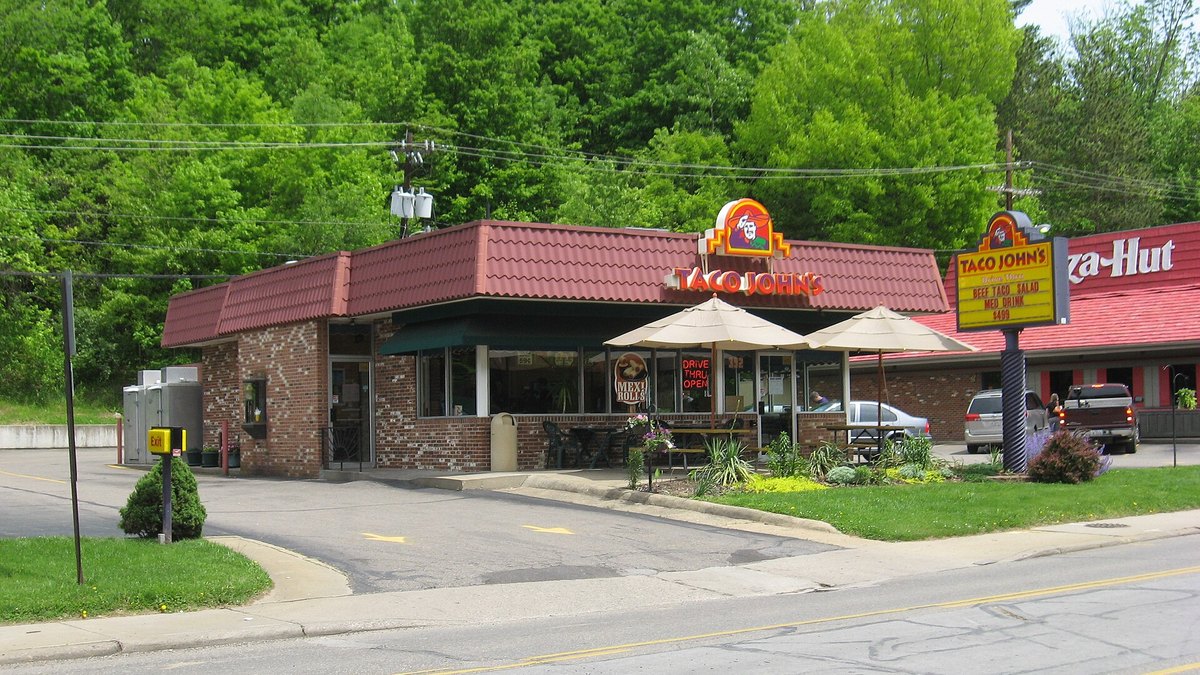
The direction is down. The 2025 FDD summary shows a net decline of 24 outlets in 2024 and the 2026 summary shows the count falling from 368 in 2023 to 327 in 2025, and says to weigh the recent net outlet decline. The two filings do not agree on the 2023 count: the 2025 summary says 364 and the 2026 summary says 368. The company's own releases cite 324 locations across 21 states in mid-2026, and Entrepreneur lists 322 units and a growth rate of -12%.
Rankings tell a mixed story. Entrepreneur ranked Taco John's #193 in its 2026 Franchise 500, #47 in its 2025 Top Food Franchises list and #91 in its 2026 Top Brands for Multi-Unit Owners. Restaurant Business and Technomic placed it at 118 on the displayed list of the 2025 Top 500, based on 2024 sales. A shrinking system can still rank well on sales, so use rankings to shortlist the brand and the FDD to judge it.
Territory: protected, but not exclusive
Entrepreneur lists exclusive territories as available. The FDD summaries read more narrowly. The 2026 summary describes a Protected Territory defined around your premises by demographics and market factors, but says it is not exclusive: the franchisor may operate or license non-traditional locations, alternative distribution channels, delivery and catering inside it. Non-traditional restaurants get no Protected Territory at all. The 2025 summary adds a 2-mile right of first refusal area for new traditional restaurants and says no minimum sales quotas apply.
Those are third-party summaries, so have a franchise attorney read the territory item in the FDD before you pay. The company's territories page marks markets as Growth Market, Future Growth Opportunities or Limited Availability and sends you to a form; it does not publish a list of open territories, so availability near you is Not published.
Who it fits and what owning one involves
- Capital. The company asks for $500K in liquid capital and $1M in net worth. Entrepreneur lists the same two figures and says financing is through third parties.
- Experience. Entrepreneur says Taco John's prefers franchisees who have experience running multiple businesses or franchises. The company site’s what-it-takes page asks for a history of business success and an all-in, hospitality-driven passion, and calls restaurant operations experience a plus.
- Hands-on or hands-off. Entrepreneur lists absentee ownership as allowed and part-time operation as not allowed, with 10 to 55 employees needed to run a restaurant.
- Training. The 2026 FDD summary lists 160 on-the-job hours and 48 classroom hours, held at company restaurants in Cheyenne, Wyoming or Minneapolis, Minnesota, or at the Restaurant Support Center in St. Louis Park, Minnesota.
- Process. The company's what it takes page lays out the steps: an inquiry, an application and due diligence, a market and business planning meeting with a visit to a local store, a Discovery Day at the Restaurant Support Center, signing, then real estate, construction, training and a grand opening.
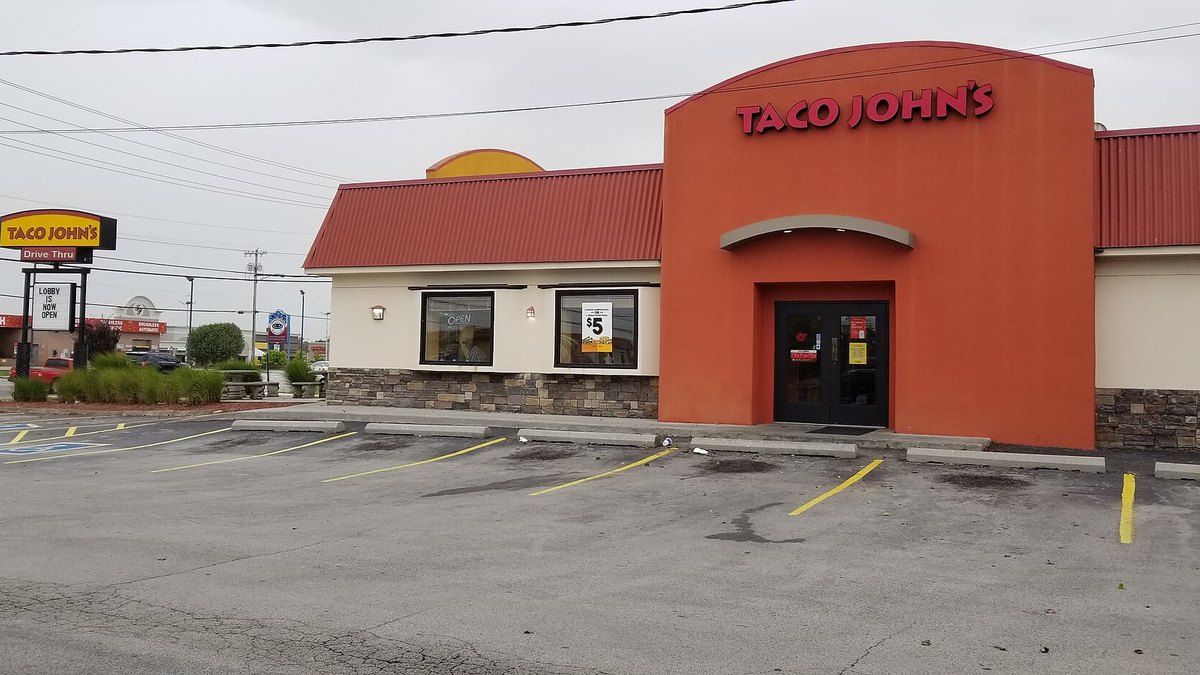
The brand offers formats beyond the classic building. The franchise site lists traditional freestanding, end cap and two modular options, drive-thru only and seating, and the filings add non-traditional sites such as travel plazas and campuses at a lower cost. Check which format your market and budget support, because the sales averages above differ by format.
Recent news that affects the decision
- July 2026, board. A release dated July 29, 2026 added Sarah McAloon to the board; she was most recently Chief Administrative Officer and Interim Brand President of Del Taco. Source.
- June 2026, strategy. CEO Heather Neary wrote that the next wave of restaurant growth is in suburban and rural markets. Source.
- May 2026, technology. The company said its unified cloud-based platform, including point of sale, digital ordering and loyalty, is fully deployed. Source.
- April 2026, development. Ian Poole, previously Vice President of Development for Subway, was named VP of Development. Source.
- March 2026, plan. The company said it plans to pilot locations in convenience stores, travel centers and airports in 2026 and to value-engineer the traditional restaurant model. Source.
These are company announcements, so they show what the franchisor wants you to see. They are worth weighing against the unit trend above, not instead of it.
Questions to ask before you sign
- Why did 15 outlets close in 2025? Ask for the Item 20 tables and the contact list of former franchisees, and call several.
- Which sales number applies to my format and market? Ask how the quartile averages were built and what the lowest quartile earned.
- What does the Protected Territory cover in writing? Ask whether delivery, catering and non-traditional sites can operate inside it.
- What is my all-in cost for my site? Get quotes for construction, equipment and site work in your market rather than relying on the range.
- When do I receive the FDD? Federal rule 16 CFR 436.2 requires the franchisor to furnish it at least 14 calendar-days before you sign a binding agreement or make any payment.
Questions people ask
How much does a Taco John's franchise cost?
The 2026 FDD, as summarized by FDD Exchange, lists a total initial investment of $457,175 to $2,039,250 depending on format, with $814,400 to $2,039,250 for a traditional freestanding restaurant and an initial franchise fee of $40,000 for a traditional restaurant.
What royalty does Taco John's charge?
The 2026 FDD summary lists a royalty of 5% of Net Sales and an advertising fee of 4% for traditional restaurants or 2% for non-traditional restaurants. See FDD Exchange.
How much do Taco John's restaurants make?
Taco John's publishes sales, not profit. The 2026 FDD summary reports a combined 2025 average of $1,260,890 for 248 traditional freestanding restaurants. The company's $1.8M figure covers only the top 25% of freestanding restaurants with drive-thru. See FDD Exchange and the franchise site.
How many Taco John's restaurants are there?
The 2026 FDD summary lists 327 restaurants at the end of 2025, down from 368 in 2023. The company cites 324 locations across 21 states in a July 2026 release. See FDD Exchange and Taco John's.
Is a Taco John's territory exclusive?
Entrepreneur lists exclusive territories as available, but the FDD summaries describe a Protected Territory that is not exclusive. See the 2026 summary and Entrepreneur. Have an attorney read the territory item.
Can I own a Taco John's franchise without working in it?
Entrepreneur lists absentee ownership as allowed and part-time operation as not allowed. See Entrepreneur.
Sources
- FDD Exchange: Taco John's 2026 FDD summary · Investment, fee, royalty, Item 19 (2025 sales), units, territory, training
- FDD Exchange: Taco John's 2025 FDD summary · Prior-year investment, Item 19 (2024 sales), unit counts
- FDD Exchange: Taco John's 2020 FDD summary · Earlier investment, fee and unit figures (year-end 2019)
- Taco John's franchise site · Qualifications, process, formats, company sales claim
- Taco John's franchise news · 2026 company releases
- Entrepreneur: Taco John's franchise information · Franchise 500 ranking, units, ownership, territory
- Restaurant Business: Technomic Top 500 2025, Taco John's · 2024 U.S. sales and units
- Franchise Payback: Taco John's · 2026 Item 7 cost table
- Franzy: Taco John's · 2024 FDD figures
- eCFR: 16 CFR 436.2 · The 14-day rule
Figures were read from the linked pages on November 4, 2026 and come from third-party summaries of the FDD, the company site and trade profiles, not from the FDD itself. Each year is stated with its figure. This is analysis, not financial advice; read the FDD and talk to a franchise attorney.
Top photo: Highplains-scout / CC BY 3.0 via Wikimedia Commons