Top 10 Sales KPIs for Fast Fashion Apparel in 2027
By Kory White · Updated Nov 2026 · 5 min read
Direct answer
Full-price sell-through and unsold surplus is the top sales KPI for fast fashion apparel in 2027, followed by speed to market and the test-and-repeat share. Inditex reported surplus clothing of 0.57% of total articles sold in 2024, ASOS says its Test & React model can bring product to market in as little as three weeks, and Shein starts new styles with batches of about 100 to 200 items. Where a company does not publish a KPI, this page says so.
How much of each drop sells at full price, and how much is left over once the season ends; Inditex reports clothing surplus as a share of total articles sold
Merchandisers and buyers at fast fashion brands: it shows whether a drop was right before discounting hides the miss
Inventory held against sales, and whether inventory is growing faster or slower than sales; H&M reports stock-in-trade as a percentage of rolling 12-month sales
Finance and merchandise planning teams: inventory that grows faster than sales is the early warning for markdowns
How many factories make the product and how close they are to the main markets, which sets how fast a brand can reorder
Sourcing leaders: near-market factories make short lead times and repeat orders possible
Pick by what you want
Best overall
Fast Fashion Full-Price Sell-Through and Unsold Surplus
Best for product speed
Fast Fashion Speed to Market (Design-to-Shelf Lead Time)
Best for buying risk
Fast Fashion Test-and-Repeat Share
Best markdown early warning
Fast Fashion Stock-to-Sales Ratio
Best for cash
Fast Fashion Operating Working Capital
The ranking
1
Fast Fashion Full-Price Sell-Through and Unsold Surplus
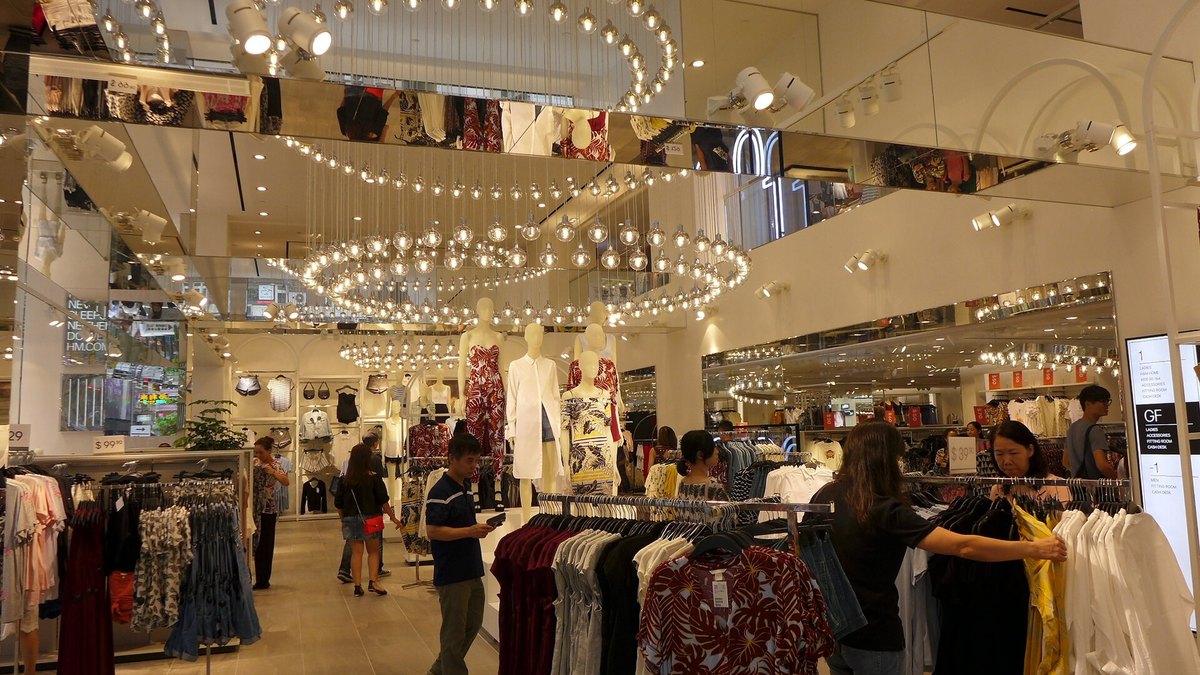
Photo: Nick-D / CC BY-SA 4.0 via Wikimedia Commons
Answrs VerdictThe headline fast fashion sales KPI.
What it measures: How much of each drop sells at full price, and how much is left over once the season ends; Inditex reports clothing surplus as a share of total articles soldInditex surplus: Surplus clothing inventory represented 0.57% of total articles sold in 2024 (the latest year reported, because the 2025 winter campaign was still in stores when the report was written)ASOS sell-through: Record performance from its A/W 2025 range, with a year-to-date sell-through rate c.5ppts higher year on year for the groupASOS full-price mix: Adjusted gross margin of 48.5% in the 26 weeks to 1 March 2026, up 330bps, helped by a significant increase in full price sales mixH&M markdowns: Costs for markdowns in the third quarter of 2026 (1 June to 31 August) were in line with the previous year
This KPI shows how much of each drop sells at full price and how much is left at season end. Inditex reported surplus of 0.57% of total articles sold in 2024, ASOS a sell-through rate c.5ppts higher year on year for its A/W 2025 range, and H&M markdown costs in line with the previous year.
Go ifMerchandisers and buyers at fast fashion brands: it shows whether a drop was right before discounting hides the miss
Skip ifYou want a cross-brand benchmark; Inditex reports surplus, ASOS reports a change in sell-through, and H&M only says whether markdown costs moved
Why #1 over #2: It measures the result that speed is meant to deliver, so it ranks above speed itself.
2
Fast Fashion Speed to Market (Design-to-Shelf Lead Time)
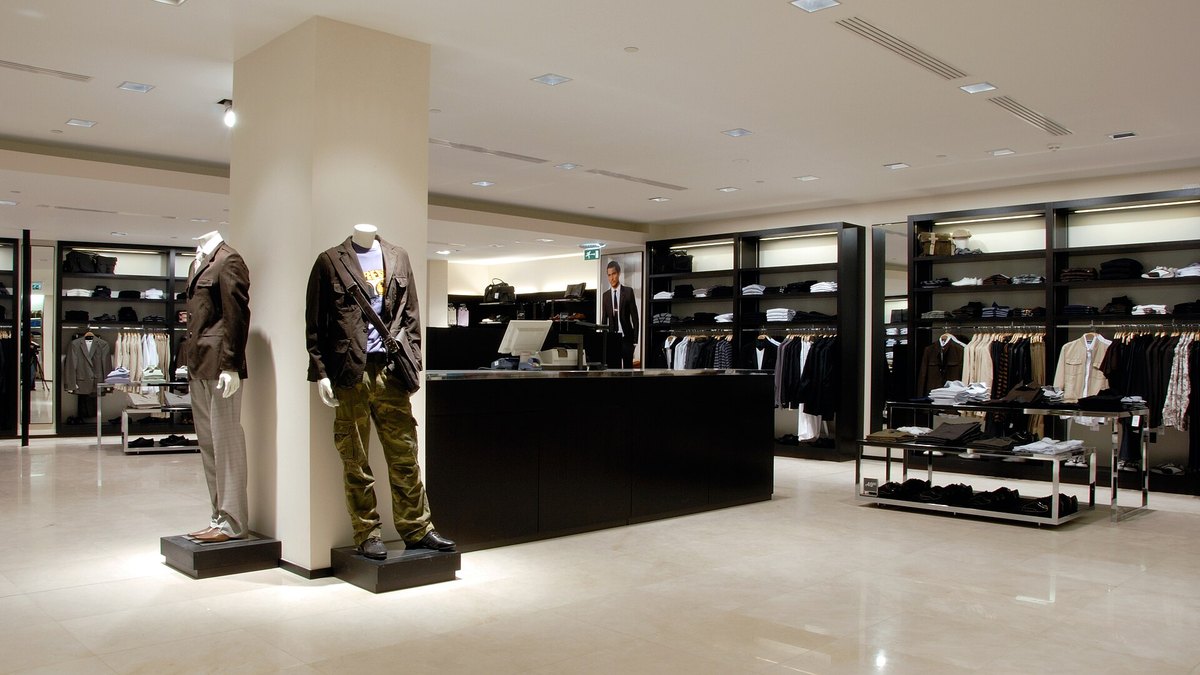
Photo: Chrisloader / CC BY-SA 3.0 via Wikimedia Commons
Answrs VerdictThe speed KPI that makes fast fashion fast.
What it measures: The time from design to the product being on sale, and how much of the range is bought within the season rather than months aheadASOS Test & React: Own-brand Test & React model can bring product to market in as little as three weeksASOS lead times: Overall lead times improved by more than 30 days year on year in the 26 weeks to 1 March 2026; warehouse and carrier changes shortened time to market by more than 6 weeksInditex: Describes its business model as characterised by flexibility, responsiveness and within-season sourcing, which lets it react to fashion trendsH&M: A higher share of product purchases in current season and a more flexible supply chain support product availability with a lower volume of stock
Speed to market is the time from design to sale. ASOS says Test & React can bring product to market in as little as three weeks, and its overall lead times improved by more than 30 days year on year; Inditex cites within-season sourcing.
Go ifProduct and sourcing teams: the shorter the lead time, the later the buying decision and the less stock is bet on a forecast
Skip ifYou need a lead time for Zara or H&M; neither publishes a design-to-shelf figure in the reports cited here
Why #2 over #3: A short lead time is what makes small test runs and fast repeats possible.
3
Fast Fashion Test-and-Repeat Share
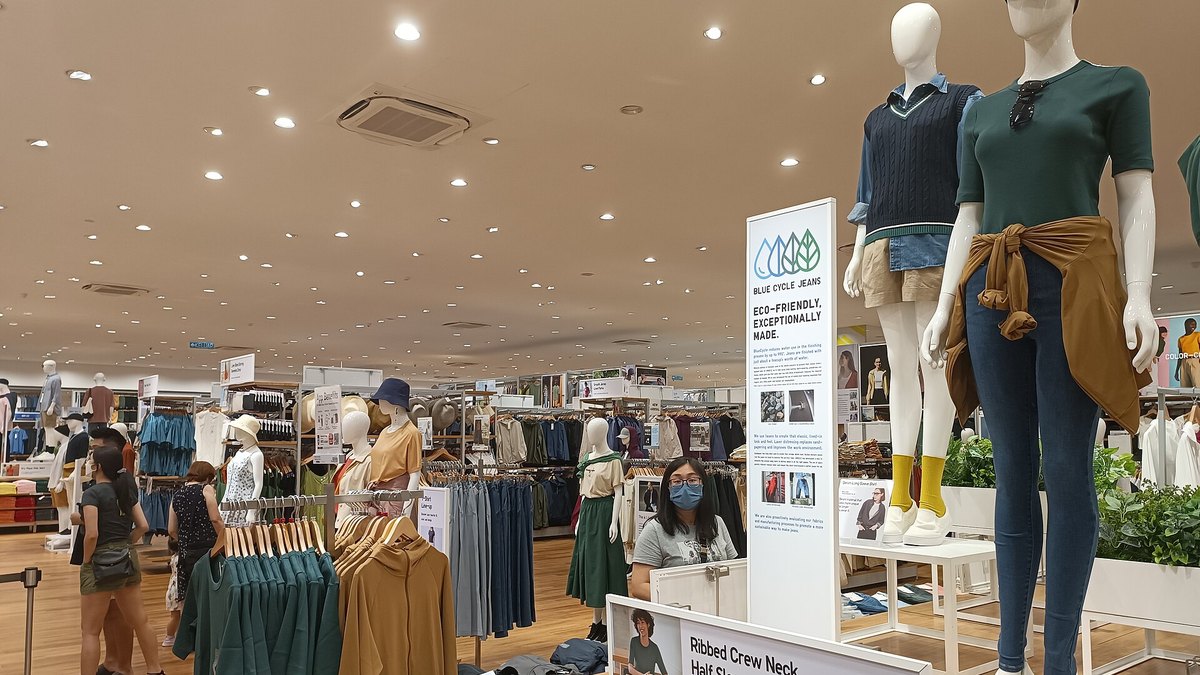
Photo: DMCGN / CC BY 4.0 via Wikimedia Commons
Answrs VerdictThe demand-testing KPI.
What it measures: How small the first order per style is, and what share of sales comes from styles tested in small runs and repeated only when they sellShein: Starts new styles with small initial batches of about 100 to 200 items per style and restocks only those that are in demand (2025 Sustainability and Social Impact Report)ASOS: Test & React grew +6ppts year on year as a proportion of Own Brand sales in the 26 weeks to 1 March 2026, scaling towards a medium-term target of 30%ASOS new categories: Tailoring accounted for c.11% of Test & React sales at the end of the first half of FY26Inditex: Production processes use short runs that are fully adapted to demand, which also allows it to maintain a tight inventory
The test-and-repeat share tracks how much of the range starts small and is repeated only when it sells. Shein starts with about 100 to 200 items per style, and ASOS grew Test & React by +6ppts of Own Brand sales towards a 30% target.
Go ifOnline and fast fashion brands deciding how much of the range to buy in small test runs instead of full seasonal orders
Skip ifYou run a basics-led range such as Uniqlo, where long runs of core items matter more than testing
Why #3 over #4: Small first orders cut the stock at risk, which keeps the stock-to-sales ratio in check.
4
Fast Fashion Stock-to-Sales Ratio
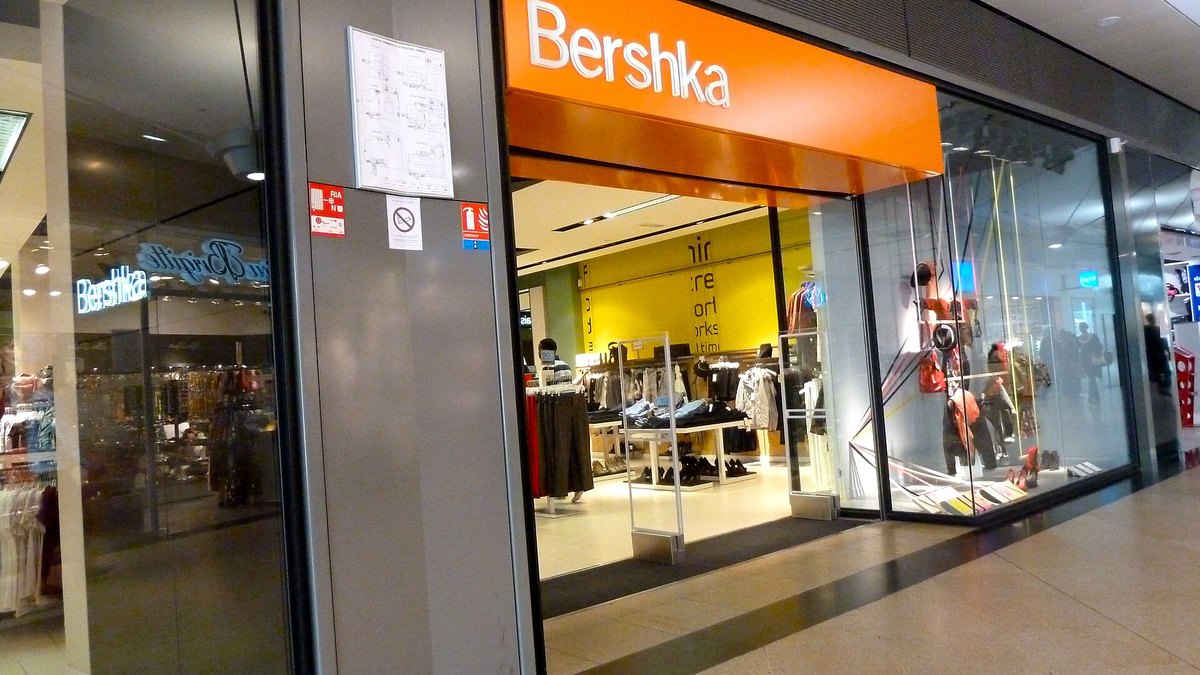
Photo: JIP / CC BY-SA 4.0 via Wikimedia Commons
Answrs VerdictThe inventory discipline KPI.
What it measures: Inventory held against sales, and whether inventory is growing faster or slower than sales; H&M reports stock-in-trade as a percentage of rolling 12-month salesH&M, 31 August 2026: Stock-in-trade of SEK 39,355 m (37,938), 17.8 percent (16.4) of rolling 12 months sales; up 9 percent currency adjusted, explained by more goods in transitInditex, 31 July 2026: Inventories of 3,789 million euros against 3,466 million, 9.3% higher, while first-half sales grew 7.6%Inditex, 31 January 2026: Inventory was 2% lower than a year earlier at the end of FY2025ASOS, 1 March 2026: Inventories of £370.3m against £411.7m at 2 March 2025
The stock-to-sales ratio compares inventory with sales. H&M held stock-in-trade of 17.8 percent of rolling 12 months sales at 31 August 2026, and Inditex inventory was 9.3% higher at 31 July 2026 while sales grew 7.6%.
Go ifFinance and merchandise planning teams: inventory that grows faster than sales is the early warning for markdowns
Skip ifYou read one quarter alone; H&M and Inditex both point to goods in transit and season timing behind short-term moves
Why #4 over #5: Inventory running ahead of sales warns of markdowns before the sales growth figure shows it.
5
Fast Fashion Currency-Neutral Sales Growth
Photo: Wpcpey / CC BY-SA 4.0 via Wikimedia Commons
Answrs VerdictThe top-line growth KPI.
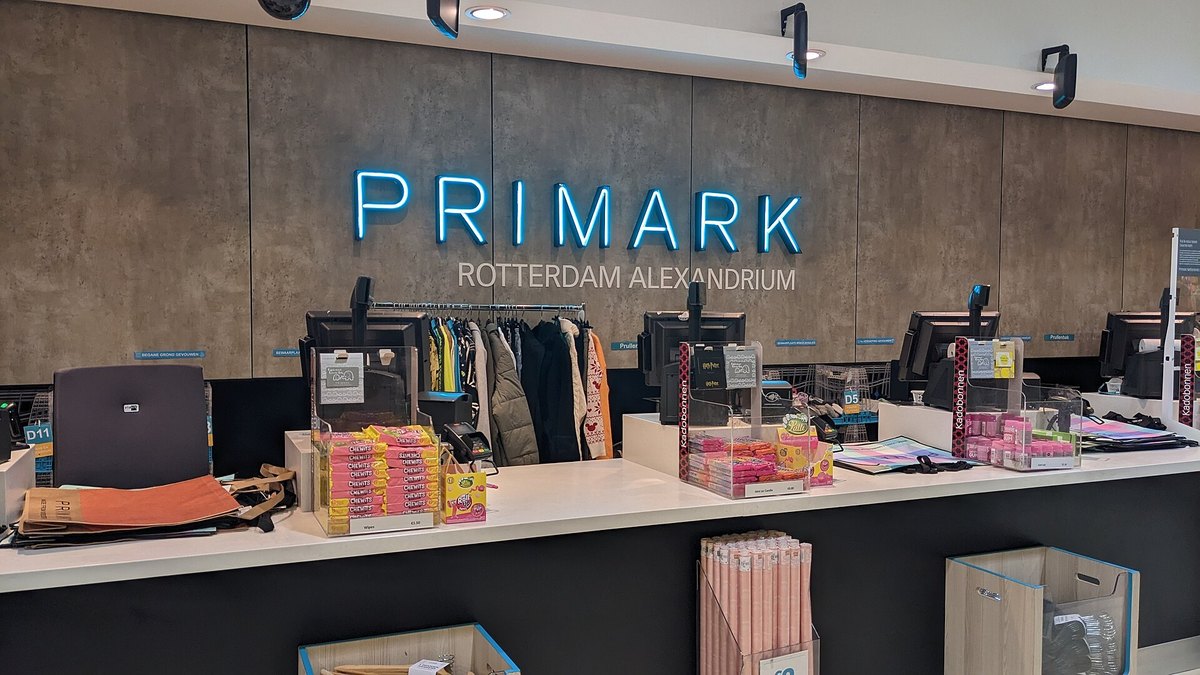
What it measures: Total sales growth from stores and online with currency effects removed; unlike comparable sales it includes new and closed spaceInditex, first half 2026: Sales up 7.6% to 19.8 billion euros; up 9.2% in constant currency. Store and online sales in constant currency rose 9% between 1 August and 7 September 2026Inditex, FY2025: Sales up 3.2% to 39.9 billion euros; up 7.0% in constant currencyH&M, third quarter 2026: Sales in local currencies up 1 percent, with around 2 percent fewer stores; September 2026 sales expected up 1 percent in local currenciesPrimark, 24 weeks to 28 February 2026: Sales grew 2%, with new store openings contributing 4% to growth; UK like-for-like sales up 1.3% and Europe down 5.6%
Currency-neutral sales growth strips out exchange rates. Inditex grew 9.2% in constant currency in the first half of 2026, H&M grew 1 percent in local currencies in the third quarter, and Primark sales grew 2% with new stores contributing 4%.
Go ifInvestors comparing brands that report in different currencies: it shows real demand growth before exchange rates
Skip ifYou want same-store performance; this figure includes new and closed stores, so pair it with like-for-like sales
Why #5 over #6: Top-line growth matters more than returns, but returns decide how much of it is kept online.
6
Fast Fashion Online Return Rate
Photo: nl:User:EuroJohn / en:User:EuroJohn / Public domain via Wikimedia Commons
Answrs VerdictThe net-sales leakage KPI.
What it measures: The share of online sales sent back, which reduces net sales and adds handling cost to every orderASOS, first half FY26: Underlying returns rate improved by 160bps year on year in the 26 weeks to 1 March 2026; the returns transparency tool brought a 1ppt benefit for each month it was activeASOS fit and quality: Returns linked to "doesn't fit me" and "poor quality/faulty" declined 80bps year on yearASOS exchanges: Historically only c.1-3% of customers who returned an item bought a replacement; since exchanges launched, c.9-11% of returned items are exchanged, and c.80% of customers keep the exchanged productInditex, H&M, Primark and Fast Retailing: None found: the reports cited here do not publish a return rate for stores or online
The return rate is the share of online sales sent back. ASOS improved its underlying returns rate by 160bps year on year, and c.9-11% of returned items are now exchanged; the other companies cited do not publish a rate.
Go ifOnline fast fashion sellers: each point of returns comes straight off net sales and profit per order
Skip ifYou need a store-versus-online split; none of the companies cited publishes one
Why #6 over #7: Returns hit net sales directly, while operating margin sums up many causes at once.
7
Fast Fashion Operating Margin
Photo: *angys* / CC BY-SA 4.0 via Wikimedia Commons
Answrs VerdictThe profitability KPI.
What it measures: Operating profit as a share of revenue: what is left after cost of goods, markdowns, stores, logistics and overheadsFast Retailing, FY2026 (to 31 August 2026): Operating profit of 743.1 billion yen, 18.7% of revenue; UNIQLO International business profit of 439.8 billion yen (18.2%) and UNIQLO Japan 196.0 billion yen (18.1%)H&M, 2026: Operating margin of 10.6 percent (8.6) in the third quarter, 8.3 percent (7.1) for the nine months and 9.0 percent for the rolling 12 monthsPrimark, 24 weeks to 28 February 2026: Adjusted operating margin of 10.1%; full-year margin expected to be approximately 10%Inditex, first half 2026: EBIT up 7.6% to 3.8 billion euros; PBT margin of 19.5%
Operating margin shows how much of revenue is left after all costs. Fast Retailing reported 18.7% for FY2026, H&M 10.6 percent for the third quarter of 2026 and Primark an adjusted 10.1%.
Go ifComparing whether fast sales turn into profit after markdowns, freight and store costs
Skip ifYou compare definitions loosely; Fast Retailing also reports business profit, Primark an adjusted margin, and Inditex headlines PBT margin
Why #7 over #8: Profit per sale ranks above store footprint, which only adds sales once the model is profitable.
8
Fast Fashion Net Space Growth and Store Rationalisation
Photo: Chrisloader / CC BY-SA 3.0 via Wikimedia Commons
Answrs VerdictThe footprint KPI.
What it measures: Growth in selling space after openings, enlargements and closures, alongside the change in store countInditex, FY2025: Gross space up 5.3% in 2025, with 190 openings, 217 refurbishments and 293 absorptions; 5,460 stores at the end of FY2025Inditex, 2026: 5,444 stores at the end of the first half of 2026; annual gross space growth of around 5% expected in 2026, with positive net space contributionH&M, 31 August 2026: 4,023 (4,118) stores; 59 opened and 137 closed in nine months; around 90 openings and around 170 closures planned for 2026; able to renegotiate or exit around a third of leases each yearPrimark: New stores expected to contribute around 4% to sales growth in 2026; targeting white space growth of around 4% to 5% per annumFast Retailing: Forecasts a group network of 3,545 stores by the end of August 2027
Net space growth tracks selling space after openings and closures. Inditex grew gross space 5.3% in 2025 while absorbing 293 stores, H&M had 4,023 stores against 4,118 a year earlier, and Primark targets white space growth of around 4% to 5% per annum.
Go ifReal estate and expansion teams: fast fashion groups are growing space while closing stores, so store count alone misleads
Skip ifYou run online only; ASOS and Shein do not grow through store space
Why #8 over #9: Space drives sales growth directly, while working capital is how that growth is funded.
What it measures: Inventories plus trade receivables minus trade payables; a negative figure means suppliers fund the stock until it sellsInditex, 31 July 2026: Operating working capital of minus 6,965 million euros against minus 6,066 million, with trade and other payables of 11,912 millionInditex cash flow, first half 2026: Change in working capital of minus 470 million euros against minus 1,253 million; free cash flow of 2,299 million against 1,165 millionH&M, third quarter 2026: Cash flow from operating activities up 19 percent to SEK 11,908 m; more in-season purchasing supports a lower level of tied-up working capitalASOS: Free cash flow expected to be broadly neutral for FY26, underpinned by improved inventory efficiency
Operating working capital is inventory plus receivables minus payables. Inditex reported minus 6,965 million euros at 31 July 2026, so suppliers fund its stock, and H&M cash flow from operating activities rose 19 percent in the third quarter.
Go ifCFOs: fast turns that sell stock before suppliers are paid turn sales growth into cash
Skip ifYou need a peer benchmark; only Inditex publishes an operating working capital line in the releases cited
Why #9 over #10: It turns the speed and inventory KPIs above into cash, which the supplier base below only makes possible.
10
Fast Fashion Proximity Sourcing and Supplier Base
Photo: Nemigo / Public domain via Wikimedia Commons
Answrs VerdictThe supply-base KPI.
What it measures: How many factories make the product and how close they are to the main markets, which sets how fast a brand can reorderInditex, 2025: Supply chain of 6,684 factories in 49 markets (6,615 in 2024); suppliers organised into 10 clusters including Spain, Portugal, Morocco and TürkiyeInditex proximity: A very significant portion of the cutting, sewing, dyeing, washing, printing or finishing factories that made its garments in 2025 are in proximity markets such as Spain, Portugal, Morocco or TürkiyeShein, 2025: More than 7,500 contract manufacturers in China, the majority of suppliers of SHEIN-branded products; suppliers are integrated into its platforms
The supplier base sets how fast a brand can reorder. Inditex used 6,684 factories in 49 markets in 2025, with a very significant portion in proximity markets, and Shein reported more than 7,500 contract manufacturers.
Go ifSourcing leaders: near-market factories make short lead times and repeat orders possible
Skip ifYou want a percentage of production made near market; Inditex describes proximity in words rather than as a share in its 2025 report
How we ranked these
We ranked KPIs on how directly each one drives full-price sales and profit in a fast fashion model and on how many of six companies disclose it, using Inditex’s first-half 2026 results and 2025 annual report, H&M’s nine-month report 2026, ASOS’s interim results to 1 March 2026, Fast Retailing’s FY2026 results summary, Associated British Foods’ 2026 interim results for Primark and Shein’s 2025 Sustainability and Social Impact Report. Companies define some KPIs differently, so each figure names its company and period. Where none of the sources publishes a KPI, the page says so. Facts are taken from each maker's own published information; check the official site before you buy.
Questions people ask
What is the most important KPI for a fast fashion brand?
Full-price sell-through, because it shows whether a drop sold before discounting. Inditex reported surplus clothing of 0.57% of total articles sold in 2024, and ASOS reported a sell-through rate c.5ppts higher year on year for its A/W 2025 range.
How fast can fast fashion get product to market?
ASOS says its Test & React model can bring product to market in as little as three weeks, and its overall lead times improved by more than 30 days year on year. Shein starts new styles with batches of about 100 to 200 items per style and restocks only those in demand.
How much inventory do fast fashion retailers hold?
H&M held stock-in-trade of SEK 39,355 m at 31 August 2026, 17.8 percent of rolling 12 months sales. Inditex held 3,789 million euros at 31 July 2026, 9.3% higher, while sales grew 7.6%.
What operating margin do fast fashion companies make?
Fast Retailing reported 18.7% for FY2026, H&M 10.6 percent for the third quarter of 2026 and Primark an adjusted 10.1% for the 24 weeks to 28 February 2026.
Operating margin, latest reported 2026 period at a glance
H&M (nine months 2026)8.3 %
Primark (24 weeks to 28 February 2026, adjusted)10.1 %
H&M (third quarter 2026)10.6 %
Fast Retailing (FY2026)18.7 %
Operating margin, latest reported 2026 period, as published by each maker. Picks without a published figure are left off.