Top 10 Sales KPIs in the Fitness Center Industry in 2027
By Kory White · Updated Nov 2026 · 5 min read
Direct answer
Same-club sales growth is the top sales KPI for a fitness center in 2027, followed by membership count and average revenue per membership. In Q3 2026 Planet Fitness, a franchisor, reported system-wide same club sales up 1.5% and Life Time, a club operator, reported comparable center revenue of 8.7%, while Xponential Fitness reported North America same store sales down 6.8% in Q2 2026. Where a company did not publish a figure, this page says so.
Sales from clubs open for about a year or more compared with the same period a year earlier; Planet Fitness measures it solely on monthly dues billed, Life Time calls it comparable center revenue, and Xponential measures same store sales for traditional North America studios
Operators checking whether existing clubs are growing without counting new openings
Members at the end of a period; Planet Fitness reports approximate members, Life Time reports center memberships and, separately, total subscriptions that include on-hold memberships
Xponential defines North America system-wide sales as gross sales by all studios, including franchisee sales that are not Xponential revenue; it receives approximately 7% of franchisee sales as royalty and 2% as marketing fund revenue
Franchisors tracking the sales their royalties are paid on
Average sales per location; Xponential calculates quarterly run-rate average unit volume (AUV) as average quarterly sales of traditional North America studios open at least six months, multiplied by four
Franchise buyers and franchisors testing how much a typical location sells
Total revenue of fitness and recreational sports centers (NAICS 713940, employer firms) in the U.S. Census Bureau Service Annual Survey, as listed by the Federal Reserve Bank of St. Louis (FRED)
Operators and investors sizing the whole market against company results
Pick by what you want
Best overall
Fitness Center Same-Club Sales Growth
Best for franchisors
Fitness Center System-Wide Sales
Best for premium clubs
Fitness Center Average Revenue per Membership
Best for add-on services
Fitness Center In-Center Revenue Share
Best for market size
Fitness Center Industry Revenue
The ranking
1
Fitness Center Same-Club Sales Growth
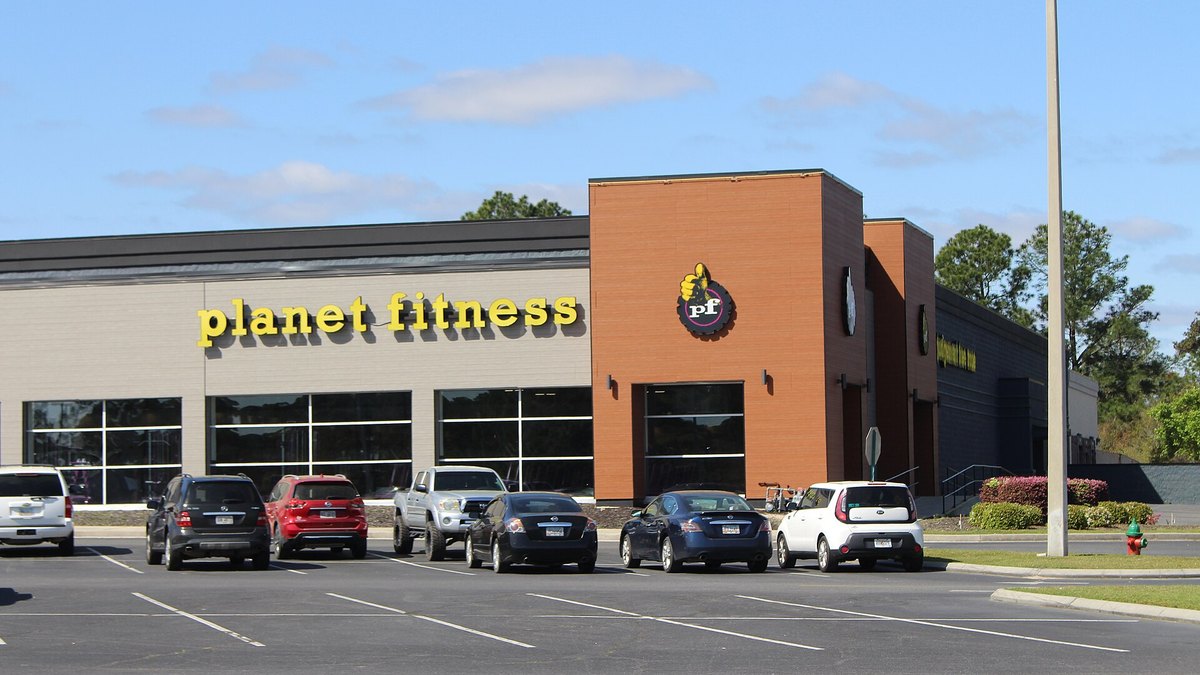
Photo: Michael Rivera / CC BY-SA 4.0 via Wikimedia Commons
Answrs VerdictThe headline sales KPI.
Definition: Sales from clubs open for about a year or more compared with the same period a year earlier; Planet Fitness measures it solely on monthly dues billed, Life Time calls it comparable center revenue, and Xponential measures same store sales for traditional North America studiosPlanet Fitness (franchisor), Q3 2026: System-wide same club sales increased 1.5%, with franchisee-owned clubs up 1.5% and corporate-owned clubs up 1.8%; full-year outlook raised to approximately 1.5% to 2% from approximately 1%Life Time (club operator), Q3 2026: Comparable center revenue of 8.7% versus 10.6% in Q3 2025; 8.8% for the nine months versus 11.5%; full-year guidance of 8.5% to 8.7%Xponential Fitness (franchisor), Q2 2026: North America same store sales decreased 6.8%, compared with growth of 2.4% in Q2 2025; the Q3 2026 release was not readable for this page
Same-club sales growth shows whether existing clubs sell more without new openings. Planet Fitness reported system-wide same club sales up 1.5% in Q3 2026 and Life Time reported comparable center revenue of 8.7%. Xponential reported North America same store sales down 6.8% in Q2 2026.
Go ifOperators checking whether existing clubs are growing without counting new openings
Skip ifYou need one cross-company number; the three companies define the base differently
Why #1 over #2: It strips out new openings, where system-wide sales mix them in.
2
Fitness Center Membership Count and Growth
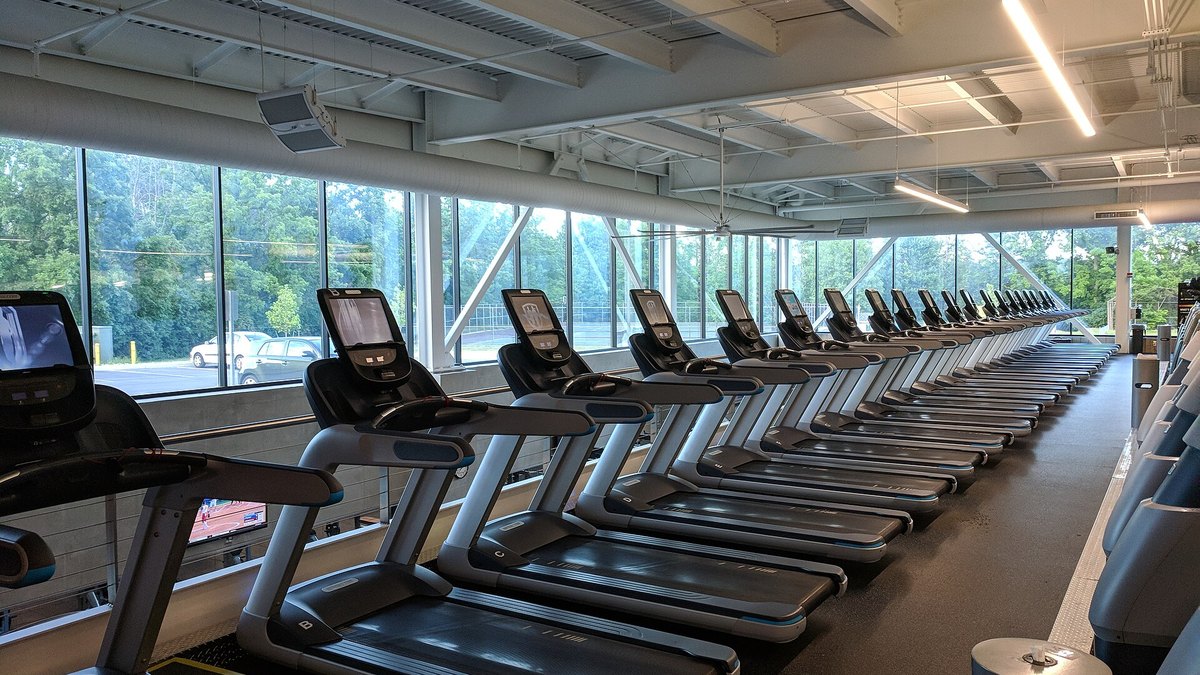
Photo: DanielPenfield / CC BY-SA 4.0 via Wikimedia Commons
Answrs VerdictThe scale KPI.
Definition: Members at the end of a period; Planet Fitness reports approximate members, Life Time reports center memberships and, separately, total subscriptions that include on-hold membershipsPlanet Fitness (franchisor), September 30, 2026: Approximately 21.5 million members and 2,962 clubs; the release read states no year-over-year change in membersLife Time (club operator), September 30, 2026: Center memberships of 858,747, up 2.2% (18,125) from 840,622, and down 1,294 (0.2%) from June 30, 2026; total subscriptions of 908,454, up 1.9%Life Time mix note: Growth included an approximately 21,500 reduction in memberships administered through medical insurance providers, which have significantly lower average duesHealth & Fitness Association, 2025: An estimated 81 million Americans ages six and older held a gym membership, a 26.1% penetration rate and a 5.2% increase from 2024
Membership count is the base that dues are billed on. Planet Fitness reported approximately 21.5 million members at September 30, 2026, Life Time reported center memberships of 858,747, and the Health & Fitness Association estimated 81 million U.S. members in 2025.
Go ifOperators sizing the base that dues are billed on
Why #2 over #3: It sizes the base, where revenue per membership shows its value.
3
Fitness Center Average Revenue per Membership
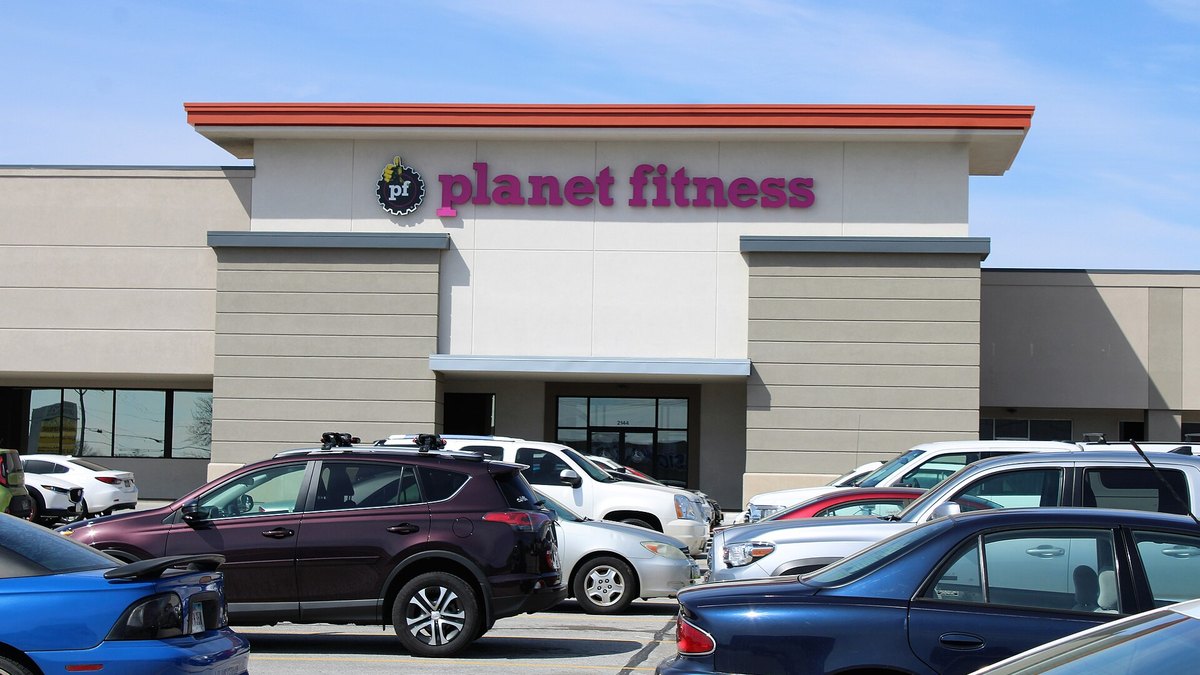
Photo: Tony Webster / CC BY 2.0 via Wikimedia Commons
Answrs VerdictThe yield KPI.
Definition: Life Time reports average center revenue per center membership, which includes in-center revenue as well as duesLife Time (club operator), Q3 2026: $1,016 versus $907 in Q3 2025, up 12.0%Life Time, nine months 2026: $2,914 versus $2,638, up 10.5%; Life Time credits higher average dues from improved membership mix and higher use of in-center offerings, particularly Dynamic Personal TrainingPlanet Fitness and Xponential: Not published: the Planet Fitness Q3 2026 and Xponential Q2 2026 releases read give no revenue per member or per studio member, and this page does not compute one
Average revenue per membership shows what each member is worth. Life Time reported $1,016 for Q3 2026 versus $907 a year earlier, and credited higher dues and in-center use. Planet Fitness and Xponential did not publish a comparable figure.
Go ifPremium operators judging whether price and add-on services are lifting each member
Skip ifYou run a low-price club; Planet Fitness does not publish this figure
Why #3 over #4: It measures price and mix, where member counts ignore both.
4
Fitness Center System-Wide Sales
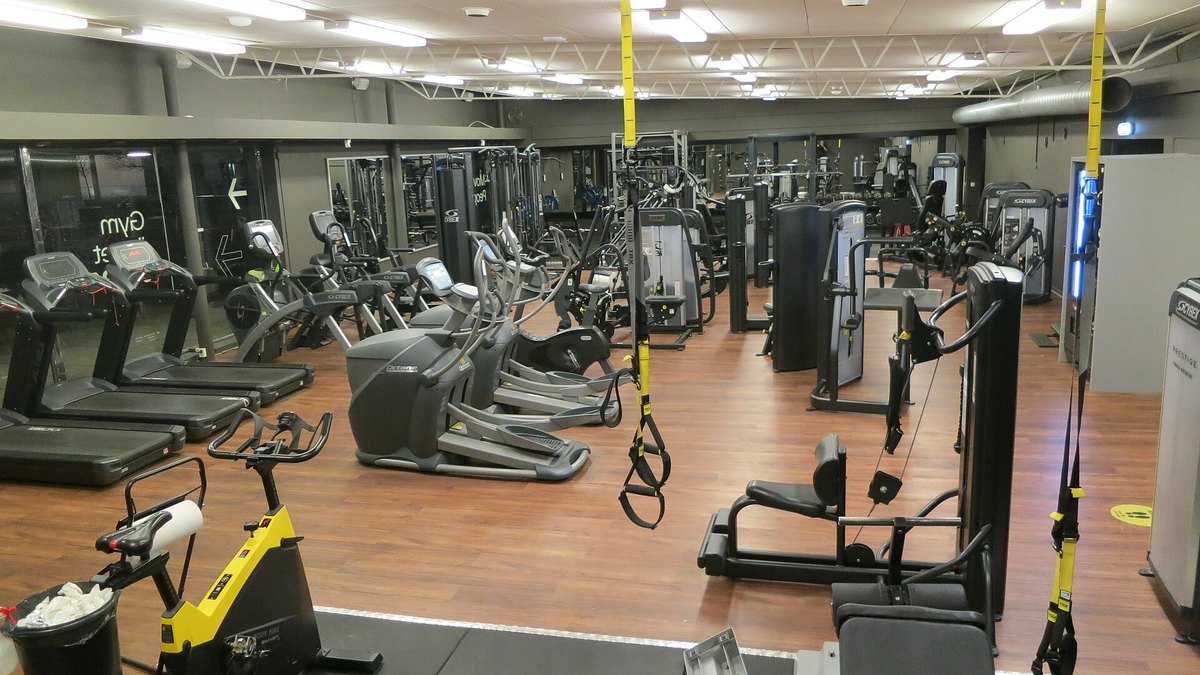
Photo: Farragutful / CC BY-SA 4.0 via Wikimedia Commons
Answrs VerdictThe franchisor KPI.
Definition: Xponential defines North America system-wide sales as gross sales by all studios, including franchisee sales that are not Xponential revenue; it receives approximately 7% of franchisee sales as royalty and 2% as marketing fund revenuePlanet Fitness (franchisor), Q3 2026: System-wide sales increased $53.4 million to $1.3 billionXponential Fitness (franchisor), Q2 2026: North America system-wide sales of $437.3 million, flat year over year; 2026 outlook of $1.70 billion to $1.75 billion, a decrease of 1% at the midpointLife Time (club operator): Not applicable: Life Time operates its own centers and reports total revenue of $893.5 million, up 14.2%, in Q3 2026
System-wide sales is the franchisor view of sales. Planet Fitness reported an increase of $53.4 million to $1.3 billion in Q3 2026, and Xponential reported $437.3 million for North America in Q2 2026, flat year over year. Life Time owns its centers and reports revenue instead.
Go ifFranchisors tracking the sales their royalties are paid on
Skip ifYou own the clubs; your revenue is the figure, not system-wide sales
Why #4 over #5: It shows the sales royalties follow, where same-club sales show the trend.
5
Fitness Center Average Unit Volume
Photo: Farragutful / CC BY-SA 4.0 via Wikimedia Commons
Answrs VerdictThe unit-economics KPI.
Definition: Average sales per location; Xponential calculates quarterly run-rate average unit volume (AUV) as average quarterly sales of traditional North America studios open at least six months, multiplied by fourXponential Fitness (franchisor), Q2 2026: North America quarterly run-rate AUV of $659,000 compared with $686,000 in Q2 2025Planet Fitness and Life Time: Not published: the Planet Fitness Q3 2026 and Life Time Q3 2026 releases read give no average unit volume
Average unit volume shows how much a typical location sells. Xponential reported a North America quarterly run-rate AUV of $659,000 for Q2 2026 versus $686,000 a year earlier. Planet Fitness and Life Time did not publish an AUV in the releases read.
Go ifFranchise buyers and franchisors testing how much a typical location sells
Skip ifYou compare big clubs with boutique studios; the units are very different in size
Why #5 over #6: It speaks to unit economics, where system-wide sales hide the per-location picture.
6
Fitness Center In-Center Revenue Share
Photo: R. Henrik Nilsson / CC BY 4.0 via Wikimedia Commons
Answrs VerdictThe add-on KPI.
Definition: The share of center revenue that comes from services other than membership dues and enrollment fees; Life Time reports it as in-center revenueLife Time (club operator), Q3 2026: In-center revenue of $249,026 thousand, or 28.6% of center revenue, versus $213,591 thousand, or 28.1%, in Q3 2025Life Time, dues side, Q3 2026: Membership dues and enrollment fees of $622,101 thousand, or 71.4%, versus $547,306 thousand, or 71.9%Life Time, nine months 2026: In-center revenue of 28.1% of center revenue versus 27.8% a year earlierPlanet Fitness and Xponential: Not published as an in-club revenue share in the releases read
In-center revenue share shows how much sells beyond dues. Life Time reported in-center revenue of $249,026 thousand, or 28.6% of center revenue, in Q3 2026 versus 28.1% a year earlier, with dues and enrollment fees at 71.4%.
Go ifClubs selling training and other services on top of dues
Skip ifYour model is dues only; the share will be near zero
Why #6 over #7: It shows revenue beyond dues, where average revenue per membership blends the two.
7
Fitness Center New Club Openings
Photo: Chuze Fitness / CC BY-SA 4.0 via Wikimedia Commons
Answrs VerdictThe footprint KPI.
Definition: Locations opened in the period; Xponential reports gross new studios and net new studio openings, Life Time reports net new center openingsPlanet Fitness (franchisor), Q3 2026: 33 new clubs opened, 25 franchisee-owned and 8 corporate-owned, for 2,962 clubs; 2026 outlook of approximately 190 to 195 new clubs including Be-Fit, previously 180 to 190Life Time (club operator), Q3 2026: One new center opened in Q3 and 196 centers operated at September 30; seven opened in the nine months versus six; 14 new clubs planned for 2026Xponential Fitness (franchisor), Q2 2026: Opened 67 gross new studios; 2026 outlook of net new studio openings of approximately 150, a decrease of 25%
New openings show how fast the footprint grows. Planet Fitness opened 33 clubs in Q3 2026, Life Time opened one center and operated 196, and Xponential opened 67 gross new studios in Q2 2026 with a 2026 outlook of approximately 150 net new studios.
Go ifGrowth-stage operators and franchisors measuring how fast the footprint is expanding
Skip ifYou judge health by existing clubs; use same-club sales
Why #7 over #8: It measures expansion, where franchise sales measure the pipeline behind it.
8
Fitness Center Franchise Licenses and Equipment Sales
Photo: San Francisco Foghorn / CC BY 2.0 via Wikimedia Commons
Answrs VerdictThe pipeline KPI.
Definition: Franchisors earn revenue from selling licenses and from equipment sold to franchisee clubs; both lead club openingsPlanet Fitness (franchisor), Q3 2026: Equipment segment revenue of $87.6 million, up 11.1%, with equipment sold to 21 new franchisee-owned clubs versus 27 a year earlier; outlook of approximately 135 to 140 new equipment placements, previously 150 to 160Xponential Fitness (franchisor), Q2 2026: Sold 53 franchise licenses; equipment revenue of $7.1 million, down 26%, on fewer global equipment installations tied to fewer openings and lower license salesLife Time: Not applicable: it operates its own centers and does not sell franchises
Franchise licenses and equipment sales signal the clubs to come. Xponential sold 53 franchise licenses in Q2 2026, and Planet Fitness reported equipment sales to 21 new franchisee-owned clubs in Q3 2026 versus 27 a year earlier.
Go ifFranchisors reading the pipeline of clubs that will open next
Skip ifYou own your clubs; this KPI is a franchisor revenue line
Why #8 over #9: It is a leading signal, where openings are the result.
9
Fitness Center Visits per Location and Inactive Members
Photo: Shixart1985 / CC BY 2.0 via Wikimedia Commons
Answrs VerdictThe engagement KPI.
Definition: Visits counted per facility and the share of memberships with no use; Health & Fitness Association (HFA) tracks both industry-wideHFA, 2025, commercial facilities: More than 184,000 visits per location annually, and the fourth quarter of 2025 was the 19th consecutive quarter of visitation growthHFA, 2025, inactive memberships: A record low of 4.6%HFA consumer report, 2025: An estimated 7 billion total visits, above the 2019 pre-pandemic peak; inactive share fell from around 10% to 4.6%; 100 million people used a fitness facility counting non-membersLife Time (club operator), Q3 2026: Credits higher member utilization of in-center offerings but publishes no visit count in the release read
Visits show whether members use what they buy. The Health & Fitness Association reported more than 184,000 visits per commercial location in 2025 and a record-low inactive membership share of 4.6%. No operator in the releases read published visit counts.
Go ifOperators testing whether members use what they pay for
Skip ifYou need a company figure; Planet Fitness, Life Time and Xponential publish no visit counts in the releases read
Why #9 over #10: It tests engagement, where the Census series sizes the market.
10
Fitness Center Industry Revenue
Photo: Harrison Keely / CC BY 4.0 via Wikimedia Commons
Answrs VerdictThe market-size KPI.
Definition: Total revenue of fitness and recreational sports centers (NAICS 713940, employer firms) in the U.S. Census Bureau Service Annual Survey, as listed by the Federal Reserve Bank of St. Louis (FRED)U.S. Census Bureau, 2022: $38,684 million versus $31,333 million in 2021, $25,057 million in 2020, $35,947 million in 2019 and $34,025 million in 2018Series status: Last updated January 31, 2024 on the page read; no 2023 or 2024 value was listed thereHFA industry revenue: Not used: the HFA page lists $224 Billion in a data box and US$22.4 billion in its text, and the two disagreeHFA consumer survey: December 2025 survey of consumers intending to allocate an estimated US$60 billion toward health and fitness goals in 2026
Industry revenue sizes the market. The U.S. Census Bureau Service Annual Survey listed $38,684 million for fitness and recreational sports centers in 2022 versus $31,333 million in 2021. The series read ends at 2022, so use it for context, not current-year comparison.
Go ifOperators and investors sizing the whole market against company results
Skip ifYou need current-year data; the Census series read ends at 2022
How we ranked these
We ranked ten sales KPIs for fitness centers by how directly each measures sales and whether a public source states a figure for it. Company data come from earnings releases: Planet Fitness and Life Time for the third quarter ended September 30, 2026 (released in late October and early November 2026), and Xponential Fitness for the second quarter ended June 30, 2026, released in August 2026, because its Q3 2026 release could not be read. Planet Fitness and Xponential are franchisors and Life Time operates its own clubs, so their figures measure different things. Industry data come from the Health & Fitness Association 2026 global report and consumer report coverage, and the U.S. Census Bureau Service Annual Survey series. Each company defines its own measures, so figures are not strictly comparable. Where no number is published we say so instead of estimating. Facts are taken from each maker's own published information; check the official site before you buy.
Questions people ask
What is same-club sales growth for a gym?
It compares sales from clubs open about a year or more with the same period a year earlier. Planet Fitness reported system-wide same club sales up 1.5% in Q3 2026, and Life Time reported comparable center revenue of 8.7%.
How many members does Planet Fitness have?
Planet Fitness reported approximately 21.5 million members and 2,962 clubs at September 30, 2026.
How much does a Life Time member generate?
Life Time reported average center revenue per center membership of $1,016 in Q3 2026 versus $907 in Q3 2025. Life Time operates its own centers, so this includes in-center revenue.
Why do franchisors and club operators report different figures?
A franchisor such as Xponential receives approximately 7% of franchisee sales as royalty, so it reports system-wide sales and AUV, while Life Time reports its own center revenue.
U.S. fitness and recreational sports centers total revenue, employer firms, $ millions at a glance
Fitness and recreational sports centers total revenue, employer firms, 202025,057 USD millions
Fitness and recreational sports centers total revenue, employer firms, 202131,333 USD millions
Fitness and recreational sports centers total revenue, employer firms, 201834,025 USD millions
Fitness and recreational sports centers total revenue, employer firms, 201935,947 USD millions
Fitness and recreational sports centers total revenue, employer firms, 202238,684 USD millions
U.S. fitness and recreational sports centers total revenue, employer firms, $ millions, as published by each maker. Picks without a published figure are left off.