What are the key sales KPIs for the Commercial Medical Device Sales industry in 2027?
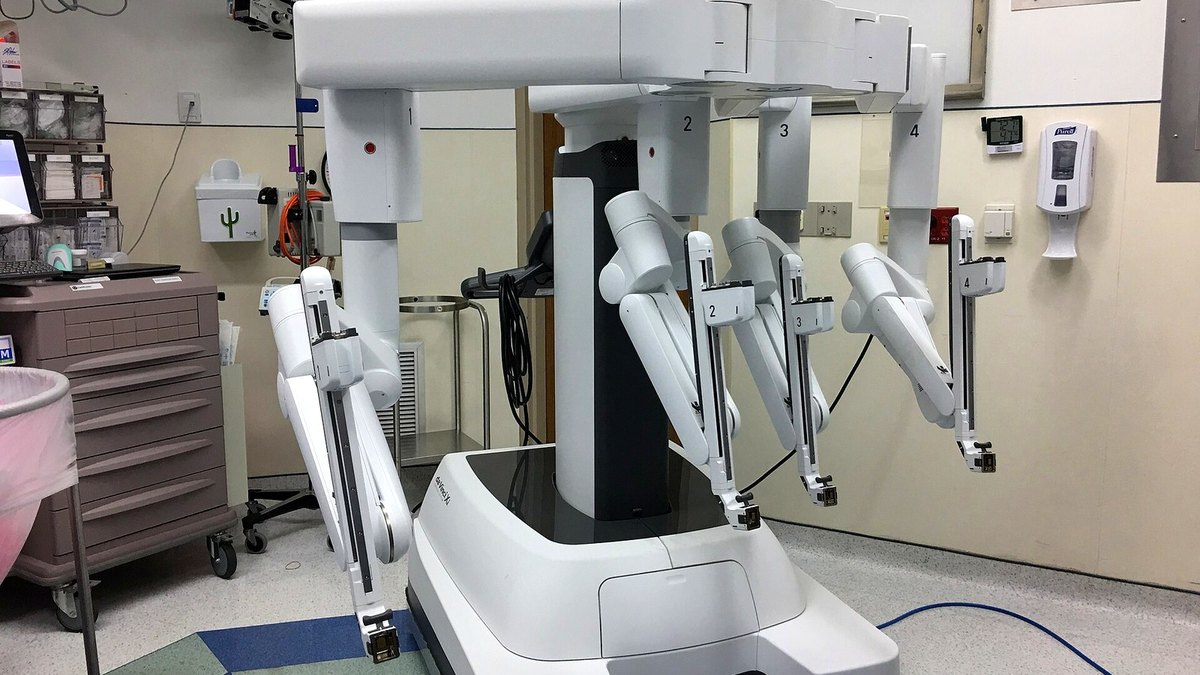
The sales KPIs that matter most in commercial medical device sales are procedure volume, the installed base of systems and new placements, the split between one-time capital sales and recurring revenue from disposables and service, revenue per procedure, system utilization, organic growth by franchise, and the cost of selling. Capital equipment is sold to a hospital once, but the instruments used in each procedure are bought again and again, so a rep's year is often decided by both kinds of sale. This page uses only figures read in third-quarter 2026 company filings. Intuitive placed 546 da Vinci systems, grew its da Vinci installed base to 12,094 and reported about 14% da Vinci procedure growth, and recurring revenue was 84% of its total revenue. Stryker reported 7.7% organic growth and Penumbra reported $410.1 million of revenue, up 15.6%, mostly from single-use products.
No filing read here publishes rep quota attainment, win rate, sales-cycle length or rep productivity, so none is given. Definitions differ by company, so compare each KPI over time within one company. This is business content about sales metrics, not medical information, and not financial advice.
Procedure volume: the demand signal under every sale
In device sales, procedures are the closest measure of real demand, because every procedure uses disposables and keeps a system in service. A device company that sells a platform usually reports procedure growth before it reports anything about a single customer, and a sales leader should track procedures per account for the same reason.
- Intuitive, procedures, Q3 2026 (company-reported)Worldwide da Vinci and Ion procedures grew approximately 15%; da Vinci procedures grew approximately 14% and Ion procedures approximately 31%.
- Intuitive, Ion procedures, Q3 2026 (company-reported)Approximately 49,700 Ion procedures, up from approximately 37,900 in the third quarter of 2025.
- Intuitive, 2026 outlook (company-reported)Worldwide da Vinci procedure growth of approximately 14% to 15% in 2026, closer to the midpoint of that range.
- Intuitive, daily volume, Q3 2026 (company statement)Customers performed, on average, over 10,000 procedures per day throughout the period.
The point for a sales team is that procedure growth is the figure investors and hospital buyers both watch. A rep who can show a hospital's own procedure growth against the company-wide rate has a better conversation about adding capacity.
Installed base and system placements
The installed base is the number of systems in the field, and placements are the new systems added in a period. Together they show how big the base of future disposable sales is and how fast it is growing.
- Intuitive, da Vinci placements, Q3 2026 (company-reported)546 da Vinci systems placed, compared with 427 in the third quarter of 2025; 315 were da Vinci 5 systems, compared with 240.
- Intuitive, da Vinci installed base (company-reported)12,094 systems as of September 30, 2026, up 12% from 10,763 as of September 30, 2025.
- Intuitive, Ion installed base (company-reported)1,152 systems as of September 30, 2026, up 21% from 954; 56 Ion systems placed compared with 50.
- Intuitive, Ion in the U.S. (company statement)Intuitive estimates Ion's penetration of lung biopsy procedures has exceeded the halfway point, and customers' focus has begun to shift from increasing capacity to increasing utilization of existing systems.
That last statement shows how the sales conversation changes as a market matures: the first goal is a placement, and later the goal is more procedures on the systems already installed.
Capital versus recurring revenue
Most platform device makers earn money twice. A system is sold or leased up front, which is a capital decision for the hospital, and then instruments, accessories and service generate revenue each time the system is used. Intuitive's quarterly filing spells this out, which makes it the clearest public example.
- Intuitive, revenue, Q3 2026 (company-reported)Revenue of $3.05 billion, up 22% from $2.51 billion; instruments and accessories $1.80 billion (up 18%) and systems $769 million versus $590 million.
- Intuitive, recurring revenue, Q3 2026 (company-reported)Total recurring revenue of $2,554.6 million, which is 84% of total revenue, against 85% in the third quarter of 2025.
- Intuitive, recurring revenue definition (company statement)Recurring revenue is the revenue from instruments and accessories, service and operating lease arrangements, and the company uses it to assess installed base strength, system utilization and procedure adoption.
A device business reported this way gives a clean KPI pair for a sales leader: systems sold or placed this period (the capital line), and the recurring revenue that earlier placements keep producing. Teams measured only on capital can under-serve the accounts that drive the repeat line, and the reverse is also true.
Price points: system, instrument and service
Unit economics are rarely published, but Intuitive's 10-Q gives ranges that show how a device sale is structured. These are company-stated ranges, not averages, and they are in U.S. dollars.
- da Vinci system price (company statement)Generally sells for between $0.6 million and $3.1 million, generally inclusive of one year of service, depending on model, configuration and geography.
- da Vinci instruments and accessories (company statement)Generally between $900 and $3,700 of revenue per surgical procedure, depending on the type and complexity of the procedure.
- da Vinci service contract (company statement)Annual fee between $95,000 and $225,000, depending on configuration and the services offered.
- Ion system (company statement)Generally sells for between $500,000 and $815,000, with an annual service fee between $55,000 and $70,000.
- da Vinci average selling price, Q3 2026 (company-reported)Approximately $1.61 million, compared with approximately $1.60 million in the third quarter of 2025, excluding systems under operating leases, Ion systems and specified-price trade-in rights.
For a rep, these ranges make clear why a capital sale is treated as a long-term relationship: the first system price is one line, and the instrument and service lines follow it for years.
Leasing and usage-based deals
Hospitals do not always buy outright. Intuitive offers fixed-payment and usage-based operating leases as well as sales, and says usage-based arrangements reduce customers' overall risk and need for capital outlay.
- Intuitive, lease placements, Q3 2026 (company-reported)291 of 546 da Vinci placements were under operating lease arrangements, of which 160 were usage-based, compared with 231 operating lease placements and 115 usage-based placements in the third quarter of 2025.
- Intuitive, operating lease revenue, Q3 2026 (company-reported)Operating lease revenue of $275 million, of which $178 million was variable lease revenue, primarily from usage-based arrangements; $223 million the year before.
The sales effect is that a lease shifts revenue out of the quarter of the deal and into later quarters. Intuitive says that when operating leases rise as a share of placements, total systems revenue is reduced, and that revenue from usage-based arrangements can be highly volatile because procedure counts vary. A quota built only on booked capital can look weak when a business is moving toward leasing.
Utilization: procedures per system
Utilization is procedures per system per year, and it separates a hospital that bought a system from one that is using it. Low utilization is a retention and expansion risk, and high utilization is a case for another system.
- Intuitive, da Vinci utilization, Q3 2026 (company-reported)Procedures per system per year increased 2% relative to the third quarter of 2025.
Compare that 2% against installed base growth of 12% and procedure growth of about 14% in the same quarter: the numbers show the base is growing faster than use per system, which is consistent with new systems being added to account for new capacity. That reading is my judgment from the company's figures, not a company statement.
Organic growth and franchise mix
Large device makers report organic growth, which excludes currency and acquisitions, by business. It is the fairest way to compare franchises and is often the number a sales leader is held to.
- Stryker, Q3 2026 (company-reported)Reported net sales increased 7.7% to $6.5 billion, with organic growth of 7.7% primarily from increased unit volume; MedSurg and Neurotechnology organic 9.1%, Orthopaedics organic 5.9%.
- Stryker, 2026 guidance (company-reported)Organic net sales growth now expected in the range of 6.5% to 7.0%, including a modestly positive pricing impact.
- Boston Scientific, Q3 2026 (company-reported)Net sales of $5.138 billion, up 1.5% on a reported, operational and organic basis; MedSurg 0.7% and Cardiovascular 1.9% organic.
- Boston Scientific, by business, Q3 2026 (company-reported)Neuromodulation $331 million versus $293 million, 13.0% organic; Urology $661 million versus $682 million, (3.1)% organic; Endoscopy $741 million versus $747 million, (0.6)% organic.
The spread across franchises inside one company is the lesson. Boston Scientific's total grew 1.5% while Neuromodulation grew 13.0% and Urology fell, so a team's result depends on which line it sells. Stryker's own CEO called the quarter good in absolute terms but short of the company's expectations, a reminder that growth is judged against a plan, not only against last year.
A disposables-led model
Not every device business sells capital. Penumbra describes itself as the world's leading thrombectomy company and reports revenue by single-use product line, so its sales KPIs are growth by line and the margin on each unit sold.
- Penumbra, Q3 2026 (company-reported)Revenue of $410.1 million, up 15.6%; global thrombectomy revenue of $279.2 million, up 18.1%; U.S. VTE revenue up 26.0%.
- Penumbra, other lines, Q3 2026 (company-reported)Global embolization and access revenue of $131.0 million, up 10.8%; U.S. neuro revenue of $77.9 million, up 19.3%.
- Penumbra, gross margin, Q3 2026 (company-reported)Gross profit margin of 68.3%, an increase of 0.5% compared with the third quarter of 2025.
For this kind of company, the comparison that matters is revenue growth by product line and by U.S. versus international. For a platform company, it is installed base and utilization. Know which model your employer or target account runs before you choose KPIs.
Hospital purchasing and the capital environment
Capital sales depend on hospital budgets, approvals and, in some countries, government tenders. The filings give two useful pictures of that process.
- Stryker, capital environment, Q3 2026 earnings call (company statement)Investor relations VP Nick Mead said the order book remains strong and elevated and that, by and large, the capital environment remains healthy; the CEO said capital sales were very strong in the quarter.
- Stryker, Mako, Q3 2026 earnings call (company statement)U.S. Ortho Tech organic sales grew 18%, driven by continued strength in Mako robotic system sales and demand for orthopedic power tools; the CEO said there is a balance between upgrades and brand-new installations.
- Intuitive, China, Q3 2026 (company statement)The 2023 quota allows the sale of 559 new surgical robots into China; as of September 30, 2026 Intuitive had placed 176 da Vinci systems under it and 3 under special approval, and sales depend on hospitals completing a tender process and receiving approvals.
The practical KPI here is the stage of each capital deal: budget approved, tender open, contract signed, installed. Reimbursement is part of the picture too. Boston Scientific noted that the American Medical Association assigned Category I CPT codes for renal denervation devices and implantable tibial nerve stimulation devices, effective January 2028, an access event that sales teams can log against future accounts.
Cost of selling
SG&A is the nearest public proxy for the cost of selling, and it also holds general overhead, so watch it over time rather than treating it as sales cost alone.
- Penumbra, Q3 2026 (company-reported)SG&A of $204.2 million, which includes $7.1 million of acquisition-related expenses tied to the pending acquisition by Boston Scientific, on revenue of $410.1 million.
- Intuitive, 2026 outlook (company-reported)Non-GAAP operating expense growth of 11% to 13% in 2026.
Pricing is the other lever to track. Intuitive says that beginning in the first half of 2027 it expects instrument pricing actions, including extended instrument uses and volume-based pricing, that it expects to reduce da Vinci instruments and accessories revenue per procedure by approximately 3% to 5% once fully implemented. A sales team should model that kind of change into revenue per procedure early.
What is not published
A scorecard to start with
Read together, the filings point to a compact scorecard. This structure is my judgment, built on the KPIs the companies themselves report.
- Volume. Procedures, with growth by account and by product.
- Base. Installed base and new placements, by region.
- Mix. Capital sales and leases against recurring revenue from instruments, accessories and service.
- Price. Revenue per procedure and any announced pricing change.
- Use. Procedures per system, so low-use accounts get attention early.
- Growth. Organic growth by franchise against plan.
- Pipeline. Each capital deal by stage, including tender or budget approval.
- Access. Dated coverage and coding changes.
- Cost. SG&A over time, with one-off items separated.
Questions people ask
What are the most important sales KPIs in medical device sales?
Procedure volume, installed base and placements, the split between capital and recurring revenue, revenue per procedure, system utilization, organic growth by franchise and the cost of selling. Companies publish the first several well and the rest unevenly.
What is the difference between capital and recurring revenue for a device company?
Capital revenue comes from selling or leasing a system, while recurring revenue comes from the instruments, accessories and service used afterward. Intuitive reported recurring revenue of $2,554.6 million in Q3 2026, which was 84% of its total revenue.
What is an installed base and why does it matter?
It is the count of systems in customers' hands. Intuitive's da Vinci installed base was 12,094 systems on September 30, 2026, up 12% from 10,763. A bigger base means more procedures and more disposables sold, but only if the systems are used.
How big is a typical device capital sale?
It varies by device. Intuitive says a da Vinci system generally sells for between $0.6 million and $3.1 million and an Ion system for between $500,000 and $815,000. Those are one company's stated ranges, in U.S. dollars.
Do medical device companies publish quota attainment or sales-cycle length?
Not in the filings read for this page. These are tracked internally, so measure them on your own data rather than looking for an industry benchmark.
Are these figures comparable across companies?
Not strictly. Business models, definitions and franchises differ, and a platform company like Intuitive is not comparable with a disposables company like Penumbra. Compare each KPI over time within one company. All figures are in U.S. dollars as reported.
Sources
- Intuitive: third-quarter 2026 earnings release, October 20, 2026 (SEC 8-K exhibit) · Procedures, placements, installed base, revenue, lease placements, outlook
- Intuitive: Form 10-Q for the quarter ended September 30, 2026 (SEC) · Recurring revenue, price ranges, utilization, leasing, China quota, pricing actions
- Stryker: third-quarter 2026 operating results, October 29, 2026 (SEC 8-K exhibit) · Net sales, organic growth by segment, guidance
- Stryker: Q3 2026 earnings call transcript (The Motley Fool) · Ortho Tech growth, Mako, capital environment statements
- Boston Scientific: third-quarter 2026 results, October 28, 2026 (SEC 8-K exhibit) · Net sales by business, organic growth, CPT code assignment
- Penumbra: third-quarter 2026 financial results, October 29, 2026 (SEC 8-K exhibit) · Revenue by product line, gross margin, SG&A
- Photo: New Da Vinci Xi.jpg by Alvarogarciamd, CC BY-SA 4.0, Wikimedia Commons · Hero photo, cropped and color-adjusted
Figures were read from the linked company releases, SEC filings and one earnings call transcript on November 7, 2026. They are company-reported for the periods stated, in U.S. dollars. Where no figure was published, the page says so instead of estimating. Hero photo: Alvarogarciamd, CC BY-SA 4.0, via Wikimedia Commons (cropped and color-adjusted). This page is about sales metrics, not medical information, and is not financial advice.
Top photo: Alvarogarciamd / CC BY-SA 4.0 via Wikimedia Commons