How Do Film Preservationists Restore and Archive Deteriorating Nitrate Film in 2027?
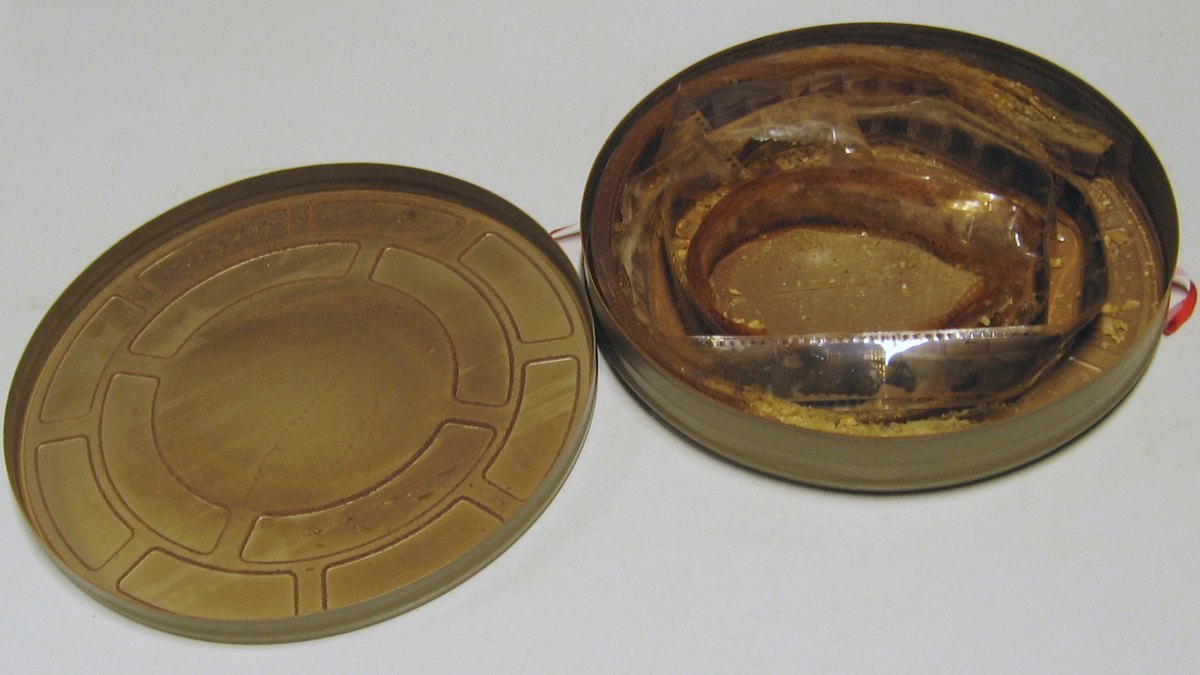
Preservationists save nitrate film in four steps: they identify and inspect it, store it cold, dry and ventilated away from other film, copy it onto stable modern film or scan it digitally before it decays further, and then keep the original as long as it is safe to do so. Copying comes first because nitrate decomposition cannot be reversed.
The Library of Congress tells collections to keep nitrate below 70 degrees F, says freezing is recommended, and sets relative humidity at 30-40% (Library of Congress). UCLA says the goal of photochemical preservation is a new master positive or dupe negative on modern polyester film placed in cold storage, where film elements can survive for hundreds of years (UCLA Film & Television Archive). Most restorations today mix scanning and photochemical work.
This page covers what the archives and Kodak publish. Where a figure is not published, it says so.
Step one: identify the film and inspect it
Nitrate cannot be treated like other film, so the first job is knowing what you have. Kodak says not to assume every film is acetate or polyester, because some reels are spliced mixtures, and notes that cellulose nitrate has a characteristic acid odor like nitric acid (Kodak).
Inspection is how condition is judged. Kodak describes the checks:
- Base color. If the base is yellowish or even amber, decomposition has begun.
- Brittleness. The confirming test is whether the base breaks easily when bent in half, especially with the emulsion side out.
- Sticky gelatin. If moisture from your breath makes the gelatin slightly sticky, Kodak says the film must be duplicated within 2 years while proper storage is maintained.
- Never wet it. Kodak warns never to wet a decomposing nitrate base negative because the gelatin may dissolve.
Kodak says spot inspection only needs to happen once a year if the recommended storage conditions are followed, and once every 3 months if adverse conditions exist.
How nitrate decomposes: six stages
Library and Archives Canada describes six stages of nitrate base deterioration (Library and Archives Canada). The stage decides what can still be saved.
- Stage one. Legible image and no visible deterioration.
- Stage two. Legible image, the film support begins to yellow, silver mirroring appears on the emulsion, and the odor of nitric acid can be detected.
- Stage three. Legible image, the support turns yellow or becomes sticky, and the film curls.
- Stage four. A partially legible image, an amber base, and nitric gas bubbles that may be visible between the emulsion and the support.
- Stage five. No legible image, a soft film that can stick to neighbors, and a surface that may be covered with sticky froth.
- Stage six. No legible image; the film degrades into a brown acid powder and should be disposed of as hazardous waste.
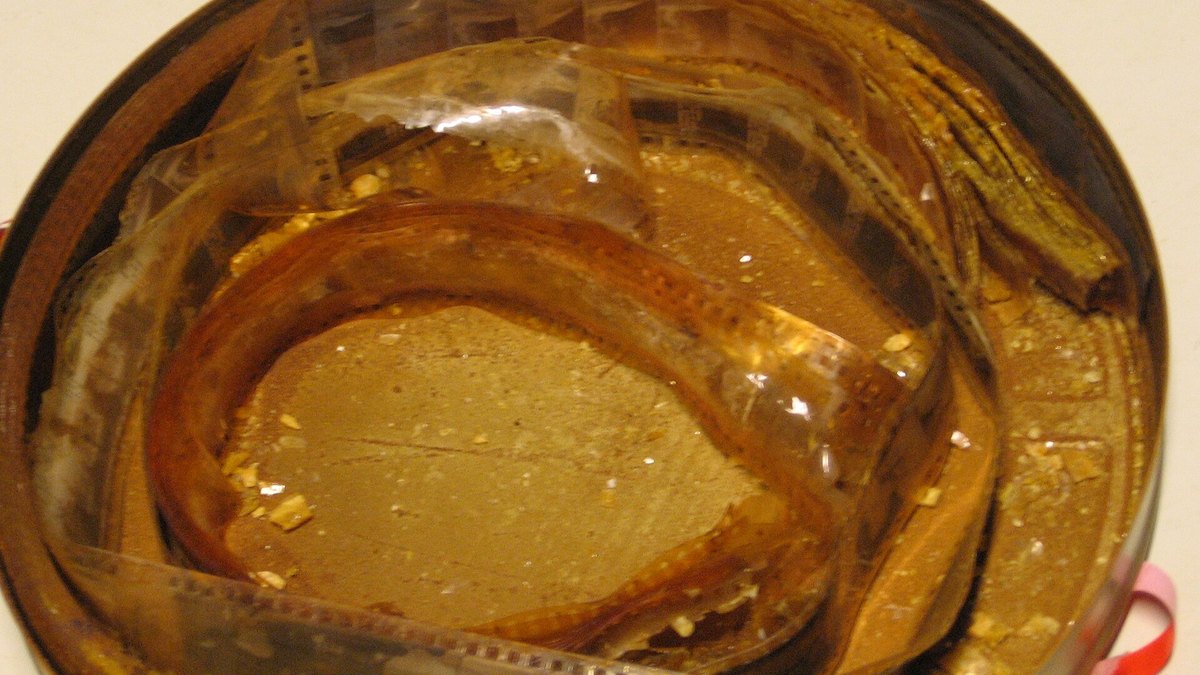
Kodak adds that as nitrate breaks down it gives off nitric oxide, nitrogen dioxide and other gases that yellow the base and oxidize the silver image, then the film becomes brittle, then sticky, and finally disintegrates (Kodak).
Cold, dry, ventilated storage
Storage cannot repair film, but it slows decay while the copying is planned.
- Library of Congress, immediate actionsKeep nitrate as cool as possible and always below 70 degrees F, with freezing recommended; relative humidity 30-40%; ventilated containers; isolated from other collection items
- Kodak, long-term black-and-whiteBelow 10 degrees C (50 degrees F) at 20-50% relative humidity
- Kodak, long-term colorBelow 0 degrees C (32 degrees F) at 20-30% relative humidity
- Kodak, medium-termBelow 21 degrees C (70 degrees F) at 20-50% relative humidity
Sources: Library of Congress and Kodak. The two publish different humidity bands, so a collection should follow its own archive's specification.
Ventilation matters as much as temperature. Kodak says never to store nitrate in sealed containers or without ventilation, because that dead storage increases the rate of decomposition, and to store it apart from other photographic materials because the escaping gases can attack acetate and polyester film. Kodak also notes that very low humidity makes the film more brittle, which is why most experts do not push humidity very low.
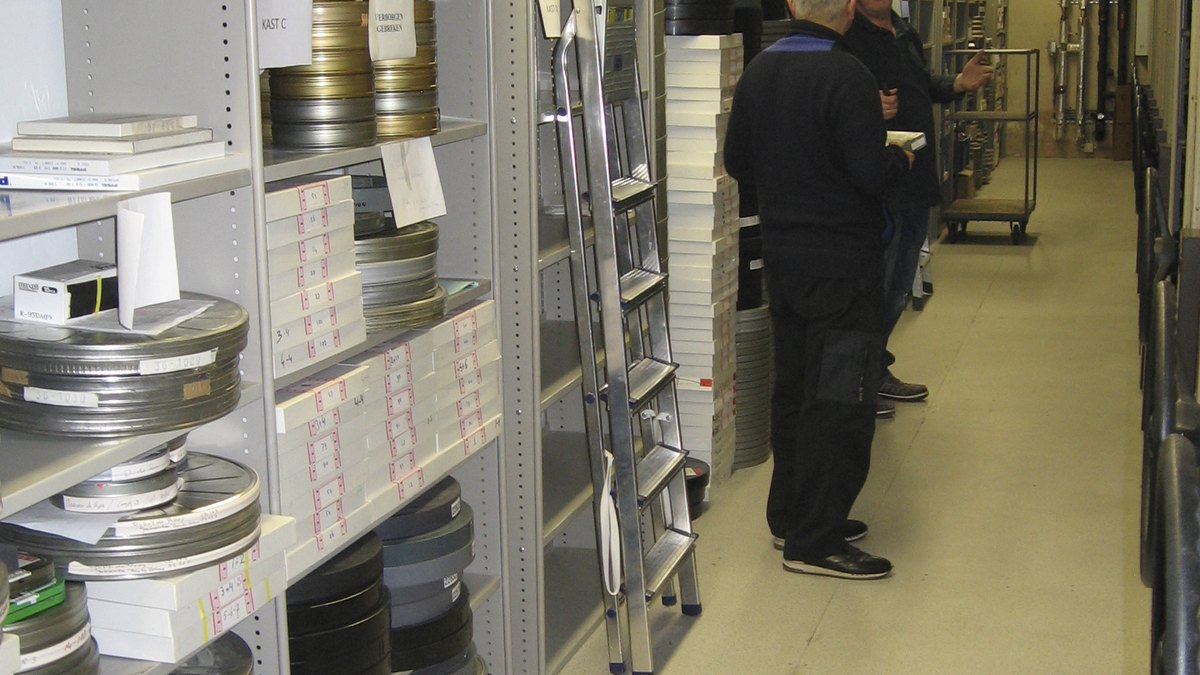
The George Eastman Museum stores its nitrate at its Louis B. Mayer Conservation Center in Chili, New York, which opened in 1995. Its blog gives the conditions as temperatures of 40 degrees and relative humidity of 30%, but does not state the temperature unit, and it publishes no vault count or inspection schedule (George Eastman Museum). In 2019 the museum received a National Endowment for the Humanities grant of $340,615 for its Protecting Nitrate Film Heritage project (NEH).
Copying nitrate onto safety stock: the photochemical route
The traditional answer is duplication. UCLA describes the ultimate goal of photochemical preservation as a new preprint element, a master positive copy or a dupe negative copy, on modern polyester film placed in cold storage (UCLA).
Before the copy, the work is often hands-on. UCLA lists researching the best surviving materials among the world's archives and private collectors, comparing and cutting together shots and scenes from diverse sources, repairing splices and perforations, rerecording soundtracks and restoring faded prints.
Kodak says the film should be duplicated soon after inspection, drying and cleaning, because buckled film and sticky gelatin may make duplication later more difficult or perhaps impossible.
The Library of Congress lists "Consider digitizing and disposing" among its immediate actions for nitrate (Library of Congress). Kodak takes a more cautious line on the original: first-generation elements in good condition usually give better image quality than any copy and are worth preserving even after copies exist, and should be destroyed only if seriously deteriorated and a risk to the facility or other films.
Digital scanning and restoration
UCLA describes its digital restorations as scanning the best source materials in high resolution and fixing visual imperfections with software, with the raw scans and restored files kept on hard drives and digital tapes. It says multiple digital backups and continual migration of the files must be done to secure their longevity, and that when possible a physical 35mm negative is created from the digital files for long-term storage (UCLA).
The field no longer treats this as a choice. Greg Lukow of the Library of Congress' National Audio-Visual Conservation Center said it is "really a matter of film and digital" and Rajendra Roy of the Museum of Modern Art described current restorations as scanning, digitally editing and cleaning, and outputting to DCPs and in some cases 35mm prints (Film Foundation / IndieWire, 2024).
The long-term storage argument still favors film. In the same article Jeff Lambert of the National Film Preservation Association said film stored in cold, dry conditions will last hundreds of years, and May Hong HaDuong of UCLA contrasted that with LTO tape, which she gave a lifespan of 15-30 years. Lukow said robotic data tape libraries with SHA-1 verification and checksumming make him comfortable with digital preservation at the petabyte level. Both views are on record, so the sensible reading is that archives do both.
Fire safety: why nitrate vaults are built differently
The fire risk is real but conditional. The Library of Congress says nitrate can self-ignite at ambient temperatures around 100 degrees F, cannot be extinguished once ignited, and that quantities over 25 pounds are subject to NFPA 40, the Standard for the Storage and Handling of Cellulose Nitrate Film (Library of Congress).
Kodak says fire is not caused by cellulose nitrate in good condition, but in the advanced stages of decomposition self-ignition takes place at sustained temperatures only slightly above 38 degrees C (100 degrees F). In one laboratory test, a decomposing 1,000 foot roll burned only after 17 days at 41 degrees C (106 degrees F) tightly encased in an insulated can (Kodak).
The National Archives worked out many of today's vault rules. After 66 tests, John Bradley's compartmented cabinet protected film inside when a fire outside burned at 1500 degrees Fahrenheit. A 1956 report on vault tests found that compartmented racks plus sprinklers did the best job of stopping fire spreading between cans, and recommended a vertical vent to avoid explosions (National Archives).
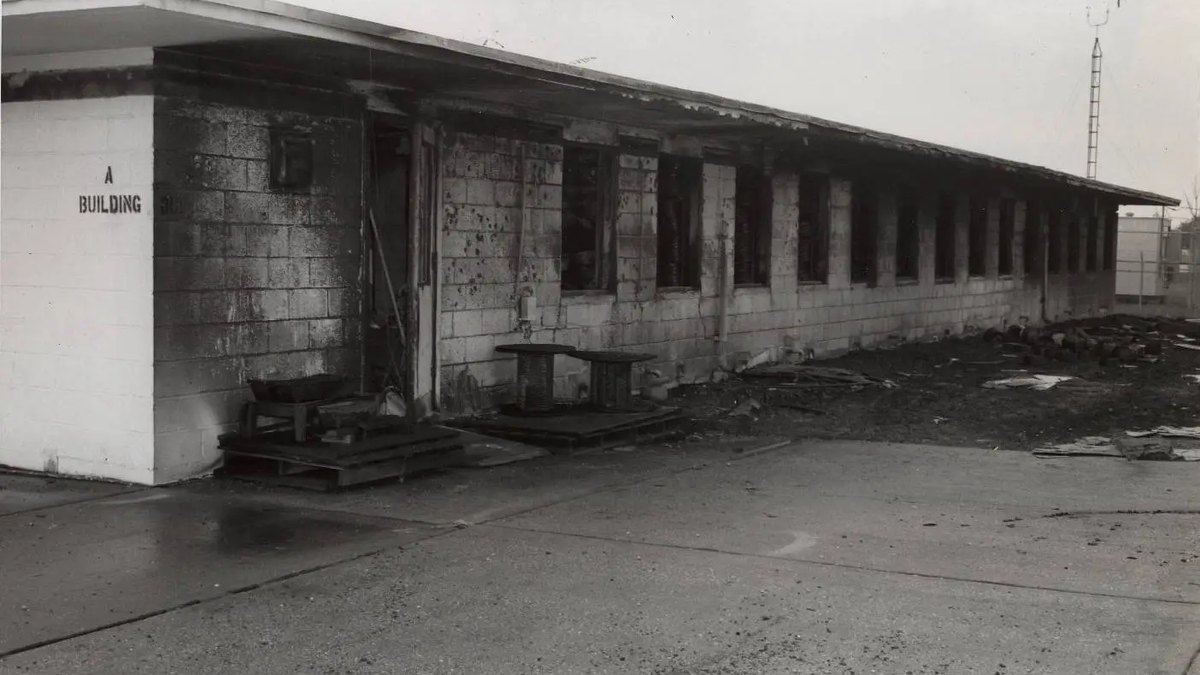
The same post says that when the Suitland vault fire broke out, the sprinklers were off because workmen were upgrading them, and workers were using power tools near the film. Its conclusion is that nitrate itself is not imminently dangerous without conditions that let it burn.
What a purpose-built archive looks like
The Library of Congress' Packard Campus has 124 nitrate film vaults, which the Architect of the Capitol calls the largest in the western hemisphere. A separate Nitrate Vaults building of 55,000 square feet is built to exacting fire codes for pre-1951 films, and the campus has below-freezing storage for film masters, though the page gives no temperature. It also has a 200-seat theater able to project nitrate (Architect of the Capitol).
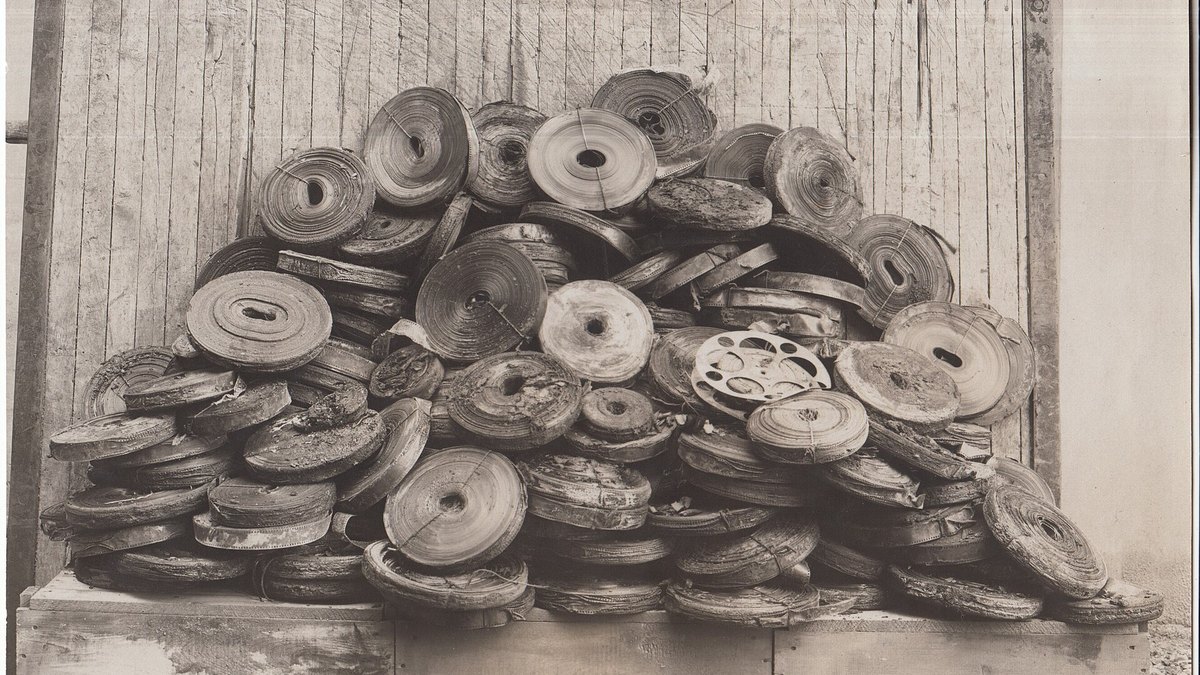
Archives also keep showing the originals. The National Archives notes that new nitrate has not been made for nearly 70 years, yet archivists are still finding elements that have existed for 80, 90, 100 years or more (National Archives).
What is not published
Questions people ask
Can you restore nitrate film that has already decomposed?
Only the earlier stages. Library and Archives Canada describes the image as still legible at stages one to three and partially legible at stage four, with no legible image at stages five and six. It says stage six film should be disposed of as hazardous waste (Library and Archives Canada).
Is nitrate film likely to explode?
The National Archives says that when handled and stored properly, nitrate will not just explode or spontaneously combust, but a burning nitrate vault without adequate venting can end in explosions. The Library of Congress says it cannot be extinguished once ignited (National Archives, Library of Congress).
Do archives destroy the nitrate original after copying it?
Practice differs. The Library of Congress lists digitizing and disposing as something to consider. Kodak says good first-generation elements are worth keeping after copying and should be destroyed only if seriously deteriorated and a risk, and the Eastman Museum's archivists follow the motto Save the original (Library of Congress, Kodak, George Eastman Museum).
Is digital scanning enough to preserve a nitrate film?
UCLA says digital restorations need multiple backups and continual migration of the files, and where possible it creates a 35mm negative from the digital files. Library of Congress staff in the 2024 article say they are comfortable with their digital preservation infrastructure (UCLA, Film Foundation).
What rules cover storing nitrate film?
In the United States, the Library of Congress says quantities of nitrate over 25 pounds are subject to NFPA 40. Owners of smaller amounts should still follow the Library of Congress and Kodak guidance linked here (Library of Congress).
Sources
- Library of Congress: Care, Handling, and Storage of Motion Picture Film · Nitrate storage temperature, humidity, NFPA 40, fire hazard
- Kodak: Storage and Handling of Processed Nitrate Film · Inspection, decomposition, storage tables, vault design, duplication
- Library and Archives Canada: Six stages of nitrate film base deterioration · The six stages
- UCLA Film & Television Archive: About Preservation · Polyester preprint, cold storage, digital restoration workflow
- National Archives: Film Preservation 101, Is Nitrate Film Really Dangerous? · Vault tests, venting, the Suitland vault fire
- Architect of the Capitol: Packard Campus · 124 nitrate vaults, Nitrate Vaults building
- George Eastman Museum: Protecting Nitrate Film Heritage · Louis B. Mayer Conservation Center storage conditions
- NEH: grant to assist Eastman Museum with nitrate film preservation · 2019 grant amount
- Film Foundation: What Film Preservation Means Today (IndieWire, 2024) · Film and digital together, LTO lifespan, digital preservation
Figures were read from the linked pages on November 9, 2026. This page is an overview, not conservation or fire-safety advice; follow your archive's own specification and local fire code for any nitrate you hold.
Top photo: Hansmuller / CC BY-SA 4.0 via Wikimedia Commons