How Is the AI Coding Tools Market Changing Developer Productivity in 2027?
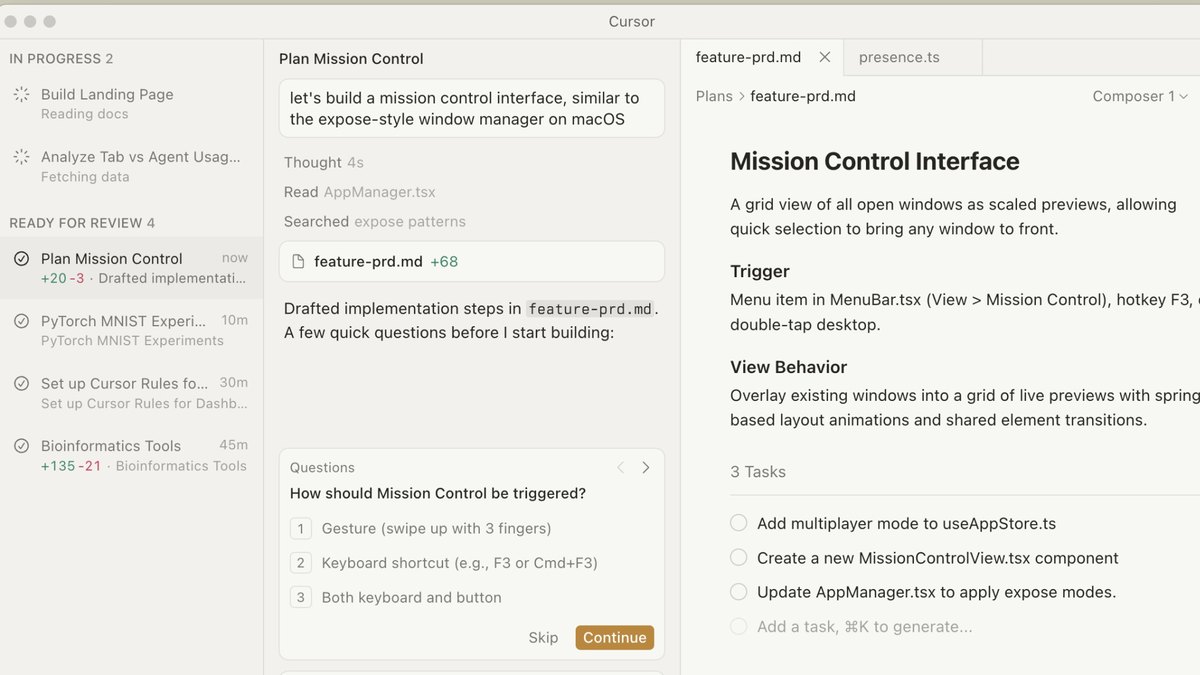
The AI coding tools market is growing very fast, but the evidence that the tools make developers more productive is mixed. On the market side, Microsoft said on July 29, 2026 that GitHub Copilot has 50 million users, Cursor's maker said in November 2025 that it had crossed $1B in annualized revenue, and Anthropic said in February 2026 that Claude Code's run-rate revenue was over $2.5 billion.
On productivity, published studies disagree. GitHub's 2022 experiment found developers finished a task 55% faster with Copilot, while METR's 2025 randomized trial of experienced open-source developers found they took 19% longer with AI tools. METR's February 2026 update says its newer data is only very weak evidence of a change, and the 2025 DORA report found AI adoption linked to higher delivery throughput but lower delivery stability.
In short: usage and spending are not in doubt, the size of the speedup depends on who is measured and how, and no single study settles it. Every figure below comes from the linked source; this is not investment advice.
How big is the market, by what vendors have said
No market-size figure is used here, because the research-firm estimates I found were paywalled or unsourced. What can be read directly are vendor and earnings statements.
- GitHub Copilot, Microsoft earnings call, July 29, 2026"GitHub Copilot now has 50 million users." Copilot revenue accelerated over 60% quarter-over-quarter.
- GitHub Copilot, Microsoft earnings call, January 28, 2026Over 4.7 million paid Copilot subscribers, up 75% year-over-year
- Cursor (Anysphere), Series D, November 13, 2025$2.3B raised at a $29.3B post-money valuation; crossed $1B in annualized revenue
- Claude Code (Anthropic), February 12, 2026Run-rate revenue over $2.5 billion, more than doubled since the beginning of 2026; weekly active users doubled since January 1
Sources: Microsoft FY26 Q4 call, Microsoft FY26 Q2 call, Cursor's Series D post, Anthropic's Series G announcement.
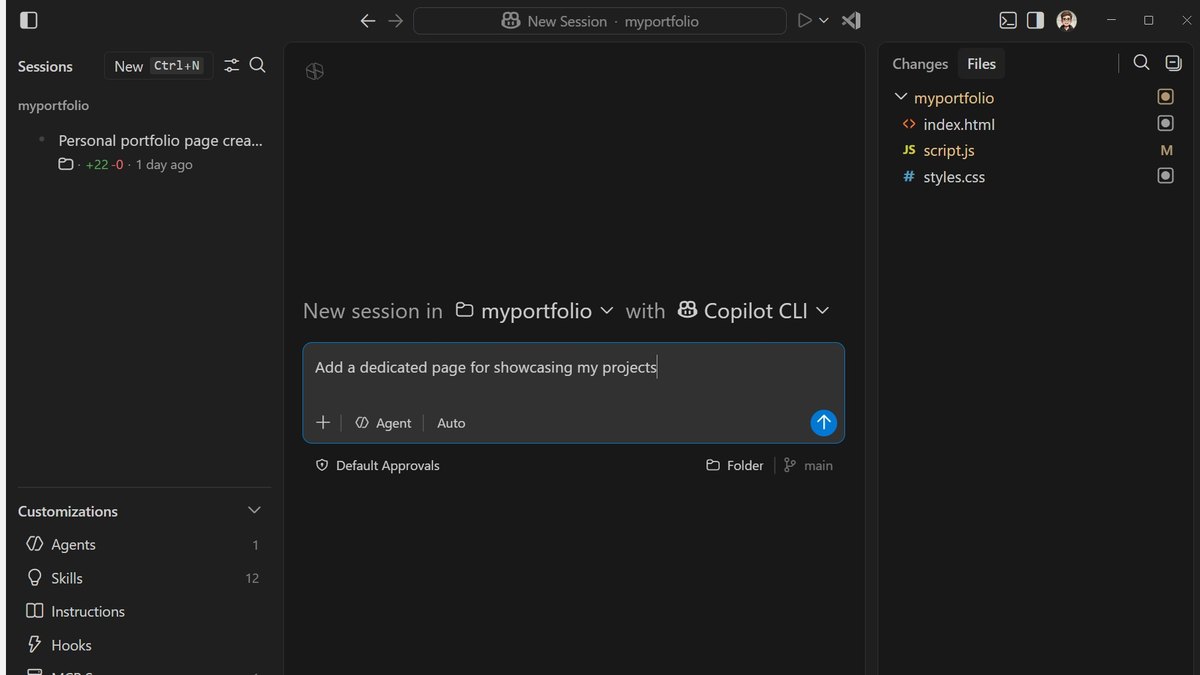
What Microsoft says is driving Copilot
On the July 29, 2026 call, CEO Satya Nadella said Microsoft introduced usage-based billing and saw "Business and Enterprise seat growth, and also significant consumption revenue." CFO Amy Hood said results benefited from "stronger-than-expected GitHub Copilot consumption following the June business model change," and that segment gross margins "were also impacted by growing GitHub Copilot usage." Nadella also said GitHub now has 225 million users across the platform.
The takeaway for buyers: pricing is moving toward usage-based models, and Microsoft itself notes that heavier usage affects its margins. Source: Microsoft FY26 Q4 call.
Adoption: how many developers use AI tools
The 2025 Stack Overflow Developer Survey reports that 84% of respondents are using or planning to use AI tools in their development process, up from 76% the prior year, and that 51% of professional developers use AI tools daily.
The same survey shows caution: more developers actively distrust the accuracy of AI tools (46%) than trust it (33%), and only 3% report highly trusting the output. 52% agree that AI tools and/or agents have had a positive effect on their productivity.
The 2025 DORA report from Google Cloud, based on survey responses from nearly 5,000 technology professionals, says 90% report using AI at work and more than 80% believe it has increased their productivity. That is self-reported belief, not a measured gain. Source: Google Cloud, September 23, 2025.
What controlled studies found, and why they disagree
Two randomized designs point in opposite directions.
- GitHub, 2022 (task experiment). 95 professional developers were randomly split into two groups and timed writing an HTTP server in JavaScript. The Copilot group finished 55% faster, in 1 hour 11 minutes on average versus 2 hours 41 minutes, with a task completion rate of 78% versus 70% (P=.0017). GitHub, which makes Copilot, ran the study. Source: GitHub Blog.
- METR, July 2025 (real issues in familiar codebases). 16 experienced developers from large open-source repositories worked on 246 real issues, each randomly assigned to allow or disallow AI, mostly using Cursor Pro with Claude 3.5/3.7 Sonnet. They took 19% longer with AI. Beforehand they expected AI to speed them up by 24%, and afterward they still believed it had sped them up by 20%. Source: METR.
The designs differ: one was a single, well-defined task, the other was real work inside large codebases the developers already knew. The tools also differ by years. Those are differences in the studies, not a verdict on which is right.
METR's 2026 update: why the answer is still open
On February 24, 2026, METR described a follow-up with 57 developers (10 from the original study, 47 new) across 143 repositories and 800+ tasks, with tasks again randomly assigned to AI allowed or disallowed.
- Original early-2025 study19% longer, confidence interval +2% to +39%
- Original developers, later studyAn 18% speedup, interval on the change in task time -38% to +9%, so not statistically clear
- Newly recruited developersA 4% speedup, interval on the change in task time -15% to +9%, so not statistically clear
METR says the data is "only very weak evidence" that developers are more sped up than a year earlier. It lists limits: developers increasingly declined to take part because they did not want to work without AI, and 30% to 50% of developers did not submit some tasks they did not want to do without AI. METR says the central estimate is likely "a bad proxy" for the real productivity impact. Source: METR.
Speed versus stability
The 2025 DORA report says that, unlike the prior year, there is a positive relationship between AI adoption and both software delivery throughput and product performance. It also says AI adoption continues to have a negative relationship with software delivery stability. Faster output that is less stable is a different outcome from simply being faster, which is why teams measure more than tasks completed. Source: Google Cloud.
What cannot be verified
Total market size, each vendor's current share, and any 2027 forecast were not found in a readable primary source and are left out. Cursor's and Anthropic's figures are the latest I could read from the companies themselves; newer figures reported by the press were not confirmed against a company statement and are not used.
Questions people ask
How many people use GitHub Copilot?
Satya Nadella said on Microsoft's July 29, 2026 earnings call that GitHub Copilot now has 50 million users. In January 2026 Microsoft reported over 4.7 million paid Copilot subscribers.
How much revenue does Cursor make?
In its November 13, 2025 Series D post, Cursor said it had crossed $1B in annualized revenue and raised $2.3B at a $29.3B post-money valuation.
Do AI coding tools make developers faster?
Studies disagree. GitHub's 2022 experiment found a 55% faster task completion; METR's 2025 trial found experienced developers took 19% longer; METR's 2026 update calls its newer data only very weak evidence of improvement.
Do developers trust AI coding tools?
The 2025 Stack Overflow survey found 46% distrust the accuracy of AI tools versus 33% who trust it, even though 84% are using or planning to use them.
Does AI affect software delivery stability?
The 2025 DORA report found AI adoption has a positive relationship with throughput and a negative relationship with delivery stability.
Sources
- Microsoft FY26 Q4 earnings call (July 29, 2026) · Copilot users, revenue growth, usage-based billing
- Microsoft FY26 Q2 earnings call (January 28, 2026) · Paid Copilot subscribers
- Cursor Series D announcement (November 13, 2025) · Funding, valuation, annualized revenue
- Anthropic Series G announcement (February 12, 2026) · Claude Code run-rate revenue
- METR, early-2025 developer study (July 10, 2025) · Randomized trial, 19% longer
- METR, experiment design update (February 24, 2026) · Follow-up study and limitations
- GitHub Blog, Copilot productivity research · Task experiment, 55% faster
- Google Cloud, 2025 DORA report (September 23, 2025) · AI use, throughput and stability
- Stack Overflow 2025 Developer Survey, AI · Adoption, trust, productivity
Figures were read from the linked pages on October 30, 2026. Studies are described as published; this page does not compute or combine their results. This is not investment advice.