How do I decide between vertical-by-vertical vs horizontal expansion in 2027?
Go vertical-by-vertical when your product wins because of industry-specific workflows, rules or data, and go horizontal when the same product solves the same problem in many industries with little rework. In both cases, sell more to the market you already lead before you open a new one. Veeva is the vertical case: it calls itself "the leading provider of industry cloud solutions for the global life sciences industry," says "Nearly all of our revenues are generated by sales to customers in the life sciences industry," and grew total revenues to $3,195 million in its year ended January 31, 2026. Samsara is the horizontal case: it credits its "industry-agnostic approach and the horizontal applicability of our solution" for reaching transportation, construction, field services, utilities, government and other industries, with revenue of $1,618.6 million in the same fiscal year.
The middle path is the one ServiceTitan describes: enter one new vertical at a time "using a proven playbook by harnessing common features applicable across the industry, while identifying and building key additional features specific to each trade and end market." The test is how much of your product, sales pitch and proof carries over to the next market without rework.
What each path means in practice
Vertical-by-vertical means you own one industry, then enter the next one that shares most of your platform. Horizontal means you sell one product, built around a job like tracking vehicles or managing documents, to many industries at once and tailor the message instead of the product. Public filings show both can reach large scale, and that the leaders mostly grew by adding products for buyers they already had before they added markets.
- Vertical, one industry deep: Veeva. Its four product groups, Development Cloud, Quality Cloud, Commercial Cloud and Data Cloud, all serve pharmaceutical, biotechnology and MedTech companies. It served 1,552 customers as of January 31, 2026. It does sell "certain of our Development Cloud and Quality Cloud applications to companies outside the life sciences industry," and there it competes with OpenText, Microsoft, Honeywell, Oracle, Box and others.
- Vertical, trade by trade: ServiceTitan. It says it was "born in the trades and built for the trades" and calls its software "Extensible Across Trade Verticals." Its revenue grew from $120.7 million in fiscal 2020 to $961.0 million in fiscal 2026, and it is "expanding our sales focus to include large businesses, commercial services and construction customers."
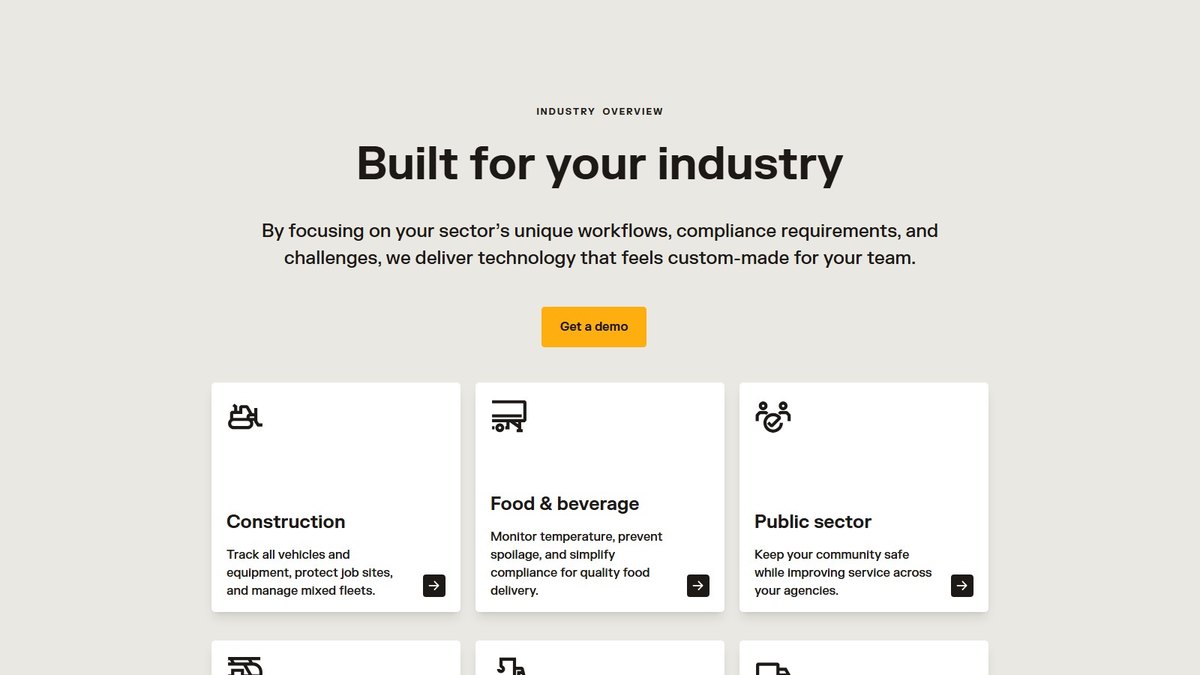
- Horizontal, one platform many industries: Samsara. It started with connected fleets, "then expanded into connected equipment and connected sites." As of January 31, 2026 it had over 12,000 Core Customers, each with $25,000 or more in ARR. Its industries page still packages the platform by sector, with the headline "Built for your industry."
- One vertical, many buyer types: Procore. It focuses "exclusively" on construction but sells to owners, general contractors and specialty contractors, and its direct sales team "is specialized by geography, followed by size and type of stakeholder." Revenue was $1.3 billion in 2025.
When vertical-by-vertical is the better bet
Bessemer's Atlas essay "Ten lessons from a decade of vertical software investing" (July 18, 2022) says the goal of every vertical software company is market leadership, and that the great ones build "a 'layer cake' strategy of building additional products to sell into their core vertical market." Its example is Veeva, where Vault "has driven the majority of the company's recent growth" next to CRM. Veeva's own split shows it: R&D and Quality Solutions were 55% of total revenues in fiscal 2026, up from 53% the year before, and the company expects that share to keep rising.
That points to three signs a vertical path fits. First, the work is regulated or specialized: Veeva lists industry regulations its software must be tested against, and ServiceTitan says it tailors "certain product offerings to address specific needs of each trade." Second, the next vertical reuses most of the product, which is how ServiceTitan describes each new trade. Third, existing customers pull you there: ServiceTitan notes that as customers grow "they may look to expand into additional trades we already serve."
The limit is market size. Bessemer warns that "in many verticals, there are too few logos to build a big SMB/mid-market vertical software business," citing nCino, which had only about five thousand US banks to sell to and needed six-figure deals to reach IPO scale. If your first vertical is that small, plan the next vertical or the move upmarket early.
When horizontal expansion is the better bet
Horizontal fits when the problem is the same across industries. Samsara lists customers in construction, transportation, wholesale and retail trade, field services, logistics, manufacturing, utilities and energy, government, healthcare and education, and food and beverage, and says its platform "is broadly applicable across verticals," with over 350 partner integrations.
Even then, the expansion that pays is usually inside each account. As of January 31, 2026, over 90% of Samsara's Core Customers and over 95% of customers above $100,000 in ARR used multiple Applications, about 70% of those large customers used three or more, and customers above $100,000 in ARR grew from 2,484 to 3,194 and made up approximately 61% of ARR. The cost of going wide is competition from specialists: Samsara notes that some competitors have "established distribution networks within specific industrial verticals."
What the filings say each path costs
- New markets slow the sale. Veeva says a new-customer sales cycle "may span 12 months or longer" and that "Sales cycles for our newer applications or in newer markets or industries are also lengthy and difficult to predict."
- New verticals add volatility. ServiceTitan says "as we enter different trade verticals, the sales cycle may increase the variation of our results," and that success depends on "adapting to new trades verticals such as commercial services and specialty trades subcontractors."
- Each new vertical brings new rivals. ServiceTitan expects to "compete against a growing number of companies and solutions specific to those industries and trades" as it expands.
- Staying narrow concentrates risk. Veeva says factors such as drug pricing regulation and government funding in life sciences could adversely affect it, and ServiceTitan derives "substantially all of our revenue from sales to trades businesses in the United States and Canada."
- New use cases are new risk too. Samsara says entering new use cases "will continue to require significant resources, and there is no guarantee that such efforts will be successful."
A decision test for your next market
This is my framework, built from the filings above, not a published model. Score the next market on five questions. Does the product need industry-specific features to win, or only a different pitch? How much of the platform carries over without rework? Do current customers already work in that market? Is the current market big enough to keep growing by selling more products to the same buyers? Do you have proof, such as references and case studies, that a buyer in the new market will trust?
Mostly "industry-specific" and "carries over" answers point to vertical-by-vertical, one market at a time, with its own owner. Bessemer describes Veeva giving each product and market segment a product owner and a GTM owner who are "focused full-time on their piece of the layer cake." Mostly "same problem, different pitch" answers point to horizontal, with sector pages and sales plays like Samsara's industry pages rather than separate products.
What I could not verify
A checklist for 2027
- Sell more to the market you lead first, the layer cake Bessemer describes, before you open a new one.
- Pick the adjacent market by reuse, the share of product, pitch and proof that carries over.
- Give each new market its own owner and team, as Veeva does with its two-in-a-box model.
- Plan for longer, less predictable sales cycles in a new market, as Veeva and ServiceTitan both warn.
- If you go horizontal, tailor the story by industry and measure growth by multi-product adoption inside accounts.
Questions people ask
What is the difference between vertical and horizontal expansion?
Vertical expansion means entering one new industry at a time with features built for it, as ServiceTitan does trade by trade. Horizontal expansion means selling the same product across many industries, as Samsara does with its industry-agnostic platform.
Which public companies grew by staying vertical?
Veeva says nearly all of its revenues come from life sciences and reported total revenues of $3,195 million for its year ended January 31, 2026. Procore focuses exclusively on construction and reported revenue of $1.3 billion in 2025.
When should a vertical company enter a second industry?
When the first market is too small to keep growing by adding products. Bessemer warns that in many verticals there are too few logos to build a big SMB or mid-market business.
Does horizontal software still need industry focus?
Usually in the go-to-market. Samsara sells one platform but presents it by sector on its industries page, under the headline "Built for your industry."
Sources
- Veeva Systems Inc., Form 10-K for fiscal year ended January 31, 2026 (SEC) · Life sciences focus, revenue mix, customers outside life sciences, sales cycles, concentration risk
- ServiceTitan, Inc., Form 10-K for fiscal year ended January 31, 2026 (SEC) · Trade-by-trade playbook, new trades verticals, revenue growth, Active Customers, risks
- Samsara Inc., Form 10-K for fiscal year ended January 31, 2026 (SEC) · Industry-agnostic platform, industries served, multi-application adoption, large-customer ARR
- Procore Technologies, Inc., Form 10-K for fiscal year 2025 (SEC) · Construction-only focus, stakeholder segments, sales team structure, international revenue
- Bessemer Venture Partners, Ten lessons from a decade of vertical software investing (Jul 18, 2022) · Market leadership, layer cake strategy, Veeva owner model, too few logos warning
- Samsara industries page · Industry packaging; page image is a screenshot of this vendor page
Facts were read from the linked filings and pages on November 3, 2026. Figures are as reported by each company or source, opinions are labeled as such, and nothing is estimated. If a page here is out of date, tell us and we will correct it from a source.