What Is the GTM Playbook for Athleisure DTC Brands in 2027?
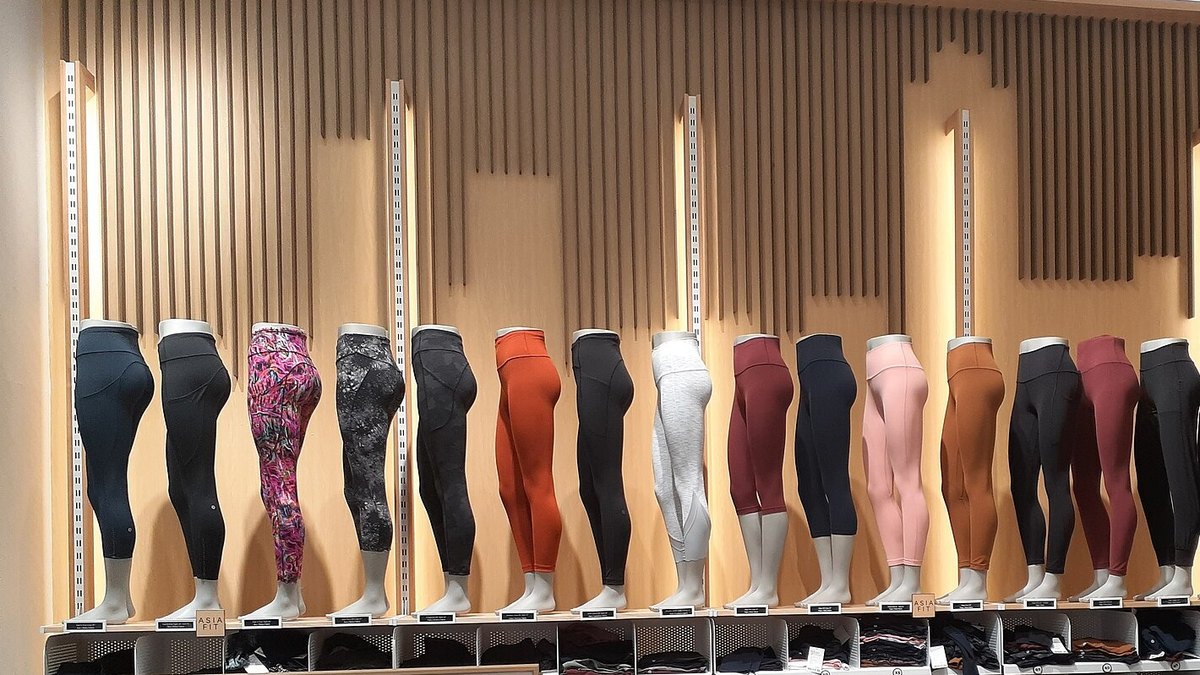
The go-to-market playbook for an athleisure DTC brand is to own the customer relationship through its own stores and its own site, build demand through ambassadors, creators and local community events, keep wholesale small and deliberate, and run tight inventory so markdowns stay rare. That is the pattern in the public companies this page read. Lululemon, the category reference, reported fiscal 2025 (the year ended February 1, 2026) net revenue of $11.1 billion, up 5%, with company-operated stores at $5,049,744 thousand and e-commerce at $4,918,697 thousand, so its two direct channels are close to equal.
The playbook is not a guarantee. In the same filing Lululemon says Americas comparable sales decreased 3% and product margin in the Americas fell 340 basis points, reflecting tariffs and increased markdowns. Gap Inc.'s Athleta Global brand and Under Armour also shrank in their latest fiscal years, and Nike cut its direct business while growing wholesale. The sections below cover flagship and retail, creators and community, the channel mix, inventory and markdowns, and the sales KPIs worth tracking.
Every figure carries its fiscal period and source. Private brands (Vuori, Alo) are labeled as estimates that are not audited, and anything marked Judgment is my reading, not a disclosure. Several things are not published by any of these companies, including creator program spend, customer acquisition cost and store-level profit, and this page says so rather than estimating them.
Flagship and retail: stores are the brand, not just a channel
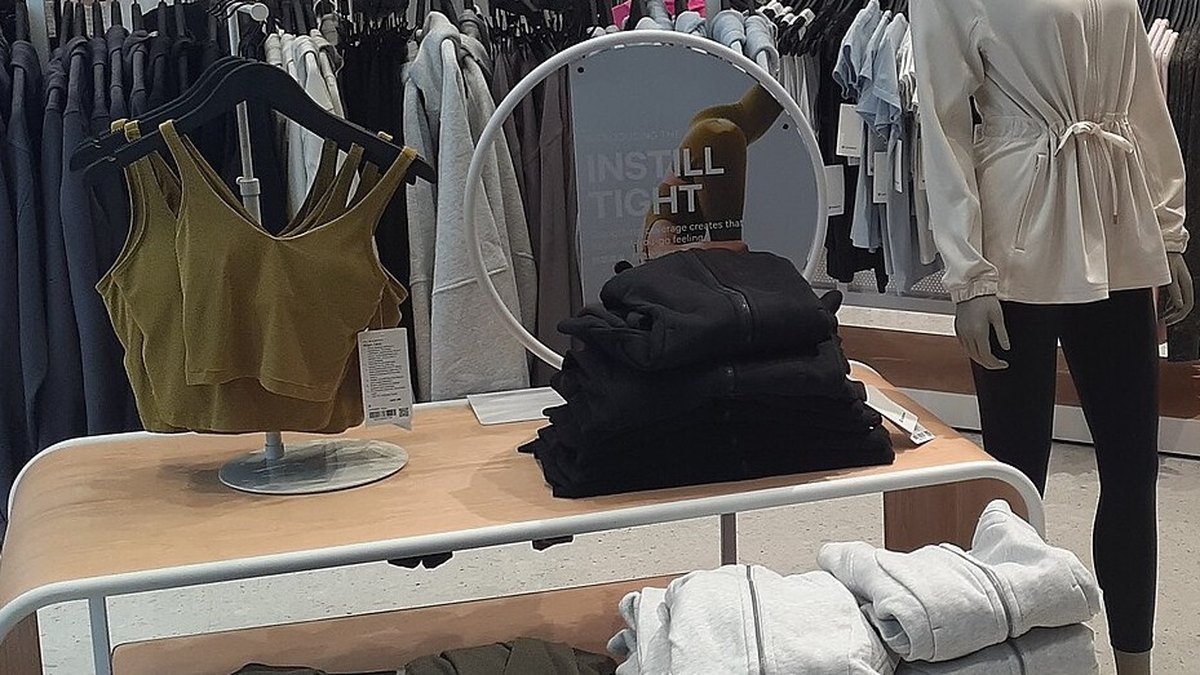
Lululemon describes a vertical retail strategy: it designs, sells and serves guests through its own stores and website, and says that lets it control its brand image and gather feedback for design. Its filing shows how much weight the store base carries. It ended fiscal 2025 with 811 company-operated stores, up from 767, after adding 44 net new stores, and it says that expansion contributed to an 11% increase in square footage.
- Lululemon company-operated stores (fiscal 2025)811 stores at February 1, 2026 versus 767 a year earlier; 476 in the Americas
- Lululemon sales per square foot (10-K)$1,426 in 2025 versus $1,574 in 2024
- Lululemon store revenue growth (2025)Company-operated store net revenue increased 1% while e-commerce net revenue increased 8%
- Athleta Global net sales (Gap Inc. 10-K, fiscal 2025)$1,219 million versus $1,353 million in fiscal 2024; comparable sales (9)%
- Athleta North America stores (Gap Inc. 10-K)252 at January 31, 2026, down from 260 after 8 net closings
- Alo Yoga stores (TheIndustry.fashion, June 24, 2026)More than 150 global stores, nine in the UK; private company, not audited
- Vuori store target (CNBC, December 19, 2024)Working toward 100 stores by 2026; private company, not audited
The numbers show that more stores did not mean more productive stores. Lululemon's sales per square foot fell from $1,574 to $1,426 while square footage grew 11%, and its comparable sales rose only 2%, which the filing attributes to higher e-commerce traffic partly offset by lower conversion rates and a lower average order value. In the Americas, it names lower conversion rates, lower store traffic and a lower average order value.
Athleta shows the other side. It is a premium performance lifestyle brand sold through company-operated stores in the U.S. and Canada, franchise locations globally and online, and its fiscal 2025 net sales were $1,219 million against $1,353 million the year before, with 252 North American stores. Gap Inc. discloses the figures; this page did not find a stated cause for the decline.
Creators and community: what the filings actually say
Creator and ambassador programs are central to the category, but the public filings say less than the marketing implies. Lululemon's 10-K says its strategy leverages owned and paid channels, its ambassador network, events and content. Under its Americas action plan, it says it is leveraging its ambassadors as well as carefully sourced creators, with a focus on engaging guests through social channels and community activations.
Under Armour describes the same lever in sports terms: its marketing strategy centers on athletes and teams across multiple levels of competition as well as brand ambassadors and influencers. Nike's filing also lists a marketing approach built on advertising and promotional programs, including social media and other digital advertising.
- Lululemon (10-K, fiscal 2025)Ambassador network, events and content; "carefully sourced creators" and community activations named in the Americas action plan
- Under Armour (10-K, fiscal 2026)Marketing strategy centers on athletes and teams plus brand ambassadors and influencers
- Creator program spend or revenueNot published by Lululemon, Under Armour, Gap Inc. or Nike in the filings this page read
- Vuori growth (CNBC, December 19, 2024)Sales up 44% in 2023 and up 23% so far in 2024, against a sportswear market that grew only 2.4%; not audited
What is not disclosed matters. None of these filings gives creator program cost, the share of sales driven by creators, or creator payback. A claim that a creator engine produced a specific revenue figure for any of these brands is not supported by what the companies publish.
Channel mix: DTC versus wholesale
The four public companies sit at different points on the direct-to-wholesale scale, and the latest year shows no single winning mix. Lululemon is the most direct, with stores and e-commerce together well above its other channels, which include certain wholesale arrangements with fitness studios, athletic organizations, corporate sales and university campus retailers. Under Armour sells 57% wholesale and 41% direct-to-consumer. Nike sells more through wholesale than through its own channels.
- Lululemon by channel (fiscal 2025, thousands)Company-operated stores $5,049,744; e-commerce $4,918,697; other channels $1,134,159; total $11,102,600
- Under Armour by channel (fiscal 2026, thousands)Wholesale $2,831,787 versus $2,978,869 a year earlier; direct-to-consumer $2,054,115 versus $2,089,607
- Nike (fiscal 2026)NIKE Brand wholesale $27.5 billion versus $25.9 billion; NIKE Direct $17.7 billion versus $18.8 billion, "primarily driven by a decrease in traffic"
- Gap Inc. total (fiscal 2025, millions)Store and franchise sales $9,385; online sales $5,981; total net sales $15,366
- Vuori early channel (CNBC, December 19, 2024)Started as a purely online business, partnered with wholesalers including REI early on
- Alo Yoga parent revenue (Forbes via TheIndustry.fashion)Estimated at nearly $2 billion in April 2025; an estimate, not audited
Two details are worth carrying into planning. First, In Nike's fiscal 2026 results, wholesale revenue rose while NIKE Direct fell. It also says its three largest U.S. customers accounted for approximately 29% of sales in the United States, which is the concentration risk that comes with that choice. Second, Under Armour's stated priority in wholesale is floor space: it designs point of sale displays and concept shops to secure prime floor space in major accounts.
Inventory and markdowns: the margin test
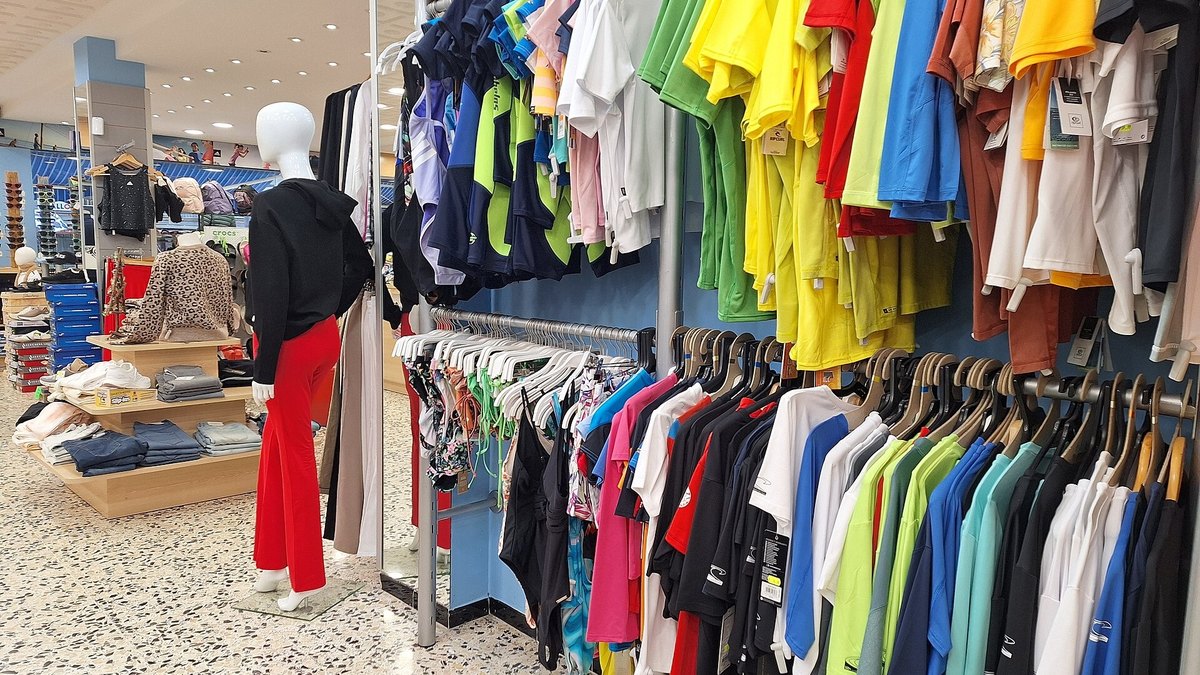
Markdowns are where the playbook is tested. Lululemon reports gross margin of 56.6% in 2025 versus 59.2% in 2024, and attributes its Americas product margin decline of 340 basis points to tariffs and increased markdowns. It has said an action plan includes a plan to reduce the percentage of markdowns on its products. Its inventories were $1,700,753 thousand at February 1, 2026 against $1,442,081 thousand a year earlier.
- Lululemon inventories$1,700,753 thousand (February 1, 2026) versus $1,442,081 thousand (February 2, 2025)
- Lululemon gross margin56.6% in 2025 versus 59.2% in 2024
- Gap Inc. merchandise inventory (fiscal 2025)$2,207 million versus $2,067 million, up 7 percent; gross margin 40.8 percent versus 41.3 percent
- Under Armour inventories and gross marginInventories $914,751 thousand versus $945,836 thousand; gross margin 45.5% versus 47.9%
- Nike inventories (May 31, 2026)$7.5 billion, flat; gross margin up 20 basis points to 42.9%
Lululemon's plan names specific operating levers: more frequent and broader new styles, faster speed to market, and "chase" capabilities that allow more responsive replenishment of select strong-performing styles. In stores it names individual item count reduction, shifting product adjacencies and better visual merchandising. Gap Inc. says its gross margin was helped by less promotional activity at all brands except Athleta Global; the filing does not tie that to Athleta's sales decline. Nike warns that forecasting errors can lead to excess inventories or inventory shortages.
Sales KPIs to run the playbook
The filings point to a short list of measures that a DTC athleisure team can track weekly. Most are metrics the public companies themselves report, and none of the benchmark figures below should be treated as a target.
- Comparable sales by channel. Lululemon reports total comparable sales up 2% with Americas down 3%, China Mainland up 20% and Rest of World up 9%, so the aggregate hid a regional split.
- Sales per square foot. Lululemon discloses $1,426 for 2025 and $1,574 for 2024, and notes that the metric may not be equivalent to similarly titled metrics at other companies.
- Conversion rate, traffic and average order value. Lululemon cites lower conversion rates and a lower average order value in the Americas, and these are the three it names when explaining weak comps.
- Gross margin and product margin. Lululemon's product margin fell 340 basis points in the Americas; Under Armour's gross margin went from 47.9% to 45.5%.
- Inventory against sales. Compare the change in inventory with the change in net revenue each quarter, as the Gap Inc. and Lululemon figures above allow.
- Channel concentration. Nike's three largest U.S. customers were approximately 29% of U.S. sales; set an internal ceiling for any single wholesale account.
Questions people ask
What does GTM mean for an athleisure brand?
GTM means go-to-market: how a brand finds, converts and keeps customers. For a DTC athleisure brand, that is its own stores and website, ambassador and creator activity, community events, any wholesale partners, and the inventory plan that supports them.
Is Lululemon the model for athleisure DTC?
It is the largest public reference. Its fiscal 2025 net revenue was $11.1 billion, up 5%, with company-operated stores and e-commerce close to equal. Its Americas comparable sales fell 3% in the same year, so it is a model to study, not to copy line by line.
Do athleisure brands need wholesale?
The filings show mixed results. Nike grew wholesale to $27.5 billion in fiscal 2026 while NIKE Direct fell to $17.7 billion, and Under Armour sells 57% through wholesale. Lululemon relies mostly on its own channels. The choice depends on whether a partner gives you presentation control.
How much do creators drive sales?
That is not published. Lululemon and Under Armour describe ambassadors, creators and influencers in their filings, but neither gives creator-driven revenue or program cost.
How big are Vuori and Alo Yoga?
Both are private and do not publish audited financials. CNBC reported in December 2024 that analysts estimate Vuori generates around $1 billion in annual revenue. TheIndustry.fashion reported in June 2026, citing Forbes, that Alo Yoga's parent had estimated revenue of nearly $2 billion. Both are estimates.
Sources
- Lululemon Athletica Form 10-K, fiscal 2025 · revenue by channel, stores, margin, action plan, ambassadors and creators
- Gap Inc. Form 10-K, fiscal 2025 · Athleta net sales, comparable sales, stores, inventory
- Under Armour Form 10-K, fiscal 2026 · wholesale and direct-to-consumer mix, inventory, marketing strategy
- NIKE, Inc. Form 10-K, fiscal 2026 · wholesale and NIKE Direct revenue, inventory, customer concentration
- CNBC, December 19, 2024 · Vuori analyst revenue estimate, growth, stores, valuation (not audited)
- TheIndustry.fashion, June 24, 2026 · Alo Yoga revenue estimate and store count (not audited)
This page reads company filings and named news reports as of its date. Private-company figures are estimates, and no creator, acquisition cost or store profit data is published for these brands.
Top photo: Jrmallpo RZIMTao / CC BY-SA 4.0 via Wikimedia Commons