GTM Playbook for Direct-to-Consumer Fitness Equipment Brands in 2027
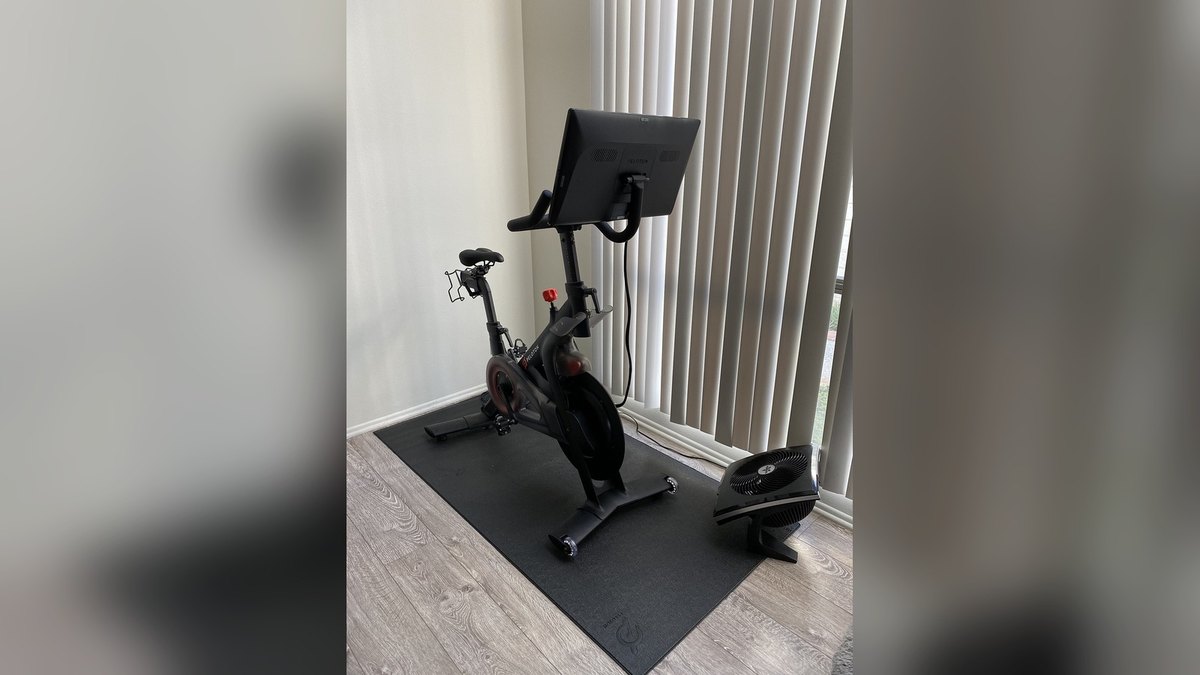
Sell the machine to start a membership, then build channels that lower the cost of each new member: your own site and inside sales first, a few retail partners and small showrooms next, and a commercial team for gyms, hotels and apartment buildings. Peloton's FY2026 10-K shows why: subscriptions were 68.5% of its $2,446.0 million in revenue, and it calls an attractive LTV/CAC ratio "a primary goal" of customer acquisition.
The often-quoted $2.8 billion Peloton figure is out of date. It matches the FY2023 10-K total of $2,800.2 million. The latest full year, FY2026, was $2.446 billion, and the company guides FY27 to $2.3 billion to $2.4 billion. Hardware is the hard part of the model: Peloton's equipment revenue fell 5.7% while subscription revenue was flat.
The model: hardware opens the account, the membership pays for it
In Peloton's FY2026 10-K, Connected Fitness Products brought in $770.4 million and Subscription $1,675.6 million. Subscription Gross Margin was 71.4% for the year. The Q4 FY2026 release shows the gap within a single quarter: a 13.4% gross margin on Connected Fitness Products against 73.6% on Subscription.
Competitors charge in a similar way. Tonal's Tonal 2 page lists the machine at $4,295 and says each purchase "requires a 12-month membership commitment ($59.95/mo. + applicable taxes)." iFIT charges $39/month for iFIT Pro on NordicTrack, ProForm and Freemotion equipment with built-in touchscreens, and $15/month for iFIT Train on Bluetooth equipment without a screen. Peloton lists the Cross Training Bike at $1,695 and the Cross Training Bike+ at $2,695 on its bike page, with the All-Access Membership sold separately at $44/mo per its membership page.
Retention is the metric that decides the plan
If the membership is where the margin is, churn is the number to manage. Peloton reports Average Net Monthly Paid Connected Fitness Subscription Churn of 1.4% in FY2024, 1.6% in FY2025 and 1.7% in FY2026, and Ending Paid Connected Fitness Subscriptions fell from 2.976 million to 2.800 million to 2.553 million over those three years, per the 10-K. The Q4 release puts the year's drop at 247,000, or 8.8%.
Peloton still turned a profit while subscriptions shrank: GAAP net income was $63 million and free cash flow $378 million for FY2026, which the company calls the first time in its history with positive full-year net and operating income. The lesson for a smaller brand is to plan around retention and cost from the start, not after growth slows.
Channel mix: own site, retail partners and microstores
Peloton lists four routes to market in its 10-K: "direct e-commerce, third-party retail partners, owned micro-store showrooms, and our Commercial Business Unit." An Inside Sales team supports online buyers through chat, phone and email and offers one-on-one sales consultations. Its third-party retailers include Amazon, Dick's Sporting Goods, Johnson Fitness & Wellness, John Lewis & Partners, Fitshop and MediaMarkt.
Physical retail has changed shape. The 10-K says Peloton has "substantially reduced our legacy retail showroom footprint" and is moving to smaller-format microstores and partner retail. The FY2026 release says the microstores outperformed internal sales goals and that Peloton plans to double the fleet in FY27. The practical point: large expensive buys still benefit from a place to try the machine, but the store can be small.
Plan for seasonality. Peloton says its second fiscal quarter, which covers the holiday period for a June fiscal year, has historically brought higher revenue and also higher sales and marketing spend. Cash and inventory plans should assume the same peak.
Commercial business development: gyms, hotels and apartments
Commercial sales is where established equipment makers earn most of their revenue. Technogym's FY2025 results, filed on Euronext Milan on March 19, 2026, show revenue of Euro 1,019 million, up 13.1%. BtoB was Euro 823.6 million, up 14.9%, against BtoC of Euro 195.7 million, up 6.2%. By channel, field sales reached Euro 691.2 million, up 15.9%, while inside sales, which covers teleselling and e-commerce, slipped 1.5% to Euro 63.9 million.
Peloton bought its way into this market. Its April 1, 2021 release says it acquired Precor, "one of the largest global commercial fitness equipment providers," for $420 million in cash, a deal announced on December 21, 2020. Today its Commercial Business Unit combines Precor's operator relationships with Peloton's connected content and serves Commercial Clubs, Hospitality, Multi-Family Residential, Corporate, Education and Government, with customers in over 60 countries. In October 2025 it launched the Pro Series, "commercial-ready" versions of the Bike+, Tread+ and Row+.
The commercial line is now the growth story in Peloton's own numbers. The FY2026 release says Commercial Business Unit revenue grew double digits, and the 10-K attributes part of the year's equipment results to higher sales of Precor-branded products. Peloton does not break out a dollar figure for the unit in the sources read, so none is stated here.
Resale, rental and the used-equipment market
A durable machine outlives its first owner, so the secondhand market is part of the go-to-market plan. Peloton has added several programs, per its 10-K: Peloton Rental in select markets from March 2022, a Used Equipment Activation Fee for products bought on the secondary market announced in August 2024, and Peloton Repowered, an equipment and accessories resale marketplace, launched in June 2025.
The aim is to turn a resold machine into a new paid membership rather than a lost customer. A brand without its own resale program should at least decide how a second owner activates the device and what that costs, before the first units reach the used market.
Product safety is part of the brand
Recalls hit both the brand and the channel partners that sold the product. On May 11, 2023, the U.S. Consumer Product Safety Commission announced a recall of about 2.2 million Peloton Bikes after 35 reports of the seat post breaking and detaching, including 13 reports of injuries. The bikes were sold at Peloton and Dick's Sporting Goods stores and on Amazon.com from January 2018 through May 2023 for about $1,400.
On November 06, 2025, the CPSC announced a second seat-post recall covering about 833,000 Original Series Bike+ units, sold from January 2020 through April 2025 for about $2,495, after three reports including two injuries. The remedy in both cases was a free repair. For a hardware brand, a recall plan that covers every retailer and the resale market belongs in the launch checklist.
A practical sequence (our reading of the sources)
- Price the pair, not the machine. Set the hardware price and the monthly membership together, as Peloton, Tonal and iFIT all do, and track churn from the first month.
- Sell direct first. Use your own site with chat, phone and one-on-one consultations before adding retail partners that take margin.
- Keep stores small. Peloton is moving from large showrooms to microstores; a trial space can do the job of a flagship.
- Build a commercial team early. Clubs, hotels, apartment buildings and offices buy through field sales, which is the largest channel in Technogym's results.
- Plan the second owner and the recall. Decide how resold machines activate and how a safety recall reaches every buyer before the first units ship.
Questions people ask
Is Peloton's revenue $2.8 billion?
Not anymore. $2,800.2 million was Peloton's FY2023 total revenue. FY2026 revenue was $2.446 billion, and the company guides FY27 to $2.3 billion to $2.4 billion.
How much of Peloton's revenue comes from subscriptions?
In FY2026, Subscription revenue was $1,675.6 million, or 68.5% of total revenue, and Connected Fitness Products were 31.5%, per the company's 10-K.
What does a connected fitness membership cost?
On November 3, 2026, Peloton listed All-Access at $44/mo, Tonal required a 12-month commitment at $59.95/mo plus tax, and iFIT Pro was $39/month.
Why did Peloton buy Precor?
Peloton said the $420 million cash deal, closed April 1, 2021, gave it U.S. manufacturing and faster entry into commercial markets. Precor now anchors its Commercial Business Unit.
Is commercial or consumer the bigger market for equipment makers?
For Technogym, commercial is far larger: BtoB revenue was Euro 823.6 million in 2025 against Euro 195.7 million BtoC. That is one company's split, not an industry figure.
Sources
- Peloton Form 10-K for fiscal year ended June 30, 2026 · Revenue split, churn, subscriptions, channels, Commercial Business Unit, resale programs, seasonality
- Peloton Q4 and FY2026 results release (August 6, 2026) · Full-year revenue, net income, free cash flow, microstores, commercial growth, FY27 outlook
- Peloton Form 10-K for fiscal year ended June 30, 2023 · FY2023 total revenue of $2,800.2 million (the source of the $2.8 billion figure)
- Peloton: Peloton Completes Precor Acquisition (April 1, 2021) · Deal price, dates and commercial rationale
- Peloton bike shop page · Cross Training Bike and Bike+ prices
- Peloton membership page · All-Access Membership price
- Tonal 2 product page · Hardware price and membership commitment
- iFIT membership page · iFIT Train and iFIT Pro prices and supported brands
- Technogym FY2025 results release (March 19, 2026) · Revenue by customer type and by channel
- CPSC: Peloton Recalls Two Million Exercise Bikes (May 11, 2023) · Recall size, incident reports, where sold
- CPSC: Peloton Recalls Original Series Bike+ (November 06, 2025) · Recall size, incident reports, sale dates
- Wikimedia Commons: Peloton Bike · Source of the page photo (CC BY-SA 4.0, SpartyZag)
Facts were read from the linked filings and official pages on November 3, 2026. Company statements are quoted as the company's own, and figures a source did not disclose are called undisclosed rather than estimated. If a figure here is out of date, tell us and we will correct it from a source.
Top photo: SpartyZag / CC BY-SA 4.0 via Wikimedia Commons