GTM Playbook for Market Research Firms in 2027
Sell a defined outcome for a named kind of buyer, not "research" in general. A small or mid-size firm wins when it picks one decision type (pricing, brand tracking, concept testing, customer experience), one buyer group, and one pricing shape, then proves quality through published standards and clean data practice. Use custom studies for the main revenue, a retainer or subscription for repeat buyers, and treat AI as a way to speed analysis, not as a reason to skip disclosure.
On public numbers: the U.S. Department of Labor's O*NET OnLine, which credits the Bureau of Labor Statistics, shows 952,700 people employed as market research analysts and marketing specialists in 2025, a median wage of $78,760, and projected growth much faster than average for 2025 to 2035. That is an occupation, not the research-firm industry. I could not retrieve a Census or BLS count of firms, employees or receipts for NAICS 541910, and found no published win rate, proposal-to-award ratio or typical project price, so none is given. Pricing sections below are formulas to fill with your own numbers.
This guide does not center on any one company. The standards sections cite the Insights Association code (2025 Edition), the ICC/ESOMAR code page, ISO's description of ISO 20252, and the California Attorney General's CCPA page.
What the public data does and does not tell you
The O*NET OnLine summary for occupation 13-1161.00 (site updated October 6, 2026; data credited to the Bureau of Labor Statistics) lists Market Research Analysts and Marketing Specialists with employment of 952,700 in 2025, median pay of $78,760 a year ($37.87 an hour), and projected job openings of 82,000 from 2025 to 2035, counting growth and replacement. It describes growth for 2025 to 2035 as much faster than average. Its top industries include Professional, Scientific, and Technical Services and Finance and Insurance.
Read that carefully. It counts people in an occupation across every industry, including in-house teams at banks and brands, so it does not size your market and it is not a count of agencies. It does show that insight work is done in-house at large buyers, which is part of your competition and part of your buyer base.
The industry code usually used for firms that sell this work is NAICS 541910, Marketing Research and Public Opinion Polling. I could not open the Census Bureau or BLS pages that report establishments, employment and receipts for it, so I give no figures. Pull them yourself from Census County Business Patterns and cite the table and year.
Pick an ideal customer profile and a buyer map
No public source I found gives a standard buyer profile for research firms, so this section is method, not data. Write your ICP as four fields: the decision your study informs (launch, price, message, retention), the type of organization that faces that decision often, the size of the insights budget or the person who controls it, and the speed the buyer needs. A firm that says "brand tracking for regional banks" can be found and remembered. A firm that says "all research" cannot.
Map the buyer roles. The sponsor owns the business question and the money. The insights or research manager runs the vendor process and judges rigor. Procurement manages the contract, and legal reviews data terms. Brand, product, sales and customer-experience teams are the users of the findings. A proposal written only for the sponsor can stall in procurement, and one written only for the research manager can lose on business value. Name all four in your account plan.
Choose a first wedge: a repeatable study type you can field quickly and cheaply because you have done it many times (for example a recurring customer satisfaction wave, a concept-test template or a pricing study). Repeat work is where margin and referrals come from.
Custom, qualitative, syndicated and subscription: choose the mix
Custom quantitative studies are designed around one client's question, usually with a survey fielded to a sample from a panel. Qualitative work (interviews, groups, diary studies) explains why people answer as they do and is priced by the hour and the respondent. Syndicated research is built once and sold to many buyers. Subscription products, such as a dashboard or a recurring tracker, sell access over time.
My judgment, not sourced data: a small firm usually cannot afford to build a syndicated product before it has paying custom clients, because the cost lands before the first sale. A common path is custom work first, then convert the best repeat study into a tracker or a license, and sell it to similar buyers. Test demand with three or four existing clients before you build.
Quality and speed are now part of the pitch. Where you use AI to code open-ended answers, summarize interviews or draft reports, say so, and keep a human reviewer in the workflow. The Insights Association code (see the standards section) requires disclosure and human judgment for AI use.
Pricing models as formulas
- Project fee. Fee = (direct costs + (hours by role x loaded hourly cost) + risk reserve) / (1 - target margin). Direct costs are sample, incentives, translation, software and any subcontractors. Quote a range of sample sizes so the buyer sees what precision costs.
- Retainer. Monthly fee = (committed hours x blended rate) + a fixed amount for standing infrastructure (a questionnaire library, a dashboard, a quality-check process). Define the hours, the turnaround and what happens to unused hours.
- Subscription or syndicated license. Price per subscriber = (annual cost to build and refresh the product + annual cost to serve) / (subscribers you can realistically win) / (1 - target margin). Check against what the buyer pays for the alternative.
- Hybrid. A project fee for the first wave plus a lower price per later wave of the same design, so the repeat buyer is rewarded and your setup cost is recovered once.
Build a cost sheet before any quote: hours by role (project manager, programmer, analyst, reviewer), unit cost of sample, expected incidence, incentives, and a contingency for re-fielding. Review each closed job against the quote to see where hours ran over. Your own actuals are the only benchmark worth trusting here.
Proposals and RFPs
This is a working method. For each request, decide in the first hour whether to bid: Is the buyer in your ICP? Do you know the question well enough to add value? Is the incumbent entrenched? Is the budget stated? A short bid-or-no-bid checklist protects your analysts' time.
A strong proposal has the same parts every time: the business question restated in the buyer's words, the proposed design and why it fits, sample and quality controls, timeline, deliverables, price with options, team and relevant prior work, and data-protection terms. Offer two options, a core design and an upgrade, so the buyer can choose rather than reject.
Answer RFP questions directly and attach evidence: your membership in industry bodies, your quality procedures, and any certification you hold. Ask for the evaluation criteria and the decision date, and ask for a debrief on lost bids. Track bids by source, buyer type and outcome in a simple log, so you can compute your own win rate. I found no published benchmark for it.
Panel providers and other partners
Most custom survey work buys respondents from a sample or panel provider. The relationship is a supply chain, and your data quality depends on it. ISO's description of ISO 20252:2019, read through an ISO search summary because the ISO page itself returned an access error, says the standard incorporates and supplants ISO 26362:2009, the access panels standard. That signals that panel quality is treated as part of research service quality, so ask your providers how they recruit and verify respondents, and how they handle duplicates and fraud.
Insights Association's code says a researcher should identify subcontractors to the client on request, so keep a current list of who touches the data. Negotiate in writing: price per complete by length and incidence, replacement of poor-quality completes, data-transfer terms and incident notification. Use two providers for large or hard-to-reach samples.
Other partners worth a formal agreement: a fieldwork or recruiting firm for qualitative work, a translation partner, and a data-visualization or analytics vendor. Referral partners such as consultancies and agencies can be a steady source of work if you agree on who owns the client relationship and how findings are credited.
Positioning against do-it-yourself survey tools
Self-serve survey software lets any buyer write and send a questionnaire cheaply. Do not argue against it. Position around the parts a tool cannot do for the buyer: framing the decision, designing unbiased questions, choosing and weighting the sample, checking data quality, and explaining what the result means for the choice at hand. I found no published data on how often buyers move from DIY tools to a firm, so treat the following as judgment.
Offer an on-ramp: a fixed-price questionnaire review or sample audit for buyers who already run their own surveys, with a path to a full engagement. Sell risk reduction, such as a decision that rests on a biased sample, rather than features. Show a before-and-after of one anonymized questionnaire you improved, with the client's permission.
Standards, ethics and AI in your sales story
The Insights Association Code of Standards and Ethics for Market Research and Data Analytics, 2025 Edition (its training page lists 11 sections), says adherence is required by all IA members. It rests on four principles: respect research subjects; be transparent and collect personal data only with consent, securing it in transit and at rest; act with integrity and professionalism; and comply with applicable law. When the code and law conflict, the more restrictive standard governs. It treats using research data to market directly to a participant without consent as a violation, so a client request to add survey respondents to a marketing list must be declined unless consent exists.
On AI, the same page says an AI avatar or chatbot that could be perceived as human must be disclosed at the beginning of the research; personal data must not be used in AI training without informed consent; AI-generated data must be clearly distinguished from human-participant data in reporting; and no AI system may operate without human judgment embedded in its lifecycle. To clients, the code calls for honesty about qualifications and conflicts, a client's approval before public release, and technical detail that allows independent assessment. Complaints go to the Standards Committee, with sanctions from a private warning to public expulsion of at least 2 years.
The ICC/ESOMAR page describes the International Code on Market, Opinion and Social Research and Data Analytics as the global standard for ethical market research and data analytics. The page body would not load for my reader, so I only quote that description; read the code itself before you cite its articles.
For quality management, ISO 20252:2019 covers all stages of a study from first contact between client and provider to presenting results (as summarized by ISO in a search result; I could not open the page directly). A search result also suggested a newer 2026 edition exists, which I could not confirm, so check ISO's catalogue for the current one. Certification is a sales asset for RFPs only if you can show it, so do not claim it unless an auditor has granted it.
Privacy basics for survey data
This is a planning summary, not legal advice. The California Attorney General's CCPA page (updated August 28, 2026) says the law gives consumers the right to know what personal information a business collects, to delete it, to opt out of its sale or sharing, and not to be discriminated against for using those rights, and that amendments from Proposition 24 added the right to correct information and to limit use of sensitive personal information as of January 1, 2023. It says the law applies to many businesses, including data brokers.
The same page explains that a business that hires another company to provide services may treat that company as a service provider, and that the business is responsible for answering consumer requests. For a research firm, this makes your client contract important: state who is the business, what you may do with respondent data, how you handle a deletion request and when you must report a breach. Other states have their own laws; check each one that applies to your respondents. I did not read the FTC's guidance because its site returned an access error to my request.
Practical habits that match the Insights Association code: keep a plain privacy policy, collect only the data you need, get consent before passing data to another party, and delete or anonymize on schedule.
A working playbook in seven steps (judgment, not data)
- Choose a wedge. One decision type and one buyer group, backed by a repeatable study design.
- Write the buyer map. Sponsor, research manager, procurement, legal and users, each with what they need to see.
- Build the cost sheet and price from it. Use the project, retainer and license formulas, and compare each closed job to its quote.
- Standardize proposals. Same structure, two options, a bid-or-no-bid checklist and a win/loss log.
- Lock your supply chain. Two sample providers, written quality terms, and a subcontractor list.
- Meet DIY buyers with an audit offer. A fixed-price review of their own questionnaire and sample.
- Publish your standards and AI policy. State your code adherence, disclosure rules and data handling on your site and in each proposal.
Questions people ask
What is a go-to-market plan for a market research firm?
It is a written plan for who you serve, which study types you sell, how you price them, how buyers find and select you, and how you keep them. It should also state the standards you follow and how you handle respondent data.
How big is the market research industry?
I could not retrieve a Census or BLS figure for NAICS 541910 and found no reliable public market size, so none is given. O*NET OnLine, crediting the Bureau of Labor Statistics, reports 952,700 market research analysts and marketing specialists employed in 2025 across all industries, which is an occupation count, not the industry.
What do market research analysts earn?
O*NET OnLine, crediting the Bureau of Labor Statistics, shows a 2025 median of $78,760 a year ($37.87 an hour) for market research analysts and marketing specialists, with projected growth much faster than average for 2025 to 2035. The O*NET page was updated October 6, 2026.
How should a research firm price a project?
Start from cost: direct costs plus hours by role at loaded cost plus a risk reserve, divided by one minus your target margin. Then adjust for the buyer's alternatives and your own record. No public source gives standard prices.
Do I need to follow the Insights Association code?
It is required for members of the Insights Association. Non-members can still use it as a public statement of practice, and it says that when it conflicts with law, the more restrictive standard governs.
Can I label AI-generated respondents or summaries as research findings?
The Insights Association code, 2025 Edition, says AI-generated data must be clearly distinguished from human-participant data in reporting, and that AI use must be disclosed. Label it, and keep a person reviewing the output.
How do I compete with free or cheap survey tools?
Sell judgment, not software: question framing, sample design and weighting, data-quality checks and interpretation. An audit offer for buyers who already run their own surveys is a low-risk way in.
Sources
- O*NET OnLine: 13-1161.00 Market Research Analysts and Marketing Specialists (site updated October 6, 2026; BLS data) · Employment 952,700 in 2025, median pay, projections to 2035
- Insights Association: Code of Standards and Ethics, 2025 Edition (training page, read November 2026) · Principles, AI rules, client duties, enforcement
- ICC/ESOMAR: International Code (page description, read November 2026) · Description of the global code
- ISO: ISO 20252:2019 (read through an ISO search summary; direct request returned 403) · Scope of the research quality standard, access panels standard it supplants
- California Attorney General: California Consumer Privacy Act (updated August 28, 2026) · Consumer rights, service providers, CPRA changes
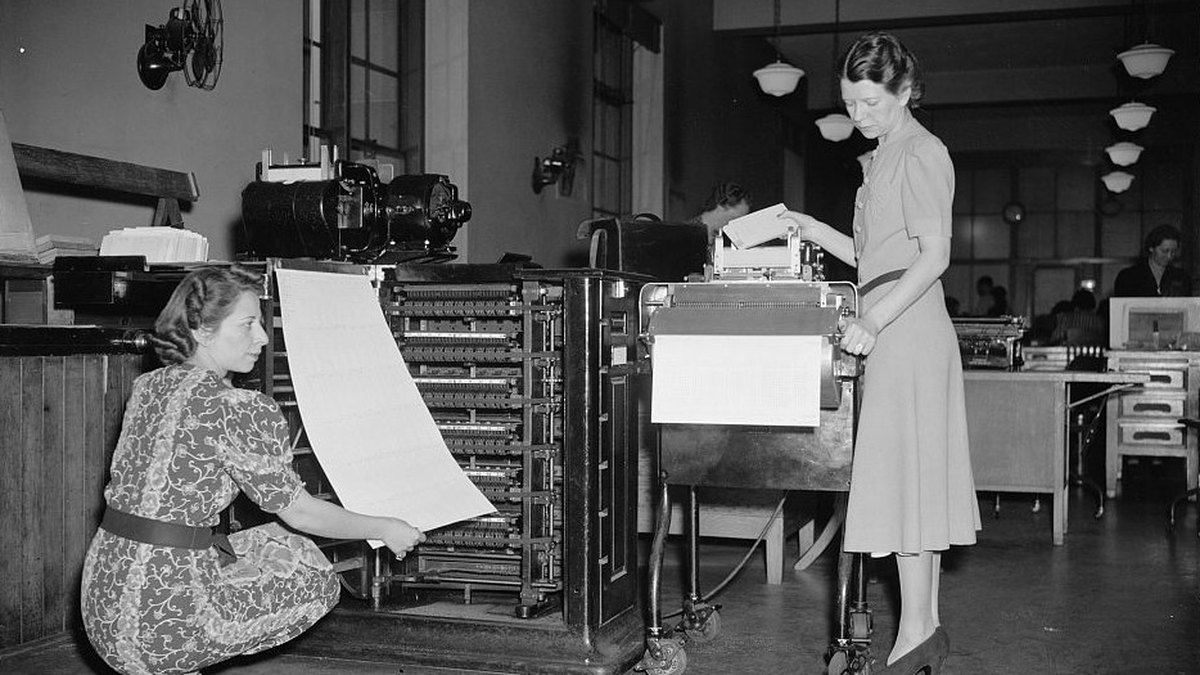
- Hero photo: Harris & Ewing, Library of Congress (no known restrictions on publication), December 2, 1939 · Census tabulating machines
Figures were read from the linked pages in November 2026. The Census Bureau, BLS, FTC and ISO pages returned access errors to my requests, and the ICC/ESOMAR page would not render, so industry counts for NAICS 541910, BLS Occupational Outlook Handbook text and FTC guidance are not quoted. No market size, win rate, project price or conversion figure is stated because none was found. This is a business guide, not legal advice.