How do you build the GTM playbook for an RPO provider in 2027?
Sell RPO as a menu of entry points, not one big contract, and prove AI with measurable use cases. The two sources that speak to buyers directly point the same way. The RPO Association's 2026 buyer report (n=998 employers, 454 of them active RPO users) found nearly 70% of buyers report a positive return on investment, yet nearly six in ten are considering switching providers or restructuring their engagement. Its September 24, 2026 market report says enterprise-wide, full-lifecycle arrangements are now 35% of client engagements, down nearly 10% since the previous measurement.
That shifts the playbook toward modular and project entry points that can grow into a broader partnership, with enterprise full-cycle as the destination rather than the first sale. AI expertise is a top buyer expectation for the first time since 2023, and the same report says buyers want specific, measurable use cases, not broad promises.
Pricing evidence is thin and mostly from vendor blogs, so each figure is labeled. No source I read publishes a customer acquisition cost, sales-cycle length or win rate for an RPO provider, so none is given. Strategy advice is my judgment and is marked as such.
Start with what RPO buyers say they want
The RPO Association 2026 Buyer Trends Report, published in January 2026 with Lighthouse Research & Advisory, surveyed 998 employers across North America, EMEA and APAC, including 454 active RPO users. It is the fourth annual edition. The full 38-page report costs $950 for non-members, so I read only the public summary.
The summary has a good-news, bad-news shape. Nearly 70% of buyers report a positive return on investment and a majority say hiring metrics improved under their current partnership. But nearly six in ten employers are considering switching providers or restructuring the engagement, and cost pressure is rising. For a provider, the buyer base is large and satisfied enough to keep buying, and loose enough to move.
Two expectations are new in the summary. AI expertise is a top buyer expectation for the first time since 2023, and the report describes the ask as moving from broad promises to specific, measurable use cases. Candidate fraud, including AI-enabled application manipulation, is a top hiring concern for the first time since 2023.
Choose your engagement shapes: full-cycle, project and on-demand
The three shapes most sources describe are end-to-end (enterprise full-cycle), project-based and recruiter-on-demand. Manatal defines end-to-end as the provider managing the entire lifecycle from requisition to onboarding, project-based as support for specific hiring campaigns or short-term expansions, and recruiter-on-demand as adding recruiters to an existing team for niche roles. Pin puts typical end-to-end contracts at a minimum of 2-3 years and project RPO at usually 3-12 months, and calls on-demand RPO the fastest-growing segment at a 17.8% compound annual growth rate through 2030, citing Research and Markets.
The shift away from the biggest shape is the key data point. The RPO Association's Seven Signals report says enterprise-wide, full-lifecycle arrangements are 35% of client engagements, down nearly 10% since its previous measurement, and recommends offering modular entry points that can still join a broader partnership. Everest Group's 2026 RPO PEAK Matrix, covering 57 providers, describes providers responding to slower hiring demand and budget pressure with modular and project-based delivery, recruiter-on-demand offerings and advisory services.
Judgment: the full-cycle contract is still the biggest account, but it is the harder first sale. A project that proves a hiring team's pipeline in months is an easier yes, and it gives you the data to propose the larger scope. Market it that way: project and on-demand as the door, enterprise full-cycle as the expansion.
Price it the way the market already prices it
Providers rarely publish rate cards. HeroHunt.ai, a vendor of an AI recruiter, says no major RPO provider publishes one, so any number below is indicative. Manatal lists five structures: management fee, cost-per-hire, cost-per-slate, activity-based and cost-per-resource. Pin cites Staffing Industry Analysts for a hybrid, a fixed monthly fee combined with cost-per-hire, covering about half of contracts, but HeroHunt notes that SIA figure comes from a September 1, 2021 article, so it is five years old.
For a per-hire anchor, Activated Scale, a vendor blog, says U.S. pricing typically ranges from $3,000 to $10,000 per hire and cites SHRM's 2025 average cost per hire of $5,475, which it says climbs sharply for specialized roles without giving a figure. Treat this as a buyer's mental benchmark, not a quote.
AI has not yet changed the commercials. HeroHunt quotes the RPO Association's August 2026 paper as saying providers report little AI-specific pricing change so far, that employers increasingly expect efficiency gains to reach the commercials, and that the market has not converged on a new model. Judgment: expect procurement to ask where your AI savings go. Decide before the first negotiation whether they show up as lower per-hire fees, wider scope at the same fee, or an outcome-linked component.
Make AI-augmented sourcing a proof point, not a slogan
Buyers now ask for the specifics. The Seven Signals report says 51% of buyers want their provider to advise on emerging compliance requirements and 58% want help mitigating candidate fraud, and it recommends building sound governance practices first and positioning them as a product afterward. It also says AI technology consulting ranks first among the elements buyers see as most valuable, and advises deciding when to price advisory separately instead of giving it away.
The same report notes that entry-level job postings have fallen by more than one-third since generative AI became widely available, and suggests extending the offer to skills intelligence, internal mobility and workforce planning. It also says personalization is re-emerging as a differentiator against automation, so the human recruiter's role should be defined by role type, candidate segment and process stage rather than automated away.
As an example of how a large provider packages this, Cielo's site describes Cosm by Cielo as an AI-native talent acquisition operating model combining human expertise, AI and governance, offers Source & Engage as an automated sourcing tool, describes its TA Optimizers as its modular RPO offering, and says it was named a Leader in Everest Group's RPO PEAK Matrix for the 14th consecutive year. These are the company's own claims. I found no revenue figure for Cielo on its page, and none is used here.
A working playbook in six steps (judgment, not data)
- Segment by buying behavior. Split accounts into those ready for a multi-year full-cycle partnership and those who want a project or recruiter-on-demand. The shift in engagement mix suggests the second group is growing.
- Lead with a modular entry offer. Package a time-boxed project or a small on-demand pod with a defined path to broader scope, as the RPO Association recommends.
- Win the switchers. Nearly six in ten buyers are considering a change. Build a switching offer: a transition plan, a pilot and the metrics you will report.
- Prove AI with named use cases. For each AI tool, state the job it does, the human oversight around it and the measure you will report, since buyers want specific use cases and governance.
- Sell fraud screening and advisory on their own line. With 58% of buyers wanting fraud help and AI consulting ranked most valuable, consider pricing these separately rather than bundling.
- Decide how AI savings are shared. Pick your commercial answer before procurement asks, since buyers expect efficiency gains to reach the commercials.
Questions people ask
What is a go-to-market playbook for an RPO provider?
It is a written plan for which buyers you target, which engagement shapes you sell (enterprise full-cycle, project, on-demand), how you price them, how you prove your recruiting and AI capability and how you expand an account. The structure here is my judgment, built on the buyer and market data cited on this page.
What are the main types of RPO?
Sources describe end-to-end (enterprise full-cycle), project-based and recruiter-on-demand RPO, plus hybrid or selective arrangements. Pin puts typical end-to-end contracts at a minimum of 2-3 years and project RPO at usually 3-12 months.
How are RPO engagements changing?
The RPO Association's September 24, 2026 report says enterprise-wide, full-lifecycle arrangements are 35% of client engagements, down nearly 10% since its previous measurement, and recommends modular entry points.
How much does RPO cost?
Providers rarely publish rate cards. A vendor blog, Activated Scale, says U.S. pricing typically ranges from $3,000 to $10,000 per hire. Treat that as indicative, not a quote.
What do RPO buyers expect from AI?
The RPO Association's 2026 buyer report says AI expertise is a top buyer expectation for the first time since 2023 and the ask has moved to specific, measurable use cases. Its market report adds that 51% of buyers want advice on emerging compliance requirements.
What is an RPO provider's customer acquisition cost or sales cycle?
Not published in any source I read. Track your own cost per new account and time from first meeting to signed scope before planning a budget.
Sources
- RPO Association: 2026 RPO Buyer Trends Report (January 2026) · Sample, ROI, switching, AI expectation, fraud concern
- RPO Association: Seven Signals Reshaping RPO (September 24, 2026) · 35% full-lifecycle share, 51% compliance advice, 58% fraud help, entry-level postings
- Everest Group: RPO Services PEAK Matrix Assessment 2026 (July 9, 2026) · 57 providers; modular, project and on-demand delivery
- Pin: RPO Explained (April 10, 2026; vendor) · Contract terms, on-demand growth, hybrid share citation
- Manatal: Recruitment Process Outsourcing Guide (March 2, 2026; vendor) · Engagement models and pricing structures
- Activated Scale: RPO Pricing (March 31, 2026; vendor) · Per-hire range and SHRM cost-per-hire citation
- HeroHunt.ai: RPO Pricing 2026 (November 4, 2026; vendor) · No published rate cards; RPOA pricing quotes; age of SIA figure
- Cielo (company site) · Cosm by Cielo, TA Optimizers, Everest Leader claim (company claims)
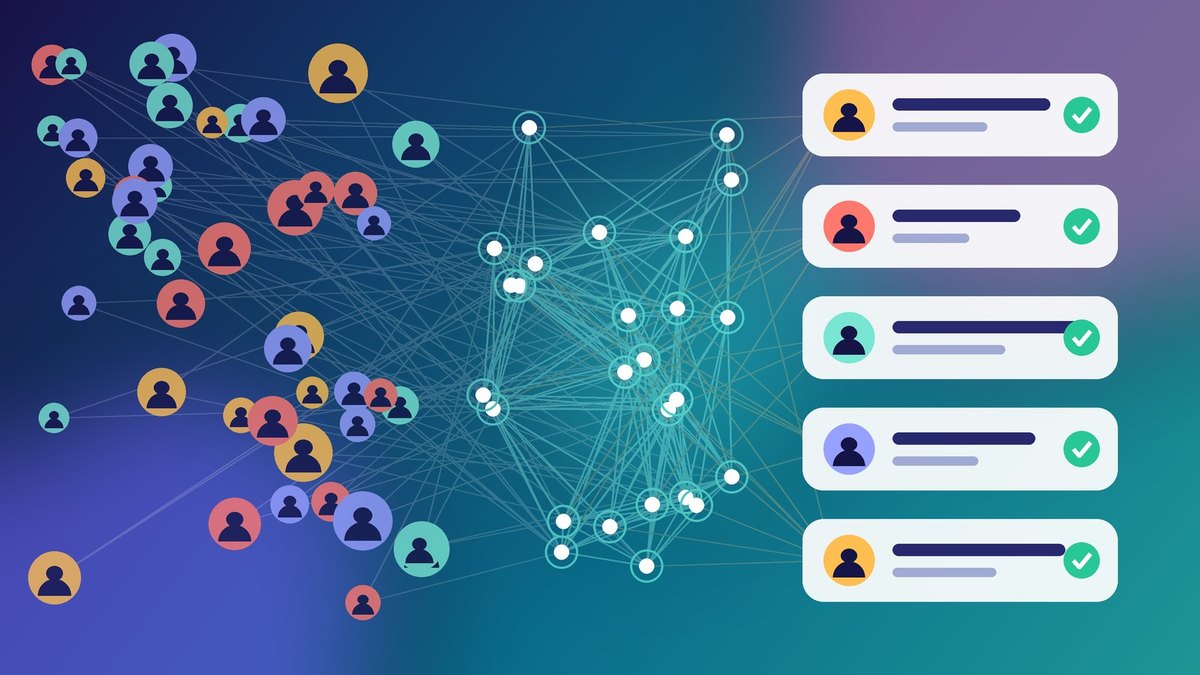
- Hero illustration: original artwork created for answrsnow · Candidates to AI network to shortlisted cards
Figures were read from the linked pages in November 2026. The RPO Association figures come from the trade body's own surveys; Pin, Manatal, Activated Scale and HeroHunt are vendors, and their figures are indicative. The full buyer report is paywalled and was not read. This is not financial advice.
Top photo: Illustration: original artwork created for answrsnow