How do you build the GTM playbook for a specialty coffee roaster and independent coffee shop in 2027?
Build one playbook with two engines and decide which one leads. A specialty roaster sells beans (wholesale accounts, bags and subscriptions). An independent coffee shop sells the visit (a drink, a place and a reason to come back). Many small businesses run both, and the hard choice is which one carries the plan.
The demand data supports both. The National Coffee Association's 2026 report found 47% of American adults had specialty coffee in the past day, against 42% for traditional coffee, and 36% of past-day specialty drinkers had it prepared away from home. On the bean side, Bellwether Coffee reported on October 15, 2026 a median wholesale price of $14.80 per pound for roasted specialty coffee across 1,193 calculator entries.
The pricing, margin and loyalty figures below come mostly from software and equipment vendors, and several are modeled or self-reported, so each is labeled. No source I read publishes a standard customer acquisition cost, marketing budget or sales-cycle length for a roaster or shop, so none is given. The strategy advice is my judgment, marked as such.
Start with who is drinking specialty coffee and where
The National Coffee Association release of June 2, 2026 reports that 47% of American adults had specialty coffee in the past day and 42% had traditional coffee. The survey was nationally representative and run by Dig Insights; the page does not state a sample size. It also reports that 69% of 25 to 39 year olds had specialty coffee in the past week, the highest of any age group.
Where the cup is made matters for a shop. NCA reports that 36% of past-day specialty drinkers had their coffee prepared away from home, against 23% of traditional drinkers. Daily Coffee News covering the Spring 2026 data adds that among all past-day coffee drinkers, 85% drank at home and 36% out of home, and that 66% of adults drank coffee in the past day. The Specialty Coffee Association summary says 76% of past-day specialty drinkers had their coffee hot and 60% had it cold.
Read together, these figures say the at-home cup is the larger pool, which is where a roaster's bags and subscriptions compete, and the away-from-home cup is where a shop earns its place. That reading is my judgment, not a figure from NCA.
Decide which business leads: the bag or the visit
A roaster's plan starts with wholesale accounts because they repeat. Bellwether's analysis of 1,193 roasting-calculator entries from July 1 to September 30, 2026 puts the median price U.S. buyers pay for wholesale roasted specialty coffee at $14.80 per pound, with over one third paying $18 per pound or more. Those figures are modeled from user-reported prices and volumes, not audited (Sprudge, October 15, 2026).
A 2007 opinion piece from SLAYER Espresso by Eric Perkunder argued that roasters earn better returns from wholesale relationships with independent cafes than from running retail stores, and it gave no margin percentages. It is nearly two decades old and written by an equipment maker, so use it as an argument, not a data point.
A shop's plan starts with the counter. Joe Coffee's State of Coffee Q2 2026 data puts the average independent latte at $5.54 against $5.40 at chains, and the average cold brew at $5.46 against $4.59, while the independent Americano averaged $3.85 against $4.14. Joe is a software vendor and says verified cost and labor actuals are not yet in that report.
Watch the customer who may also become a competitor
The line between the two businesses is getting thinner, and that changes the roaster's go-to-market. In a Bellwether customer survey of 122 responses taken October 2 to 9, 2026, 93% said they now sell coffee under their own brand and 72% added new revenue from roasting, led by retail bag sales. Bellwether sells shop-size roasters, the subgroup sizes are not stated, and businesses that switched estimated average savings of $2,000 per month. The company also models about a half cut in coffee cost and a median 5-month payback.
For a wholesale roaster, the judgment is that your best shop customers may roast for themselves once their volume is high enough. Bellwether's own undated blog puts break-even at roughly 25 lbs per week, based mostly on customer testimonials. So the playbook should give a shop a reason to stay beyond price: consistent quality, training, equipment help and delivery you can rely on. For a shop, the same figures show a way to add a bag-sales line, but a payback claim from a roaster seller is not a plan until you run it with your own volumes.
Count the real cost of the cup
The most useful old figure is also the most dated. The SLAYER piece said coffee was 8-10% of total operating expense for higher-volume retailers and that for a $4 cappuccino about $0.07 was coffee while around $3.00 covered labor and rent. It put labor and overhead at 70-80% of total store operating costs. Those are 2007 numbers, so rebuild them from your own invoices, but they explain why a shop's playbook is mostly about traffic and labor, not bean price.
For profit, Joe's CEO Nick Martin cites the 2025 Independent Coffee Shop Industry Report for an average net profit margin of 13.8 percent for independents (June 9, 2026; sample size not given). Use it only as a sense of scale.
Green coffee cost is still a roaster's biggest swing. A StoneX report on October 19, 2026 said December arabica traded above 315 for the first time since 31 August, reaching a high of 317.75 in the session. The page does not state units; they appear to be cents per pound. The takeaway is that wholesale price sheets should say how often you reprice and why.
Build around regulars, and be careful how you reward them
Square's March 18, 2026 report is Canadian and not coffee-specific, but it measures the idea a shop lives on. It found regulars, defined as buyers with transactions on four or more distinct dates within a year, generate nearly six times more annual revenue than one-time visitors, and that 84% of regulars spend the same or more per visit once a relationship is established.
On loyalty rewards, Joe's CEO cites a 2017 study in the International Journal of Hospitality Management finding that 56 percent of redeemers would have visited anyway. The cost to a small shop is a discount given to people who were coming regardless. No source I read gives a loyalty return on investment for independent coffee shops. A reasonable first test is to reward behaviors you want, such as a first bag purchase or a second visit in a week, and compare against a month without it.
A working playbook in six steps (judgment, not data)
- Pick the lead engine. Wholesale roaster, shop, or both with one clearly in front. Write down which channel gets the first dollar of effort.
- Name your customer by place and use. Office, restaurant, other shops, nearby households or commuters. The NCA data says younger adults are heaviest specialty drinkers, so check whether your block matches.
- Price from your own costs. Compare your price per pound and per drink with the public reference points above, then set your own rule for repricing when green coffee moves.
- Make wholesale sticky. Offer training, equipment support and a delivery schedule, since an equipment seller says shops can roast their own.
- Make regulars countable. Count customers who come on four or more dates in a year, as Square does, and track their share of sales.
- Test one change at a time. Run one promotion or one new account type for a fixed period and keep the result.
Questions people ask
What is a go-to-market playbook for a coffee roaster or coffee shop?
It is a written plan for who you sell to, what you sell, at what price, through which channel and how you keep them. For a roaster that usually means wholesale accounts, bags and subscriptions. For a shop it means the daily traffic, the drink menu and the regulars.
How many Americans drink specialty coffee?
The National Coffee Association's 2026 specialty report found 47% of American adults had specialty coffee in the past day, against 42% for traditional coffee (NCA).
What do shops pay for wholesale roasted coffee?
Bellwether's analysis of 1,193 roasting-calculator entries from July 1 to September 30, 2026 put the median at $14.80 per pound, with over one third paying $18 per pound or more. The figures are modeled from user-reported prices, not audited (Sprudge).
Should a coffee shop start roasting its own coffee?
It depends on volume. Bellwether, which sells roasters, reports a median modeled payback of 5 months and puts break-even at roughly 25 lbs per week, but those are vendor figures. Run your own numbers with your own purchases before deciding.
What is the average net profit margin for an independent coffee shop?
Joe's CEO cites 13.8 percent from the 2025 Independent Coffee Shop Industry Report. The sample size is not given, so treat it as rough.
What is a typical customer acquisition cost or marketing budget for a roaster or shop?
Not published in any source I read. Track your own cost per new wholesale account or per new regular before setting a budget.
Sources
- NCA: Specialty Coffee Consumption Remains at Record High (June 2, 2026) · Specialty and traditional past-day shares, away-from-home preparation, age
- Specialty Coffee Association: 2026 National Coffee Data Trends report · Hot and cold shares of specialty drinkers
- Daily Coffee News: Two-thirds of Americans drank coffee yesterday (April 14, 2026) · Past-day coffee, at-home and out-of-home shares
- Sprudge: Bellwether shop roaster and data release (October 15, 2026) · Wholesale price median, in-house roasting survey (vendor press release)
- Bellwether Coffee: cafe profit margins, wholesale vs roasting (undated) · Break-even and savings claims (vendor)
- SLAYER Espresso: Third Wave Roaster Cafes (December 12, 2007) · Coffee share of costs, wholesale vs retail argument (2007)
- Joe Coffee: coffee industry trends (State of Coffee Q2 2026) · Independent vs chain drink prices (vendor)
- Joe Coffee: The Loyalty Leak (June 9, 2026) · Net profit margin and loyalty redemption citations (vendor)
- Square: Local Economy Report, Canada (March 18, 2026) · Regulars and revenue (Canadian data)
- StoneX: Daily Coffee Report (October 19, 2026) · December arabica price action
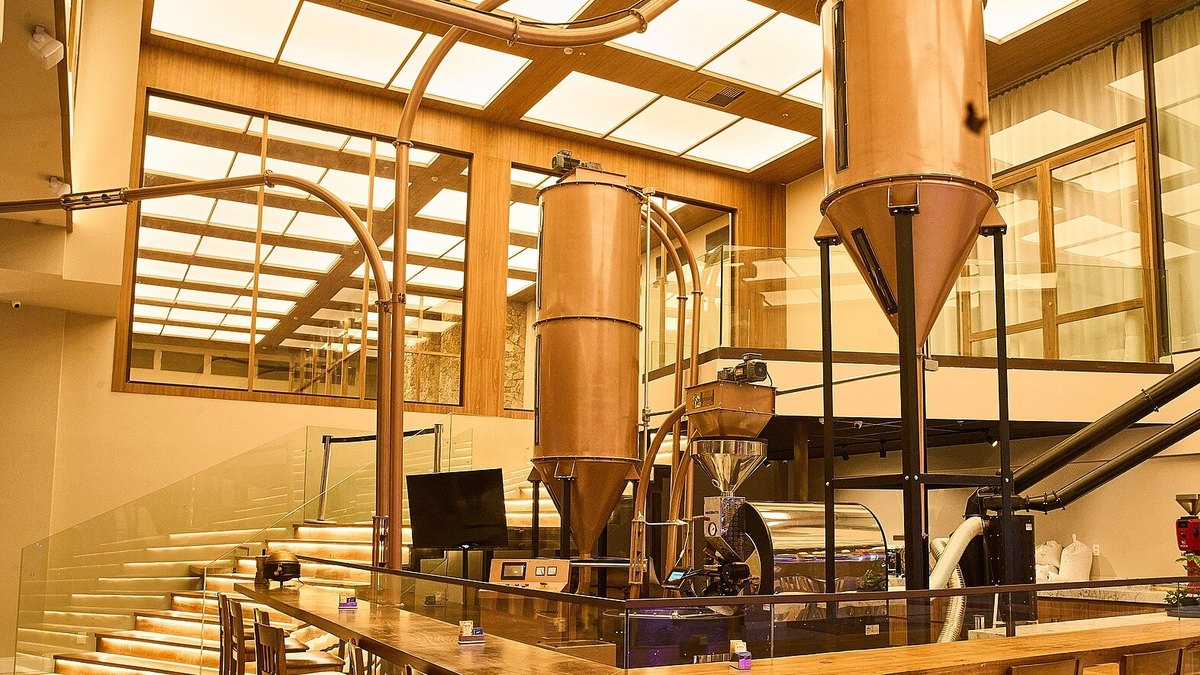
- Hero photo: author not stated, CC BY-SA 4.0, via Wikimedia Commons (cropped) · Coffee roastery with roaster, silos and tasting bar, Rio de Janeiro
Figures were read from the linked pages in November 2026. NCA figures come from its 2026 reports; Bellwether and Joe are vendors and their figures are modeled or self-reported; the SLAYER figures are from 2007; Square's data is Canadian. This is not financial advice.
Top photo: Unknown authorUnknown author / CC BY-SA 4.0 via Wikimedia Commons