GTM Playbook for Direct-to-Consumer Supplement Brands in 2027
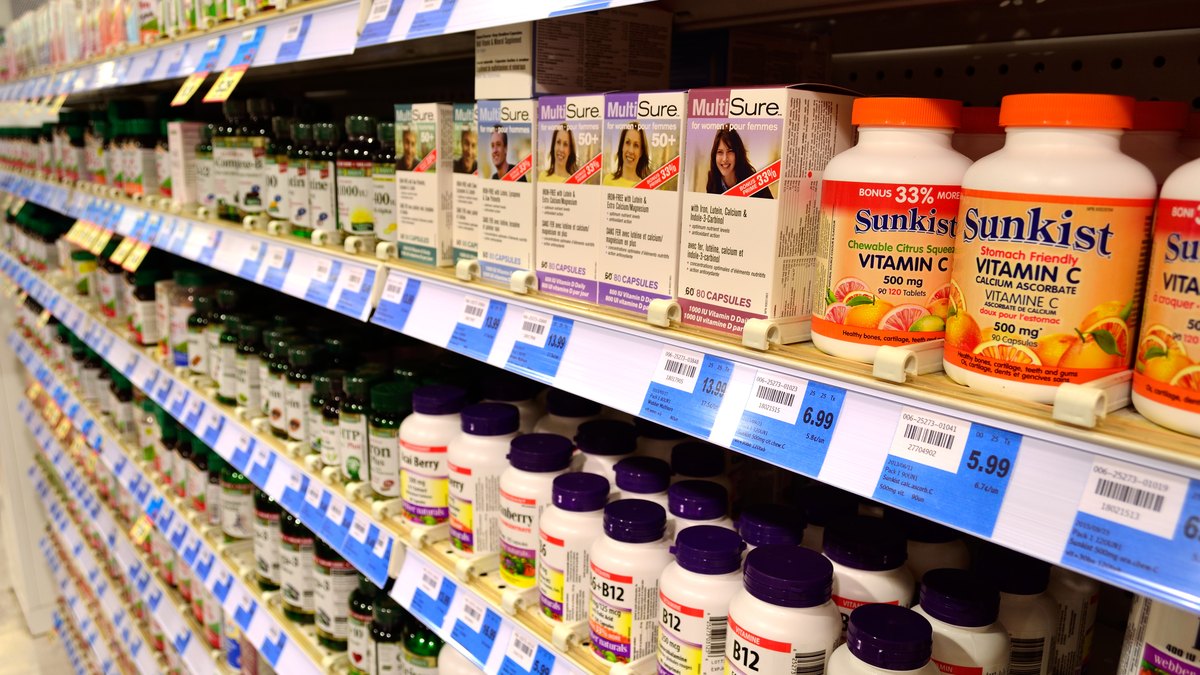
A direct-to-consumer supplement brand should go to market with one hero product, a subscription offer on its own site, and a channel mix that adds Amazon and retail only after the basics work, all wrapped in claims that follow FDA and FTC rules. Start with a single product people can understand in one sentence, make the own-site subscription the core of the business, and treat Amazon and retail as extra reach that carry their own compliance and margin costs.
The rules shape the marketing. Under FDA rules, a structure/function claim needs substantiation, the required disclaimer and a notice to FDA within 30 days of first marketing, and the FTC says a disclaimer will not cure an otherwise deceptive ad. Amazon now requires third-party verification of supplements. Content and creator marketing works only inside those limits, because advertisers are liable for misleading endorsements.
The best-known example, AG1, was reported in January 2025 to sell one product direct to consumer and to project $600 million in revenue that fiscal year, with retail as its "first steps" in a new channel. Trend positioning, such as around GLP-1 medication users, is covered below only as reported. This page describes how brands market, not what supplements do.
Market facts: how big the category is and who buys
Market size depends on whose definition you use, so treat every figure as one published view. The numbers below come from P&S Intelligence and the Council for Responsible Nutrition (CRN).
- U.S. vitamin and dietary supplements market, 2024 (P&S Intelligence)USD 70.0 billion
- Forecast (P&S Intelligence)USD 139.0 billion by 2032, a 9.1% CAGR for 2025-2032
- Largest channel share, 2024 (P&S Intelligence)Supermarkets and hypermarkets, 65%; online retail is described as the highest-growth channel
- Share of U.S. adults who take supplements (CRN, 2023 survey)74%, with 55% regular users; sample of 3,192 adults, conducted by Ipsos
Another research firm's summary table gave a different 2024 figure of $42.76 billion, which shows how far published sizes can differ when scope differs. A later trade report says the 2024 CRN survey found 75%, matching the prior year. Use these numbers to size the opportunity, not to forecast your own revenue.
Two things follow. The category is mainstream, so you are not educating a new market. And the biggest channel is still physical retail, which is why a DTC brand should plan the retail step deliberately instead of assuming online is everything.
Hero product and positioning
A DTC supplement brand wins by being easy to explain. AG1, the most-cited example, sells one product, a daily drink mix, and per Fortune's January 21, 2025 report has sold only direct to consumer since 2010. One product means one story, one set of ads, one subscription and one compliance file.
- Pick one hero. Choose the product with the clearest buyer and the simplest label. Add a second product only when the first has a stable reorder pattern.
- Position on the buyer and the habit, not on cures. Describe who it is for, how it fits a daily routine and what is in it. Keep any claim about the body inside the structure/function rules in the next section.
- Build proof you are allowed to use. Ingredient sourcing, third-party testing and manufacturing standards are things you can show. Amazon requires them anyway, so they double as marketing assets.
Regulation that limits your marketing
Supplements are regulated differently from drugs. The Dietary Supplement Health and Education Act (DSHEA) of 1994 amended the Federal Food, Drug, and Cosmetic Act, and FDA states that it is not authorized to approve dietary supplements for safety and effectiveness before they are marketed. That does not mean marketing is unregulated.
- Structure/function claims. Under 21 CFR 101.93, as summarized in FDA's labeling guide, you must have substantiation that the statement is truthful and not misleading, include the disclaimer, and notify FDA no later than 30 days after first marketing the product.
- The required disclaimer. "This statement has not been evaluated by the Food and Drug Administration. This product is not intended to diagnose, treat, cure, or prevent any disease." The plural form begins "These statements have not been evaluated by the Food and Drug Administration." The wording may not be modified.
- Health claims are a separate category. FDA describes a health claim as one about reducing the risk of or preventing a disease, and says it requires FDA evaluation and authorization before use.
- FTC substantiation. The FTC's Health Products Compliance Guidance says claims about health benefits or safety require competent and reliable scientific evidence, and generally expects randomized, controlled human clinical testing for health benefit claims.
- A disclaimer is not a shield. The FTC says a disclaimer such as the DSHEA disclaimer will not cure an otherwise deceptive ad, and that a disclosure should not be contradicted by anything else in the ad.
The practical rule: write every claim, headline and ad variant against the evidence file you could hand to a regulator, and keep the disclaimer on materials that carry structure/function statements. This page is not legal advice; have a qualified attorney review your claims.
Subscription economics and retention
Subscriptions are the center of a DTC supplement model because the product is bought on a repeating schedule. The most useful public data is from Recharge, a subscription platform, published on eCommerce Fastlane on July 7, 2026 (author Allen Finn), covering about 1,800 supplement brands over the trailing 12 months from July 2025 to June 2026.
- Active churn per renewal cycle, supplements (Recharge)17.3%
- Skip rate (Recharge)6.9% of cycles, the highest of the five wellness verticals analyzed
- First reorder (Recharge)86.6% of first-time buyers place a second order
These are per-cycle figures, not monthly churn, and they describe a platform's customer base, so do not compare them directly to monthly benchmarks from other sources. I found no other public subscription benchmark I could verify against its primary data. Measure your own cohorts.
- Make the subscription the default offer, with easy skip and cancel. A visible skip option is also a transparency practice; check current rules on automatic renewal and cancellation for the states you sell in.
- Watch the first reorder. The second order is the first real signal that the product and the offer work.
Channel mix: own site, Amazon and retail
Start with your own site because you own the customer data and the subscription. Add Amazon and retail once the hero product has a repeatable reorder pattern.
- Own site. Highest control of message, price and subscription. AG1 built its business here: per Fortune, it sold only direct to consumer since 2010 and described retail as "first steps" in January 2025.
- Amazon. Reach, but with a compliance cost (next section) and less ownership of the customer.
- Retail. P&S Intelligence puts supermarkets and hypermarkets at 65% of 2024 distribution, so the largest pool of shoppers is still in stores. The Vitamin Shoppe, for example, sells its GLP-1 Support line exclusively at its own stores and online, according to Chain Drug Review, which shows retailers also build private lines that compete for shelf space.
- Sequence matters. Do not enter Amazon or retail with a product whose subscription economics you have not measured.
What Amazon requires from supplement sellers
The following comes from Amazon staff posts in the Seller Central forums; I could not load Amazon's own help page, so check the current policy in Seller Central before you act.
- Third-party verification. An Amazon staff post says that effective April 2, 2024, dietary supplement products need to be verified through a third party, starting with sexual enhancement, weight management, and sports nutrition and body building products, and expanding to the whole Dietary Supplements category throughout 2024.
- How it works. Sellers start a test for each product in the Manage Your Compliance dashboard with a third-party Testing, Inspection, and Certification (TIC) organization. Listings not confirmed as compliant by the due date may be removed.
- GMP and testing. A staff compliance guide says products must be made in FDA-compliant facilities following Current Good Manufacturing Practice, with a current GMP certification from an accredited third party, and tested by ISO 17025 accredited labs for harmful contaminants, listed ingredients and undeclared pharmaceutical ingredients.
- Annual verification and labels. The same guide says annual verification is required, that labels must meet FDA labeling guidelines, and that single and double-pill packs are prohibited for sexual enhancement and weight loss supplements.
Budget for testing and certification per product, and keep documents current. The guide's date is shown only as "a year ago", so confirm anything time-sensitive.
Content and creator marketing, inside the rules
Content and creators are the main acquisition engine for DTC brands, and they are also where compliance risk concentrates. The FTC's guidance says advertisers are liable for the misleading use of endorsements across TV, print, internet and social media, and that social media and influencer marketing are covered.
- Testimonials need support. The FTC says it is not enough that a testimonial represents the honest opinion or experience of an endorser; you also need evidence for the implied claim.
- Brief creators in writing. Give approved talking points and a list of words and claims to avoid, and review posts before and after they go live.
- Monitor. Because you are liable for what endorsers say, audit creator content on a schedule and remove or correct anything off-message.
- Own the content asset. Educational content about ingredients, sourcing and how to use the product builds search traffic without making disease claims.
Positioning around trends such as GLP-1 users
Brands are building products and messages for people using GLP-1 medications. The dated reporting below describes what companies did, not what products do.
- The Vitamin Shoppe, March 31, 2025. Chain Drug Review reported the retailer's GLP-1 Support line from Whole Health Rx: a nutrient powder, protein, a fiber with 15g of fiber per serving, a synbiotic and multivitamins, sold exclusively at its stores and online. It was described as dietitian-formulated and doctor-approved and marketed to address dietary gaps and potential nutrient deficiencies linked to GLP-1 medication use.
- Food companies. Trade coverage in 2025 describes brands leading with protein and fiber on the pack, with some not putting a GLP-1 label on the pack at all.
- Demand signal. One consumer analysis projected that active GLP-1 users plan to spend around 24% and 22% more on protein and fibre supplements, respectively. Treat that as indicative, not as a forecast.
AG1 and the operator path
AG1 (formerly Athletic Greens) is the case most operators study. What reputable reporting supports:
- One product, direct to consumer. Fortune, republishing Retail Brew on January 21, 2025, reported that AG1 sells one product, its daily health drink mix, and has sold only direct to consumer since 2010.
- Revenue. CEO Kat Cole said at a National Retail Federation panel that AG1 was projected to reach $600 million in revenue "this fiscal year". This is a company projection, not audited revenue, and the article does not name the year.
- Earlier funding. Front Office Sports reported on January 25, 2022 that Athletic Greens raised $115 million in funding that values it at more than $1 billion, led by Alpha Wave Ventures, with a $150 million revenue run-rate; the exact valuation was not disclosed.
- What changed. In January 2025, AG1 described "first steps" into new retail channels and a willingness to start "saying yes" to new products and channels, with pop-ups and partnerships such as 1 Hotels and True Food Kitchen. The article does not mention subscriptions or Amazon.
I did not find a reliable current revenue or valuation figure for AG1 beyond those dated reports, so this page does not give one. The lesson for operators is the order: one hero product, owned customer relationships, then carefully chosen new channels.
Metrics to track
No public source I could verify gives brand-level benchmarks for most of these, so the formulas are the point. Compute them monthly by product and channel.
- First-reorder rateCustomers who place a second order divided by first-time customers, by acquisition source
- Churn and skip rate per cycleCancellations and skipped shipments divided by scheduled renewals
- Contribution margin by channelRevenue minus product, shipping, fees, testing and ad cost, for own site, Amazon and retail separately
- Customer acquisition cost and paybackSpend to win a customer, and months of margin needed to recover it
- Creator program healthRevenue and cost per creator, and the share of posts that needed correction
- Compliance file statusClaims with evidence on file, testing and GMP certificates current, FDA notice dates logged
Questions people ask
How should a DTC supplement brand go to market?
Lead with one hero product, make an own-site subscription the core offer, add Amazon and retail after reorder data is solid, and keep every claim inside FDA and FTC rules. AG1, per Fortune in January 2025, sold one product direct to consumer and was taking "first steps" into retail.
What claims can a supplement brand make?
Structure/function claims need substantiation, the required FDA disclaimer and a notice to FDA within 30 days of first marketing, per FDA's labeling guide. The FTC says a disclaimer will not cure an otherwise deceptive ad. Have an attorney review your claims.
What does Amazon require for supplements?
An Amazon staff post says that effective April 2, 2024, supplements need third-party verification, expanding to the whole category throughout 2024. A staff guide adds GMP certification, ISO 17025 lab testing and annual verification. Check Seller Central for the current policy.
What retention numbers exist for supplement subscriptions?
Recharge data published July 7, 2026, covering about 1,800 supplement brands, showed 17.3% active churn per renewal cycle, a 6.9% skip rate and 86.6% of first-time buyers placing a second order. These are per-cycle figures.
What is AG1's revenue?
Fortune reported in January 2025 that AG1 was projected to reach $600 million in revenue that fiscal year, a company projection. No reliable current audited revenue or valuation figure was found for this page.
Sources
- P&S Intelligence: U.S. vitamin and dietary supplements market · Market size, forecast, channel share
- CRN: Three-quarters of Americans take dietary supplements · 2023 consumer survey, usage rates
- FDA: Dietary Supplement Labeling Guide, Chapter VI Claims · Structure/function claims, disclaimer, 30-day notice
- FDA: Information for consumers on using dietary supplements · DSHEA and FDA's pre-market role
- FTC: Health Products Compliance Guidance · Substantiation, endorsements, disclosures
- Amazon Seller Central forum: New requirements for dietary supplements · Third-party verification policy
- Amazon Seller Central forum: Supplements compliance guide · GMP, testing, annual verification, labels
- eCommerce Fastlane (Recharge data): supplement subscriptions · Churn, skip rate, first reorder
- Fortune (Retail Brew): AG1 launching new products and channels · AG1 single product, DTC, revenue projection
- Front Office Sports: Athletic Greens raises $115M · 2022 funding and valuation report
- Chain Drug Review: The Vitamin Shoppe launches supplement line for GLP-1 users · GLP-1 positioning, March 31, 2025
Figures were read from the linked pages on October 20, 2026. Market sizes are one published view, the AG1 revenue is a company projection, the Amazon details come from seller-forum staff posts rather than Amazon's help pages, and the subscription data is one platform's customer base. This is not legal advice; use these facts to frame your own measurements and have claims reviewed by an attorney.
Top photo: Raysonho @ Open Grid Scheduler / CC0 via Wikimedia Commons