GTM Playbook for Translation Agencies in 2027
A translation or localization agency should stop selling words and start selling accountable quality in one specialty vertical. Machine translation and large language models now handle the commodity work, so the agency that wins is the one that owns the risky content: legal, life sciences, patents and other regulated material, where a wrong word has a cost and a buyer needs a named provider, a documented process and a human who signs off. Sell human post-editing, linguistic validation and compliance, not raw translation capacity.
The market is still growing, but the mix is changing. Nimdzi estimated the language services industry at USD 71.7 billion in 2024, and also wrote that "the traditional bread-and-butter translation work is diminishing." Its report says technology reduces unit prices and increases demand, and that machine translation and post-editing had the greatest revenue increase in 2024. That is the opening: price the work by risk and outcome, because price per word is the part of the business that technology is eroding.
The playbook below has five moves: pick one vertical and prove it with standards (ISO 17100 for translation services and ISO 18587 for post-editing of machine translation output); package an AI-augmented workflow with human sign-off; name the buyers who feel the risk; choose a pricing model that fits the risk; and use a small channel plan and a short list of metrics. Where no public figure exists, this page says so instead of borrowing one.
Market facts: size, growth and what is shrinking
The numbers below are from the 2025 edition of the Nimdzi 100, an industry ranking and market study from Nimdzi Insights. Other research firms size the market differently because they define it differently, so use these as one published view, not a law.
- Language services industry, 2024 (Nimdzi)USD 71.7 billion, up 5.6%
- Forecast for 2025 (Nimdzi)USD 75.7 billion, growth of 5.6%
- Forecast for 2029 (Nimdzi)USD 92.3 billion; a slower 5.0% CAGR after 2025, down from the pre-AI rate of 7.0%
- Top 100 providers combined (Nimdzi)Just under USD 14.2 billion, compared with USD 13.3 billion in 2023
- Interpreting (Nimdzi)Slightly more than 16% of the 2024 market, USD 11.7 billion, projected at 8% CAGR to USD 17.1 billion by 2029
- Services quoted as most likely to shrink (Nimdzi)Classic translation and localization
Read that last line with the first one: the industry grows while the traditional core of it is expected to shrink. Nimdzi also reports that firms with a strong regional presence and integrated AI workflows in high-growth or regulated verticals are being aggressively pursued in mergers and acquisitions. In plain terms, buyers of agencies pay for specialization plus AI, not for generic capacity.
Choose a specialty vertical and own the risk
Nimdzi's survey of language providers shows where the competition already is: 62.2% of respondents work in life sciences and 60.0% in financial and legal. Financial and legal is named a traditional growth vertical, and life sciences is listed among verticals with positive growth. Those are crowded, which is a reason to pick a narrow slice of them instead of the whole vertical.
- Legal. Contracts, discovery material, court filings and certified work. The buyer is a law firm or legal department that cares about defensibility. TransPerfect, the largest private player, reported 2024 billed revenues of $1.23 billion, but the page I could read gave no divisional detail, so this page does not size the legal share.
- Life sciences. Clinical, regulatory and patient-facing content. Nimdzi says high-risk content will require human supervision such as post-editing or linguistic validation, which is exactly the offer for this vertical.
- Patents and other regulated content. Filings and technical documents where accuracy and terminology control matter more than speed. I found no published market size for patent translation, so size your own addressable accounts bottom-up from your pipeline.
- How to choose. Pick the vertical where you already have reviewers with subject credentials, reference customers and a documented glossary and style guide. A vertical you cannot staff with qualified reviewers is not a strategy.
What to sell: AI-augmented work with human quality and compliance
The offer is a workflow, not a headcount. Machine translation or an LLM produces the first draft, your linguists post-edit and validate it, and you stand behind the result with a documented process. Nimdzi's report says productized machine translation augmentations can allegedly save up to 40-60% of human post-editing effort, and that low-risk content can be fully automated, saving more than 95% of time and effort. That is the line to draw for buyers: low-risk content goes through automation, high-risk content goes through you.
- Human post-editing and review. ISO 18587, published in April 2017, provides requirements for the process of full, human post-editing of machine translation output, including the qualifications of post-editors. It applies only to content processed by MT systems.
- Translation service quality. ISO 17100 is the standard for translation services, and organisations can be certified against it. ISO 18587 does not replace it; it covers hybrid workflows where machine translation and translation memories coexist. Certification is a sales asset in procurement, but I did not read the paid standard texts, so check clause-level requirements before you promise them.
- Automated quality estimation and automatic post-editing. Nimdzi reports that machine translation quality estimation (MTQE) and automatic post-editing (AutoPE) are increasingly in demand. Offering a triage step that routes content by risk is a service you can price.
- Expert validation for AI data. The report says requests for data used to train AI are shifting toward high-value expert validation rather than low-cost data gathering. If your linguists hold subject credentials, this is an adjacent offer.
- Compliance packaging. Offer a confidentiality, data-handling and audit-trail description with every regulated engagement, and be clear which MT or LLM tools touch the client's content.
Target buyers and the ideal customer profile
Nimdzi describes buyer-side localization managers as under C-level pressure to do more with AI, facing a choice between doing the same with fewer resources or doing more with the same resources. It also says buyers increasingly favor build-over-buy for technology, and look to providers for customizable AI-driven features and expert support. Sell to that pressure: help the buyer do more with the same team, with less risk.
- Ideal customer profile. A regulated organization with recurring multilingual content, a named owner of localization or regulatory quality, and consequences for errors. One vertical, one or two content types, and a defined set of languages.
- Economic buyer and champion. The champion is usually the localization, regulatory affairs or legal operations manager; the economic buyer sits above them and cares about cost and risk. Map both before you quote.
- Disqualify early. Buyers who want only the lowest per-word price on low-risk content are better served by automation, and you will lose that bid. Do not compete there.
- Account sizing. No public source I could verify gives the number of buyers per vertical or average annual spend per account. Build the target list from your own pipeline and public company lists, and record annual language spend as you qualify.
Pricing models: per word, per hour, subscription or outcome
Per-word pricing is under pressure but is not going away. Nimdzi's report says LSPs widely see per-word pricing as baggage the industry keeps carrying, and also says the simplicity of per-word pricing for procurement purposes and industry inertia make a quick shift to value-based pricing unlikely.
- Alternative to per word: hourly, project-based or flat-rate (Nimdzi survey)24.5% of respondents
- Say MT, AI and automation let them price projects in other ways43.4% of respondents
- Subscription and SaaS, token-based or AI-usage models proposed for the future17.0% of respondents
- Plan to keep current price models15.1% of respondents
- Per word. Still the procurement default. Use it as the reference rate for light work and to frame quotes, but expect pressure on it for anything machine translation can do.
- Light post-editing discounts. A 2020 Nimdzi article says discounts of up to 35-40 percent off the regular word rate make sense for light post-editing, but that full post-editing can take more effort than translating from scratch, with effort estimated at about 70 percent of full translation, or 60 to 85 percent for light versus full. This article is from 2020 and I found no current published benchmark, so test your own rates against your own productivity data.
- Per hour. Some providers quote post-editing per hour. The same article treats that as a misreading of how effort saving works, and describes a per-word source rate as the alternative. A TAUS survey cited there found per-word pricing most common among LSPs in Europe.
- Subscription or retainer. Only a minority of respondents see subscription or usage-based models in their future, so treat it as an offer for recurring regulated programs, not a replacement for the whole price list. I found no published subscription price points.
- Price by risk tier. A simple structure: automation for low-risk content, post-editing for medium-risk, and full translation plus independent review for high-risk. Publish the tiers so the buyer sees why the high-risk tier costs more.
Channel plan: how to reach regulated buyers
I found no published conversion or cost-per-lead benchmark for translation agency channels, so this section gives a plan and tells you what to measure instead of quoting numbers.
- Direct outbound to the ICP. A short list of target accounts in one vertical, contacted with a risk-based message: what content they have, what an error costs, how your process handles it.
- Referral and partner channels. Law firms, regulatory consultancies, clinical research organizations and patent attorneys already hold the relationship and need a vetted language partner. Track referral source on every opportunity.
- Proof assets. A certification page for ISO 17100 if you hold it, a description of your post-editing process aligned with ISO 18587, redacted case studies and a clear data-handling statement. These do the selling in procurement.
- Procurement and vendor lists. Regulated buyers often work from approved vendor lists. Get onto them early and keep security questionnaires ready.
- Content for the buyer's problem. Publish pages on regulated-content topics in the vertical, not on general translation. Measure the leads they produce rather than traffic.
- Acquisition as a channel. Nimdzi reports that specialized, AI-integrated firms are being aggressively pursued in M&A. If you build a strong niche position, that is also an exit path.
TransPerfect and the operator path
The old question was how to become a TransPerfect-sized operator. The sourced facts are modest. TransPerfect's own April 2025 press release headline says its billed revenues increased 3% in 2024 to $1.23 billion, and an earlier release reported a record $1.2 billion in 2023. These are company-reported billed revenues for a privately held firm; I found no audited figures.
The lesson for a smaller agency is not to copy the scale. The Nimdzi 100 puts the top 100 providers at just under USD 14.2 billion combined, and the largest players serve the high-value segments. A smaller agency competes by being the clear specialist in one slice, with the quality system and references to prove it.
Metrics to track
No public source I could verify publishes agency-wide benchmarks for these, so the formulas are the point. Compute them monthly, by vertical and by service tier.
- Share of revenue from the target verticalRevenue from the chosen vertical divided by total revenue
- Revenue per post-edited word or hourCollected revenue divided by words or hours delivered, by risk tier
- Gross margin by tierRevenue minus linguist, tool and review cost, divided by revenue
- Quality escapesClient-reported errors per delivered project, tracked to the reviewer and the workflow
- Win rate and sales cycleOpportunities won divided by qualified opportunities, and days from first meeting to signed work
- Repeat and expansionAccounts that ordered again, and accounts that added languages or content types
Questions people ask
How should a translation agency go to market now that machine translation is good?
Pick one specialty vertical such as legal, life sciences or patents, and sell human post-editing, validation and compliance on risky content. Nimdzi says high-risk content will require human supervision and that traditional bread-and-butter translation work is diminishing.
How big is the translation and localization market?
Nimdzi estimated the language services industry at USD 71.7 billion in 2024 and projected USD 75.7 billion for 2025 and USD 92.3 billion by 2029. Other research firms report different figures because they define the market differently.
What is TransPerfect's revenue?
TransPerfect's own press release reports 2024 billed revenues of $1.23 billion, up 3%. It is privately held, so these are company-reported figures, not audited ones.
What are ISO 17100 and ISO 18587?
ISO 17100 is the standard for translation services, and providers can be certified against it. ISO 18587, published in April 2017, provides requirements for full, human post-editing of machine translation output. It does not replace ISO 17100, and it applies only to content processed by MT systems.
Should an agency price post-editing per word or per hour?
Per word is the most common model according to a TAUS survey cited by Nimdzi, and procurement favors its simplicity. A 2020 Nimdzi article suggests discounts of up to 35-40 percent for light post-editing and warns that full post-editing can take as much effort as translating from scratch. I found no current published rate benchmark.
Sources
- Nimdzi 100 2025 · Market size, growth, pricing models, buyers, verticals, AI impact
- TransPerfect: billed revenues increase 3% in 2024 to $1.23 billion · Company-reported 2024 billed revenue
- TransPerfect: record revenue of $1.2 billion in 2023 · Company-reported 2023 revenue
- Nimdzi: machine translation post-editing, how much is the fish · Post-editing pricing discussion, 2020
- AFNOR: ISO 18587:2017 listing · Scope and publication date of ISO 18587
- ATC: ISO 18587 machine translation post-editing blog · How ISO 18587 relates to ISO 17100
- TUV SUD: ISO 17100 · ISO 17100 certification summary
Figures were read from the linked pages on October 19, 2026. The Nimdzi figures are one published view of the market, the TransPerfect figures are company-reported, the post-editing pricing article is from 2020, and the paid ISO texts were not read; use all of them to frame your own measurements.
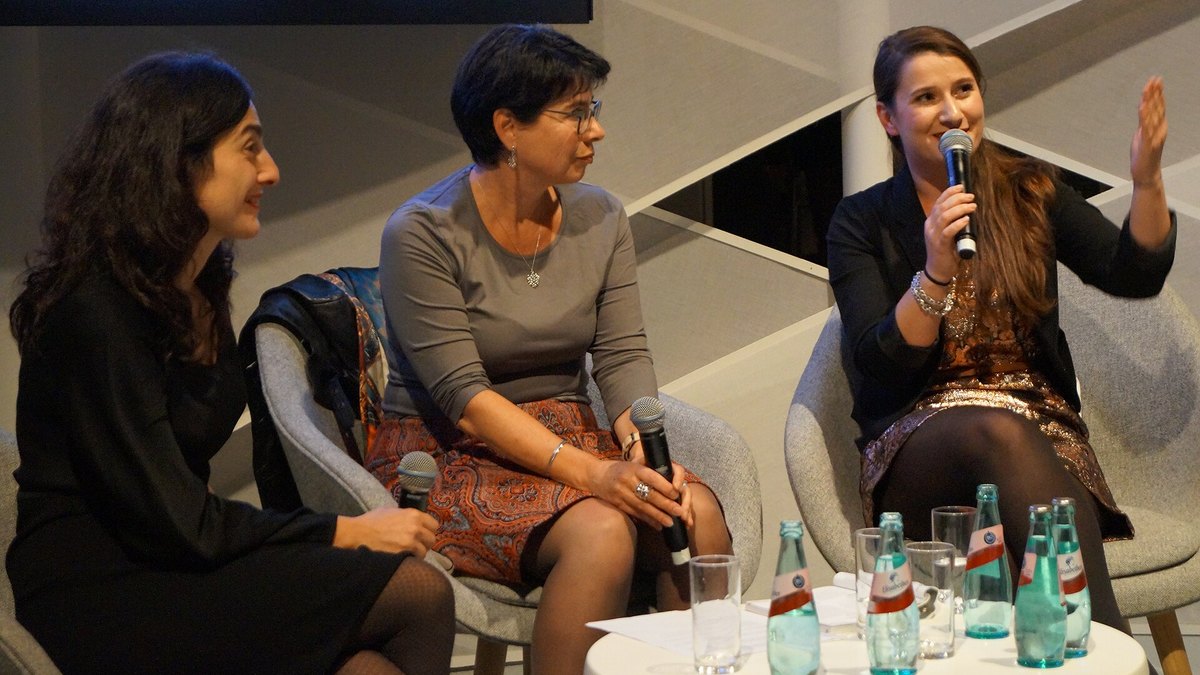
Top photo: NearEMPTiness / CC BY-SA 4.0 via Wikimedia Commons