How Do I Budget an Imaging Center (MRI/CT) Buildout in 2027?
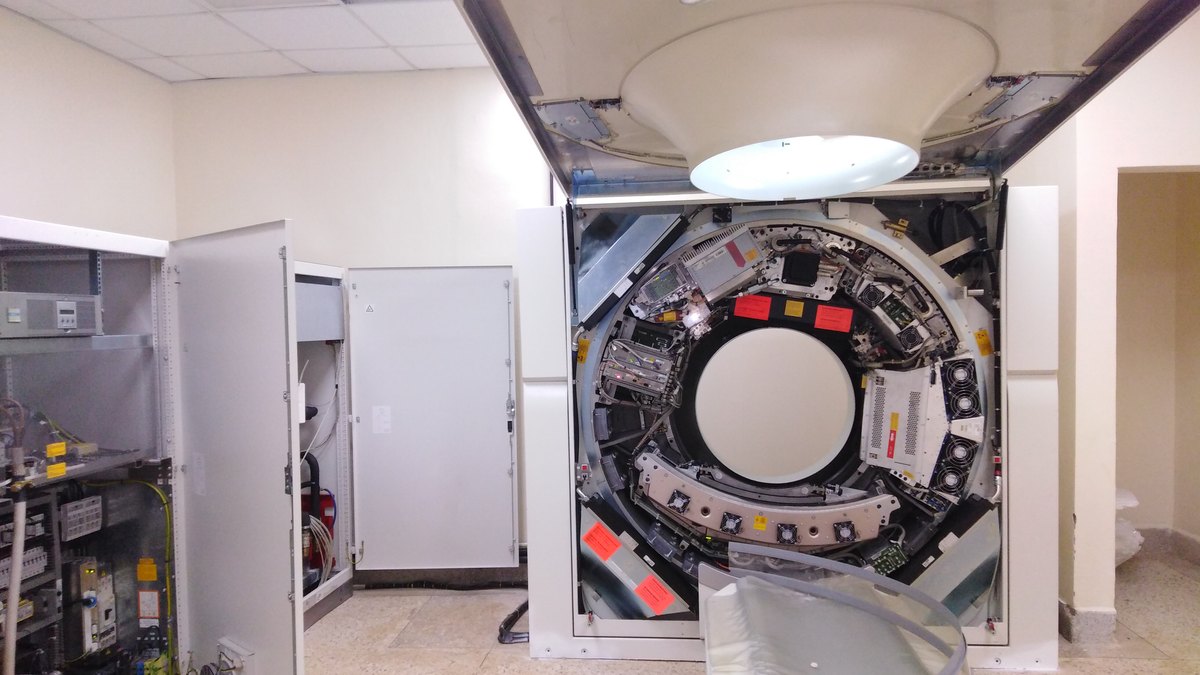
Budget an imaging center from written quotes, one line per cost bucket, not from a rule of thumb. No public source cited here gives a standard all-in cost for an MRI/CT center, so none is given. What public records do show is how the pieces behave: a hospital's 2021 replacement CT filed with North Carolina carried about $1,536,000 of equipment inside a $1,808,785 project, and a 2024 Siemens quote for a mobile MRI totaled $1,784,950. Those are single projects in existing space, not benchmarks for yours.
The buckets to price are the scanner (purchase or lease), room shielding (radiofrequency for MRI, radiation for CT), construction and fit-out, MRI power, cooling and quench venting, IT and PACS/RIS, accreditation, any certificate of need, staffing, and working capital. Two of them can stop the project before it starts: 35 states and Washington, D.C. run certificate-of-need programs (NCSL), and Medicare will not pay the technical component of MRI or CT from a non-hospital supplier that is not accredited (CMS).
This page is a planning guide, not financial, legal or medical advice. The sections below show which public numbers exist, where they stop, and how to turn vendor, contractor and payer quotes into a budget.
The cost buckets, and where each number comes from
An imaging buildout is many separate budgets under one name. Treat each bucket below as its own line, with its own quote, its own owner and its own date. The public sources in this guide support the structure and a few reference points, but the dollar amounts for your site have to come from the people who will invoice you.
- Scanner: purchase, lease or rental, with service contract, software licences and trade-in terms. Vendors quote case by case.
- Shielding: a radiofrequency shield for each MRI room and lead or other radiation shielding designed for each CT room.
- Construction and fit-out: walls, floors, doors, finishes, patient prep and changing areas, control room, equipment room, plus architect and engineering fees and permits.
- MRI building systems: dedicated power, cooling for the magnet, room ventilation and a quench pipe that vents helium outdoors.
- IT: PACS, RIS, networking, reading workstations, and connections to your billing system.
- Compliance: accreditation, state radiation shielding review, and a certificate of need where your state requires one.
- People and cash: technologist and support payroll, physician interpretation, and working capital until payers start paying.
Equipment: public records show what scanners and projects cost in practice
Manufacturers do not publish scanner prices, so the useful public numbers come from government and public-university records that attach a price to a specific purchase. They are dated and specific, and none is a typical price. Use them to see how scanner cost relates to the rest of a project.
- Rex Hospital replacement CT, North Carolina filing, January 27, 2021Equipment about $1,536,000; construction contract sub-total $214,199; architect and engineering fees $58,586; total capital cost $1,808,785.
- WR Imaging mobile MRI replacement, North Carolina filing, January 31, 2024Siemens quotation contract total $1,784,950, valid until 02/17/2024, including a certified mobile MR trailer at $596,000 and a trade-in line of $270,700.
- Wayne State University 3T research MRI, March 7, 2024Siemens 3T MAGNETOM Cima.X contract not to exceed $3,378,201, funded by $2 million from NIH and a $1.378 million university match.
Read these carefully. The CT project replaced a scanner in an existing room, which is why construction was a small share of the $1,808,785 total. The mobile MRI figure is for a trailer unit, not a built suite. The Wayne State figure is a research scanner at a university, and the news item does not say whether it includes installation or room work. A new freestanding center will carry shielding and construction the first two projects mostly avoided.
Purchase versus lease is a financing decision, not a public-data question. We found no public source for lease rates, so we give none. Ask each vendor and at least one outside lessor for the same configuration under purchase, lease and, if offered, a rental or mobile option, and make them quote the service contract, software upgrades and end-of-term terms in writing. Then compare total cost over the years you plan to hold the scanner. Have your accountant review the comparison before you sign.
MRI rooms: RF shielding, power, cooling and the quench pipe
The most detailed public design document we could read is the Department of Veterans Affairs MRI Design Guide, dated April 2008. It is a government guide for VA hospitals, not a code for a private center, and it says to coordinate with the MRI manufacturer, so treat it as a checklist of what to ask your vendor and architect, not as a specification.
- VA MRI Design Guide (April 2008), quench pipeProvide a separate cryogen exhaust (quench pipe) from the magnet to outside, protect the discharge point from wind-driven rain, and install it per the MRI manufacturer's requirements.
- VA MRI Design Guide (April 2008), RF shieldProvide wave guides for all ductwork and all piping penetrating the RF shield enclosure, furnished and installed by the RF shielding vendor.
- VA MRI Design Guide (April 2008), scanning room airMinimum 12 air changes per hour, positive room air balance, dedicated exhaust system, and an emergency exhaust fan on emergency power.
- VA MRI Design Guide (April 2008), magnet chillerThe MRI manufacturer provides the magnet chiller, and the guide calls for domestic water backup to it.
Budget implications: the shield, its wave guides and filters, the quench vent, the emergency exhaust and the chiller connections are separate trades that all touch the same room. Ask the scanner vendor for its site planning and pre-installation documents early, because they set the room size, floor loading, power and cooling you must price. The guide also notes that the oxygen sensor and depletion alarm are not reliable without calibration and preventive maintenance per the manufacturer, which is an ongoing cost, not a one-time one.
Safety is also a design and staffing cost. The FDA says it receives around 300 adverse event reports for MRI scanners and coils each year, including injuries from projectile events, and that careful screening of people and objects entering the MR environment is critical. Budget for screening procedures, training, signage and access control in the plan, not after it.
CT rooms: radiation shielding and state plan review
CT uses x-rays, so the room needs shielding designed for the workload you expect. The standard reference for medical x-ray imaging rooms is NCRP Report No. 147; a 2005 summary in Medical Physics says it updates shielding recommendations and names board-certified medical and health physicists as the qualified experts. State radiation-control programs may review shielding plans before a new unit operates, and rules differ by state.
Washington State shows what a review can look like. Its health department reviews plans for all new and replacement CT units, charges a standard submission fee of $977, and says it reviews plans within 30 calendar days, with expedited review within 2 working days for $2936 per room plan. Your state's fees, timeline and trigger events will differ, so look up your radiation-control program before you set the construction schedule. Hire the physicist or shielding designer early, since their drawings drive what the contractor prices.
Compliance gates: certificate of need and accreditation
Certificate of need (CON) is a state approval to buy certain equipment or open certain services. NCSL's page, updated April 29, 2025, says 35 states and Washington, D.C. operate CON programs, with listings as of January 2025. Among them, Connecticut lists acquiring CT, MRI, PET or PET/CT scanners, Virginia lists MRI and CT scanning as specialized services requiring a certificate, and Tennessee lists initiating MRI or PET scan services in certain locations. Vermont sets a threshold for diagnostic equipment over $1 million. Whether your project needs one, and how long approval takes, is a question for your state health department and a healthcare attorney. The North Carolina records above show a replacement-equipment exemption for projects under $2,000,000, which shows how thresholds can matter.
Accreditation is a payment gate. CMS says the Medicare Improvements for Patients and Providers Act of 2008 requires certain imaging suppliers to be accredited before they can receive Medicare payment, and that it covers MRI, CT and nuclear medicine imaging such as PET. It applies to any supplier performing the technical component, defined as all non-physician work involved in producing the images, and it does not apply to hospitals or critical access hospitals. CMS lists ACR, the Intersocietal Accreditation Commission, the Joint Commission and RadSite as approved organizations.
- ACR fee, MRI or CT, up to four modules (page modified August 4, 2026)$3,200 for the first unit; $3,100 for each additional unit at the same location.
- ACR fee, MRI or CT, five modules$3,400 for the first unit; $3,300 for each additional unit.
- ACR fee, MRI or CT, six modules$3,600 for the first unit; $3,500 for each additional unit.
- ACR fee, MRI or CT, seven modules$3,800 for the first unit; $3,700 for each additional unit.
ACR's fee page lists no separate application fee for MRI or CT. The fee is small next to the equipment, but the work around it is not: ACR's CT page says facilities must perform all quality control tests set by ACR and the CT manufacturer, and, starting January 1, 2026, phantom exams must be done within 14 months of the testing package release date. Budget physicist time and staff hours for that testing, and confirm the current fee on ACR's page before you apply.
Staffing: what the federal data says about technologist pay
The Bureau of Labor Statistics reports a 2025 median pay of $81,390 per year ($39.13 per hour) for radiologic and MRI technologists, from 278,100 jobs, with 5% growth projected from 2025 to 2035 and about 15,300 openings per year. The typical entry-level education is an associate's degree. These are national medians, so check the BLS wage data for your own metro area before you build payroll.
- BLS: MRI technologists, median pay (May 2025)$95,480 per year.
- BLS: radiologic technologists and technicians, median pay (May 2025)$80,110 per year.
- BLS: radiologic and MRI technologists, jobs and openings278,100 jobs in 2025; about 15,300 openings per year over the decade.
BLS says most states require radiologic technologists to be licensed or certified, few require licensure for MRI technologists, and employers typically require or prefer certified technologists. With about 15,300 openings a year, hiring and retaining technologists is a real line in your plan: recruiting costs, a pay premium if you must compete for them, and cross-training so one absence does not stop a scanner. Physician interpretation is a separate cost, so decide early whether radiologists are employed, contracted or paid per read, and get that in writing.
Reimbursement context: what the public pages do and do not tell you
CMS says the Medicare Physician Fee Schedule is the primary method of payment for enrolled health care providers, and that Medicare uses it to pay for diagnostic tests other than clinical laboratory tests and for radiology services. CMS's fee schedule page gives no payment amounts, and we found no CMS page we could read that states a current rate for a specific MRI or CT code, so we give none. Pull the rates for the exact codes and your locality from the CMS fee schedule files, and ask a billing specialist to explain how the technical and professional components are billed in your arrangement.
Hospitals are paid under a different CMS system for outpatient services, the Hospital Outpatient Prospective Payment System, which CMS lists on its own page. Commercial payers set their own rates and prior-authorization rules, and no public source we read gives them, so build your revenue case from payer contracts and written fee schedules, not from Medicare alone.
One policy change matters if you read older guides. CMS paused its Appropriate Use Criteria program for advanced diagnostic imaging and rescinded the regulations at 42 CFR 414.94, effective January 1, 2024, and says it has not set a timeframe for restarting. Providers stopped reporting AUC consultation information on Medicare fee-for-service claims, so it is not a current Medicare billing requirement, though it could return.
For working capital, the sequence matters more than any rate. A non-hospital supplier needs accreditation before it can receive Medicare payment for the technical component, and you also need payer enrollment, referrals and staff trained before volume builds. Model the months between opening the doors and steady payment, and fund that gap explicitly rather than hoping early revenue covers it.
IT: PACS, RIS and the data connections
PACS stores and displays images, and a RIS manages orders, scheduling and reports. We found no public price for either, so quote them as you would the scanner: a one-time license or a subscription, interface fees to your billing system and to referring practices, storage and backup, reading workstations and diagnostic monitors, and the cost of the vendor's support. The VA guide asks for two 4-port telecommunications outlets per PACS station, a small reminder that cabling and room layout belong in the construction budget, not only the IT one.
How to build the budget from quotes
- Write the scope first: number of MRI and CT rooms, field strength and scanner class, patient volume you expect, and whether you will lease, buy or start with a mobile unit. Every vendor should quote the same scope.
- Get the vendor's site planning documents: they define the room dimensions, power, cooling, venting and shielding that your architect and contractors must price.
- Collect at least three quotes per large bucket: scanner, shielding, general construction, mechanical and electrical, and IT. Ask each to separate equipment, installation, freight, taxes, training and service.
- Price the compliance items: your state's CON rules, radiation-control plan review, ACR or another approved accreditor, and physicist fees.
- Add payroll and the opening gap: hiring lead time, technologist pay for your area, physician interpretation and the months before steady payment.
- Carry a contingency and a date on every number: the North Carolina CT record carried a contingency line inside its construction costs, which is how a project plans for surprises. Re-quote anything older than the validity period on the quote, as the 2024 mobile MRI quote was valid only until 02/17/2024.
Questions people ask
How much does it cost to build an MRI or CT imaging center?
No public source cited here gives a standard all-in cost. Public records show single projects: a 2021 hospital CT replacement in North Carolina at $1,808,785 total with about $1,536,000 of equipment, and a 2024 mobile MRI quote of $1,784,950. Get written quotes for your own scope.
Is it better to lease or buy an MRI or CT scanner?
That is a financing decision. We found no public lease rates. Ask vendors and an outside lessor to quote purchase, lease and any rental option for the same configuration, including service and end-of-term terms, and compare total cost with your accountant.
Do I need a certificate of need to open an imaging center?
It depends on the state. NCSL says 35 states and Washington, D.C. operate CON programs, and Connecticut and Virginia name MRI or CT specifically. Ask your state health department or a healthcare attorney before you spend money on design.
Does an imaging center have to be accredited?
For Medicare payment of the technical component of MRI, CT and PET, CMS says non-hospital suppliers must be accredited, by ACR, the Intersocietal Accreditation Commission, the Joint Commission or RadSite. ACR lists $3,200 for a first MRI or CT unit with up to four modules.
What does MRI room shielding involve?
An RF shield enclosure with wave guides for ductwork and piping that pass through it, plus a quench pipe to vent the magnet outdoors and emergency exhaust. The VA MRI Design Guide from April 2008 describes these, and the MRI manufacturer's own planning documents govern your room.
How much do MRI and CT technologists earn?
BLS reports a May 2025 median of $95,480 per year for MRI technologists and $80,110 for radiologic technologists and technicians. Check the BLS wage data for your own area before budgeting payroll.
Sources
- Wikimedia Commons: Installation of a CT Scan (Obynel, CC BY-SA 4.0) · Hero photo
- NC DHSR Certificate of Need: Rex Hospital replacement CT exemption, record 3470 · CT equipment and total project cost, January 27, 2021
- NC DHSR Certificate of Need: WR Imaging mobile MRI replacement, record 4358 · Siemens mobile MRI quotation, January 2024
- Wayne State University: new MRI system installation · 3T research MRI contract ceiling and funding, March 7, 2024
- VA MRI Design Guide, April 2008, Section 4 (archived copy) · Quench pipe, RF shield wave guides, air changes, chiller, PACS outlets
- FDA: MRI benefits and risks · Adverse event reports, projectile injuries, screening
- Washington State Department of Health: X-Ray Shielding Plans for Registrants · CT shielding plan review, fee and timeline
- Archer and Gray, Medical Physics 2005: summary of NCRP Report No. 147 · Shielding design reference and qualified experts
- NCSL: Certificate of Need State Laws · 35 states and D.C. with CON programs; MRI and CT examples
- CMS: Accrediting organizations for advanced diagnostic imaging suppliers · MIPPA accreditation requirement, approved organizations
- ACR Accreditation Support: Fees and Payments · MRI and CT accreditation fees by module count
- ACR: CT accreditation · Quality control and phantom timing requirements
- CMS: Physician Fee Schedule · How Medicare pays for radiology and diagnostic tests
- CMS: Hospital Outpatient Prospective Payment System regulations and notices · Separate hospital outpatient payment system
- CMS: Appropriate Use Criteria Program · Program paused and regulations rescinded effective January 1, 2024
- BLS: Radiologic and MRI Technologists · 2025 pay, jobs, outlook, licensure
Figures and rules were read from the linked pages on November 8, 2026. Fees, counts and rules change, so confirm each on the source site. This page is a planning guide, not financial, legal or medical advice.
Top photo: Obynel / CC BY-SA 4.0 via Wikimedia Commons