How do you start a board game cafe business in 2027?
Start by choosing how the cafe makes money, because that choice decides your permits, your floor plan and what you buy. The four common models are a cover-charge table fee, memberships, a food-and-beverage-led cafe, and retail plus play. Most cafes blend two or three of them. Then check your city and state rules before you sign a lease, since food service permits, alcohol licenses and sales tax are all set locally.
One working cafe shows the mix. Unplugged Board Game Cafe lists $12.00 per person for two hours of play and $25.00 per person for an all-day pass (page read November 8, 2026), sells memberships from $40.00 for one month to $310.00 for a year, sells coffee, tea, cold drinks and snacks, and sells games at retail. No industry-wide revenue statistics for board game cafes were published where I could read them, so the revenue section below gives formulas to fill with your own quotes instead of invented averages.
Pick the model first
There is no standard definition of a board game cafe, so think of four revenue levers and decide which ones lead. Here is how each appears in the sources I could read.
- Cover-charge table fee. Guests pay for time at a table, not for a game. Unplugged's pricing page (read November 8, 2026) lists Two Hour Play at $12.00 per person, Play All Day at $25.00 per person, a One Hour Extension at $6.00 per person, and says children under 6 play free with a paying adult. Its FAQ says that a game brought from home still pays the fee because the fee is for table space. That is the useful idea: you are renting seats and time, and the library is the reason people come.
- Membership. The same page lists One Month at $40.00, Monthly (recurring) at $35.00, Three Months at $99.00, Six Months at $180.00 and Yearly at $310.00, all per person. Listed perks are unlimited gameplay, 10% off all retail games, one free guest pass per month and priority for special events. Items are subject to tax. Memberships trade a lower price per visit for money you collect up front and a regular base of guests.
- Food-and-beverage led. Here the games draw guests and the counter makes the margin. Unplugged's FAQ says it offers coffee, tea, cold drinks and snacks for purchase, while allowing food from next door. I could not read the pricing pages of other cafes that run a minimum-spend or free-play model, so I give no example of one. If you go this way, you are running a restaurant first, and the food permit and staffing sections below apply in full.
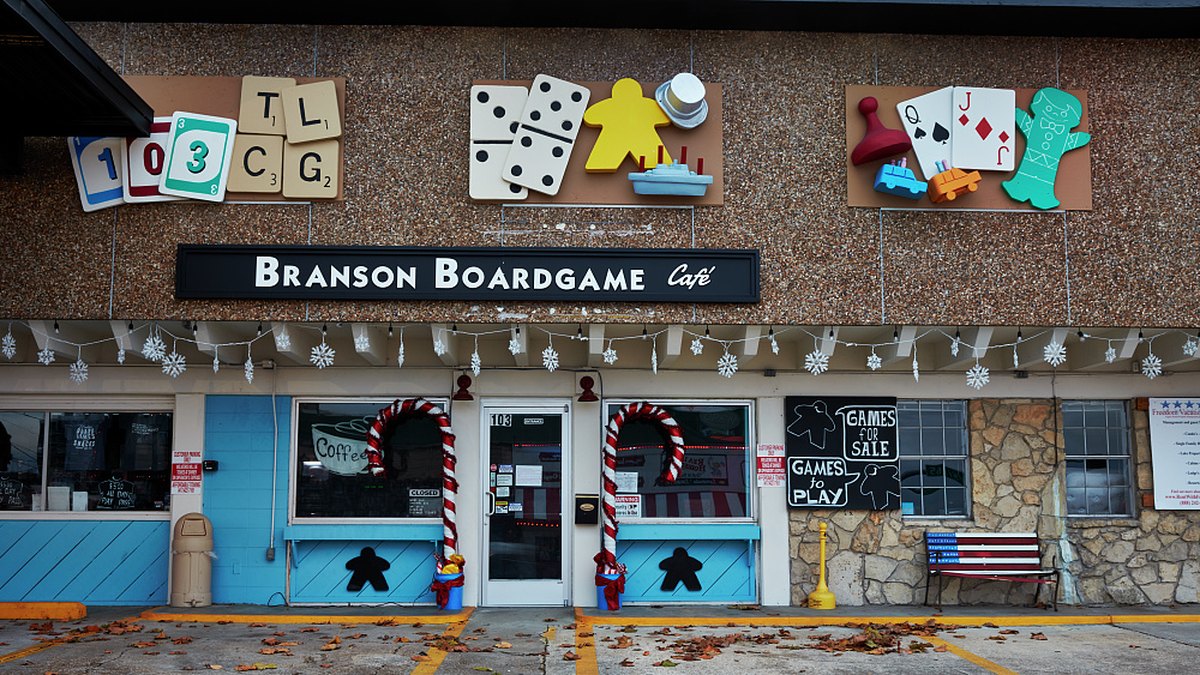
- Retail plus play. Games are sold as well as played. The Library of Congress photo of the Branson Boardgame Cafe (photographed 2020) shows a chalkboard that reads Games for Sale and Games to Play. Unplugged runs a shop on its site and gives members 10% off retail games. Retail changes your inventory risk, because unsold boxes tie up cash, so decide whether the shelf is a profit line or just a way to turn a guest into a buyer.
My judgment, not a sourced finding: pick one lead lever and one support lever. A table-fee cafe with a modest drink counter and a small retail shelf is simpler to run than a full kitchen. Write down which lever you expect to carry the rent, because that is the number your lease has to fit.
Licensing and permits: what two places require
Food service, New York City example. The NYC311 page (read November 8, 2026) says you must have a Food Service Establishment Permit to serve food or drinks at a restaurant or eatery. Applicants must register for and complete a Food Protection Course, and permits must be displayed. The permit fee is $280, the renewal fee is $280 per year, and the permit expires after 1 year on staggered dates. Whether a cafe that only sells packaged snacks needs the same permit is a question for your health department, since I did not read that rule.
Alcohol, Texas example. The TABC license and permit types page (read November 8, 2026) lists a Retail Mixed Beverage Permit for distilled spirits, wine and malt beverages for on-premise consumption, a Retail Dealer's On-Premise License for malt beverages, and a Wine and Malt Beverage Retailer's Permit for on- and off-premise sales. It adds that in certain circumstances a Mixed Beverage Permit holder must also have a Food and Beverage Certificate, and that applications go through its online system, with paper applications taking considerably longer. Some cafes avoid the license altogether: Unplugged's FAQ says it is BYOB for beer and wine only, for guests over 21. Whether BYOB is lawful where you live is a local question, so ask your alcohol regulator before you copy it.
Sales tax, Texas example. The Texas Comptroller (read November 8, 2026) says Texas imposes a 6.25 percent state sales and use tax on retail sales and taxable services, and local jurisdictions can add up to 2 percent, for a maximum combined rate of 8.25 percent. Its permit application page says to allow 2-3 weeks to receive a permit and that a NAICS code is required for every business. Unplugged's pricing page notes that all items are subject to tax, so find out whether your state taxes admission or table fees as well as food and retail.
Occupancy and zoning. I did not find an official page I could read that gives the occupancy rules for a cafe with game tables, so I give no figures. Ask your building and fire department for the occupant load of the exact address, and ask zoning whether a cafe with entertainment seating is allowed there, before you sign a lease.
Space planning: tables, seats and square footage
No official square-foot rule for game cafes was found, so plan from the games. The CATAN page (read November 8, 2026) lists the base game as ages 10+, 3-4 players and 60-90 min. That is a good planning unit: one table holds one game of three or four people for an hour or more, and a bigger game needs a bigger table.
The formulas to use:
- Seats. Seats = usable net floor area for guests, divided by the area one seat needs once tables, chairs and walkways are counted. Get the area per seat from your own layout drawing, not a rule of thumb, and make sure the result does not exceed the occupant load the fire department gives you.
- Tables. Tables = seats divided by the average group size. Mix table sizes so a pair is not sitting at a table built for a big group.
- Turns. Seats filled over a day = tables x groups per table per day x people per group. A two-hour play ticket and a play-all-day pass, as in Unplugged's pricing, give very different turn counts on the same table, so model them separately.
- Shelving. Shelf length needed = titles x box thickness, plus room for staff to reach them. Put the library where guests can browse without blocking the aisles.
Check that the layout leaves room for the counter, kitchen or prep area, restrooms, storage, and accessible routes. Space that does not pass your local building review after those are subtracted cannot be licensed at the seat count your budget assumes.
The game library: cost and upkeep
The library is your main inventory. One dated price point: the CATAN Shop (read November 8, 2026) lists the CATAN base game, 6th Edition, at $49.99 USD. The CATAN page says the game was first published in Germany in 1995 and in English in 1996, a reminder that old titles stay popular. I could not read the publisher store pages for other major titles, which refused my requests, so I give no other list prices.
The formula: library cost = number of titles x average purchase price per title. Use the price you can actually buy at, which may be a retail list price or a trade price if you have a wholesale account, and add a replacement allowance for lost and damaged parts. Three ways to keep it down:
- Donations. Unplugged's FAQ says it accepts game donations of games that may not see play time at home. Ask regulars once you have a following.
- Guests bring games. The same FAQ says guests may bring a game from home and still pay the table fee.
- Sell what you stock. If you run a shelf, the guests who like a game can buy it. That turns a library title into a retail line.
Upkeep is labor: counting pieces when a game returns, replacing worn cards, and keeping a check-in and check-out routine. Games with many small parts need a count at the table. Budget staff time for that, since it is not in any price list. Also plan a way for guests to find a game quickly, such as a shelf sorted by player count and play time, using the figures printed on the box.
Revenue math, as formulas
- Table-fee revenue. Table-fee revenue = guests x average play ticket. With Unplugged-style prices, the ticket is $12.00 for two hours or $25.00 all day, plus $6.00 for each extra hour. Subtract kids who play free and members who pay nothing per visit.
- Membership revenue. Membership revenue = members x price per month (or price per term divided by its months). Unplugged lists $35.00 recurring monthly and $310.00 yearly. Track how often members visit, because unlimited play costs you more seat-time from a heavy user.
- Food and drink revenue. Food and drink revenue = guests x average spend per guest, less the cost of goods and counter labor. The average spend is the number you have to learn from your own sales.
- Retail revenue. Retail profit = units sold x (shelf price less your cost). Remember member discounts such as the 10% off retail games Unplugged lists.
- Events and parties. Party revenue = parties x price per party. Unplugged tells guests to call to plan a party, so I found no published party price.
- Break-even. Break-even guests per month = fixed costs (rent, base payroll, insurance, utilities, software, loan payments) divided by average profit per guest after variable costs. If that number exceeds the seat-hours you can sell, the model fails on paper before you open.
Add sales tax to a price only where the rule applies, and keep tax out of revenue. Texas, for example, lists a combined maximum of 8.25 percent on the Comptroller page above, so a price of $12.00 before tax is not what the guest pays in a Texas city at that rate.
Insurance
One official fact: the Texas Department of Insurance (page last updated 6/8/2026) says private employers in Texas can choose to carry workers' compensation coverage, but it is not required in most cases. It says a workers' compensation policy provides lost wages and medical benefits to employees injured on the job. Other states differ, so check yours.
What to ask an agent about (judgment, not a sourced finding): general liability for guest injuries, property coverage for the library and furniture, coverage for the lease space your landlord will require, liquor liability if you serve alcohol, workers' compensation if your state requires it, and food spoilage or business interruption. Tell the agent the games, the food service and any events up front, since the answers change the quote. Ask whether a guest-brought game or an off-site event is covered.
Events and leagues
Events fill slow hours. Unplugged's home page (read November 8, 2026) lists Party Game Night, Craft Club, Wyrmspan, Pictionary, Card Night, Bingo, Quacks of Quedlinburg and a Puzzle Tournament, and marks most as Open Play with an RSVP link. Only the tournament says Reservation Required. The dates listed ran from October 2nd to October 24th with no year shown, and most were two-hour slots, such as 7 pm - 9 pm. Its About page says it regularly hosts events, game nights and tournaments where everyone is welcome.
How I would use that (judgment): give each weekday evening one job, such as a learn-to-play night for a single title, a league night with a season schedule, a party-game night for groups, and a daytime slot for families. Publish the calendar ahead of time, ask for an RSVP so you can plan seats and staff, and name the game so people who own it can show up. Leagues and tournaments need rules, a score sheet and a plan for ties, and a prize budget if you offer prizes. Check whether your state treats prizes or entry fees as gaming before you charge.
Marketing
Start with being found. Google's help page for the Business Profile (read November 8, 2026) says that when you add and verify a Business Profile, customers can find your business on Search and Maps, and that you can add or claim your business at no charge.
The rest is judgment. Post the event calendar and the price list where people look. Unplugged shows prices, membership perks and events on its own site, so a new visitor knows the cost before arriving. Offer a clear first-visit path: what a two-hour ticket includes, whether you teach games, and whether kids and groups are welcome. Partner with game publishers' local organizers, schools, libraries, and neighboring restaurants. Unplugged's FAQ says outside food is welcome from the restaurant next door, which turns a neighbor into a partner. Keep every claim to what the cafe really offers.
A working plan in six steps (judgment, not data)
- Choose the lead lever. Table fee, membership, food-led or retail, and one support lever.
- Read your local rules. Food permit, alcohol license or BYOB rule, sales tax, occupancy and zoning, from the agency pages.
- Draw the room. Seats, tables, shelving, counter and exits for the exact address before you sign.
- Price the library. Titles x price per title, plus a replacement allowance and a donation plan.
- Build the revenue model. Fill the formulas above with your own quotes and set the break-even guest count.
- Plan the first calendar. Insurance bound, Business Profile verified, and a month of events published before opening day.
Questions people ask
How do board game cafes make money?
Through a mix of table fees, memberships, food and drinks, and retail game sales. Unplugged Board Game Cafe lists $12.00 per person for two hours and $25.00 for all day, memberships from $40.00 per month, snacks and drinks, and retail games at a member discount of 10%.
Do I need a liquor license?
Only if you sell alcohol. In Texas the TABC lists a Mixed Beverage Permit for spirits, wine and malt beverages, a Retail Dealer's On-Premise License for malt beverages and a Wine and Malt Beverage Retailer's Permit. Some cafes are BYOB, as Unplugged is for beer and wine, but check your local rules first.
What permits does a board game cafe need?
It depends on the city and state. In New York City a Food Service Establishment Permit costs $280 and expires after 1 year, and applicants must complete a Food Protection Course. Texas also requires a sales tax permit, and the application takes 2-3 weeks. Ask your own agencies for the full list.
How much does a game library cost?
Titles times average price per title. One dated list price: the CATAN base game, 6th Edition, is $49.99 USD at the CATAN Shop, read November 8, 2026. Donations and guest-brought games can reduce the bill.
How much space and how many seats do I need?
No official game-cafe figure was found. Use your net floor area, your layout drawing and the occupant load from your fire department. A game like CATAN seats 3-4 players, so plan tables around group sizes.
What insurance does a board game cafe need?
Ask a licensed agent in your state. The Texas Department of Insurance says workers' compensation is not required for most private employers in Texas, but other states differ. General liability, property and liquor liability are common questions to raise.
How much does it cost to start one?
No neutral published startup figure was found. Build it from your lease and build-out quotes, library cost, equipment, permits, insurance and the months of cash before you reach break-even.
Sources
- Unplugged Board Game Cafe: Pricing (read November 8, 2026) · Two-hour and all-day prices, membership prices and perks
- Unplugged Board Game Cafe: FAQ (read November 8, 2026) · Table-space fee, drinks, BYOB, donations, parties
- Unplugged Board Game Cafe: About (read November 8, 2026) · Established July 2023; regular events and tournaments
- Unplugged Board Game Cafe: Home page events (read November 8, 2026) · Event list
- CATAN: base game page (read November 8, 2026) · Ages, player count, play time, publication years
- CATAN Shop: CATAN Board Game 6th Edition (read November 8, 2026) · List price of $49.99 USD
- Texas Alcoholic Beverage Commission: License and permit types (read November 8, 2026) · On-premise alcohol permits and licenses
- Texas Comptroller: Sales and Use Tax (read November 8, 2026) · State and local sales tax rates
- Texas Comptroller: Texas Online Tax Registration Application (read November 8, 2026) · Sales tax permit timing and NAICS code
- NYC311: Food Establishment Permit (read November 8, 2026) · Food Service Establishment Permit fee and rules
- Texas Department of Insurance: Employer resources (last updated 6/8/2026) · Workers' compensation is optional for most private employers
- Google Business Profile Help: Add or claim your Business Profile (read November 8, 2026) · Free listing on Search and Maps
- Hero photo: Carol M. Highsmith, Library of Congress (2020; no known restrictions on publication) · Branson Boardgame Cafe storefront, Branson, Missouri
Figures were read from the linked pages on November 8, 2026 and every figure carries the date shown beside it. Several sources refused automated requests, so there is no SBA guide, no Census or BLS figure for NAICS 722515 or 713990 (the Census data service asked for an API key), no building-code occupancy table, no publisher prices other than CATAN, and no pricing pages from other cafes. I found no neutral startup-cost or revenue figure and invented none. This is a business guide, not legal, tax, insurance or financial advice.