How do you start a pilates studio business in 2027?
Decide reformer or mat first, because that choice sets almost every cost. Published startup totals disagree widely: Gymdesk says most new studios land between $50,000 and $150,000, while Glofox puts a reformer studio in most US markets at $150,000 and $350,000. Reformers are the big line, at $3,000 to $8,000 each on two of the pages we read.
Then plan the space, the teachers and the insurance. Gymdesk says a six-reformer studio needs 800-1,200 square feet of teaching space, Mindbody and Gymdesk both say you do not need to be certified to own a studio, and Gymdesk says insurers typically want proof of certification for anyone leading a class. Every figure below comes from vendor and industry blogs, so treat prices as benchmarks and our reading as judgment.
Reformer or mat: the choice that sets the budget
Gymdesk's cost guide, bylined June 17, 2026, says most new Pilates studios land somewhere between $50,000 and $150,000 in total, and its itemized table runs from $55,700 to $248,900+. Glofox's guide, published April 16, 2026, gives a higher range for a reformer studio in most US markets, $150,000 and $350,000, and says premium builds in high-rent cities can push past $450,000.
The two pages disagree because they describe different studios. Gymdesk's table spans small studios of 4-6 reformers up to full studios of 8-12, and says four to six reformers is a common starting point for a group reformer studio. Glofox says 8-12 reformers is typical. Mindbody's guide, last updated August 11, 2025, notes that mat Pilates needs far less gear, mainly mats and some props.
Reformers and equipment
- Prices differ by page. Gymdesk says commercial-grade reformers run $3,500-$8,000 each in one guide and $3,000 to $8,000 in another. StudioGrowth says $3,000 - $8,000. Glofox says $3,000-$6,000. Mindbody says mid-range reformers typically cost between $1,000 and $3,000 and high-end models $3,000 to $5,000 or more.
- Lead times are real. StudioGrowth, last updated November 9, 2025, gives a lead time of 8-12 weeks and names Balanced Body and Peak Pilates as brands.
- Beyond reformers. Gymdesk says comprehensive certification adds the apparatus: reformer, Cadillac, Wunda chair and barrel. It says Cadillacs and tower units need vertical clearance, and that springs are consumable, so you will be replacing them either way.
- Cover the gear. Mindbody suggests considering equipment breakdown coverage for reformers and other Pilates equipment.
Space, floor and ceiling
Gymdesk says to plan for 50-70 square feet per reformer, including space to move around it, and that a six-reformer studio needs 800-1,200 square feet of teaching space. StudioGrowth says a 6-reformer studio is approximately 1,000 sq ft including reception, changing areas and storage, and a medium boutique with 8-10 reformers needs 1,500-2,000 sq ft. Glofox says roughly 1,000 square feet of functional floor space for six reformers and 1,500-2,000 square feet for ten.
StudioGrowth says ceilings should be at least 9-10 feet, with 12 feet ideal, and Glofox also says at least 9-10 feet. Gymdesk's start guide says reformers are heavy and the carriage return is loud, and that your studio is a public accommodation under Title III of the ADA. It also says to confirm commercial fitness zoning in writing and check whether the city wants a separate fitness-facility permit.
Mindbody gives a different, smaller figure: at least 800 to 1,000 square feet for reformers, mat space and reception, and 40 to 50 square feet per client for mat spacing. It also says most leases require a 3-5 year commitment plus a deposit equal to first and last month's rent. Glofox says to keep rent at or below 20% of projected gross revenue.
Instructor certification
- Owners do not need a credential. Mindbody says you don't need to be a certified instructor to own a Pilates studio. Gymdesk says that in most U.S. states nothing stops you from opening a studio without having taken a class.
- Teachers should hold one. Gymdesk says insurers typically want proof of current certification plus CPR/AED for anyone leading a class. Mindbody says CPR/AED certification may be required by local jurisdictions.
- What comprehensive means. The National Pilates Certification Program says comprehensive training must be minimally 450 hours in length and cover specified apparatus. Its post, dated December 16, 2021, says the exam is 125 multiple choice questions over 3 hours, at testing centers or online, and lists age 18 as a requirement.
- Cost of training. Gymdesk says comprehensive instructor programs cost $4,580-$7,550 in tuition and run 450 to 500-plus hours. StudioGrowth advises hiring instructors with comprehensive 500-hour certifications and at least 2-3 years of experience.
Class pricing and memberships
StudioGrowth is the one page we read that gives student prices: group reformer classes at $35-$50, with a warning not to charge above $50; a drop-in of $40-50 per class; a 10-class pack at $350-400, described as a 12% discount; monthly unlimited at $200-300; an intro offer of 3 classes for $99; and private sessions at $100-$150 per hour in major cities.
Gymdesk's start guide describes how the pieces fit: unlimited memberships are the anchor of the model, class packs are lower commitment but worse for forecasting cash flow, drop-ins are priced high on purpose, and privates and duets bring the highest revenue per hour. Its example says that at a $180 unlimited membership you break even at 70 members, and at $150 you need 84. Gymdesk's cost guide suggests founding member rates of 10-20% off for the first three to six months.
Insurance
- The usual policies. Gymdesk names general liability, professional liability for the instruction itself, and property or equipment coverage. Mindbody lists general liability, commercial property, and worker's compensation if you employ staff.
- Limits. StudioGrowth says to expect general and professional liability insurance, typically with coverage of $1M - $2M.
- Prices disagree. Gymdesk says first-year premiums typically land between $3,000 and $6,500, covering general liability, professional liability, property and workers' compensation. Glofox says annual premiums typically range from $500 to $1,500, depending on location and coverage scope.
Timeline and a practical order of steps
Gymdesk says a mid-range reformer studio takes four to nine months from first planning session to opening day, and that permitting and build-out are the stages that routinely run over. Glofox says studios can cover monthly costs within 3-6 months of opening, with full payback roughly 3-5 years, and that instructor costs are typically 35-45% of revenue. These are vendor claims, not guarantees.
What follows is our synthesis, not a source's procedure. Settle reformer versus mat, confirm zoning and lease terms in writing, line up certified instructors, get insurance quotes, order equipment early because of the 8-12 week lead time, then set a small menu of drop-in, pack and unlimited prices after checking local competitors.
What this page does not claim: it gives no income estimate, does not say which city or format earns more, and does not cover tax or employee rules. The 2027 in the title is only a label for this year's guides.
Questions people ask
How much does it cost to start a Pilates studio?
Gymdesk says most new studios land between $50,000 and $150,000. Glofox says a reformer studio in most US markets runs $150,000 and $350,000. The gap is format and market, and both are vendor blogs.
How much does a Pilates reformer cost?
Gymdesk and StudioGrowth say $3,000 to $8,000 each, Glofox says $3,000-$6,000, and Mindbody says mid-range models cost $1,000 to $3,000.
How much space does a Pilates studio need?
Gymdesk says 50-70 square feet per reformer and 800-1,200 square feet for six reformers. StudioGrowth says about 1,000 sq ft for six and at least 9-10 foot ceilings.
Do you need to be certified to open a Pilates studio?
Mindbody says you do not need to be a certified instructor to own one. Gymdesk says insurers typically want proof of current certification for anyone leading a class.
How much do Pilates classes and memberships cost?
StudioGrowth lists group reformer classes at $35-$50, a 10-class pack at $350-400 and monthly unlimited at $200-300. It is one page, so check local competitors.
What insurance does a Pilates studio need?
Gymdesk names general liability, professional liability and property or equipment coverage. Its first-year premium figure is $3,000 and $6,500, while Glofox says $500 to $1,500.
Sources
- Gymdesk: How Much Does It Cost to Open a Pilates Studio in 2026? · Startup totals, reformer prices, space per reformer, build-out, insurance, training cost
- Gymdesk: How to Open a Pilates Studio: A Step-by-Step Guide · Certification, insurers, zoning, memberships vs packs, timeline
- StudioGrowth: How to Start a Pilates Studio: A 12-Month Step-by-Step Guide · Class and membership prices, ceiling height, lead time, liability limits
- Glofox: How to Open a Pilates Studio · Startup range, space, reformer price, insurance premiums, rent and payback
- Mindbody: Guide to Opening a Pilates Studio · No certification needed to own, equipment, space, leases, insurance types
- National Pilates Certification Program: How to Get NPCP Pilates Certification · 450-hour comprehensive training, exam format, age requirement
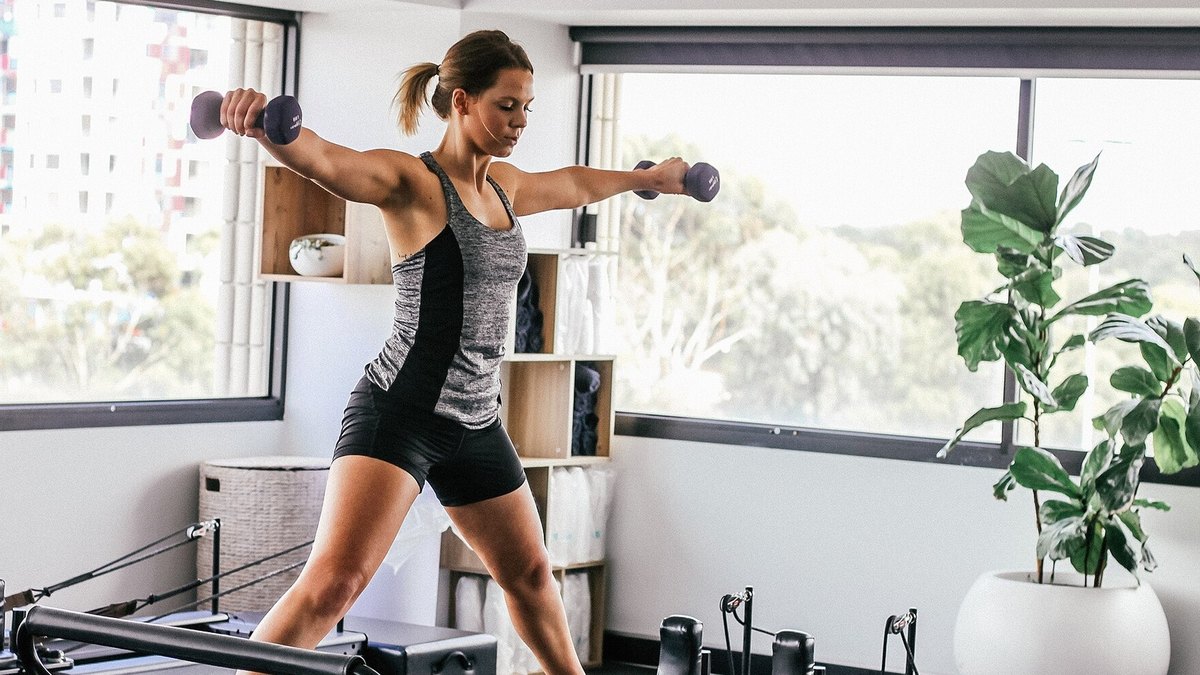
- Hero photo: "Pilates reformer.jpg" by Maddi Bazzocco, CC0, Wikimedia Commons (cropped) · Credit for the photo at the top of this page
Facts were read from the linked pages on November 7, 2026. These are vendor, industry and association pages, not studies, and prices and rules change. Sections marked as judgment are our reading, not a source claim.
Top photo: Maddi Bazzocco / CC0 via Wikimedia Commons