How do you start an esthetician skincare studio business in 2027?
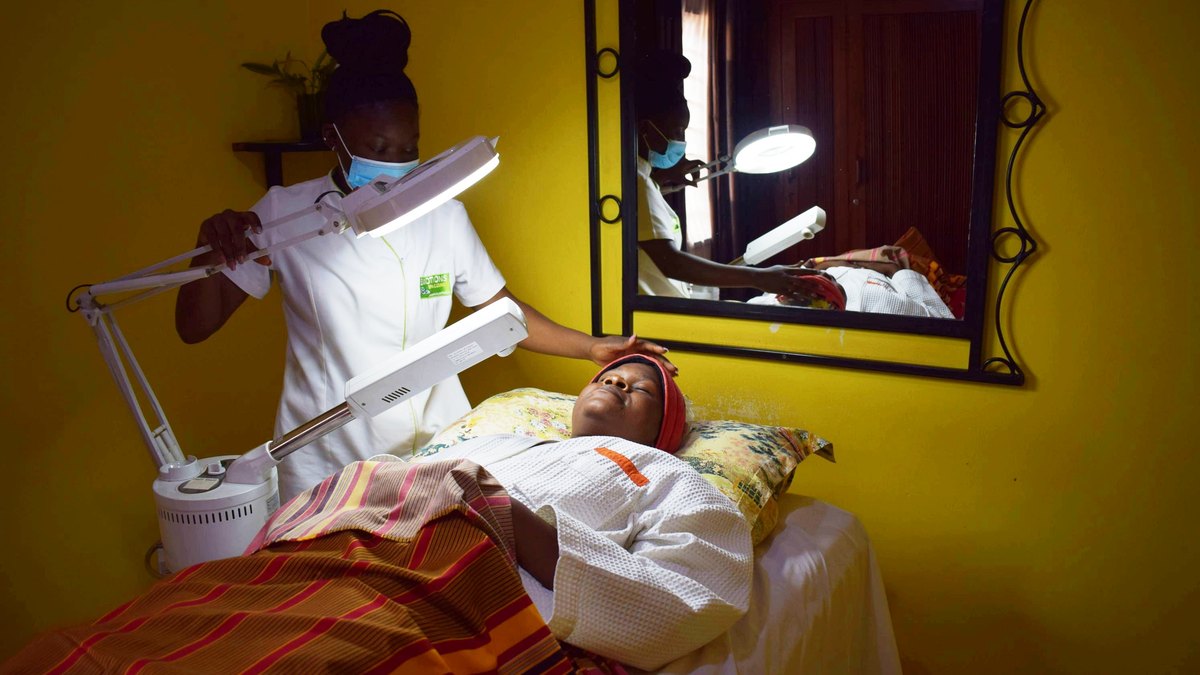
You start an esthetician skincare studio in two licensing steps, not one: you need your own esthetician license, and in many states, including Texas, California, New York and Florida, the studio itself needs a separate salon or establishment license. After that come the business basics: an entity and EIN, liability insurance, financing, and clear limits on which treatments your license allows.
Training hours differ widely by state. Texas requires a 750-hour esthetician course, California and New York require 600 hours, and Florida registers facial specialists after a minimum of 220 hours.
Owning your own room is common in this trade. The Bureau of Labor Statistics says skincare specialists held about 104,200 jobs in 2025 and that 29% were self-employed. Employment is projected to grow 9 percent from 2025 to 2035.
Get your own esthetician license first
The BLS says skincare specialists must complete a state-approved cosmetology or esthetician program and then pass a state exam, and that licensing requirements vary by state. The state board, not a federal agency, sets the hours, the exams and the fees. Four large states show the range:
- Texas (TDLR)750 hours at a Texas-licensed school, written and practical exams, $50 application fee, license valid two years
- California (Board of Barbering and Cosmetology)Not less than 600 hours at a school, or the state skin care apprenticeship; at least 17 years old
- New York (Department of State)600-hour approved course, written and practical exams, $40 application plus $15 for each exam
- Florida (Board of Cosmetology)Facial specialist registration after a minimum of 220 hours at a Florida cosmetology school
If you trained in one state and plan to open in another, check the new state's board for transfer or endorsement rules before you sign a lease. Hours earned elsewhere do not always count the same way.
License the studio, not just yourself
Your personal license lets you do the work. In many states the room you do it in needs its own license too. New York puts it plainly: the Department of State says all beauty treatment specialists as well as all spas and salons must be licensed to operate in the state.
- Texas establishment license$78 for an establishment or specialty establishment, $70 for a mini-establishment inside a licensed establishment; valid two years
- California establishment license$50 nonrefundable application fee; owner certifies the shop meets the Act and regulations before opening business
- New York appearance enhancement business license$60 initial application, $60 renewal, four-year term, owner at least 18
- Florida salon licenseRequired before operating; unannounced initial inspection within about 90 days
TDLR adds that licensed premises may not be used for living or sleeping, and that a mini-establishment must sit inside a licensed full-service or specialty establishment. Florida allows a home salon only if the salon area is separated from the living quarters by a permanent wall and has its own entrance, and says a salon license is not transferable: a new name, address or owner means a new application.
Know where esthetics ends and medicine begins
A skincare studio sells facials, extractions, peels within the board's limits, waxing and retail products. Some popular treatments sit outside an esthetician's scope in many states, and federal rules shape the claims you can make.
On microneedling, the FDA says it has authorized devices to improve the appearance of facial acne scars, facial wrinkles and abdominal scars in patients aged 22 years or older, and that microneedling may be considered a medical procedure, not a cosmetic one, when it meets the definition of a medical device. It tells providers to use only FDA-authorized devices, not to use them without appropriate training, and never to reuse a cartridge. Whether an esthetician may perform it at all is a state question, so ask your board.
Watch your product claims too. The FDA's cosmetic-or-drug guidance says the intended use decides, shown by label claims, advertising and consumer perception. A product marketed to affect the structure or function of the body is a drug, and claims to reduce cellulite or regenerate cells can make it one. Cosmetics other than color additives need no FDA approval before sale, which is exactly why the wording on your menu and private-label jars matters.
Set up the business: entity, EIN and taxes
Pick your entity before you file the establishment application, because the forms ask for it. California's application asks you to choose sole proprietorship, partnership, or corporation or LLC, and asks for a federal employer identification number for partnerships, corporations and LLCs.
The IRS issues an EIN online in minutes for free and warns that you never have to pay a fee for one. If you run the studio as a sole owner, the IRS says the self-employment tax rate is 15.3% (12.4% for Social Security and 2.9% for Medicare), due once net self-employment earnings reach $400, reported on Schedule SE (Form 1040). Set aside money for it from your first client.
Hiring changes your obligations. California's application quotes Business and Professions Code section 7359, which makes it a misdemeanor to hire or permit anyone to work in an establishment in a regulated occupation who is not duly licensed by the board. Verify every esthetician's license before their first shift.
Insure the room and set up chemical safety
Insurance is a legal requirement in some states, not just a smart buy. New York requires an appearance enhancement business to keep a surety bond, accidental and professional liability insurance, or a general liability policy, each with at least $25,000 per occurrence and $75,000 in the aggregate, with proof filed with the application and kept on the premises.
Once you have employees, OSHA's Hazard Communication standard (1910.1200) applies to the peels, solvents and disinfectants on your shelves: all employers with hazardous chemicals in the workplace must have labels and safety data sheets for exposed workers and train them to handle the chemicals appropriately. Keep a safety data sheet for each product in a binder or app the whole team can reach.
Fund the build-out
No government agency publishes an average start-up cost for an esthetics studio, so price your own list: rent and deposit, build-out, treatment bed, steamer, magnifying lamp, sterilization, opening product inventory, booking software, licensing fees and insurance. Get written quotes for your market rather than relying on online averages.
Two SBA programs fit studios of this size:
- SBA microloanUp to $50,000 through nonprofit intermediary lenders; average about $13,000; repayment up to seven years; rates set by the intermediary
- SBA 7(a) loanUp to $5 million through participating lenders, usable for working capital and equipment; SBA guarantees 85% of loans of $150,000 or less and 75% above that
The microloan program is built for small start-ups and is run by community lenders that also offer management and technical help. A 7(a) loan makes more sense for a larger multi-room studio or for buying an existing one.
Know the market you are entering
The BLS projects about 14,200 openings for skincare specialists each year over the decade. The median hourly wage was $21.79 in May 2025, or $45,330 a year, which gives you a benchmark for what you will pay an employee and what you are giving up by going solo.
- Personal care services52% of skincare specialist jobs
- Self-employed29%
- Offices of physicians6%
- Offices of all other health practitioners4%
Your competition is the personal care businesses that employ about half of the field, physician offices, and other independents. A narrow specialty, such as acne care, brows and waxing, or a particular skin type, is easier to market than a general menu.
A practical starting order
- Finish your license. Complete your state's hours and pass its written and practical exams.
- Read the board's establishment rules. Confirm what license the studio needs, home-studio rules and whether a suite rental is covered.
- Form the business. Choose an entity and get a free EIN from the IRS.
- Insure it. Buy liability coverage, and meet any state minimum such as New York's bond or insurance rule.
- Fund it. Price your build-out and equipment, then compare an SBA microloan with a 7(a) loan.
- Set your menu. List only services your license covers and keep product claims cosmetic.
- File and open. Submit the establishment application, set up safety data sheets, and pass any inspection.
Questions people ask
Do I need a separate license to open my own esthetics studio?
In the four states checked here, yes. Texas, California, New York and Florida all license the business location separately from the esthetician. New York says all spas and salons must be licensed, and Florida requires a salon license before you operate.
How many hours of training does an esthetician license take?
It depends on the state: 750 hours in Texas, 600 in California and New York, and a minimum of 220 for a Florida facial specialist.
Can I run a skincare studio from my home?
Some states allow it with conditions. Florida permits a home salon if it is separated from the living quarters by a permanent wall and has its own entrance, while Texas says licensed premises may not be used for living or sleeping. Check your state board.
Can an esthetician do microneedling?
That is decided by your state board. The FDA says microneedling may be considered a medical procedure when it meets the definition of a medical device, and tells providers to use only FDA-authorized devices and to have appropriate training.
Is there an SBA loan for a small skincare studio?
Yes. The SBA microloan program lends up to $50,000 through nonprofit intermediaries, with an average of about $13,000, and the 7(a) program lends up to $5 million through participating lenders.
Sources
- BLS Occupational Outlook Handbook: Skincare Specialists · Jobs, pay, employers, self-employment and outlook
- TDLR: Apply for an Esthetician License · 750 hours, exams, fee and term in Texas
- TDLR: Apply for an Establishment License · Establishment license types, fees and premises rules
- California Board of Barbering and Cosmetology: License Requirements · 600-hour skin care course and apprenticeship route
- California Board of Barbering and Cosmetology: Establishment License Application (2024) · $50 fee, business forms, section 7359
- Florida Board of Cosmetology: FAQs · 220-hour facial specialist rule, salon license, inspection and home salons
- New York Department of State: Become an Esthetician · 600-hour course, exams and fees
- New York Department of State: Appearance Enhancement Business · Spas and salons must be licensed; four-year term
- New York Department of State: Become an Appearance Enhancement Business · Bond or insurance minimums and fees
- FDA: Is It a Cosmetic, a Drug, or Both? · Intended use and product claims
- FDA: Microneedling Devices · Authorized uses and provider advice
- OSHA: Hazard Communication · Labels, safety data sheets and training
- SBA: Microloans · Up to $50,000, average loan and term
- SBA: 7(a) loans · Uses, $5 million maximum and guarantee
- IRS: Get an EIN · Free EIN online
- IRS: Self-employment tax · 15.3% rate and $400 threshold
Figures were read from the linked pages on November 3, 2026. State hours, fees and scope rules change, and the California form is dated 2024. This is not legal, tax or licensing advice.
Top photo: Alvinategyeka / CC BY-SA 4.0 via Wikimedia Commons