How does Atlassian make money in 2027?
Atlassian makes money mostly from subscriptions to its software, sold per user and increasingly in the cloud. In its 10-K for the fiscal year ended June 30, 2026, it reported total revenues of $6,572 million, up 26%, of which $6,262 million was subscription revenue.
By deployment, Cloud brought in $4,411 million, Data Center (software licensed for a term and run by the customer) $1,831 million, and Marketplace and other $331 million, which is mainly fees on third-party apps sold through the Atlassian Marketplace plus services such as premier support and training.
The company says subscription growth came "primarily" from paid seat expansion at existing customers and price increases, and that over 90% of FY26 revenue came from accounts that existed on or before June 30, 2025. It is also ending Data Center, so Cloud is where its growth is expected to come from.
What Atlassian reported for fiscal 2026
Atlassian's 10-K for the year ended June 30, 2026, filed August 14, 2026, says it generates revenues "primarily in the form of subscription fees." Subscription revenues were $6,262 million, up 27%. Other revenues were $310 million, up 9%. Total revenues were $6,572 million, up 26% from $5,215 million.
- Cloud: $4,411 million in FY26, up 28% from $3,447 million. These are subscriptions to apps Atlassian hosts.
- Data Center: $1,831 million, up 25% from $1,467 million. These are term licenses to software customers run themselves, with support and maintenance bundled in.
- Marketplace and other: $331 million, up 10% from $301 million. The 10-K says the increase in other revenues was primarily a $21.4 million increase in marketplace revenue.
- Server: nil in FY26 and FY25, and $178 million in fiscal 2024.
The fourth-quarter press release, dated August 6, 2026, gives the exit rate: Q4 FY26 revenue of $1,766 million, up 28%, Cloud revenue of $1,213 million, up 31%, Subscription ARR of $6,606 million, up 23%, and remaining performance obligations of $4,817 million, up 44%. Gross margin for the full year was 85% in the 10-K.
How the money is earned: land and expand
The 10-K describes a "land-and-expand strategy" with automated and low-touch customer service and transparent pricing. New customers are won mainly through word-of-mouth and low-touch demand generation, then expanded by a sales-led motion using field sales, solution sales and channel partners. It says the software powers more than 350,000 customers, from small emerging companies to over 85% of the Fortune 500.
Revenue growth comes mostly from customers it already has. The filing says the subscription increase was "primarily attributable to paid seat expansion from our existing customers and price increases", and that over 90% of FY26 revenues came from accounts existing on or before June 30, 2025.
What a customer pays: Jira as an example
Atlassian publishes prices. On its Jira pricing page, read November 2, 2026, the Free plan is free for up to 10 users with 2 GB of storage. Standard is $8.48 per user per month with 250 GB of storage and up to 100,000 users per site. Premium is $15.56 per user per month. Enterprise is billed annually and requires contacting sales.
The page offers monthly or annual billing, with savings of up to 17% for annual, and the price shown varies with team size. Because charges are per user, a customer adding seats adds revenue directly, which fits the seat-expansion driver in the 10-K.
The Marketplace and its app vendors
The 10-K calls the Atlassian Marketplace "a hosted online marketplace for free and purchasable apps." Its homepage shows 7,000+ app listings, 1.4M+ installs and 2,200+ partners. Atlassian books Marketplace sales on a net basis because it acts as the agent, so the $331 million line is its fees plus services, not the vendors' gross sales.
Deviniti, which says it was established in Wroclaw, Poland in 2004, states it released its first app in 2012 and serves "more than 15,000 satisfied clients across 38 countries" (vendor-stated). It lists Platinum Atlassian partner as a 2017 milestone and says Atlassian named it a finalist for Partner of the Year 2024-2025 in the Emerging Markets category.
Easy Agile lists three Jira apps, TeamRhythm, Programs and Roadmaps, says "All Easy Agile apps sit inside Jira", and invites visitors to "join the 10,000 product teams already using Easy Agile" (vendor-stated). Its page shows 8,960 installs on the Atlassian Marketplace.
The Data Center wind-down and what is expected next
Atlassian announced in September 2025 that it would end-of-life Data Center. The 10-K says that as of March 2026 it no longer sells Data Center products to new customers, it will stop selling term licenses and expansions to existing customers in March 2028, and, subject to limited exceptions, plans to end maintenance and support in March 2029.
Its fiscal 2027 targets in the press release reflect that shift: total revenue growth of about 13.0%, Cloud revenue growth of about 25.5%, Data Center revenue expected to decline about 17.0%, Marketplace and other growth of about 12.0%, and Subscription ARR growth of about 18.0%. For Q1 FY27 it guided to total revenue of $1,705 million to $1,715 million. These are company targets, not results.
Who else sells to the same teams
The 10-K says competitors include large technology vendors and smaller companies offering project management, collaboration and developer tools, as well as AI-native development platforms, plus cloud vendors targeting enterprise service management and legacy service desk vendors. It names no individual rivals, so the list here comes from the vendors' own pricing pages.
- Linear: publishes a Free plan (2 teams, 250 issues), Basic at $10 per user per month and Business at $16 per user per month, both billed yearly.
- Asana: lists a free Personal plan for up to 2 users, Starter at $10.99 per user per month billed annually or $13.49 billed monthly, and Advanced at $24.99 annually or $30.49 monthly.
- ClickUp: lists Free Forever, Core at $9 per user per month billed yearly (regular price $12) and Business at $17 (regular price $25).
Questions people ask
How does Atlassian make most of its money?
From subscriptions: $6,262 million of its $6,572 million fiscal 2026 revenue was subscription revenue, per its 10-K for the year ended June 30, 2026.
How much of Atlassian revenue is Cloud?
Cloud revenue was $4,411 million in fiscal 2026, up 28%, against Data Center at $1,831 million and Marketplace and other at $331 million.
Does Atlassian earn money from the Marketplace?
Yes, through fees on sales of third-party apps, which it records on a net basis. Those fees and services such as premier support and training make up the Marketplace and other line of $331 million.
Is Atlassian ending Data Center?
Yes. The 10-K says it no longer sells Data Center to new customers as of March 2026, stops selling term licenses and expansions to existing customers in March 2028, and plans to end support in March 2029, with limited exceptions.
Is Jira free?
Jira has a free plan for up to 10 users. Standard was listed at $8.48 per user per month and Premium at $15.56 when the pricing page was read on November 2, 2026.
Sources
- Atlassian Form 10-K, fiscal year ended June 30, 2026 (SEC) · Revenue by type, growth drivers, Data Center end-of-life, customers, competition
- Atlassian Q4 and fiscal 2026 results (SEC 8-K, August 6, 2026) · Q4 revenue, ARR, RPO, fiscal 2027 targets
- Atlassian Marketplace · Listings, installs, partners
- Jira pricing · Plans and per-user prices
- Deviniti: about us · Vendor history and claims
- Easy Agile · Apps, customer and install counts
- Linear pricing · Plans and prices
- Asana pricing · Plans and prices
- ClickUp pricing · Plans and prices
Facts were read from the linked pages on November 2, 2026. Atlassian reports its next quarter after that date, so figures may change. Vendor claims are labeled vendor-stated and no company is adjusted for. If a page here is out of date, tell us and we will correct it from a source.
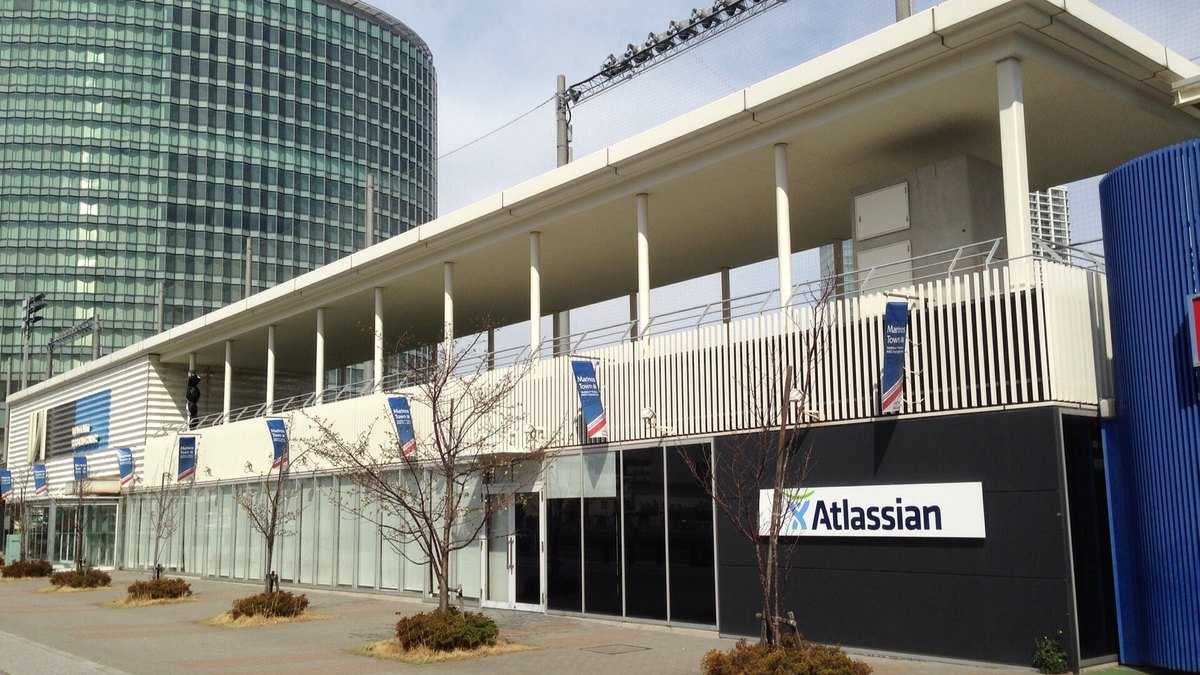
Top photo: Thirteen-fri / CC BY-SA 3.0 via Wikimedia Commons