How does the AI data center boom and its power-constraint economics work in 2027?
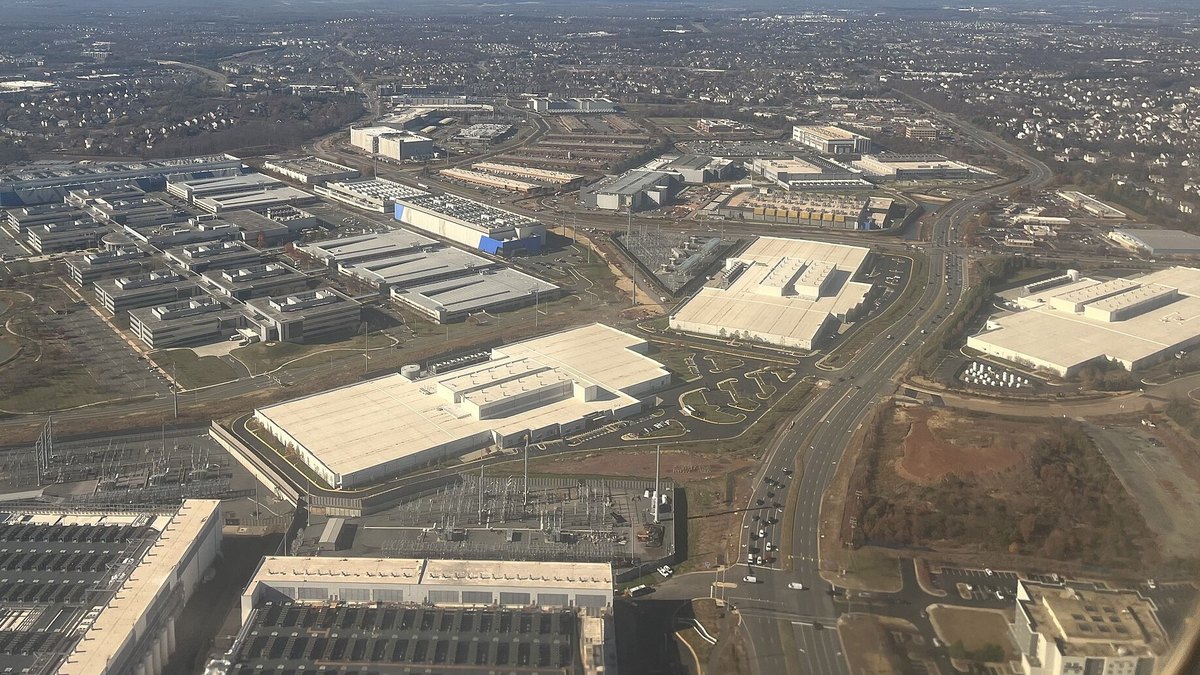
The AI data center boom runs on a simple chain: companies spend hundreds of billions of dollars on computing, each new campus needs a grid connection the size of a small city, and the power system cannot add supply as fast as that demand arrives. Electricity, not chips, has become the binding constraint, and the scarcity shows up as higher capacity prices, longer connection waits and new rules on who pays.
The scale is set by public forecasts. Lawrence Berkeley National Laboratory found U.S. data centers used about 4.4% of the country's electricity in 2023 and could use 6.7% to 12% by 2028. The International Energy Agency expects global data center use to more than double to around 945 TWh by 2030.
The price signal is clearest in PJM, the grid serving much of the eastern U.S. Its capacity price went from $28.92 per megawatt-day for 2024/2025 to the $325 cap for 2028/2029, and the July 2026 auction still came up 6,831 MW short of its reliability requirement, with PJM pointing to large data center loads added to its forecast. For 2027, the economics favor whoever can secure power soonest, and the bill for new supply is the fight to watch.
How much power the boom needs
The best U.S. baseline is the 2024 Report on U.S. Data Center Energy Use, produced by Lawrence Berkeley National Laboratory for the Department of Energy and released December 20, 2024. It found data center electricity use climbed from 58 TWh in 2014 to 176 TWh in 2023, about 4.4% of total U.S. electricity.
Its forecast is a wide range on purpose: 325 to 580 TWh by 2028, or about 6.7% to 12% of U.S. electricity. The spread reflects uncertainty about how many AI servers get built, how hard they run and how efficient cooling becomes.
- U.S. data centers, 2023 (LBNL)176 TWh, about 4.4% of U.S. electricity
- U.S. data centers, 2028 forecast (LBNL)325 to 580 TWh, about 6.7% to 12% of U.S. electricity
- World data centers, 2024 (IEA)415 TWh, around 1.5% of world electricity; the U.S. accounted for 45%
- World data centers, 2030 forecast (IEA)around 945 TWh, slightly more than Japan's entire consumption today
The IEA's Energy and AI report, published 10 April 2025, adds the AI-specific picture: demand from AI-optimised data centres is projected to more than quadruple by 2030, a typical AI-focused data centre uses as much electricity as 100,000 households, and the largest under construction will use 20 times that. In the United States, it says, data centres account for nearly half of electricity demand growth between now and 2030.
Why power, not chips, is now the constraint
For years U.S. electricity demand barely moved. The EIA notes that demand grew about 1.7% a year from 2020 to 2025, against 0.1% from 2005 to 2019, and says plainly that electricity use by data centers is driving the growth. In January 2026 the EIA forecast U.S. electricity use rising 3% in 2027, part of the strongest four-year growth period since 2000, driven largely by large computing facilities, including data centers.
When demand jumps faster than new plants, lines and substations can be added, the scarce input becomes the grid connection itself. The IEA notes that grid connection queues are long and complex, and estimates that around 20% of planned data centre projects could be at risk of delays if grid risks are not addressed.
PJM's July 2026 capacity auction shows the gap in numbers. It procured 138,318 MW of generation and demand response for 2028/2029, but committed supply was 6,831 MW short of the reliability requirement, after a shortfall of about 6,500 MW in the auction before. Only 525 MW of new generation and uprates cleared. CEO David Mills said demand for electricity continues to grow faster than supply, and PJM said the auction saw the continued trend of large data center loads being added to the load forecast.
How scarcity turns into prices
PJM runs a capacity market: generators are paid to promise they will be available years ahead, and utilities pass that cost to customers. When forecast peak load rises and new supply lags, the clearing price climbs. The sequence of PJM auctions tells the story:
- 2024/2025: $28.92 per MW-day for most of the region.
- 2025/2026: $269.92 per MW-day, with the BGE zone at $466.35 and the Dominion zone at $444.26. PJM listed an increase in projected peak load among the drivers.
- 2027/2028: cleared at the cap of $333.44 per MW-day.
- 2028/2029: cleared at the cap of $325 per MW-day across the whole PJM footprint, for a total of about $16.4 billion.
Energy prices move too. The EIA's October 2026 Short-Term Energy Outlook puts wholesale prices across 11 hubs at an average of $52 per megawatthour in 2026, about 11% higher than 2025, easing to $49 in 2027. It forecasts residential prices of 17.3 cents per kWh in 2025, 18.2 in 2026 and 18.7 in 2027. In a high-demand scenario where data center load grows faster than expected, the EIA estimates 2027 wholesale prices in ERCOT (Texas) would be $37 per MWh, or 79%, higher than its baseline, against $2.60, or 4%, in PJM.
Who supplies the extra power
In the near term the answer is mostly the existing fleet running harder. The EIA says the required increase in generation would primarily come from greater use of natural gas-fired plants; gas supplied 40% of U.S. generation in 2025, coal 17%, and wind and solar combined 18%. The EIA expects U.S. solar capacity to grow from 152 GW in 2025 to 223 GW in 2027.
Globally, the IEA sees renewables and natural gas taking the lead in meeting data centre demand, with natural gas adding 175 TWh, notably in the US, nuclear adding about the same, and the first small modular reactors coming online around 2030.
Hyperscalers are also buying power directly. Constellation announced on Sept 20, 2024 a 20-year power purchase agreement with Microsoft to restart Three Mile Island Unit 1 as the Crane Clean Energy Center, about 835 megawatts, expected online in 2028. For another example, see our explainer on Amazon's planned Indiana nuclear plant.
The capex side of the equation
The money behind the demand is visible in company filings. Meta reported on October 21, 2026 that third-quarter capital expenditures, including principal payments on finance leases, were $34.91 billion, and it narrowed its full-year 2026 outlook to $135-145 billion from $130-145 billion. It said it expects to continue investing aggressively to support its core business and emerging AI initiatives.
For a buyer, every dollar of that spending only earns a return once the building is energized. That is why power availability now shapes where campuses go, how fast they open, and what developers will pay for an existing grid connection. For the cost lines that surprise operators, see the hidden costs of running AI infrastructure.
The rules being rewritten
Regulators are trying to connect large loads faster without shifting the cost onto other customers. On June 18, 2026, FERC issued parallel show cause orders under section 206 of the Federal Power Act, directing each of the six regional grid operators under its jurisdiction to justify or reform their tariffs for large energy users, including data centers, according to the Department of Energy. Deputy Secretary James Danly said the actions aim to improve interconnection, support flexible load and generation arrangements, speed new generation, and prevent cost shifts onto current customers.
PJM, for its part, said after the July 2026 auction that it would seek FERC approval for a Backstop Procurement to address the shortfall, file Connect and Manage frameworks for large loads, and open an Expedited Interconnection Track for up to 10 projects backed by states.
What to watch in 2027
- PJM's 2029/2030 auction, scheduled for December, the next read on whether new supply is catching up.
- FERC's large-load outcomes, which decide who pays for grid upgrades and whether flexible data centers can connect sooner.
- EIA forecast revisions: the October 2026 outlook expects commercial demand, which includes data centers, to grow 2.8% in 2027. The next outlook is due November 10, 2026.
- Hyperscaler capex guidance, since spending plans set the pace of new load requests.
The practical read: the boom is now gated by megawatts. Regions with spare grid capacity win projects, customers in tight markets see capacity costs in their bills, and the companies that lock in power early hold the advantage.
Questions people ask
How much electricity do U.S. data centers use?
About 176 TWh in 2023, roughly 4.4% of U.S. electricity, according to the Lawrence Berkeley National Laboratory report released by DOE. It forecasts 325 to 580 TWh by 2028, or about 6.7% to 12%.
Why is power the bottleneck for AI data centers?
Demand from new data centers is arriving faster than new generation and transmission can be built. PJM's 2028/2029 capacity auction cleared only 525 MW of new generation and uprates and fell 6,831 MW short of its reliability requirement.
Are data centers raising electricity prices?
Capacity prices in PJM rose from $28.92 per MW-day for 2024/2025 to the $325 cap for 2028/2029, and PJM cites large data center loads in its load forecast. The EIA forecasts residential prices of 18.7 cents per kWh in 2027, up from 17.3 in 2025.
How much electricity will data centers use worldwide by 2030?
The IEA projects around 945 TWh by 2030, more than double the 415 TWh of 2024, with demand from AI-optimised data centres more than quadrupling.
Where will the extra power come from?
In the U.S. the EIA expects greater use of natural gas-fired plants to supply most of the near-term increase, alongside fast solar growth. Hyperscalers are also signing deals such as Microsoft's 20-year agreement to restart Three Mile Island Unit 1.
Sources
- U.S. DOE / LBNL, 2024 Report on U.S. Data Center Energy Use · U.S. data center electricity use 2014-2023 and 2028 forecast
- IEA, Energy and AI, executive summary · Global data centre demand to 2030, supply mix, grid delay risk
- IEA press release, April 2025 · 945 TWh by 2030 and AI-optimised data centre growth
- EIA press release, January 13, 2026 · Strongest four-year U.S. demand growth since 2000
- EIA Today in Energy, March 12, 2026 · Data center demand, gas generation and price scenario
- EIA Short-Term Energy Outlook, October 2026 · Wholesale and retail price forecasts, commercial demand, solar capacity
- PJM Inside Lines, 2025/2026 auction results · Capacity prices and peak load drivers
- PJM Inside Lines, 2028/2029 auction results · Price at the cap, shortfall, data center load, next steps
- U.S. DOE on FERC large load action, June 18, 2026 · FERC show cause orders to six grid operators
- Meta third quarter 2026 results · Q3 2026 capex and full-year 2026 outlook
- Constellation, Crane Clean Energy Center announcement · Microsoft 20-year power purchase agreement
This page reports published forecasts, auction results and company disclosures as their authors stated them, read on November 3, 2026. Forecasts are forecasts; check each linked source before relying on a figure.
Top photo: Theodore Christopher / CC0 via Wikimedia Commons