How Does the Sports Trading Card and Memorabilia Market Work in 2027?
Four groups make the market work. Makers are licensed card companies: Fanatics, through its Topps brand, now holds the exclusive baseball and basketball licenses and a long-term football deal, Panini still makes cards but without NBA or NFL branding, and Upper Deck holds the NHL license. Graders (PSA, Beckett's BGS, SGC and CGC) check that a card is genuine and score its condition, and a slab with a grade is what most high-value sales are built on. Sellers run from eBay, Goldin, Heritage Auctions and Fanatics Collect to local card shops and card shows. Buyers are collectors who want the cards and memorabilia they like, and some who buy as a store of value.
The licensing map changed recently: Fanatics took over the exclusive NBA license on Oct. 1, 2025, after Panini held it for 15 years. How much the market is worth depends on who is counting: published estimates for 2025 and 2024 run from $13.75 billion to $33.6 billion, and the figures come from firms that do not fully explain their method. This page is general information. It is not investment advice, it does not predict prices, and it does not tell anyone to buy or sell anything.
Licensing: who is allowed to make official cards
A league and its players' union each license the right to print team logos and player likenesses. Whoever holds both can make fully licensed cards. Fanatics has been collecting those rights. CBS Sports reported in August 2021 an exclusive baseball cards agreement with Major League Baseball and the players' union, with the union deal starting in 2023 and the league deal in 2026 after Topps's agreement ended in 2025. A Pristine Auction write-up says Fanatics bought Topps for $500 million in 2022.
- Baseball (MLB and MLBPA)Exclusive agreement with a Fanatics-controlled company, announced in 2021; league deal starts 2026 (CBS Sports). Topps had made MLB cards since the early 1950s.
- Basketball (NBA and NBPA)Fanatics, Topps' parent, took over the exclusive NBA license on Oct. 1, 2025, and the 2025-26 Topps Basketball set released Oct. 23 (Sports Collectors Digest). Panini had held it for the last 15 years.
- Football (NFL and NFLPA)Fanatics holds a deal described as 20 years of exclusivity; the players' union ended its Panini contract three years early (Pristine Auction).
- Hockey (NHL and NHLPA)Upper Deck, which has held both licenses since 1990-91. The most recent announcement found is a long-term extension on Oct. 25, 2021 (NHLPA); no later renewal was found, so check current status.
Panini is not gone. The same Pristine Auction piece says it still holds licenses for NASCAR, the WNBA, UFC and international soccer, and can print unlicensed cards with no league or team branding. Panini filed a federal antitrust lawsuit against Fanatics in August 2023, according to Front Office Sports, and Fanatics countersued days later. In July 2025 Front Office Sports reported that a federal magistrate judge ordered Fanatics to turn over seven unredacted licenses to Panini's lawyers. This page could not confirm how the case stands today.
Grading: PSA, BGS, SGC and CGC
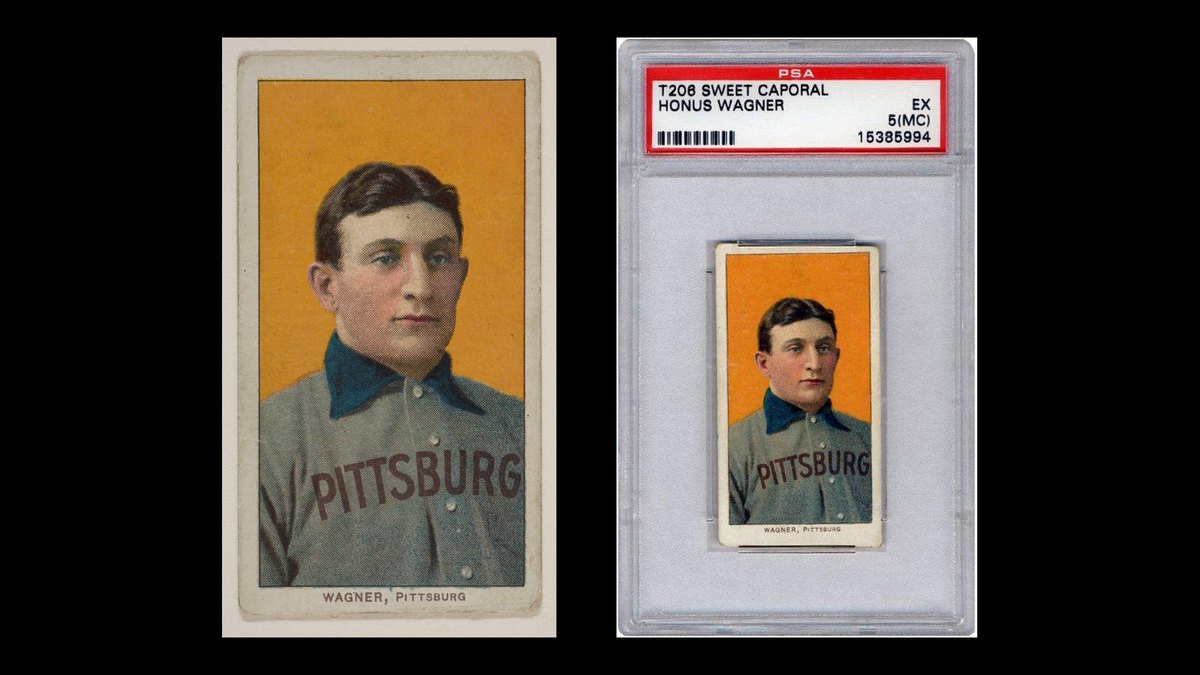
A grading company authenticates a card, scores its condition on a scale (PSA uses 10 points) and seals it in a plastic holder with a label, called a slab. PSA describes itself as the largest third-party authentication and grading company in the world and says grading can only happen after a card is judged authentic. Fees depend on the service level, how fast you want the card back and how much the card is worth.
- PSA, price per card as listedStandard $59.99 (70 - 80 business days), Priority $79.99 (50 - 60), Express $199 (20 - 30), Super Express $349 (10 - 15), Premier $599 (7 - 10). The page also says its Value services are temporarily paused (PSA).
- CGC, price per card as listedBulk $17 (25-card minimum, up to $500 value per card), Economy $20 (up to $1,000), Standard $55 (up to $3,000) (CGC).
- BGS (Beckett) and SGCSee their own fee pages: Beckett Grading and SGC. Their prices are not quoted here because the figures change and could not be verified.
Marketplaces and auction houses
- eBay. Its Authenticity Guarantee program for trading cards uses PSA as the sole authentication provider for raw and graded cards, replacing CGC, according to Value Added Resource (October 2024).
- Goldin. eBay acquired the auction house Goldin from Collectors, PSA's parent company, and sold its eBay Vault to PSA, per the same report.
- Heritage Auctions. Sold a one-of-a-kind 2007-08 Upper Deck Exquisite Collection Jordan-Kobe Bryant card signed by both players for $12.9 million, reported by NBC Sports on Aug. 24, 2025.
- Fanatics Collect. The marketplace that replaced the PWCC brand, offering fixed-price listings, weekly and monthly auctions, vaulting and grading through PSA, CGC, Beckett, SGC and MBA. At launch it charged a flat 6% seller fee on cards under $120, and it announced a Sotheby's partnership for live and online auctions (Fanatics press release). Check its current fees.
Big numbers get attention, but they are single sales. The Jordan-Kobe Bryant card's $12.9 million surpassed the $12.6 million paid for a 1952 Mickey Mantle card in 2022, per NBC Sports. A Bleacher Report list published Oct. 15, 2026 ranks the biggest 2026 sales: a Michael Jordan 1998 NBA Finals jersey at $14,000,000 through Hunt Auctions in September 2026, a Shohei Ohtani 2026 Topps Chrome one-of-one card at $11,000,000 in July 2026 and a Cooper Flagg 2025-26 Topps Chrome one-of-one card at $8,040,000 in September 2026. The list does not name an auction house for the cards. Records say little about what a typical card sells for.
Authentication and fraud
Counterfeits and altered cards are a real cost of the market. Sports Illustrated reported on May 8, 2026 that PSA's latest fraud report says more than $200 million in counterfeit and altered collectibles were intercepted before reaching slabs, a figure PSA's president called conservative, and that counterfeit submissions rose 45.3% year over year. The report's period was not stated. Types it described: fully counterfeit cards, rebacked vintage cards, trimmed edges, altered surfaces, fake autographs, counterfeit slabs made to look like graded cases, and real cards subtly modified and resubmitted as higher-grade examples.
A grade is an opinion from a company that also profits from grading, and a slab can be faked. Look up the certification number on the grader's own site, buy from sellers with return terms, and use marketplace authentication programs such as eBay's where they apply.
Market size: who says what
No agency publishes official totals for this market. The figures come from research firms, which sell reports and often do not disclose how they count. Treat each as one firm's estimate.
- Fortune Business Insights, report updated Oct. 19, 2026Sports trading cards: $13.75 billion in 2025 and $14.85 billion in 2026, forecast to reach $27.52 billion by 2034 at 8.02% a year. Its own FAQ on the same page gives a different set: $12.45 billion in 2025 and $25.58 billion by 2034 (Fortune Business Insights).
- Market Decipher, press release Dec. 16, 2024Sports memorabilia collectibles: $33.6 billion in 2024, forecast at $271.2 billion by 2034 (22.1% a year), with trading cards about $14.9 billion in 2024. The release does not explain its method (PR Newswire).
What this does and does not tell you
Licenses, graders and marketplaces explain how cards reach buyers, not what any card will be worth later. This page does not predict prices, rank products to buy or recommend that anyone buy or sell. Cards and memorabilia can lose value, and grading, shipping and selling fees reduce what a seller keeps.
Questions people ask
Who makes official sports cards now?
Fanatics, through Topps, holds the exclusive MLB and NBA licenses and a long-term NFL deal. Upper Deck's most recent announced extension for the NHL dates to 2021. Panini still makes unlicensed cards and keeps some other licenses (Pristine Auction).
What do PSA, BGS, SGC and CGC do?
They authenticate cards, grade condition and seal them in a labeled slab. PSA lists per-card fees from $59.99 for Standard to $599 for Premier, and CGC lists $17 to $55 for its Bulk to Standard tiers. Check each grader's page for current fees.
What is the biggest sports card sale?
NBC Sports reported a $12.9 million sale of a Jordan-Kobe Bryant Upper Deck card at Heritage Auctions in August 2025 as the record for a sports card at public auction. A jersey sold for more in 2026 according to Bleacher Report.
How big is the sports card market?
Estimates differ: Fortune Business Insights gives $13.75 billion for sports trading cards in 2025, while Market Decipher estimated $33.6 billion for sports memorabilia collectibles in 2024. Neither is an official figure.
Is this investment advice?
No. It explains how the market is organized and does not recommend buying or selling or predict what anything will be worth.
Sources
- CBS Sports: MLB and Fanatics card license (Aug. 19, 2021) · Baseball license, Topps history
- Pristine Auction: Panini and the NBA and NFL licenses · Fanatics deals, Panini holdings and lawsuit
- Sports Collectors Digest: Return of Topps Basketball (Oct. 2, 2025) · NBA license start, Panini 15 years
- Front Office Sports: arbitrator and Panini (Oct. 2, 2023) · NFLPA dispute, Panini lawsuit filed
- Front Office Sports: Fanatics ordered to share licenses (Jul. 9, 2025) · Seven unredacted licenses
- NHLPA: Upper Deck license extensions (Oct. 25, 2021) · NHL license
- PSA: pricing and services · Service levels and fees
- CGC Cards: services and fees · Bulk, Economy, Standard fees
- Beckett Grading · BGS fee page
- SGC · SGC fee page
- Value Added Resource: eBay and PSA (Oct. 2, 2024) · Authenticity Guarantee, Goldin
- Fanatics: Fanatics Collect launch · Marketplace features and fees at launch
- NBC Sports: Jordan-Kobe Bryant card sale (Aug. 24, 2025) · Heritage Auctions sale
- Bleacher Report: biggest 2026 sales (Oct. 15, 2026) · 2026 sale prices
- Sports Illustrated: PSA fraud report (May 8, 2026) · Counterfeit and altered items
- Fortune Business Insights: Sports Trading Cards Market · Market estimate, updated Oct. 19, 2026
- Market Decipher via PR Newswire (Dec. 16, 2024) · Memorabilia and cards estimate
General information only, not investment advice. Prices, fees and licenses change; confirm on the original pages before acting.
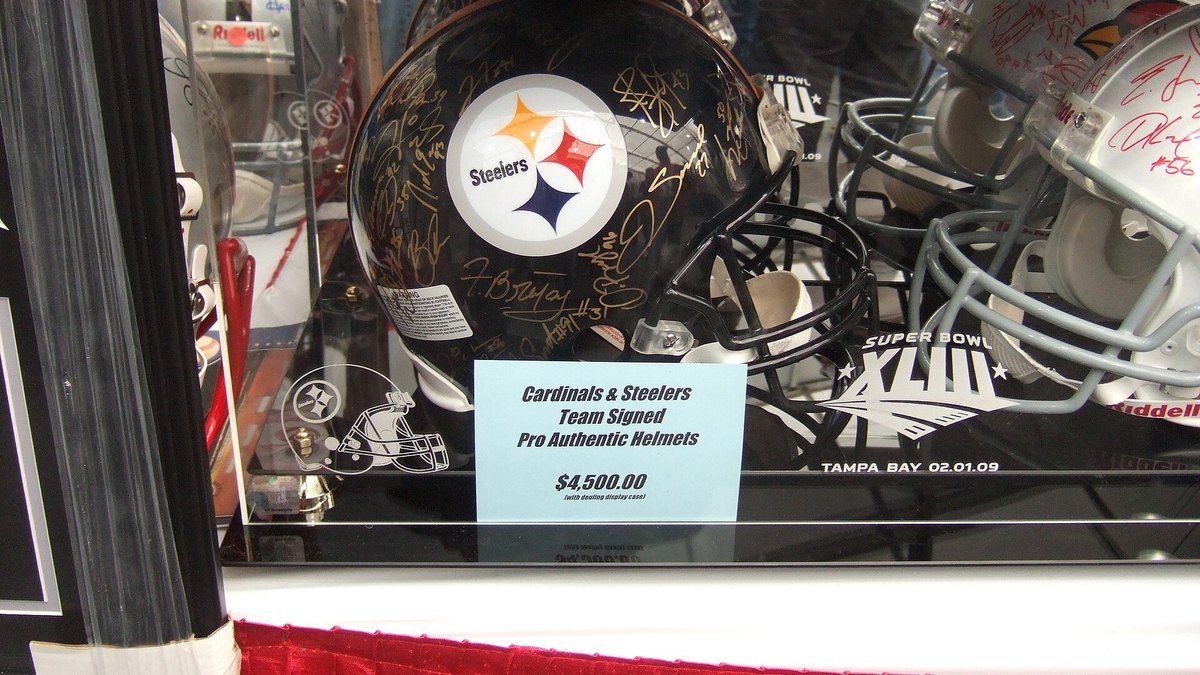
Top photo: John Seb Barber / CC BY 2.0 via Wikimedia Commons