How Do You Start a Compounding Pharmacy in 2027?
You start a compounding pharmacy by choosing your legal category first, then licensing and building to match it. Most new owners open a state-licensed pharmacy under section 503A of the Federal Food, Drug, and Cosmetic Act (FD&C Act), which means a state board of pharmacy license, a pharmacist-in-charge, compounding for individual patients on prescriptions, and compliance with the USP standards your board applies (<795> nonsterile, <797> sterile, <800> hazardous drugs). Add a DEA registration only if you will handle controlled substances. The other path is registering with FDA as a 503B outsourcing facility, which adds current good manufacturing practice (CGMP) requirements, FDA inspections and an annual FDA fee.
The rules that decide whether you can legally sell your first prescription are federal and state, and the state board is usually your day-to-day regulator. Since 2025 the biggest business change is GLP-1 compounding: FDA took semaglutide and tirzepatide off its shortage list, and in April 2026 it said they are not on the 503B bulks list either. A pharmacy built around compounded GLP-1 copies is built on rules FDA has narrowed.
Costs below are only figures a regulator or form publishes, each with whose number it is and its date. Build-out, equipment, insurance, accreditation and payer-contract costs are not published by the sources cited here, so none are given. This page is not legal, regulatory or financial advice; talk to a healthcare attorney and your state board of pharmacy before you commit money.
Choose 503A or 503B first
Federal compounding law changed after a 2012 outbreak. FDA says contaminated drugs compounded by a Massachusetts pharmacy led to more than 750 cases of infection and more than 60 deaths in 20 states, and Congress responded with the Drug Quality and Security Act, enacted on November 27, 2013. That law left section 503A in place and added section 503B.
- Section 503A: state-licensed pharmacyExempt from FDA approval, CGMP and adequate-directions labeling when conditions are met, including compounding on a valid patient-specific prescription. The state board of pharmacy has primary day-to-day oversight; FDA does surveillance and for-cause inspections.
- Section 503B: outsourcing facilityA voluntary FDA registration. Subject to CGMP, inspected by FDA on a risk-based schedule, must report adverse events, and may supply a hospital or office on an order that is not for an identified patient (office stock). Pays an annual FDA establishment fee.
FDA's own questions-and-answers page says compounded drugs are not FDA-approved and should only be used when a patient's needs cannot be met by an approved drug, for example a dye allergy or a patient who cannot swallow a tablet. That is the legal and commercial core of the business: you serve a patient need an approved product does not meet. FDA also says biologics cannot be compounded under either section.
Pick 503A unless you plan to make sterile products in volume for health care providers. Moving from 503A to 503B later means a different quality system, a different regulator and a much larger fixed cost.
State licensure and the pharmacist-in-charge
A compounding pharmacy is first of all a pharmacy, and pharmacies are licensed by state boards. The National Association of Boards of Pharmacy (NABP) is the association of those boards, working with them since 1904; it does not license you. Your license, inspections and the rules on what you may compound come from the board in each state where you are located or ship.
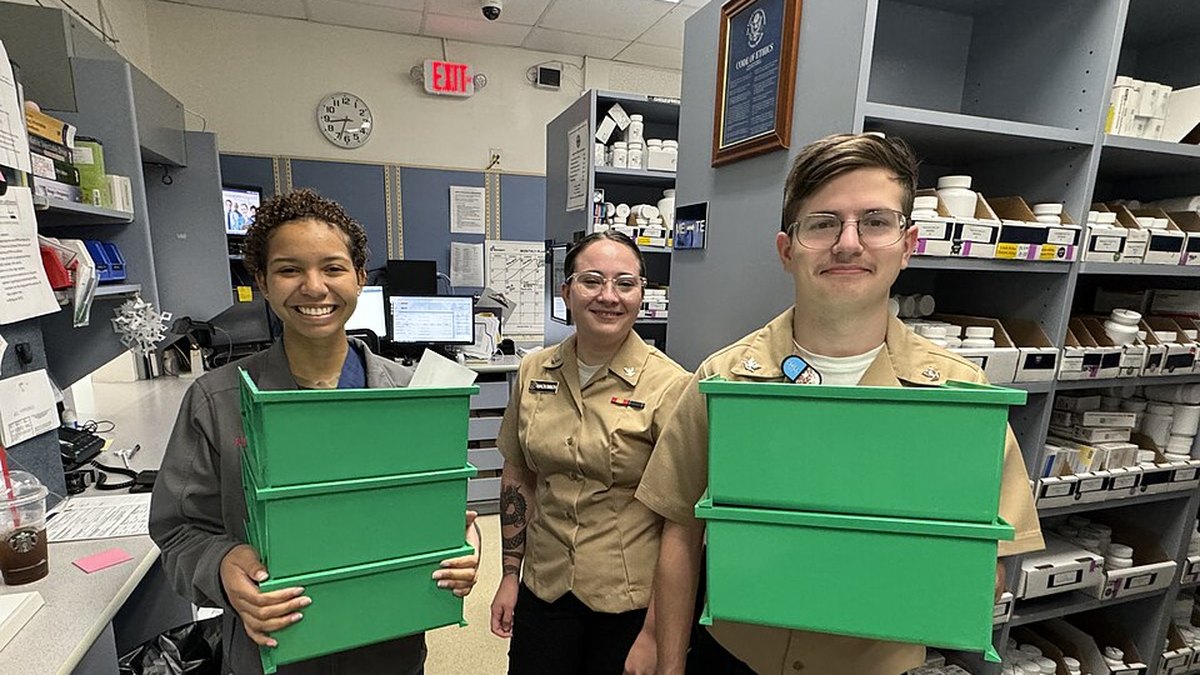
- A pharmacist-in-charge. Boards expect a named licensed pharmacist responsible for the pharmacy. The Texas State Board of Pharmacy's sterile compounding application has the pharmacist-in-charge acknowledge in a notarized signature that they have read the laws and rules for that class of pharmacy. NABP's accreditation program describes the role as a licensed pharmacist in full and actual charge of operations, personnel and compliance.
- A class of license that matches your services. The Texas form asks you to tick sterile compounding by risk level, nonsterile compounding, veterinary prescriptions, closed-door service and 503B outsourcing. California issues a separate sterile compounding license from its standard pharmacy license.
- Every state you ship into. Boards license out-of-state pharmacies that serve their residents, and California lists separate nonresident sterile compounding and outsourcing fees. Ask each board before you mail a single prescription across a state line.
Start with the board for the state where you will practice and ask for its compounding rules, not just the general pharmacy application. Rules, forms and fees differ by state and change.
USP standards: <795>, <797> and <800>
The United States Pharmacopeia (USP), a not-for-profit standards organization, publishes the general chapters that define good compounding practice. USP <795> covers nonsterile preparations and USP <797> covers sterile preparations. USP's page says <797> describes requirements including the responsibilities of compounding personnel, training, facilities, environmental monitoring, and storage and testing of finished preparations. USP lists both revised chapters as becoming official on November 1, 2023. USP <800> covers hazardous drugs.
USP publishes the standards; state boards decide how they apply to you. NABP's compounding accreditation requires a pharmacy doing nonsterile compounding to follow the current <795>, one doing sterile compounding to follow <797>, and one compounding hazardous drugs to follow the applicable sections of <800>. Buy the current chapters through USP and ask your board which edition it enforces before you design your space.
DEA registration, only if you handle controlled substances
If you will compound or dispense controlled substances, you need a registration from the Drug Enforcement Administration's Diversion Control Division, applied for online at deadiversion.usdoj.gov. The DEA's Form-224 (edition 10-20) lists Retail Pharmacy as a business activity, asks you to check each controlled substance schedule you need, and states: "FEE FOR THREE (3) YEARS IS $888" and that the fee is non-refundable. That is the figure on that form edition; the DEA website itself did not load for the tool used here on October 19, 2026, so confirm the current fee on deadiversion.usdoj.gov before you pay.
Many compounding pharmacies avoid controlled substances entirely to simplify security, record-keeping and inspections. That is a business decision to make with your attorney, not a legal requirement.
Facility and cleanroom requirements
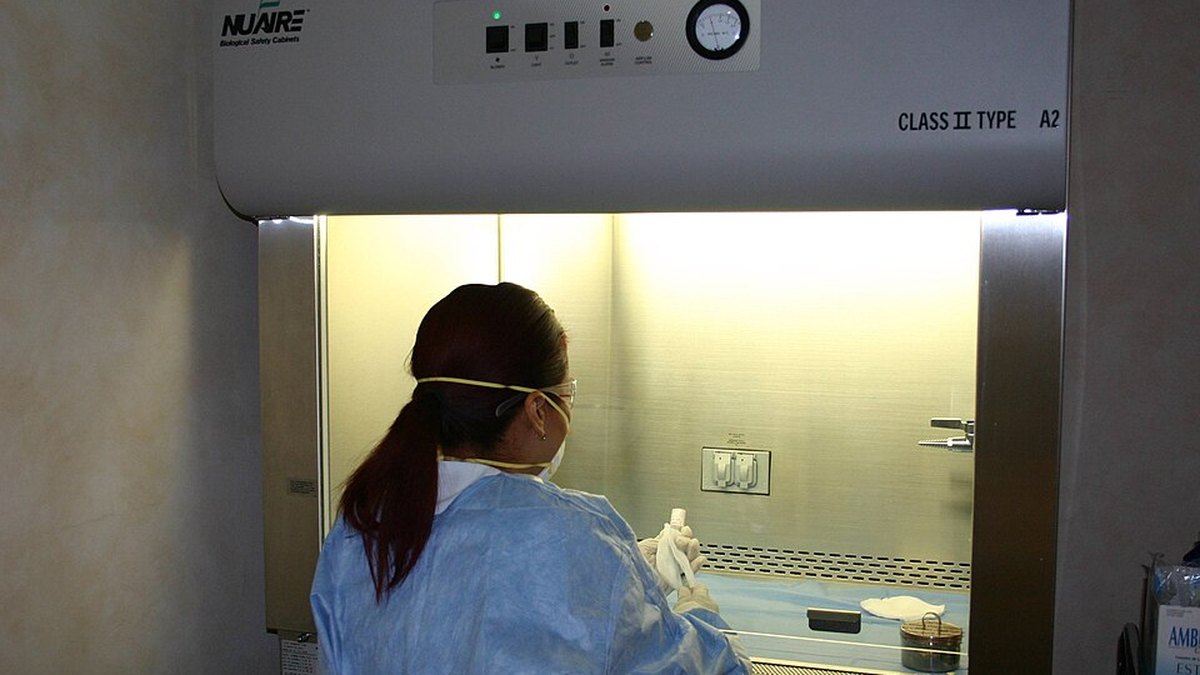
Nonsterile compounding needs a clean, organized, separately defined area under USP <795> and your board's rules. Sterile compounding is where cost and risk concentrate. USP <797> addresses facilities and environmental monitoring, and your board may add its own inspection step before a sterile license is issued.
For 503B outsourcing facilities the benchmark is stricter. FDA's draft CGMP guidance for outsourcing facilities (nonbinding recommendations) says sterile drugs should be produced only in ISO 5 or better air quality under dynamic conditions, the area around the ISO 5 zone next to the aseptic line should at minimum meet ISO 7, and if an isolator is used the surrounding area should at minimum meet ISO 8. Those ISO classes are a rough picture of what a sterile cleanroom involves, whichever license you hold.
No source cited here publishes a typical build-out cost for a cleanroom, hood, pass-through or environmental monitoring program, so none is given. Get written quotes from a cleanroom contractor and have your attorney and the board review the plan before you sign a lease.
PCAB and NABP accreditation
Accreditation is voluntary. ACHC offers PCAB (Pharmacy Compounding Accreditation Board) accreditation, with standards aligned to USP requirements for sterile and nonsterile preparations and referencing chapters <795>, <797> and <800>. NABP runs its own voluntary compounding accreditation, which requires a licensed pharmacy in good standing and a Verified Pharmacy Program inspection within the past six months.
Neither page cited here publishes a fee, and ACHC directs people to contact it for details. Accreditation is not what makes you legal; the license is. It can matter commercially, because payers, hospitals and physician customers sometimes ask whether a compounding pharmacy has been independently reviewed.
What it costs: published fees only
These are fees that a regulator or official form publishes, with whose figure it is and its date. They are filing and license fees, not a startup budget.
- FDA, 503B outsourcing facility, FY 2027 annual establishment fee$7,142 for a small business or $22,074 for a non-small business; reinspection $21,427. FDA published the FY 2027 rates in the Federal Register on July 30, 2026. The FY 2027 registration period runs October 1, 2026 to December 31, 2026, and FDA took small business fee reduction requests from April 1, 2026 to April 30, 2026. FY 2026 rates were $6,829, $20,726 and $20,486.
- DEA, new registration (Form-224, edition 10-20)$888 for three years, non-refundable, as printed on the form. Confirm the current figure with the DEA.
- California State Board of Pharmacy, original applications (effective 1/1/2025)Pharmacy $750; sterile compounding $3,875; nonresident sterile compounding $8,500; outsourcing $25,000. The same schedule lists the sterile compounding renewal at $4,085 (effective 7/1/2025).
- Texas State Board of Pharmacy, Class C-S form (revision 11/19)Pharmacy license fee $507 plus $25 for each balance or scale. This form is a hospital-pharmacy class and its revision date is old, so ask the board for the fee that applies to you.
Not published by a source cited here: the cost of equipment, a build-out, malpractice and product liability insurance, accreditation, legal and consulting help, inventory and working capital, or payer contracting. If a consultant or vendor quotes you a startup figure, ask for the basis in writing.
Insurance, PBMs and getting paid
Plan your revenue model before you build. Pharmacy benefit managers (PBMs) have a history of restricting coverage for compounds. A 2014 Managed Healthcare Executive report said Express Scripts would block coverage for about 1,000 active ingredients used by compounding pharmacies, and a Catamaran executive quoted in it described payers demanding that PBMs play a greater role in managing compounded medications while calling it "not a war against compounding in general". That article is old, and no primary source cited here publishes current PBM contract terms or compounding reimbursement rates.
In practice, new compounding pharmacies should assume that many compounded prescriptions will not be covered or will be reimbursed unpredictably, and should price and market accordingly, for example direct to prescribers and patients on a cash basis where the law allows. Have a healthcare attorney review any PBM network agreement, prescriber relationship and marketing arrangement, because kickback and referral laws can apply.
Business models: what you could build
- Nonsterile compounding. Creams, capsules, liquids and other preparations made to order for a patient who needs a different dose form, strength or ingredient mix. Lower facility burden under USP <795>, but you still need the license and a pharmacist-in-charge.
- Sterile compounding. Injectables, ophthalmics and other sterile preparations under USP <797>. This needs a cleanroom and a monitoring program, and boards may license it separately, as California does.
- Veterinary compounding. FDA says the FD&C Act permits compounding of animal drugs when the active ingredient comes from a finished FDA-approved drug, and that animal drugs compounded from bulk drug substances are not FDA-approved. FDA issued Guidance for Industry #256 on April 14, 2022 on compounding from bulk drug substances, and it is especially concerned about office stock. Read it before you plan a veterinary line.
- Hormone therapy. FDA says many products marketed as bioidentical hormones are compounded drugs that are not FDA-approved, and that it has no evidence they are safe and effective or safer or more effective than FDA-approved hormone therapy. Expect scrutiny of marketing claims.
- 503B outsourcing. Sterile or nonsterile products made in bulk under CGMP for hospitals and clinics, with FDA registration, the annual fee above and FDA inspections. It is a different kind of company from a neighborhood pharmacy.
GLP-1 compounding: what FDA changed
Compounded semaglutide and tirzepatide were a large market while the drugs were on FDA's shortage list, because federal law lets compounders prepare versions of a drug on that list under conditions. FDA's notice records the change: it resolved the tirzepatide shortage in December 2024 and determined on February 21, 2025 that the semaglutide injection shortage was resolved.
- Tirzepatide. After the district court denied a preliminary injunction on March 5, 2025, FDA said the enforcement discretion period for 503A pharmacies and physicians had ended, and it did not intend to act against 503B outsourcing facilities on shortage-dependent conditions until March 19, 2025.
- Semaglutide. After the district court denied a preliminary injunction on April 24, 2025, FDA said the period had ended for 503A, and gave 503B outsourcing facilities until May 22, 2025.
- April 1, 2026 clarification. FDA said that under 503A a compounder may not regularly or in inordinate amounts make drugs that are essentially copies of a commercially available drug, and that products combining semaglutide with another ingredient such as vitamin B12 can still be essentially copies. It said it does not intend to act against a compounder that fills four or fewer prescriptions of such a product in a calendar month. For 503B, bulk substances need to be on the 503B bulks list or the drug on the shortage list, and FDA stated that tirzepatide and semaglutide do not currently appear on either.
FDA's separate alert on unapproved GLP-1 drugs adds that, as of May 31, 2026, it had received 990 reports of adverse events associated with compounded semaglutide and more than 730 associated with compounded tirzepatide, and that these are likely underreported because state-licensed pharmacies that are not outsourcing facilities are not required to report them. It also says retatrutide and cagrilintide cannot be used in compounding under federal law and that it is not aware of a lawful basis for semaglutide salt forms in compounding.
A sensible order of operations
- Retain a healthcare attorney before you sign a lease, a PBM agreement or a prescriber relationship.
- Call your state board of pharmacy for the compounding rules, license classes, inspection steps and which USP editions it enforces.
- Decide 503A or 503B and whether you will do sterile work, hazardous drugs, veterinary or hormone products.
- Name your pharmacist-in-charge and design the space and procedures to the USP chapters that apply.
- Decide on controlled substances and, if yes, register with the DEA before you stock them.
- Plan for payment and decide whether accreditation helps you win the prescribers and facilities you want.
Questions people ask
What is the difference between a 503A and a 503B compounder?
A 503A compounder is a state-licensed pharmacy (or physician) that compounds for identified patients on valid prescriptions, overseen mainly by the state board of pharmacy. A 503B outsourcing facility voluntarily registers with FDA, follows CGMP, is inspected by FDA on a risk-based schedule and may supply providers on an order that is not for an identified patient. 503B facilities pay an annual FDA fee.
Do I need a pharmacist to open a compounding pharmacy?
Yes. Boards expect a licensed pharmacist responsible for the pharmacy, called the pharmacist-in-charge. The Texas State Board of Pharmacy's application has that pharmacist sign a notarized acknowledgment. Check your own board for the exact qualifications.
Do I need a DEA registration?
Only if you will handle controlled substances. The DEA Form-224 edition 10-20 lists a three-year fee of $888, non-refundable. Confirm the current amount on deadiversion.usdoj.gov, and confirm your state's separate controlled substance rules with your board.
Is PCAB accreditation required?
The ACHC page cited here does not say it is required; it describes accreditation as a choice pharmacies make. NABP describes its own compounding accreditation as voluntary. Your state license, not accreditation, is what lets you operate.
Can I still compound semaglutide or tirzepatide?
It is narrow and risky. FDA ended its enforcement discretion for 503A pharmacies in March and April 2025, says compounded copies of commercially available drugs are limited under 503A, and says neither drug is on the 503B bulks list or the shortage list. Get legal advice on your specific facts before offering them.
How much does it cost to start a compounding pharmacy?
No source cited here publishes a total startup cost. The published filing fees are listed above, for example FDA's FY 2027 503B fees of $7,142 or $22,074 and California's original sterile compounding fee of $3,875. Equipment, build-out, insurance and accreditation costs were not found in a published source.
Sources
- FDA: Human Drug Compounding Laws · DQSA, sections 503A and 503B, content current as of 12/17/2024
- FDA: Compounding and the FDA: Questions and Answers · Who compounds, who inspects, quality standards; content current as of 09/16/2025
- FDA: Human Drug Compounding Outsourcing Facility Fees · FY 2026 and FY 2027 503B fees and registration period
- FDA: CGMP guidance for outsourcing facilities (draft) · ISO 5, ISO 7 and ISO 8 recommendations for sterile production
- FDA: Clarifies policies for compounders as national GLP-1 supply begins to stabilize · Shortage resolution, enforcement dates, April 1, 2026 clarification
- FDA: Concerns with Unapproved GLP-1 Drugs Used for Weight Loss · Adverse event counts as of May 31, 2026
- FDA: Animal Drug Compounding · Veterinary compounding and Guidance for Industry #256
- FDA: Menopause · Compounded bioidentical hormones
- DEA: Form-224 Application for Registration (edition 10-20) · Registration fee printed on the form; apply online at deadiversion.usdoj.gov
- DEA Diversion Control Division · Online registration; confirm the current fee here
- California State Board of Pharmacy: Fee Schedule · Pharmacy, sterile compounding and outsourcing fees
- Texas State Board of Pharmacy: Class C-S application form · Sterile compounding license form, pharmacist-in-charge acknowledgment
- NABP: Compounding Pharmacy accreditation · Voluntary accreditation, pharmacist-in-charge, USP chapters
- USP: General Chapter <797> Sterile Preparations · Sterile compounding standard, official November 1, 2023
- USP: General Chapter <795> Nonsterile Preparations · Nonsterile compounding standard, official November 1, 2023
- ACHC: PCAB accreditation · Pharmacy Compounding Accreditation Board
- Managed Healthcare Executive: Compounded ingredient costs, PBMs take action · PBM coverage restrictions, July 7, 2014
Figures and rules were read from the linked pages on October 19, 2026. Fees change, and some agency pages did not load for the tool used, as noted above, so confirm each on the agency's own site. This page is not legal, regulatory or financial advice; consult a healthcare attorney and your state board of pharmacy.
Top photo: José Eugenio Gómez Rodríguez / CC BY-SA 2.0 via Wikimedia Commons