How do you start a dental practice in 2027?
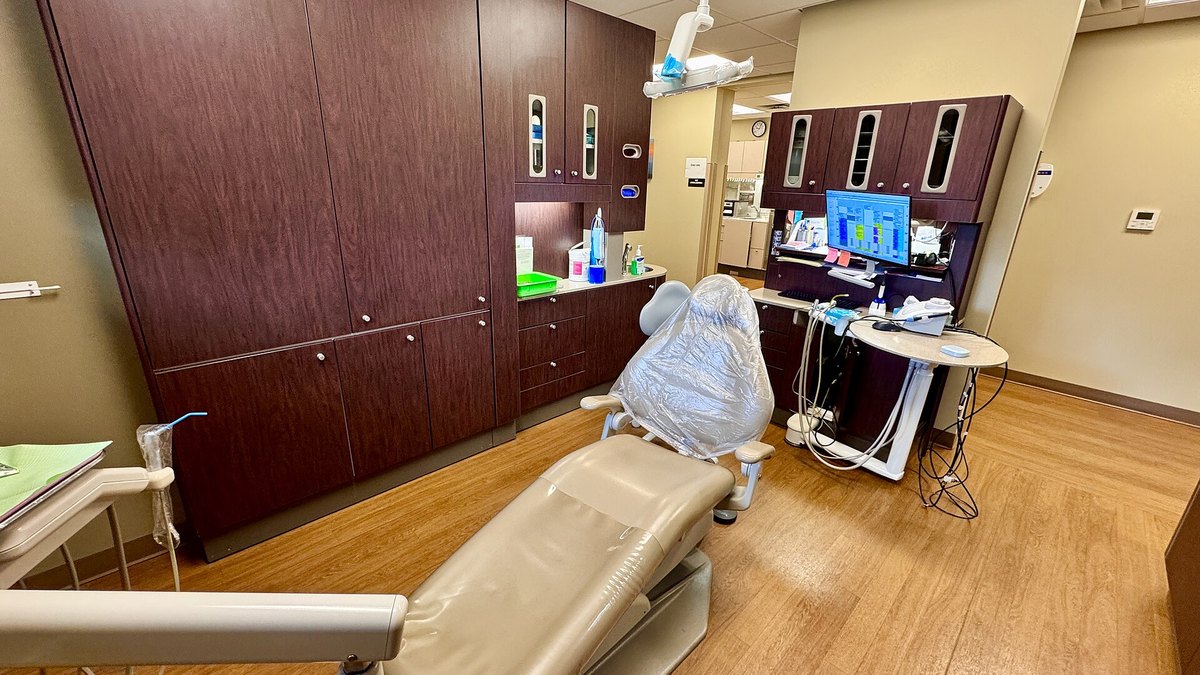
You start a dental practice by holding a dental license in the state where you will work, confirming that state lets you own the practice the way you plan to, then financing the build-out or purchase, registering the office's x-ray machines and your DEA number, and setting up the safety, billing and staffing basics before the first patient. The license and the money are the hard parts; the registrations are paperwork you schedule around them.
Budget is the biggest unknown. A lender writing in ADA News says opening a practice often takes $500,000 at minimum, and lender Panacea Financial sketches a sample start-up budget of $400,000-500,000 for construction alone on about 2,500 square feet, plus $200,000-400,000 for equipment and $100,000+ of working capital. Those are lender estimates, not government data, so check them against local bids.
The market has shifted under new owners. The ADA Health Policy Institute reports that 72.5% of U.S. dentists were private practice owners in 2023, down from 84.7% in 2005, and that 16% were affiliated with a dental support organization (DSO) in 2024. Ownership now tends to come later in a career, not never.
Get licensed in the state where you will practice
Dental licenses are issued by each state's board of dentistry. The ADA says every candidate must meet three basic requirements: an educational requirement (nearly all states want a D.D.S. or D.M.D. from a CODA-accredited program), a written exam, and a clinical assessment. All U.S. licensing jurisdictions require the Integrated National Board Dental Examination (INBDE), launched in August 2020 to replace the NBDE Part I and Part II. Which clinical assessment is accepted varies by state, so check the board before you book one.
The Bureau of Labor Statistics says dentists must be licensed in the state in which they work, and that specialists such as orthodontists also need postdoctoral training. If you plan to open in a state other than the one where you trained or practice now, start that board's application early.
Decide whether to build new or buy
A start-up (often called a de novo practice) means signing a lease, building operatories and finding every patient yourself. Buying an existing practice gets you staff, equipment and patients on day one but a purchase price instead of a construction bill. Panacea Financial notes that acquisitions provide immediate cash flow, while start-ups need months to build patient volume.
The two dentists profiled in ADA News in April 2026 both bought rather than built. One, buying in Bend, Oregon, put together a lender, an attorney and a certified public accountant, and said one of the biggest challenges turned out to be negotiating the lease, not financing. The other spent years in DSO-affiliated practices before buying a practice in Riverside, California, in March 2023.
Check who may own a dental practice in your state
States set their own rules on ownership. Maryland's is blunt: Health Occupations section 4-103 says only an individual or individuals licensed by the Board to practice dentistry, or a dental professional corporation, may own a dental practice, and only a licensed dentist may direct clinical care. Other states draw the line differently, which is why outside groups usually support practices through management agreements rather than owning the clinical side outright.
That is the DSO model. The ADA Health Policy Institute counts a practice as DSO-affiliated if some outside entity manages some or all of its non-clinical functions such as billing, marketing or human resources. HPI's chief economist, Marko Vujicic, says DSO status is not about practice size but a particular type of business model, so even a single-dentist office can be DSO-supported.
Before you choose a business structure, read your state dental practice act or ask the board, and have an attorney confirm that your entity, partners and any management contract fit the rules.
What a new dental practice costs
No government agency publishes an average start-up cost for dental offices, so the figures here come from lenders. Writing for ADA News in March 2025, a Panacea Financial executive said opening a practice often requires $500,000 at minimum, covering equipment and technology, the lease or purchase of space, design and construction, licensing, permits, insurance, marketing and working capital.
Panacea's own start-up guide gives a sample budget and says construction currently averages $200-$250 per square foot, higher in competitive markets:
- Construction and build-out$400,000-500,000 for about 2,500 square feet, including tenant improvements, permits and a 15-20% contingency fund
- Equipment and technology$200,000-400,000 for chairs, operatory equipment, imaging, sterilization, furniture and IT
- Soft costs$50,000-75,000 for legal and design fees, lease deposits, first supplies, credentialing and licensing
- Working capital$100,000+ minimum recommended, about 6-9 months of operating expenses
The same guide advises starting with 1,500-2,000 square feet and 3-4 operatories, targeting 2,500+ residents per general dentist (6,000 per provider for pediatric practices), negotiating a tenant improvement allowance (it cites $25-50 per square foot as a standard), and budgeting $25,000 for a first-month marketing launch and $2,000-3,000 a month after that.
Financing: dental lenders and SBA 7(a)
Specialty health care lenders are the usual route. The ADA News expert column says some offer terms like up to 100% financing, and Panacea advertises 100% financing while suggesting personal reserves of 10% or more of the anticipated loan amount.
The government-backed option is the SBA 7(a) loan, which you apply for through a participating lender and which tops out at $5 million. SBA's terms page lists the guarantee and maximum maturities:
- SBA 7(a) maximum loan$5 million
- SBA guarantee85% for loans up to $150,000; 75% for loans greater than $150,000
- Maximum maturity25 years for real estate, 10 years for equipment, working capital generally 10 years or less
Plan for a slow first year. Panacea's planning assumptions are minimal revenue in months 1-3, gradual patient growth over 6-12 months, and break-even typically in months 8-18, and it says many new owners keep working part-time as associates until the practice can support them.
Register the office: x-ray, DEA and IDs
Dental x-ray units are registered with the state radiation program, not the dental board. In Virginia, the Department of Health requires every x-ray machine owned or possessed in the state to be registered; the installer files FDA Form 2579, VDH recommends registering within 30 days, and dental machines must be inspected within a 3-year frequency. In California, the California Dental Association says (in a 2018 FAQ) that the owner of a new practice registers the facility and its machines with the state Department of Public Health on form RH 2261N, and that practices in Los Angeles and San Diego counties also need a county plan check.
If you will prescribe, administer or dispense controlled substances, the DEA Practitioner's Manual says you must hold a state license first and then register with DEA on Form 224, with a separate registration for each location where controlled substances are stored, administered or dispensed. Registration runs 36 months, and a 2020 DEA fee rule set the practitioner fee at $888 per three-year cycle; confirm the current fee when you apply.
- National Provider Identifier (CMS)A 10-digit number covered health care providers use in HIPAA transactions
- Employer Identification Number (IRS)Free, issued online directly by the IRS
- DEA registrationForm 224, one per location, valid 36 months, $888 under the 2020 fee rule
You need an NPI before you can bill insurers electronically, and an EIN from the IRS before you hire staff. Insurance network credentialing usually follows, and Panacea counts it among the soft costs.
Set up infection control and OSHA compliance
OSHA says there are no specific OSHA standards for dentistry; dental offices fall under the general industry standards instead. The most important is the Bloodborne Pathogens standard, 29 CFR 1910.1030: any employer with staff exposed to blood must keep a written Exposure Control Plan, review it at least annually, and make the hepatitis B vaccination available at no cost to the employee.
For clinical infection control, the CDC summary for dental settings pulls together its recommendations and says its 2003 dental guidelines, though archived, still serve as the standard of practice for clinical dentistry. Build sterilization flow and staff training around it before opening day.
Know the market you are entering
The BLS says dentists held about 161,400 jobs in 2025, that 78% worked in offices of dentists and 12 percent were self-employed, and that employment is projected to grow 6 percent from 2025 to 2035, with about 4,800 openings a year. The median annual wage for dentists was $176,110 in May 2025.
Ownership is coming later. The ADA Health Policy Institute found that at the earliest career stage only 21% of 2016-20 graduates and 33% of 2011-15 graduates owned practices, versus 63%-70% of those who graduated in 2010 or earlier. By 15-19 years out the gap mostly closes: 81% of 2006-10 graduates owned a practice, against 89% of 1991-95 graduates.
- Dentists who own a private practice (HPI)72.5% in 2023, down from 84.7% in 2005
- Dentists affiliated with a DSO (HPI)8.8% in 2017, 10.4% in 2019, 13% in 2022, 16% in 2024
- DSO affiliation, dentists under 10 years out (HPI)23% in 2022
You will compete with large groups for staff, patients and sites. Heartland Dental, which calls itself America's leading dental support organization, says it supports 3,100+ doctors and 1,900+ practices across 39 states.
A practical starting order
- Secure the license. Pass the INBDE and a clinical assessment your target state accepts, then apply to that board.
- Check the ownership rules. Read your state dental practice act and have an attorney approve your entity and any management agreement.
- Pick start-up or purchase. Compare a build-out budget with the price and cash flow of a practice for sale.
- Study the site. Check population per dentist and competitors before you sign a lease.
- Line up financing. Talk to dental-specialty lenders and an SBA 7(a) lender, and keep working capital for a slow first year.
- Register and equip. Register x-ray units with the state, apply for DEA Form 224 at the new address, get your NPI and EIN, and write the OSHA Exposure Control Plan before patients arrive.
Questions people ask
How much does it cost to start a dental practice?
There is no official figure. A lender writing in ADA News says it often takes $500,000 at minimum, and Panacea Financial sketches $400,000-500,000 for construction, $200,000-400,000 for equipment, $50,000-75,000 in soft costs and $100,000+ of working capital. Get local bids.
Can a non-dentist own a dental practice?
It depends on the state. In Maryland, section 4-103 says only licensed dentists or a dental professional corporation may own a dental practice. Many groups instead provide non-clinical support through a DSO arrangement. Check your state's dental practice act with an attorney.
What exams do I need to get a dental license?
The ADA says all U.S. licensing jurisdictions require the INBDE, nearly all states require a degree from a CODA-accredited program, and most jurisdictions also require a clinical assessment, with acceptance varying by state.
Can I get an SBA loan for a dental practice?
Yes, the SBA 7(a) program lends up to $5 million through participating lenders for uses that include equipment, working capital and buying a business. Dental-specialty lenders also offer start-up loans, some advertising up to 100% financing.
How long until a new dental practice breaks even?
Panacea Financial says break-even is typically achieved in months 8-18 and full capacity in years 2-3, which is why it recommends at least $100,000 of working capital. Your market and marketing will move that timeline.
Sources
- ADA: Licensure Overview · Three licensure requirements, CODA, INBDE, clinical assessment
- BLS Occupational Outlook Handbook: Dentists · Jobs, employers, pay and outlook
- ADA Health Policy Institute: Dental practice research · Practice ownership 2005 and 2023; DSO affiliation 2024
- ADA News: More dentists affiliating with DSOs (2023) · DSO affiliation trend and definition
- ADA News: Younger dentists still become practice owners (2025) · Ownership by graduation cohort
- ADA News: Making the leap (2026) · Two dentists who bought practices
- ADA News: Ask the Expert on financial preparation (2025) · Lender view of minimum start-up cost and financing
- Panacea Financial: 12 tips for starting your own dental practice · Lender sample start-up budget, ramp-up and site guidance
- Maryland Health Occupations 4-103 (FindLaw) · Who may own a dental practice in Maryland
- DEA Practitioner's Manual · Who must register, Form 224, per-location rule, 36-month term
- Federal Register: DEA registration fee rule (2020) · $888 practitioner fee per three-year cycle
- Virginia Department of Health: Dental X-ray Machines · X-ray registration, Form 2579, inspection frequency
- California Dental Association: Radiation Safety FAQ (2018) · Facility and machine registration in California
- OSHA: Dentistry · No dentistry-specific standard; general industry rules apply
- OSHA: Bloodborne Pathogens standard 1910.1030 · Exposure Control Plan and hepatitis B vaccination
- CDC: Infection prevention practices in dental settings · Basic expectations and the 2003 guidelines
- CMS: National Provider Identifier Standard · What an NPI is
- IRS: Get an EIN · Free EIN online
- SBA: 7(a) loans · Loan uses and $5 million maximum
- SBA: 7(a) terms, conditions and eligibility · Guarantee percentages and maturities
- Heartland Dental: About us · Supported doctors, practices and states
Figures were read from the linked pages on November 3, 2026. Costs are lender estimates, state rules and fees change, and the 2018 and 2020 sources are dated. This is not legal, financial or licensing advice.
Top photo: Harrison Keely / CC BY 4.0 via Wikimedia Commons