How Do You Start a Knife Sharpening Business in 2027?
You start a knife sharpening business by learning to put a consistent edge on many kinds of knives, buying a small equipment kit, registering the business where you live, and then finding customers such as home cooks and restaurants. The skill and the customer list matter more than the gear: a basic kit is cheap compared with most businesses, but the paying customers are what you have to build.
Startup figures vary widely by who is writing. One guide from Seriously Fast Sharpening says startup cost is "under $500 all-in," while a guide from the payments company JIM puts a professional setup at $1,250 to $3,800. Both are published opinions, not quotes, and each is attributed below.
Licensing is local. The SBA says requirements and fees vary by activity, location and government rules, so check your own city, county and state before you take a customer. None of this is financial or legal advice.
Decide what kind of sharpening you will do
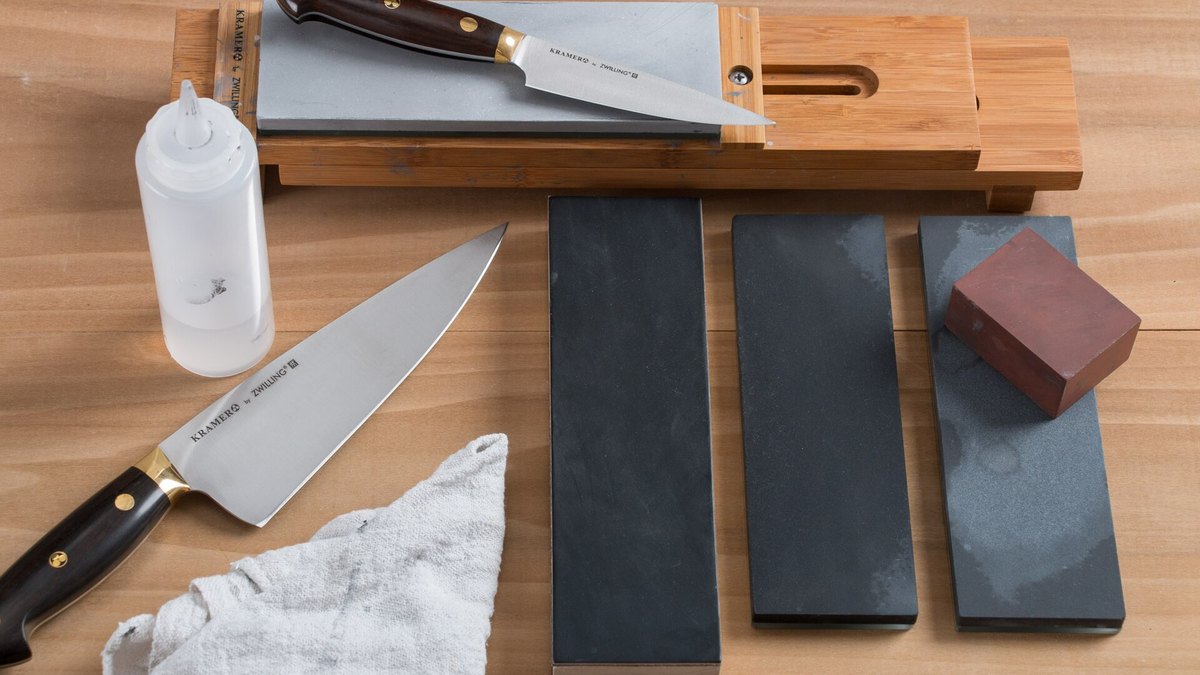
Most people start in one of a few ways. The tools and the customers are different for each, so choose before you buy equipment.
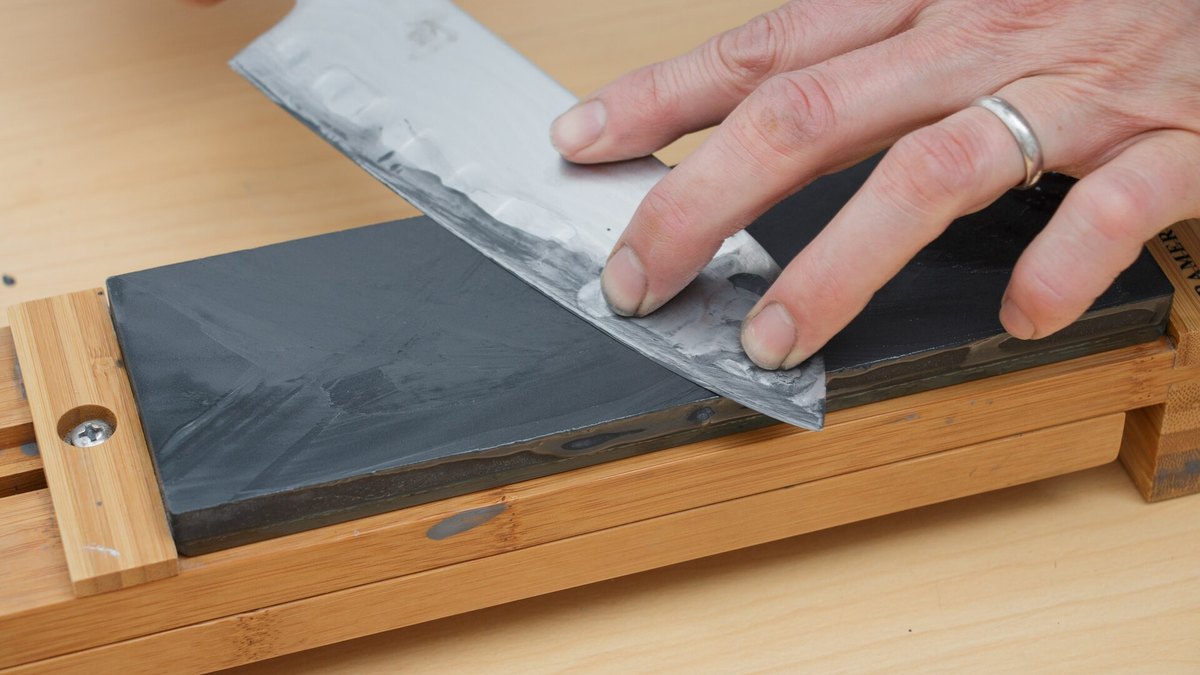
- Whetstones and hand sharpening. Slow, but it needs little equipment and suits chef knives and fine kitchen cutlery. The photo above shows a chef knife on a stone held in a block.
- Guided systems. A clamp and angle guide hold the knife at a set angle. Makers such as Wicked Edge sell these.
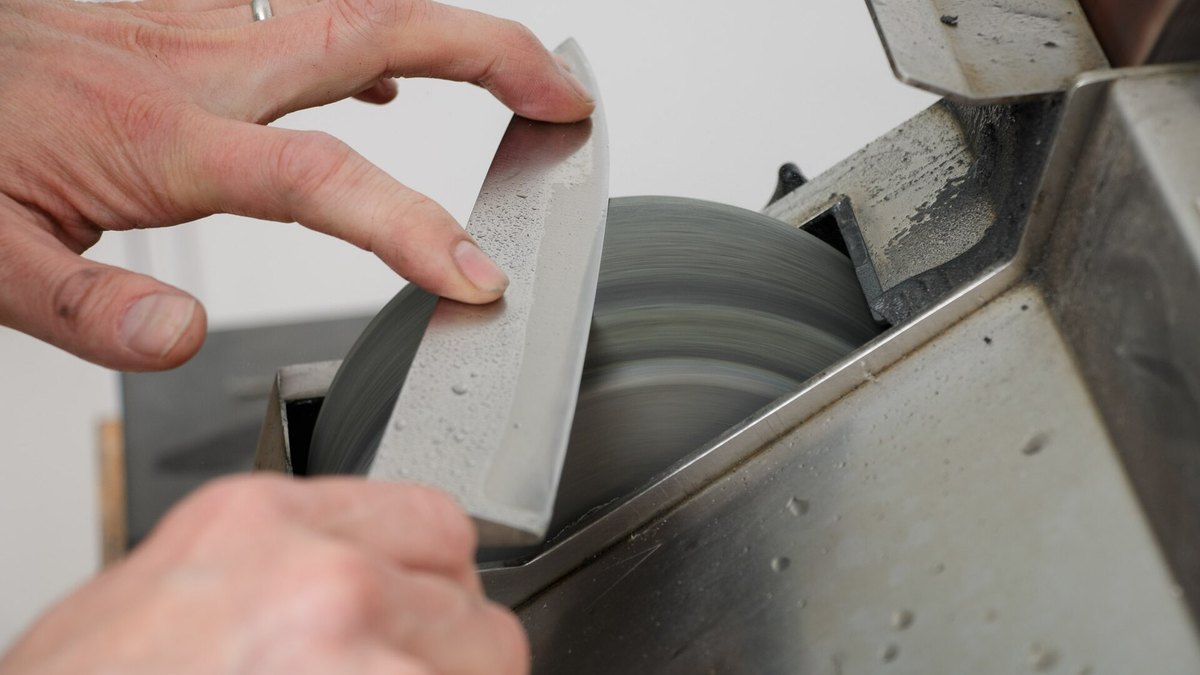
- Belt grinders and wheels. Faster for volume work. The JIM guide calls the belt grinder the largest single expense in a professional setup.
Pick the method that matches the knives your first customers own, and learn it on your own and friends' knives before charging anyone.
What equipment costs, according to the makers and guides
Prices below come from the Wicked Edge store and from two published startup guides. They change, so confirm before you buy.
- Wicked Edge Venture Portable Knife Sharpener$42.00 on the maker's store
- Wicked Edge Venture Pro Portable Knife Sharpener$189.00 on the maker's store
- Wicked Edge Carbon WE40$209.00 on the maker's store
- Work Sharp Ken Onion Elite (grinder)Listed at $240 with a blade grinder attachment, per Seriously Fast Sharpening
- Professional belt grinder$800 - $2,500, per JIM
- Quality whetstone$60 to $150 for a stone from brands like Shapton, per JIM
Sources: Wicked Edge, Seriously Fast Sharpening and JIM. The two guides disagree on the total, which shows how much depends on your method. Seriously Fast Sharpening counts a core kit of grinder, belts, strop, safety gear and consumables at just under $480, and JIM lists a professional setup at $1,250 to $3,800 with $200 - $500 for whetstones and honing rods.
Register the business and check local rules
Licensing varies by place, so there is no single rule to state. The SBA says "Industry requirements often vary by state" and that local governments determine registration, licensing and permitting requirements, and that you might need licenses and permits from the county or city. It adds that business license fees vary.
Ask your city or county clerk what a sharpening service needs. If you plan to work from home, the SBA notes that zoning ordinances can still apply even to home-based businesses. If you plan to work from a van or trailer, also ask about local rules for mobile businesses.
Structure matters too. The SBA says your business structure affects how much you pay in taxes and shapes personal liability. The IRS says you never have to pay a fee for an EIN. Whether you need one depends on your situation, for example if you hire staff.
The JIM guide lists a limited liability company registration at $100 - $500 and says license fees run from under $50 in some rural counties to several hundred dollars in major cities. Your own cost will depend on where you register.
Sales tax, insurance and the shop itself
The SBA says income tax, sales tax, property tax and corporate taxes can vary significantly from place to place. Whether sharpening services are taxable in your state is something to ask your state revenue department, because the sources read for this page do not say.
On insurance, the JIM guide warns against assuming that a homeowner's policy covers a home-based business, and it cites Insureon for general liability averaging about $538 per year. Ask an insurance agent to quote your own work, since you will be handling customers' knives and running powered equipment.
What to charge, and what income claims to believe
Published rates differ. JIM says pricing is typically $1 to $2 per inch of blade, or a flat rate such as $8 for a standard chef's knife and $12 for a serrated one. Seriously Fast Sharpening says pricing is $10 to $20 a knife by size and states a pickup minimum of $150.
Income figures are the weakest part of the published advice. JIM gives an illustrative example of 25 knives a week at an average of $10 each, about $1,000 a month, and the page gives no source for it. Seriously Fast Sharpening's author reports his own results of $25,000 over the first 6 months and about $60,000 in the first full year. Those are one person's claims, not typical results, and neither source is an independent survey.
Find your first customers
Seriously Fast Sharpening describes building from a part-time start and reviews, and a restaurant account combined with a residential route. Pickup and drop-off from restaurants can fill a day, which is why that guide sets a minimum order. These are one operator's experience, so test the idea in your own area.
A practical first step is to sharpen a few knives for people you know, ask for honest feedback and a written review, and then approach local restaurants with a clear price list and turnaround time.
Check before you spend
- Price your method. Add the cost of your chosen equipment, consumables, safety gear and registration from the makers and guides above, then compare with the per-knife rate you can honestly charge.
- Call your city or county. Ask what license, zoning or permit applies to your address or vehicle.
- Ask about tax and insurance. Confirm sales tax treatment with your state and get an insurance quote.
- Be wary of income promises. Any program that sells you a license or a route with promised earnings should be compared with the sources above.
Questions people ask
How much does it cost to start a knife sharpening business?
It depends on the method. One published guide says startup cost is under $500 all-in, and another puts a professional setup at $1,250 to $3,800. Wicked Edge lists its Venture Portable Knife Sharpener at $42.00 and its Carbon WE40 at $209.00. Sources: Seriously Fast Sharpening, JIM, Wicked Edge.
Do I need a license to sharpen knives for money?
It depends on your state, county and city. The SBA says local governments determine registration, licensing and permitting requirements, so ask your local clerk.
Do I need an EIN?
The IRS says businesses need an EIN to manage their taxes in the situations it lists, and that an EIN never costs a fee. Check the IRS page against your own situation.
How much should I charge per knife?
Guides differ. JIM says typically $1 to $2 per inch of blade or a flat rate such as $8 for a standard chef's knife, and Seriously Fast Sharpening says $10 to $20 a knife by size. Set your own rate from your costs and local competition.
Can I run it from home?
Possibly. The SBA says you might have fewer zoning restrictions if you base your business out of your home, but zoning ordinances can still apply, so ask your city or county first.
Sources
- SBA: Apply for licenses and permits · Licensing, zoning, taxes vary by place
- SBA: Choose a business structure · Structure, taxes and liability
- IRS: Get an employer identification number · EIN is free
- Wicked Edge store · Maker prices for sharpeners
- Seriously Fast Sharpening: start guide · Startup cost, rates, operator results
- JIM: how to start a knife sharpening business · Cost ranges, rates, insurance
- Wikimedia Commons photos by Didriks (CC BY 2.0) · Page photos
Figures were read from the linked pages on November 4, 2026. Prices are single listings and change; startup costs, rates and income figures are the published claims of the named authors, not verified results. This is not financial or legal advice.
Top photo: Didriks / CC BY 2.0 via Wikimedia Commons