How Do You Start a Veterinary Clinic in 2027?
You start a veterinary clinic by getting a veterinary license (the NAVLE is required in every U.S. and Canadian jurisdiction), checking whether your state lets you own the practice, registering the clinic as a premises with the state board, registering with the DEA if you will stock controlled substances, and then funding the buildout and equipment. The license, the premises permit and the DEA registration are what let you open the door; the money decides how fast.
Cost is the biggest variable and the sources disagree. Lender Crestmont Capital says a new practice typically costs $500,000 to more than $1 million including buildout and equipment, while the educational site Veterinary Practice Loans gives a wider $300,000 to over $1 million. Both are vendor or lender estimates, not government data. A JAVMA News article quotes a young mobile-clinic owner saying a mobile practice costs way less to start than building or buying a brick-and-mortar.
The SBA says its 7(a) program has a $5 million maximum and can fund equipment, real estate, working capital and changes of ownership, but you apply through a local lender, not SBA. This page is not legal, financial or licensing advice; confirm every requirement with your state veterinary board before you sign a lease or a loan.
Get licensed to practice first
Every clinic needs a licensed veterinarian behind it. The ICVA NAVLE handbook says the North American Veterinary Licensing Examination is a requirement for licensure to practice veterinary medicine in all licensing jurisdictions in the United States and Canada, and has been administered by the ICVA since 2000. The handbook lists the NAVLE application fee at $825 (USD) for testing in the U.S. or Canada.
The sources read for this page do not list the further licensing steps of every state, so ask the board in the state where you will practice what it needs beyond the NAVLE. Several states also tie the clinic to a licensed veterinarian-manager or supervising veterinarian, which is covered below.
Many owners do not start on day one. A JAVMA News article cites 2019 AVMA survey data that owners of companion animal-exclusive practices average 62 years old, and says Veterinary Practice Transitions, a nonprofit online marketplace, connects buyers and sellers of practices. That is a useful reminder that buying an existing practice is a real alternative to starting from scratch.
Decide: start new, buy, or go mobile
The same JAVMA News article gives both sides. Dr. Peter Weinstein, chair of the AVMA Veterinary Economic Strategy Committee, says even in the face of corporatization, independent ownership is usually the way to go, especially for people who want to be in leadership roles. Dr. Alli Reid, a 2018 graduate who opened a mobile clinic in April 2020, says to start out small and that mobile startup costs are way less than building or buying a brick-and-mortar.
A mobile practice still needs to be set up under your state rules; Florida, for example, requires a premises permit for an establishment "permanent or mobile" where a licensed veterinarian practices. The cost sections below assume a brick-and-mortar clinic.
Check who may own the clinic in your state
This is the step many first-time founders skip. Arnall Golden Gregory LLP explains the corporate practice doctrine: a non-veterinarian or general business entity generally cannot own an interest in a veterinary practice or employ veterinarians to practice. Its February 2020 article named New York, New Jersey, Minnesota and North Carolina as states that prohibit it, Connecticut, Georgia and Massachusetts as states with no prohibition, and Florida, Oregon and California as states that do not prohibit it but require a licensed veterinarian-manager to supervise the practice of veterinary medicine.
Rules change. The North Carolina Veterinary Medical Board says that effective January 1, 2025, ownership of a veterinary facility is no longer limited to veterinarians, even though that 2020 article listed North Carolina as a prohibiting state. The board still requires every facility to designate a supervising veterinarian who is licensed and in good standing. Treat any state list that is more than a year or two old as a starting question, not an answer.
If you are a veterinarian opening your own clinic, ownership rules mostly matter when you bring in investors or partners. The AGG article describes a common workaround in restrictive states: the investor buys only the non-regulated clinic assets through a management vehicle, a veterinarian stays the owner and employer of the veterinarians, and the clinic contracts with the management entity. It warns the management agreement must not be too controlling and that a management fee above fair market value may be treated as a sham. Get a health-care or veterinary attorney involved before you sign anything like it.
Register the premises with the state board
A clinic is licensed separately from the veterinarian. Three states show how different the paperwork can be:
- Florida, DBPR Form VM 2 (effective November 2020)Premises permit fee $250; must list the licensed veterinarian responsible for managing the establishment; temporary license until the premise passes inspection
- North Carolina, Form FP-01 (10-2025)Facility permit $150, renewed annually at $150; $225 with a boarding kennel permit; new facilities inspected before seeing clients
- California, Business and Professions Code 4853All veterinary premises must be registered with the board; registration is nontransferable; report a change of owner or operator within 30 days
In Florida, the VM 2 form says that if the establishment's owner is not a Florida-licensed veterinarian, the owner's name is submitted for a statewide criminal records check through the Florida Department of Law Enforcement, and that practicing at an unlicensed establishment is a violation of Section 474.215, Florida Statutes. It lists premises requirements including an emergency telephone answering service available 24 hours a day, a locking secure cabinet if controlled substances are on the premises, and a DEA certificate on the premises. The form is dated November 2020, so confirm the current fee and version with the board.
In North Carolina, the Spring 2025 board bulletin says a facility permit is required before offering any veterinary service to the public and that each facility must designate a supervising veterinarian. At a facility open 159 hours or less per month, the supervising veterinarian must be on site at least 25 percent of the time the facility is open. The current application form adds that owners other than a natural person must be appropriately registered and in good standing.
In California, the board takes premises applications online through BreEZe, per its premises forms page, and Business and Professions Code 4853 requires every veterinary premises to be registered. The state's minimum standards for fixed premises, as published by Cornell's Legal Information Institute, call for a reception room and office, a separate examination room, radiology capability on site or through commercial facilities, working anesthetic equipment, equipment to deliver oxygen in emergencies, and a separate dedicated aseptic surgery room. Check the current regulation text with the board before you design the floor plan.
Register with the DEA for controlled substances
If your clinic will prescribe, administer or dispense controlled substances, you need a DEA registration. The DEA's Practitioner's Manual says every practitioner who dispenses, which includes administering and prescribing, controlled substances in schedules II through V must be registered, that the definition of practitioner includes veterinarians, and that you must have a state license first.
- Application formDEA Form 224, completed online; paper applications no longer accepted
- Registration termValid for 36 months and renewed every three years with Form 224a
- Fee, three-year cycle (Federal Register final rule effective October 1, 2020)$888 for practitioners; the manual says the current fee is shown on the application and is non-refundable
- LocationsA separate registration for each principal place of business where controlled substances are stored, administered or dispensed, with a limited exception for DEA-registered veterinarians under the Veterinary Medicine Mobility Act of 2014
The Federal Register rule is the source for the $888 figure; confirm today's fee on the DEA application, because the rule is from 2020. The manual also says employees of a registered practitioner may administer or dispense under the employer's registration if the state allows it, but that this exemption does not extend to prescribing.
What a new clinic costs
No government agency publishes a clinic start-up cost. Every number below is a lender, builder or educational-site estimate, and the sources do not agree, so treat them as a range to test against local bids.
- Crestmont Capital (commercial lender), total to open a new practice$500,000 to more than $1 million including buildout and equipment
- Veterinary Practice Loans (educational site, may be paid if a loan closes), total startup capital$300,000 to over $1 million
- Terrapin Construction Group (builder), ground-up hard cost for a small general practice of 2,500 to 4,000 square feet$275 to $400 per square foot; excludes land, design fees, loose medical equipment, permitting and pre-opening costs
- Crestmont Capital, clinic buildout$150 to $300 per square foot
- Veterinary Practice Loans, ground-up buildout$225 to $400 per square foot
The per-square-foot ranges overlap but do not match, partly because they measure different things: a builder pricing a new building, a lender quoting a typical buildout, and a site that mixes ground-up and leasehold work. Terrapin says its hard-cost figures leave out land, architectural and engineering fees, loose equipment, permitting and pre-opening expenses, so a quote from a contractor is not your all-in number.
Equipment is where lenders give the most detail. Crestmont lists typical new-equipment ranges for 2026:
- Digital radiography (X-ray)$20,000 to $70,000
- Ultrasound$15,000 to $50,000
- In-house lab analyzers$10,000 to $40,000
- Dental suite$10,000 to $30,000
- Surgical equipment and monitoring$50,000 to $150,000+
- Practice software and IT$5,000 to $25,000
Crestmont adds that refurbished and used equipment generally runs 30 to 50 percent less. Veterinary Practice Loans gives a separate set of planning ranges: medical equipment $100,000 to $300,000, leasehold improvements and surgical build-out $60,000 to $180,000, initial supplies and pharmacy inventory $15,000 to $50,000, and office furniture and lobby $5,000 to $25,000. It describes the equipment figures as internal budgeting benchmarks, not a bid.
Financing with an SBA 7(a) loan
The SBA describes 7(a) as its primary business loan program. Eligible uses include acquiring, refinancing or improving real estate and buildings, working capital, purchasing and installing machinery and equipment, furniture, fixtures and supplies, and a complete or partial change of ownership. The maximum loan is $5 million. To qualify, a business must be an operating for-profit business in the U.S., be small under SBA size standards, be unable to obtain the credit it wants on reasonable terms elsewhere, and be creditworthy. You apply through a local lender, and SBA's Lender Match tool helps you find one.
- SBA guarantee on most 7(a) loans85% for loans of $150,000 or less; 75% above $150,000
- SBA maximum maturityEquipment 10 years or less; real estate 25 years; working capital generally 10 years or less
- Typical SBA 7(a) loan for veterinary services, per Crestmont Capital (lender)About $350,000 to $750,000; 30 to 90 days from application to funding
The guarantee and maturity figures come from the SBA's terms page. The veterinary-specific loan size and timing are a lender's claim and do not come from SBA. Crestmont also says new graduates typically put down 10 to 15 percent. The SBA does not lend directly, so your lender's own underwriting rules decide what you can actually borrow.
Know the corporate chains you will compete with
You will open near consolidators, and their size shapes your market. These figures are each company's own statements:
- Banfield Pet Hospital (Mars), company pageMore than 1,000 hospitals and more than 3,600 veterinarians; founded in Portland, Oregon, in 1955; joined Mars, Incorporated in 2007
- VCA (Mars Veterinary Health)More than 1,000 small animal general, specialty and emergency hospitals across the U.S., Canada and Japan
- Mars Veterinary HealthMillions of pet visits each year across 3,000 veterinary clinics worldwide
- National Veterinary Associates (NVA)A network of 1,000 community hospitals plus 140+ Ethos Veterinary Health specialty and emergency hospitals
The numbers come from Mars Veterinary Health, its home page, Banfield and NVA. They are corporate statements and are not independent counts. For you the practical point is that Dr. Weinstein of the AVMA, quoted earlier, still calls independent ownership usually the way to go despite corporatization.
A practical starting order
- Confirm your license path. Register for the NAVLE and ask your state board what else it requires before you can practice.
- Read your state practice act. Find out who may own a clinic and whether a supervising or managing veterinarian is required.
- Choose new, buy or mobile. Compare a ground-up buildout, a purchase and a mobile start-up against your savings.
- Price it with local bids. Use the lender and builder ranges above to check bids, not to replace them.
- Apply to a lender. Ask about SBA 7(a) and what the lender needs before it will commit.
- Register the premises, then the DEA. File the premises application, schedule the inspection, and apply for DEA Form 224 online once you have a state license and an address.
Questions people ask
Do I need a license to open a veterinary clinic?
You need to be licensed to practice, and the ICVA says the NAVLE is required for licensure in all U.S. and Canadian jurisdictions. Some states also let non-veterinarians own a clinic if a licensed veterinarian supervises, so check your board.
Does the clinic need its own permit?
Usually, yes. Florida requires a $250 premises permit on its VM 2 form, North Carolina requires a facility permit costing $150 on its FP-01 form, and California requires every premises to be registered under Business and Professions Code 4853.
Can a non-veterinarian own a vet clinic?
It depends on the state. Arnall Golden Gregory said in 2020 that some states prohibit it and some require a licensed veterinarian-manager, and the North Carolina board says ownership there is no longer limited to veterinarians as of January 1, 2025.
Do I need a DEA registration?
If the clinic prescribes, administers or dispenses controlled substances, yes. The DEA Practitioner's Manual says veterinarians are practitioners who must register, with a separate registration for each location where controlled substances are stored or dispensed.
How much does the DEA registration cost?
The Federal Register lists $888 for practitioners on the three-year cycle, effective October 1, 2020. The fee is shown on the DEA application, so confirm it there.
How much does it cost to open a veterinary clinic?
Estimates vary: Crestmont Capital says $500,000 to more than $1 million, and Veterinary Practice Loans says $300,000 to over $1 million. These are lender and educational-site figures, not government data.
Can I use an SBA loan to start a vet clinic?
The SBA says 7(a) loans can fund equipment, real estate, working capital and changes of ownership, with a $5 million maximum, through a local lender. SBA does not make the loan itself.
Sources
- ICVA: NAVLE Candidate Handbook 2026-2027 · NAVLE required for licensure in all U.S. and Canadian jurisdictions; $825 fee
- DEA Diversion Control: Practitioner's Manual · Who must register, Form 224, 36-month term, one registration per location
- Federal Register: DEA registration fee rule (2020) · $888 practitioner fee per three-year cycle, effective October 1, 2020
- Florida DBPR: Form VM 2 veterinary premise application · $250 fee, managing veterinarian, owner background check, premises requirements
- California Business and Professions Code 4853 (FindLaw) · Premises registration, nontransferable, 30-day change notice
- California Veterinary Medical Board: premises forms · Online premises applications through BreEZe
- 16 CCR 2030 minimum standards (Cornell LII) · Fixed premises facility and surgery standards
- North Carolina Veterinary Medical Board: Spring 2025 bulletin · Facility permit, ownership no longer limited to veterinarians, supervising veterinarian
- North Carolina Veterinary Medical Board: Form FP-01 · Permit fees $150 and $225, owner registration
- Arnall Golden Gregory LLP: Vet Clinic Acquisitions Require Regulatory Diligence · Corporate practice doctrine and management-company workaround (2020)
- SBA: 7(a) loans · Uses, $5 million maximum, eligibility, how to apply
- SBA: 7(a) terms, conditions and eligibility · Guarantee percentages and maximum maturities
- Crestmont Capital: Veterinary Practice Financing Statistics 2026 · Lender estimates of startup cost, equipment ranges and SBA loan size
- Veterinary Practice Loans: cost to build a vet clinic · Educational-site startup and equipment ranges
- Terrapin Construction Group: cost to build a veterinary clinic · Builder hard-cost ranges and exclusions
- JAVMA News: Young veterinarians bring unique perspective to ownership · Mobile start-ups, ownership views, practice marketplace (2020)
- Mars Veterinary Health: Our Companies · Banfield, VCA, BluePearl and AniCura counts
- Mars Veterinary Health: home · 3,000 clinics worldwide
- Banfield Pet Hospital: About us · Hospitals, veterinarians, history with Mars
- National Veterinary Associates: About us · Hospital network sizes
Figures were read from the linked pages on October 31, 2026. Costs are lender, builder or educational-site estimates, state fees and forms change, and the 2020 sources are dated. This is not legal, financial or licensing advice.
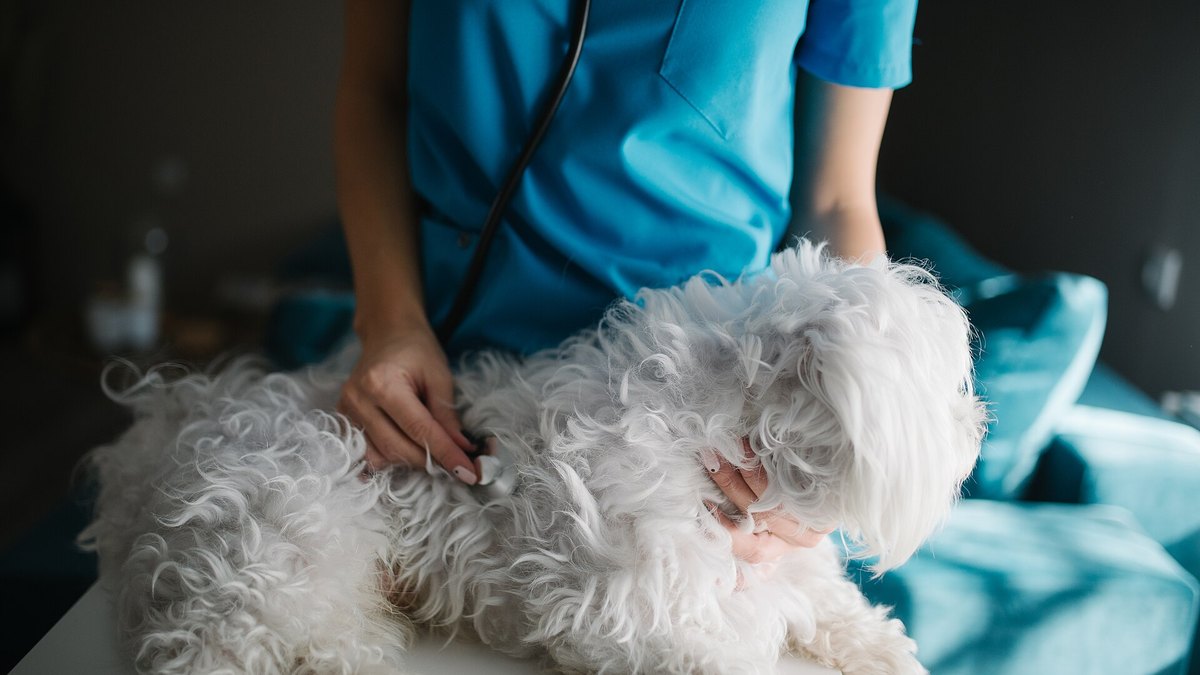
Top photo: Nenad Stojkovic / CC BY 2.0 via Wikimedia Commons