How do you start an AI consulting agency business in 2027?
You start an AI consulting agency the way you start any consulting business, then add the parts that are specific to AI: pick a niche and a defined offer, understand your model vendors' data terms before you touch client data, put ownership and review duties in your client contracts, track the AI rules that apply to your clients, and prove results without overpromising.
The U.S. Bureau of Labor Statistics says most management analysts work as consultants on a contractual basis, and the U.S. Small Business Administration says most small businesses need a combination of federal and state licenses and permits. On the AI side, the Federal Trade Commission has said there is no AI exemption from the laws on the books.
This page gives no income promises. No source read here states what an AI consulting agency earns or charges, so none is quoted.
Pick a niche and a defined offer
The BLS management analysts page describes the closest government occupation: analysts who recommend ways to improve an organization's efficiency. It says most work as consultants on a contractual basis, that many enter the occupation with several years of work experience, and that 14 percent of jobs are held by self-employed workers. It does not break out AI consultants, so treat it as context, not a forecast for your agency.
Your niche decides how much risk you carry. Anthropic's Usage Policy lists high-risk areas that include legal, medical, finance, insurance, employment and academic testing. For those uses it requires that a qualified person meaningfully review a high-risk recommendation with the authority to change it, and that the affected individual be clearly told AI was used. The same policy excludes internal drafting or research and general education content from those requirements. An agency that starts with internal drafting and research workflows faces fewer of those duties than one that automates hiring or insurance decisions.
Set up the business basics
The SBA's licenses and permits page says most small businesses need a combination of licenses and permits from both federal and state agencies, that local governments determine registration, licensing and permitting requirements, and that zoning ordinances can still apply to home-based businesses. It also says the federal government requires every business with employees to carry workers' compensation, unemployment and disability insurance, and that some states require more.
The SBA's business structure page says a sole proprietor can be held personally liable for the debts and obligations of the business, while LLCs protect you from personal liability in most instances. It adds that consulting with business counselors, attorneys and accountants can prove helpful. For an agency that will handle client data, that advice is worth taking before the first contract.
Read your model vendors' terms before you touch client data
Your agency will build on someone else's models, so the vendor's terms become part of your promise to clients. Two examples show what to look for.
- OpenAI API. The data controls guide says that as of March 1, 2023, data sent to the OpenAI API is not used to train or improve OpenAI models unless you explicitly opt in. It also says abuse monitoring logs are retained for up to 30 days by default, and that Zero Data Retention controls are subject to prior approval by OpenAI and acceptance of additional requirements.
- Anthropic commercial terms. The Commercial Terms say the customer owns its Outputs and that Anthropic may not train models on Customer Content from the Services. They permit use to power products and services the customer makes available to its own customers and end users, but bar building a competing product and reselling the Services unless Anthropic approves. They also say customers must notify their Users that Outputs may be inaccurate and that the customer is responsible for all activity under its account.
- What this means for you. A client who asks where its data goes, how long it is kept and who is liable for misuse needs answers that match these documents. Read the current version of each vendor's terms yourself, because they change.
The Anthropic Usage Policy page lists an effective date of Nov 12, 2026, so confirm which version applies when you sign up.
Put ownership, review and disclosure in your client contracts
No source read for this page supplies a template contract, so have a lawyer draft yours. The sources above do point to topics worth covering.
- Output ownership. Vendor terms say who owns outputs between the vendor and you, so your contract should say who owns them between you and your client. The U.S. Copyright Office's AI page notes that Part 2 of its AI report, published January 29, 2025, addresses the copyrightability of outputs created using generative AI.
- Data handling. State which client data goes to which vendor, whether retention controls such as Zero Data Retention are in use, and who may access it.
- Human review. If the work touches a high-risk area under a vendor policy, say who the qualified reviewer is and that the affected individual will be told AI was used.
- Accuracy notices. Anthropic's terms require customers to notify their Users that Outputs may be inaccurate, so pass that notice through to your client's end users where it applies.
Track the AI rules your clients face
Which rules matter depends on where your clients operate and what the AI does. These three can be sourced.
- European Union. The European Commission's AI Act page says the Act entered into force on 1 August 2024, that prohibited practices and AI literacy obligations applied from 2 February 2025, that general-purpose AI obligations applied from 2 August 2025, and that the Act became applicable on 2 August 2026 with some exceptions. It says high-risk rules for Annex III use cases such as biometrics, education and employment were extended to 2 December 2027, and rules for high-risk systems embedded in regulated products apply from 2 August 2028.
- Colorado. McDermott Will & Schulte's analysis says SB 26-189 was signed May 14, 2026, repeals and reenacts the earlier SB 205 with a narrower, notice-based approach, and pushes the effective date to January 1, 2027. It says the notice requirements apply only to automated decision-making technology used in consequential decisions, apply to developers and deployers, and come with a 60-day notice-and-cure opportunity before the attorney general enforces. It also reports an April 27, 2026 order blocking enforcement of SB 205 after xAI sued.
- Federal advertising law. The FTC's Operation AI Comply announcement of September 25, 2024 describes five law enforcement actions against businesses that used AI hype or sold AI tools that could be used deceptively or unfairly.
A law firm's summary is not the statute. Confirm any state or EU obligation with counsel before telling a client it does or does not apply.
Prove results without overpromising
The FTC announcement is the clearest warning for a new agency. It says Chair Lina M. Khan stated that there is no AI exemption from the laws on the books and that using AI tools to trick, mislead or defraud people is illegal. Among the cases it lists, Ascend Ecom allegedly promised AI-powered tools would generate passive income, and DoNotPay marketed itself as the world's first robot lawyer. A proposed settlement with DoNotPay requires a $193,000 payment.
For an agency, the practical lesson is to promise only what you can show. Agree on a measurable baseline with the client before you build, report against it, and keep the evidence.
For a risk checklist you can share with clients, the NIST AI Risk Management Framework was released on January 26, 2023 and is intended for voluntary use. NIST released its Generative AI Profile, NIST-AI-600-1, on July 26, 2024.
Questions people ask
Do I need a license to run an AI consulting agency?
No source read for this page names an AI-specific license. The SBA says most small businesses need a combination of licenses and permits from federal and state agencies and that local governments determine registration, licensing and permitting requirements, so check with your state and local government.
Can I put client data into ChatGPT or Claude?
It depends on the product tier and the vendor's terms. OpenAI says API data is not used to train its models unless you opt in and that abuse monitoring logs are kept for up to 30 days by default. Anthropic's commercial terms say it may not train models on Customer Content from its Services. Read the current terms and get the client's agreement first.
Does the EU AI Act apply to my agency?
The European Commission says the Act became applicable on 2 August 2026, with some exceptions, and that Annex III high-risk rules were extended to 2 December 2027. Whether it applies to you depends on your clients and the systems you build, so ask a lawyer.
Is there an AI law I should watch in the United States?
Colorado's SB 26-189, signed May 14, 2026, is effective January 1, 2027 according to McDermott Will & Schulte. The FTC also says there is no AI exemption from existing law.
Can I resell access to a model vendor?
Anthropic's commercial terms bar reselling the Services unless Anthropic expressly approves, while allowing use to power products and services for your own customers. Check each vendor's terms.
How much does an AI consulting agency earn?
No source read for this page gives a figure for AI agencies, so we do not quote one. The BLS page covers management analysts generally, not AI consultants.
Sources
- BLS: Management analysts · Consultants on contract, experience, self-employed share
- SBA: Apply for licenses and permits · Licenses, local rules, zoning and employer insurance
- SBA: Choose a business structure · Sole proprietorship and LLC liability
- OpenAI: Data controls in the API platform · No training by default, 30-day abuse logs, Zero Data Retention approval
- Anthropic: Commercial Terms of Service · Output ownership, no training, resale limits, user notice
- Anthropic: Usage Policy · High-risk areas, human review and disclosure
- European Commission: AI Act · Application dates and high-risk rule extensions
- McDermott Will & Schulte: Colorado AI law in flux · SB 26-189, January 1, 2027 effective date, enforcement
- FTC: Operation AI Comply · Five enforcement actions and the no AI exemption statement
- NIST: AI Risk Management Framework · Voluntary framework and Generative AI Profile
- U.S. Copyright Office: Artificial Intelligence · Part 2 report on copyrightability of AI outputs
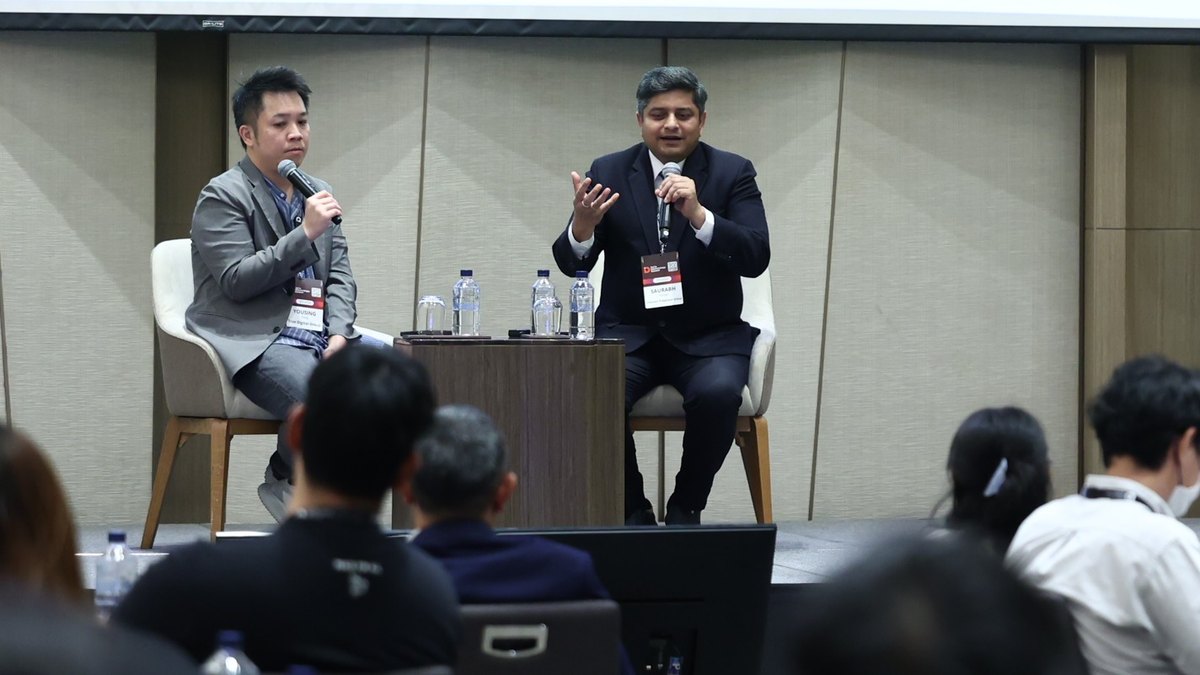
- Hero photo: "Data Demystified Summit 2024" by AgathInfo, CC BY-SA 4.0, Wikimedia Commons · Credit for the photo at the top of this page
Facts were read from the linked pages on November 7, 2026. Laws, vendor terms and thresholds change, so check each source for current terms. This is general information, not legal or tax advice, and no earnings figures are promised.