How Do You Start an EV Repair Shop Business in 2027?
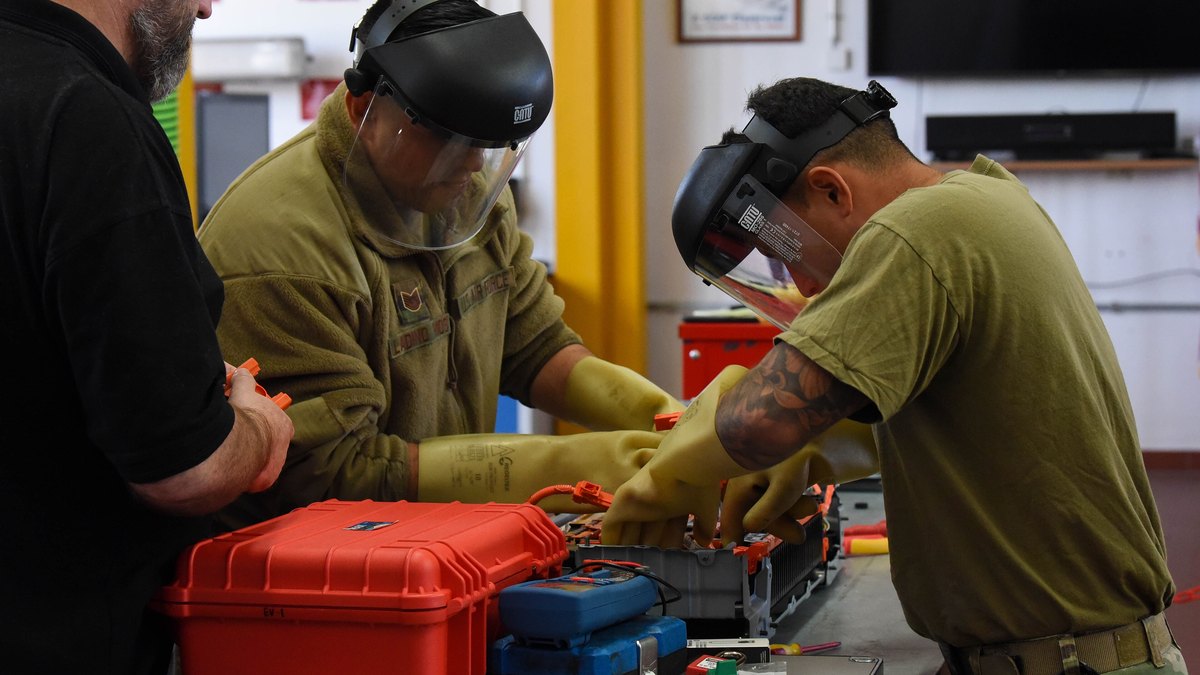
You start an EV repair shop the way you start any auto repair business, then add the parts that make EVs different: a state repair-shop registration where your state requires one, technicians trained and certified for high-voltage work, a written lockout/tagout and electrical safety program, the right lifts and insulated PPE, and insurance that reflects the value of customer vehicles on your property. The certification most shops start with is ASE L3 (Light Duty Hybrid/Electric Vehicle Specialist), which requires that a technician has already passed the ASE A6 and A8 tests.
Two facts shape the plan. First, the work is a real career field: the Bureau of Labor Statistics reports a May 2025 median of $50,620 for automotive service technicians and says some technicians primarily focus on electric vehicles. Second, the market is not growing in a straight line: Cox Automotive estimates 247,226 EVs were sold in the second quarter of 2026, down 20.5% from the same quarter of 2025. Plan around the EVs already on the road, not just new sales.
Costs below are only figures a regulator, test provider or seller publishes, each with whose number it is. Total startup cost, scan tool and battery-service equipment prices, insurance premiums and OEM program fees are not published by the sources cited here, so none are given. This page is not legal, insurance or financial advice; confirm rules with your state and an insurance broker before you commit money.
Decide what kind of EV shop you are building
The BLS Occupational Outlook Handbook says some technicians primarily focus on electric vehicles, handling routine maintenance and diagnosing battery performance, regenerative braking and electric motor efficiency. That description is a useful scope for a first shop: routine service and diagnostics on vehicles with a high-voltage system, with high-voltage battery pack repair as a later step rather than a day-one promise.
ASE draws the line the same way. Its high-voltage safety standard defines three levels of worker. Level One is an electrically aware person who is near EVs but not doing high-voltage work. Level Two is a high-voltage vehicle technician who isolates and secures the high-voltage system and works on de-energized components. Level Three is a high-voltage vehicle and battery technician who has specific battery pack training and can perform live work, which ASE says is not electrically safe. Decide which level you will staff before you buy equipment.
- BLS: median pay, automotive service technicians and mechanics (May 2025)$50,620 per year ($24.34 per hour).
- BLS: outlook for the occupationEmployment projected to grow 5 percent from 2025 to 2035, faster than the average for all occupations, with about 66,200 openings per year on average. These are figures for all automotive technicians, not for EV specialists.
The market: sales are down, so look at the cars already on the road
Cox Automotive and Kelley Blue Book estimated, as of July 9, 2026, that 247,226 EVs were sold in the U.S. in the second quarter of 2026 against 311,064 in the second quarter of 2025, a change of -20.5%. Year to date it counted 462,892 against 607,653, a change of -23.8%.
A repair shop earns from the vehicles on the road, not from this quarter's sales. No source cited here gives a count of EVs in operation in your area or a published figure for EV repair demand, so none is given. Look up registrations with your state motor vehicle agency, and talk to local fleets and independent shops before you lease a building.
Certifications: ASE L3 and what it takes to sit it
ASE's L3 test is the standard credential for hybrid and electric diagnosis. ASE says you must have passed both the Automobile Electrical/Electronic Systems (A6) and Engine Performance (A8) tests before you register. The test has 45 scored questions, a 2 hour limit, and covers diagnosis of the battery system, internal combustion engine, drive system, power electronics and hybrid supporting systems. Certifications are valid for five years.
- ASE test fees, certification (L1-L4 advanced level tests)$124 per test plus a $34 registration fee per order.
- ASE test fees, recertification (L1-L3 advanced level tests)$124 per test plus a $34 registration fee per order.
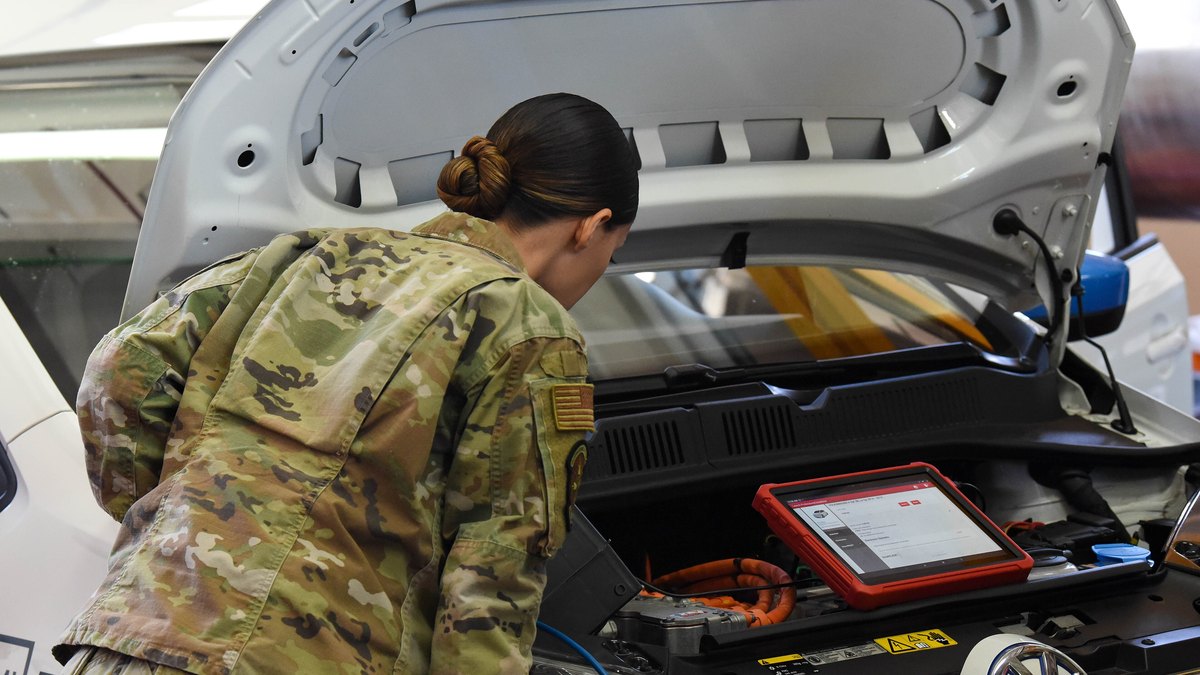
The ASE page does not say a shop must hold an ASE certificate to operate, and no source cited here does either. A certification is how you show customers, insurers and your own staff that a technician has been tested, not a license to open the doors. ASE's xEV safety standard separately says Level Two and Level Three workers must be trained, and that the shop must align with NFPA 70E, OSHA and regional or local requirements.
OEM and manufacturer training: what we could and could not confirm
Automaker programs are a harder source of training for an independent shop. A December 2021 Repairer Driven News report on an OEM panel said GM's training materials are online and "will require a subscription", and that Lucid's body repair program is by invitation only, with about 50 U.S. shops and roughly 50 more planned. That article does not directly address independent mechanical shops, it is several years old, and we did not find a current, sourced list of which automakers open their EV training to independent shops. Ask each brand you want to service what access it offers and at what price.
Aftermarket training exists. In April 2024 Bosch and AVI announced three one-day, eight-hour EV courses in U.S. cities, capped at 20 attendees each and aimed at technicians at an intermediate skill level. The cost was not stated in the article, and the tour is a past event, so treat it as an example of what to look for, not a current offer.
High-voltage safety training and the rules that apply
There is no OSHA standard written only for EV shops in the sources cited here, but general rules apply. Under 29 CFR 1910.332, OSHA's electrical training standard, employees who face a risk of electric shock must be trained. Its Table S-4 of higher-risk occupations includes mechanics and repairers, with an exception for workers whose jobs never bring them close enough to exposed circuits of 50 volts or more to ground for a hazard to exist. ASE says battery packs typically range from 100 V to 400 V DC and can reach 800 V DC in new battery electric vehicles, so the high-voltage systems you will service are well above that threshold. Whether a specific task counts as exposure is a question for a safety professional or your state OSHA program.
Qualified persons, meaning those permitted to work on or near exposed energized parts, must at minimum be trained to distinguish exposed live parts, determine their nominal voltage and know the clearance distances in 29 CFR 1910.333(c). The training can be classroom or on-the-job.
Oregon OSHA's automotive fact sheet adds that the lockout/tagout standard, 1910.147, applies to all general industry workplaces including automotive repair shops, and that employers must build a hazardous energy control program tailored to their workplace. Oregon runs its own state plan, so read your own state's version.
- Insulated gloves. ASE's standard says rubber insulating gloves must be worn on both hands when working near energized high-voltage components and always when working with the high-voltage battery. It recommends Class 0 gloves rated 1000V AC and 1500V DC, with an expiration date showing a laboratory test within the last 6 to 18 months, and says ordinary latex, nitrile and neoprene gloves must not be substituted.
- Work practices. The same standard says technicians must not back-probe high-voltage connectors, must follow a one-hand rule when working with live circuits, must wait the manufacturer-prescribed time after disconnecting a manual service disconnect, and must never work on a high-voltage vehicle without first notifying someone trained in high-voltage safety.
- A written program. Document your de-energizing, lockout/tagout and emergency procedures, and train every technician on them before they touch a vehicle. Have an attorney or a safety consultant review the program against your state's rules.
Equipment and lift costs: what is published
A lift is the one big-ticket item with a published price. As an example only, Mechanic Super Store lists a BendPak 10AP two-post lift, rated for 10,000 lbs with 2,500 lbs maximum per arm, at $6,095.00 as read on October 22, 2026, with free freight to the lower 48 states. Anchors are not part of the standard package, the page does not say whether installation is included, and it does not mention electric vehicles or EV lift points. That is a general lift, not a statement that it suits any particular EV.
Heavy battery packs make equipment choice more important. ASE's standard has a section titled for handling batteries weighing about 500 to more than 3500 pounds, and says battery service may require lifting equipment to remove the pack and special equipment for the make and model of vehicle. Get the lift-point and battery-removal requirements from each manufacturer's service information before you choose a lift or a battery table.
- Two-post lift (example listing, read October 22, 2026)BendPak 10AP, 10,000 lbs capacity: $6,095.00 at Mechanic Super Store. Anchors extra; installation not stated.
- Insulating gloves, test instruments, battery tools, scan toolsNot published in the sources cited here. ASE lists the types of instruments (digital multimeter, insulation tester, proving unit) but gives no prices. Get written quotes.
Licensing and registration
There is no single federal license for a repair shop, and the rules are set state by state and city by city. We read one example. California requires automotive repair dealers to register, and its regulation sets the initial registration fee at $200. The renewal fee is $200 if renewed by the expiration date, or $250 including a $50 delinquency fee if late. That is California only, and it is a registration fee, not a startup cost.
Ask your state's consumer affairs or motor vehicle agency, your city for a business license and zoning, and your landlord, before you sign a lease. Local fire code may also affect how you store a damaged lithium-ion battery; we found no source cited here that states a requirement, so confirm with your local fire marshal.
Insurance: what to ask your broker
No source cited here publishes insurance premiums for an EV repair shop, so no premium is given. Repairer Driven News interviewed Shaughn Kennedy of Spark Underwriters in May 2023. His guidance was to know what your building and contents are worth and confirm the policy keeps pace, to size your garagekeepers limit from the number of customer vehicles on site and their average value, and to check environmental cleanup limits, noting that some policies offer only about $10,000 for remediation while costs could be closer to $50,000. That article does not address EV battery fires.
Ask a commercial insurance broker directly whether your policies cover a lithium-ion battery fire, a damaged battery stored on your property, and customer vehicles in your care, and what storage conditions the insurer expects. Get the answers in writing.
A sensible order of operations
- Talk to local fleets and shops to see whether EV repair demand exists near you, then decide your scope (routine service and diagnostics first, battery repair later).
- Train and certify your lead technician with the ASE A6 and A8 prerequisites, then L3, plus documented high-voltage safety training.
- Write your safety program covering de-energizing, lockout/tagout, PPE inspection and emergency response, and review it with a professional.
- Register the business with your state, city and any repair-shop regulator, and call your insurance broker about EV-specific coverage.
- Buy equipment last once you have manufacturer service information for the vehicles you will take, and get written quotes.
Questions people ask
What certification do you need to work on EVs?
No source cited here says a certificate is legally required. The standard credential is ASE L3 (Light Duty Hybrid/Electric Vehicle Specialist), which requires that you have passed ASE A6 and A8 first and has 45 scored questions and a 2 hour limit. ASE's safety standard also says Level Two and Level Three high-voltage workers must be trained.
How much does ASE L3 cost?
ASE lists advanced level tests at $124 per test plus a $34 registration fee per order, for certification and for recertification. Certifications are valid for five years.
How much does it cost to start an EV repair shop?
No source cited here publishes a total startup cost. Published figures include a $6,095.00 example two-post lift listing and California's $200 initial repair dealer registration fee. Insurance, scan tools, battery equipment and build-out costs were not found in a published source.
Is high-voltage safety training required?
OSHA's training standard, 29 CFR 1910.332, requires training for employees who face a risk of electric shock, and lists mechanics and repairers among higher-risk occupations. ASE's standard says Level Two and Level Three workers must be trained. Ask a safety professional how it applies to each task in your shop.
Are EV sales growing?
Not in 2026 so far. Cox Automotive estimated 247,226 EVs sold in Q2 2026, down 20.5% from Q2 2025, and 462,892 year to date, down 23.8%. That counts new sales, not the vehicles already on the road that you would service.
Can an independent shop get automaker EV training?
We could not confirm a current, sourced list. A 2021 report said GM training required a subscription and Lucid's body program was by invitation only. Ask each automaker what it offers independent shops.
Sources
- BLS: Automotive Service Technicians and Mechanics · May 2025 median pay, 2025-2035 outlook, EV-focused technicians
- Cox Automotive: Electric Vehicle Sales Report Q2 2026 · Estimated Q2 and year-to-date 2026 EV sales, as of 7/9/2026
- ASE: L3 Light Duty Hybrid/Electric Vehicle Specialist test · Prerequisites, question count, time limit, five-year validity
- ASE: Register Now (test fees) · Registration and advanced level test fees
- ASE: xEV High-Voltage Electrical Safety Standards, Version 2.1 · Worker levels, PPE, work practices, battery handling, January 14, 2025
- eCFR: 29 CFR 1910.332 Training · OSHA electrical safety training scope and qualified-person content
- Oregon OSHA: Lockout/Tagout for the Automotive Repair Industry · Control of hazardous energy in automotive repair shops
- California Code of Regulations Title 16 section 3351.1: Fees · Automotive repair dealer registration and renewal fees
- Mechanic Super Store: BendPak 10AP 10,000 lb two-post lift · Example lift price and capacity
- Repairer Driven News: Underwriter offers guidance on repair shop fire coverage · Insurance limits guidance, May 4, 2023
- Repairer Driven News: GM, Lucid, Rivian executives discuss repair guidance for EVs · OEM training access, December 7, 2021
- The Shop Magazine: Bosch Announces EV Training Tour · Aftermarket EV training example, April 2, 2024
Figures and rules were read from the linked pages on October 22, 2026. Fees, prices and rules change, and some agency pages did not load for the tool used, as noted above, so confirm each on the source's own site. This page is not legal, insurance or financial advice.
Top photo: U.S. Air Force photo by Airman Sydney Franklin / Public domain via Wikimedia Commons