How Do I Model FX Risk When Scaling Revenue Across 4+ Currency Zones in 2027?

Model FX risk in four steps: sort every currency flow into transaction, translation and economic exposure; build a currency-mix table of revenue and cost by currency; run sensitivity cases of plus and minus 5% and 10% against your reporting currency; then decide what to cover with natural hedges, forwards or options. Report growth in constant currency alongside reported growth so the board can see which is which. The method is the same one public companies disclose. Microsoft reported fourth-quarter fiscal 2026 revenue of $90.0 billion, up 18% (up 17% in constant currency), and Salesforce reported fiscal 2026 revenue up 10% year over year and 9% in constant currency. Atlassian, which sells mostly in U.S. dollars, published a 10% sensitivity: a hypothetical 10% move in the dollar would change the fair value of its currency contracts by $91.6 million.
Two cautions. First, exposure is not the same as accounting: ASC 830 decides where gains and losses land, and hedge accounting is a separate election under ASC 815 (U.S. GAAP) or IFRS 9. Second, every worked number labelled illustrative on this page is round-number arithmetic from an invented company, not a benchmark. Every other figure was read on the linked source page on October 31, 2026. This page is general information, not accounting, tax or investment advice.
Step 1: Separate transaction, translation and economic exposure
Start by naming which kind of currency risk each flow carries, because each is measured and managed differently. Cherry Bekaert, an accounting firm, describes transaction exposure as the risk that arises when transactions are made between jurisdictions and the transacted currency rises or falls; translation exposure as the degree to which the parent company's financials are affected by exchange rate volatility; and economic exposure as the degree to which the business's value is affected by currency fluctuations.
- Transaction exposureA contracted foreign-currency receivable or payable. Salesforce says its exposures arise from selling annual and multi-year subscriptions in multiple currencies, customer accounts receivable and intercompany transactions (Form 10-K, fiscal 2026).
- Translation exposureThe effect of converting foreign subsidiaries' results into the reporting currency. Salesforce says total revenue in fiscal 2026 was positively impacted by approximately one percent due to foreign currency fluctuations compared with fiscal 2025.
- Economic exposureThe effect of rate moves on competitiveness and value. Atlassian says it benefits from a strengthening U.S. dollar and is adversely affected by a weakening one, because most sales contracts are in dollars and operating expenses are in local currencies.
In U.S. GAAP terms, FTI Consulting says transaction gains or losses are generally included in determining net income for the period, while translation adjustments are reported in other comprehensive income instead. That is why a translation hit changes reported revenue and equity without a cash payment, while a transaction hit flows through earnings. The functional currency of each entity, which FTI and Cherry Bekaert define as the currency of the primary economic environment in which it operates, decides which treatment applies, and FTI notes it can require significant judgment where an entity operates in two or more foreign currencies.
Step 2: Report in constant currency, the way public companies do
Constant currency removes the exchange-rate effect from growth so you can see the underlying business. Microsoft says it presents the information to provide a framework for assessing how its underlying businesses performed excluding the effect of foreign currency rate fluctuations, and explains that current and comparative prior period results of entities reporting in other currencies are converted into U.S. dollars using the average exchange rates from the comparative period rather than the actual rates in effect. Salesforce's release says revenue results are converted into U.S. dollars at the weighted average exchange rate for the quarter being compared to. The two companies describe slightly different conversion bases, so state yours.
- Microsoft, quarter ended June 30, 2026Revenue $90.0 billion, increased 18% (up 17% in constant currency); fiscal year revenue $331.8 billion, increased 18% (up 16% in constant currency).
- Microsoft, segment contrastMore Personal Computing revenue $12.9 billion, decreased 4% (down 5% in constant currency): the currency effect can help or hurt depending on the segment.
- Salesforce, fiscal 2026Fourth quarter revenue $11.2 billion, up 12% year over year and 10% in constant currency; full year $41.5 billion, up 10% and 9% in constant currency.
- Salesforce, backlogIts 10-K says foreign currency positively impacted current remaining performance obligation growth by approximately three percent compared with constant currency rates.
- Atlassian, fiscal 2026Fourth quarter revenue $1,766 million, up 28%; full year $6,572 million, up 26%. The earnings release read for this page reports these as growth rates and does not use the term constant currency.
The Atlassian line is worth keeping in mind: not every company reports constant currency. A company that bills mostly in U.S. dollars, as Atlassian says it does, has little translation effect on revenue and instead sees its currency risk in costs. Choose the disclosure that matches where your exposure actually sits.
Step 3: Build the currency-mix model and the sensitivity table
The model is a table with one row per currency and columns for revenue, costs, net position and forecast cash flows over the next 12 months. Public filings show what a currency list looks like at scale: Salesforce names the Euro, British Pound Sterling, Japanese Yen, Canadian Dollar, Australian Dollar and Brazilian Real against the U.S. dollar, and Atlassian lists nine exposures, led by the Australian dollar, Indian rupee, Euro and British pound sterling. For four or more zones, expect your cost currencies to differ from your revenue currencies.
Then shock each rate. Atlassian's 10-K is a real example of the output: it says a sensitivity analysis on its hedging portfolio as of June 30, 2026 and 2025 indicated that a hypothetical 10% strengthening or weakening of the U.S. dollar would decrease or increase the fair value of its foreign currency contracts by $91.6 million and $102.2 million, respectively. It also says that after considering its hedge contracts, a hypothetical 10% move would not have a material effect on its operating results, which is the result a hedge program is meant to produce.
Illustrative example with round numbers: a company with $100 million of annual revenue, split 40% USD, 25% EUR, 15% GBP, 10% JPY and 10% AUD. Non-USD revenue is $60 million. The table shows the change in reported dollar revenue if every non-USD currency moves against the dollar at once.
- Illustrative: all four non-USD currencies move 5%Reported revenue changes by about $3 million, 3% of the total. EUR $1.25 million, GBP $0.75 million, JPY $0.5 million, AUD $0.5 million.
- Illustrative: all four non-USD currencies move 10%Reported revenue changes by about $6 million, 6% of the total. EUR $2.5 million, GBP $1.5 million, JPY $1 million, AUD $1 million.
Revenue alone overstates the risk if costs are in the same currency. Illustratively, if the euro zone brings in $25 million of revenue and $15 million of costs, the net long euro position is $10 million, and a 10% euro fall costs $1 million, not $2.5 million. Run the table on net positions, then on the cases where currencies move in opposite directions, because the all-at-once case is a simplification.
Step 4: Decide between local-currency pricing and U.S. dollar pricing
Pricing currency decides who carries the risk. Atlassian says the substantial majority of its sales contracts are in U.S. dollars while its expenses are in local currencies, so the company carries the cost-side risk, and it also transacts in some non-dollar currencies for some products. Salesforce takes the other route and sells subscriptions in multiple currencies, which creates the receivable and intercompany exposures it hedges.
Local-currency list prices do not have to stay fixed. Atlassian's Data Center price page announces that it will update the USD-to-JPY conversion rate by roughly 7.3% on October 13, 2026 PT, to align yen prices with currency valuation, and that quotes generated before the change are honored at the old price until they expire. The same page says the currency charged is based on billing location. A rate-reset policy with a date and a grace period for open quotes is one way to share the risk with customers without hedging every price.
Step 5: Use natural hedges first, then forwards and options
StoneX, a hedging provider, defines natural hedging as a business mitigating currency risk through its own operations, calls it more cost-effective because it does not involve purchasing financial instruments, and notes that it relies on significant cash flows in matching currencies, which is not always possible. Corporate Finance Institute, an education vendor, lists revenue and cost matching, re-invoicing centers and multi-currency loan facilities as examples and warns that natural hedges are less flexible than financial hedges and may require changing standard business procedures. Both are vendor material, not regulators.
- Forward contracts. StoneX says forwards lock in an exchange rate for a future transaction and are set up with no upfront costs, but both parties must complete the transaction.
- Options. StoneX says options give the right, but not the obligation, to exchange a currency at a predetermined rate, and the company pays an upfront premium. A buyer who does not exercise loses the premium.
- Use at scale. Atlassian's notes report forward contracts with a total notional of $1,092,715 thousand at June 30, 2026, of which $704,613 thousand were designated cash flow hedges and $388,102 thousand were non-hedge; $1,030,684 thousand mature in under 12 months. Salesforce reports an outstanding notional of $11.9 billion at January 31, 2026, up from $10.7 billion a year earlier, using short-term forwards it does not designate as hedging instruments.
Illustratively, a 50% hedge ratio on the $10 million net euro position above would cover $5 million and leave $5 million open, so a 10% euro fall costs $0.5 million instead of $1 million. The hedge ratio is a policy choice for your board and treasury advisers, not a number any source on this page recommends.
Step 6: Know what hedge accounting does, and what ASC 830 does not
ASC 830 covers foreign currency matters: remeasurement into the functional currency, with adjustments generally recorded in net income according to EisnerAmper, and translation using the current rate method, with the adjustment in other comprehensive income, a separate component of stockholders' equity. Hedge accounting sits separately: Cherry Bekaert says ASC 815 allows entities to use a specialized hedge accounting for qualified hedging relationships, aiming to match the timing of income statement recognition of the hedging instrument with the hedged risk. Atlassian and Salesforce show both outcomes: Atlassian has designated cash flow hedges, while Salesforce records fair-value changes on its forwards in its statements of operations because it does not designate them.
- U.S. GAAP (FASB ASU 2017-12, August 28, 2017)Aims to better align hedge accounting with risk management. It eliminated separate measurement and reporting of hedge ineffectiveness; for cash flow and net investment hedges, value changes included in the effectiveness assessment are deferred in other comprehensive income and recognized in earnings when the hedged item affects earnings.
- U.S. GAAP presentation and testingThe hedging instrument is presented in the same income statement line as the hedged item, subsequent effectiveness assessments may be qualitative if conditions are met, and critical terms match can cover forecasted transactions in the same 31-day period or fiscal month.
- IFRS 9 (IFRS Foundation, November 2013 summary)The objective is to represent the effect of risk management activities when financial instruments manage exposures that could affect profit or loss. Without hedge accounting, derivatives are accounted for as if they were trading instruments, which creates profit-or-loss volatility.
- IFRS policy choiceAn entity may choose to apply the hedge accounting requirements of IFRS 9 or continue to apply IAS 39. The FASB notes IFRS 9 retained separate measurement of ineffectiveness and that qualifying criteria still differ.
A 2027 checklist for four or more currency zones
- Map exposures. Tag every currency flow as transaction, translation or economic, and confirm each entity's functional currency.
- Report both views. Publish reported and constant-currency growth with a stated conversion basis, as Microsoft and Salesforce do.
- Shock the model. Run plus and minus 5% and 10% cases on net positions, one currency at a time and all at once.
- Match first. Move costs, debt or invoicing into the currencies where you earn revenue before buying instruments.
- Hedge the residual. Use forwards for known amounts and options where a flow is probable but uncertain, within a written policy.
- Price deliberately. Decide which markets get local prices, and set a dated rate-reset rule like Atlassian's yen update.
- Settle the accounting. Decide on hedge accounting with your auditor under ASC 815 or IFRS 9 before the hedges are placed.
Questions people ask
What is the difference between transaction, translation and economic exposure?
Transaction exposure is a contracted foreign-currency flow such as a receivable. Translation exposure is the effect of converting foreign results into the reporting currency. Economic exposure is the effect of rate changes on a business's value and competitiveness. Cherry Bekaert, an accounting firm, gives these definitions; FTI Consulting says transaction gains and losses generally go to net income while translation adjustments go to other comprehensive income.
What is constant-currency growth?
It is growth with the exchange-rate effect removed. Microsoft says it converts current and prior period results of non-U.S.-dollar entities using the average exchange rates from the comparative period. In its release, Microsoft reported fourth-quarter fiscal 2026 revenue up 18% and up 17% in constant currency; Salesforce reported fiscal 2026 revenue up 10% and 9% in constant currency.
How do I build a sensitivity table for plus and minus 5% and 10% currency moves?
List revenue and costs by currency, compute the net position in each, and multiply by the shock. Illustratively, on $100 million of revenue with $60 million outside the dollar, a 5% move changes reported revenue by about $3 million and a 10% move by about $6 million. Atlassian's 10-K shows the same idea for hedge contracts: a hypothetical 10% dollar move changes their fair value by $91.6 million.
Should I price in local currency or U.S. dollars?
It depends on who should carry the risk. Atlassian says most of its sales contracts are in U.S. dollars while expenses are local; Salesforce sells in multiple currencies and hedges the resulting exposures. Atlassian's yen price update of roughly 7.3% on October 13, 2026 PT shows a way to reset local prices on a stated date.
Do forwards and options qualify for hedge accounting automatically?
No. Hedge accounting is an election with documentation and effectiveness requirements under ASC 815 or IFRS 9. Salesforce reports that it does not designate its forwards as hedging instruments, while Atlassian reports designated cash flow hedges. Confirm treatment with your auditor.
Sources
- Microsoft: fourth quarter fiscal 2026 press release, July 29, 2026 · Constant-currency growth and Microsoft's definition
- Salesforce: fourth quarter and fiscal 2026 results, February 25, 2026 (SEC Form 8-K exhibit) · Revenue growth reported and in constant currency; conversion note
- Salesforce: Form 10-K, fiscal 2026 · Transaction and translation risk, forward contracts, notional amounts
- Atlassian: Form 10-K, fiscal 2026 · Currency exposures, 10% sensitivity, hedge program and notional amounts
- Atlassian: fourth quarter and fiscal 2026 results, August 6, 2026 (SEC Form 8-K exhibit) · Reported revenue growth; no constant-currency measure
- Atlassian: Data Center price list, JPY foreign exchange update · Local-currency price reset of roughly 7.3% for yen
- FASB: In Focus, ASU 2017-12 Derivatives and Hedging (Topic 815), August 28, 2017 · U.S. GAAP hedge accounting changes
- IFRS Foundation: IFRS 9 hedge accounting project summary, November 2013 · Objective of hedge accounting under IFRS 9
- IFRS Foundation: IFRS 9 Financial Instruments standard page · Accounting policy choice between IFRS 9 and IAS 39 hedge accounting
- Cherry Bekaert: Getting Ahead of Foreign Exchange Exposure (accounting firm), October 27, 2023 · Three exposure types; ASC 815 hedge accounting
- FTI Consulting: Foreign Currency Transactions and Translation Under U.S. GAAP (consulting firm) · Transaction gains to net income, translation to OCI, functional currency
- EisnerAmper: Foreign Currency Matters Under ASC 830 (accounting firm) · Remeasurement and the current rate method
- StoneX: What is currency hedging? (hedging provider glossary, vendor material) · Forwards, options and natural hedging
- Corporate Finance Institute: Natural Hedge (education vendor) · Natural hedge examples and limits
Figures were read from the linked pages on October 31, 2026. Company figures are company-reported, and vendor, accounting-firm and consulting material is labelled as such. Worked examples marked illustrative use invented round numbers and are not benchmarks. This page is general information, not accounting, tax or investment advice.
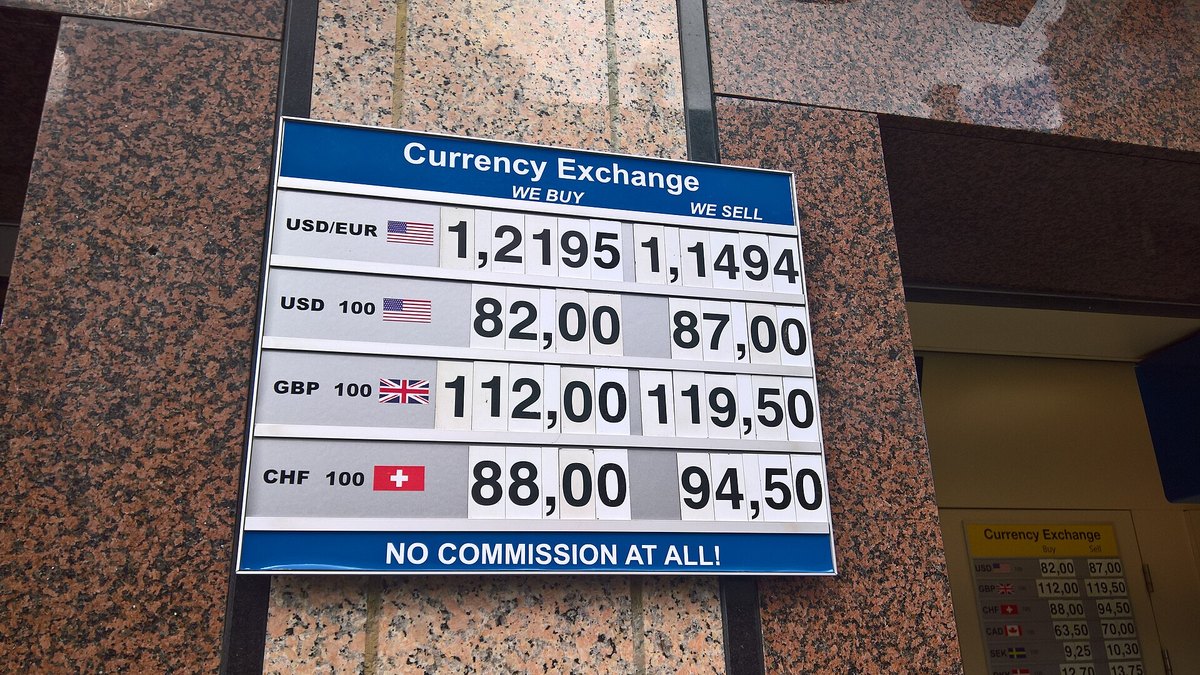
Top photo: King of Hearts / CC BY-SA 4.0 via Wikimedia Commons