What Are the Most Important LLM Evaluation Metrics and Benchmarks in 2027?

There are two kinds of LLM evaluation, and you need both. Public benchmarks compare models on shared tests: MMLU and MMLU-Pro for knowledge, GPQA Diamond-style graduate science questions, SWE-bench Verified for fixing real software issues, Humanity's Last Exam for expert-level closed-ended questions, ARC-AGI for novel reasoning, LiveBench for contamination-limited testing, Arena for human preference votes, and HELM for a multi-metric view. Production evals measure your own application on your own tasks: task success, faithfulness to retrieved sources, hallucination, LLM-as-judge scores, cost and latency per task, and safety and refusal rates.
The benchmark authors are candid that scores saturate and leak, so a public score is a shortlist tool, not a verdict. This page describes what each benchmark and metric measures, using the official papers, repositories and sites, and eval tool documentation labelled as vendor docs, all read on October 31, 2026. It deliberately does not print leaderboard rankings, which change with every release; open the official leaderboards for the live tables.
Public benchmarks: what each one measures
Public benchmarks give you a common yardstick before you have any data of your own. Each one measures something narrow, and each has a known weakness. Descriptions below come from the benchmark's own paper, repository or site.
- MMLU and MMLU-Pro (knowledge and reasoning). The original MMLU paper describes a multitask accuracy test covering 57 tasks, from elementary mathematics to law. The MMLU-Pro paper says performance on MMLU has begun to plateau, so it adds harder reasoning-focused questions, expands the choices from four to ten options and removes trivial and noisy questions.
- GPQA (graduate-level science). 448 multiple-choice questions written by experts in biology, physics and chemistry. The paper reports that PhD-level experts reach 65% accuracy while skilled non-experts with web access reach 34%, which is why the questions are called Google-proof. GPQA Diamond is the name the field uses for the hardest subset; this page did not read an official source that sizes it, so it gives no figure.
- SWE-bench and SWE-bench Verified (software engineering). SWE-bench has 2,294 problems from real GitHub issues and pull requests across 12 popular Python repositories; the model must edit the codebase to resolve the issue. The project's README describes Verified as a 500-problem subset that software engineers confirmed is solvable, and lists Multimodal and other variants on the same leaderboard site.
- Humanity's Last Exam (HLE). 2,500 multi-modal questions across dozens of subjects, built by the Center for AI Safety and Scale AI with nearly 1,000 expert contributors. It exists because, in the paper's words, LLMs now achieve over 90% accuracy on popular benchmarks like MMLU. The questions are public and a private held-out set is kept to check for overfitting.
- ARC-AGI. Tasks built on core knowledge priors that are easy for humans and hard for AI. ARC-AGI-2 has 1,000 public training tasks and 120 tasks in each evaluation set, and ARC Prize says every evaluation task was solved by at least two humans. ARC-AGI-3 is an interactive benchmark of game-like environments where agents learn without instructions.
- LiveBench. Built to resist contamination: its questions come from recent sources and are refreshed monthly, and answers are scored automatically against objective ground truth rather than by an LLM judge. It has 18 tasks across six categories, including reasoning, math, coding and data analysis.
- Arena (formerly LMArena / Chatbot Arena). An open platform where people compare models head to head. The paper describes pairwise comparison with crowdsourced human preference votes and reports good agreement between those votes and expert raters. The leaderboard lives on arena.ai.
- HELM. Stanford's Holistic Evaluation of Language Models measures seven metrics for each core scenario: accuracy, calibration, robustness, fairness, bias, toxicity and efficiency. Its docs list Capabilities and Safety leaderboards, and note that HELM entered maintenance mode on June 1, 2026.
- SWE-bench Verified size (official README)500 problems that software engineers confirmed are solvable.
- HLE size (official site)2,500 questions, with a private held-out test set.
- ARC-AGI-2 evaluation sets (ARC Prize)120 tasks each in the public, semi-private and private sets.
Saturation and contamination: why scores age
Two problems recur in the sources. The first is saturation: once top models score near the ceiling, the test stops separating them. The HLE paper was written because LLMs score over 90% on benchmarks like MMLU, and the HLE site goes further, arguing that benchmarks saturate quickly and pointing to an HLE-Diamond release for when frontier models reach the noise ceiling of the original set.
The second is contamination, where test questions leak into training data. LiveBench's paper calls test set contamination a well-documented obstacle that can quickly render benchmarks obsolete, and its answer is fresh questions every month. HLE keeps a private held-out set, and the GPQA repository embeds a canary string in its dataset and distributes it as a password-protected file. The practical rule: prefer benchmarks with held-out or refreshed questions, and never treat a single public score as proof your use case will work.
Also watch for prompt sensitivity. The MMLU-Pro paper tested 24 prompt styles and reports that sensitivity to prompt wording fell from 4-5% on MMLU to just 2% on MMLU-Pro, which means small prompt changes can move a score by more than the gap between two models.
Production metric 1: task success and accuracy
The first production metric is the plainest: did the system do the job? Anthropic's eval guidance says good success criteria are specific, measurable, achievable and relevant, and that evals should be task-specific, mirroring your real task distribution and including edge cases. OpenAI's evals guide (vendor docs) makes the same point: use a test data set that represents the data you expect, and run evals especially when upgrading or trying new models.
Prefer grading that a machine can do. Anthropic's guide recommends automating where possible and says more questions with slightly lower-signal automated grading beats fewer human hand-graded ones. Exact-match and code checks are cheap; LangSmith's docs list human, code, LLM-as-judge and pairwise evaluators as the main types.
For agents, DeepEval (vendor docs) lists metrics such as Task Completion, Step Efficiency, Plan Adherence, Tool Correctness and Argument Correctness, which score how the agent got to the result and not just the final answer.
Production metric 2: faithfulness and hallucination
For retrieval-augmented generation (RAG), the key metric is faithfulness, also called groundedness: is every claim in the answer supported by the retrieved context? The Ragas docs (vendor docs) define it on a scale of 0 to 1 and compute it by identifying the claims in a response, checking each against the retrieved context and dividing the supported claims by the total. Their worked example scores 0.5 when one of two claims is supported. The Ragas paper describes the framework as reference-free, meaning it does not need human-written ground truth.
- Faithfulness (Ragas docs)Supported claims divided by total claims in the response, from 0 to 1; higher is better.
- Metric limit (DeepEval docs)Recommends no more than five metrics in total: two or three system-level and one or two use-case-specific.
Hallucination is the broader failure: stating things that are false or unsupported. DeepEval lists a Hallucination metric alongside Faithfulness, Answer Relevancy and the contextual precision and recall metrics. Anthropic's guide on reducing hallucinations suggests allowing the model to say it does not know, grounding answers in direct quotes, and best-of-N verification, where inconsistency across repeated runs can indicate hallucination. It adds that these techniques reduce hallucinations but do not eliminate them, so keep checking.
Production metric 3: LLM-as-judge
Most of the metrics above use a model as the grader. DeepEval says nearly all of its metrics use an LLM as the judge and return a 0 to 1 score with a written reason, passing at a default threshold of 0.5. Braintrust notes that live production requests have no ground truth, so its online scoring relies on LLM-as-a-judge scorers, running asynchronously so it adds no latency.
The research behind the approach is mixed in a useful way. The original LLM-as-a-judge paper reports that strong judges reach over 80% agreement with human preferences, the same level as agreement between humans, but it also documents position, verbosity and self-enhancement biases and limited reasoning ability. Anthropic's advice is to grade with a different model from the one that produced the answer and to constrain the grader's output format, and LangSmith warns that judge scores need careful review and prompt tuning. Spot-check judge scores against human labels before you trust them.
Production metric 4: cost and latency per task
A model that is right but too slow or too expensive is still a failure, and the benchmark world has started to say so. HELM has measured efficiency alongside accuracy since its paper, and ARC Prize says that starting with ARC-AGI-2 all reported results include an efficiency metric, using cost because it is the most directly comparable measure between humans and AI.
In your own evals, log tokens, dollars and seconds for every run, and report them per completed task, not per request, so an agent that takes many steps is not hidden by cheap individual calls. DeepEval's Step Efficiency metric is one vendor-documented way to score the steps an agent used.
Production metric 5: safety and refusal rates
Safety evals have two sides. One is whether the model refuses harmful requests; HarmBench is a standardized framework for automated red teaming and robust refusal, and its paper compares 18 red teaming methods against 33 target LLMs and defenses. The other is over-refusal: XSTest pairs 250 safe prompts that a well-calibrated model should not refuse with 200 unsafe prompts it should refuse, to catch exaggerated safety.
Track both. A refusal rate that only goes up can look like safety while the product quietly stops being useful. HELM Safety is the leaderboard HELM's docs list for this area, and DeepEval lists Bias, Toxicity, PII leakage and Misuse metrics (vendor docs).
Offline and online: putting the metrics to work
LangSmith's docs (vendor docs) split evaluation in two. Offline evaluation runs on curated datasets with reference outputs before you deploy, for benchmarking and regression testing. Online evaluation runs on live production traffic without reference outputs, for monitoring and anomaly detection. Braintrust describes the same loop: score production traces, catch edge cases you have not seen, and turn real user interactions into new test cases.
- Before you pick a model. Use public benchmarks to shortlist, matching the benchmark to the job: SWE-bench Verified for coding agents, MMLU-Pro and GPQA for knowledge and reasoning, Arena for human preference.
- Before each release. Run a fixed offline set of your real tasks and compare task success, faithfulness, cost and latency to the last release.
- After launch. Score a sample of live traces with judges, review the failures by hand, and add them to the offline set.
Questions people ask
Which public benchmark should I trust most?
None alone. The benchmark authors themselves describe saturation: the HLE paper says LLMs score over 90% on popular benchmarks like MMLU, and the MMLU-Pro paper says performance on MMLU has begun to plateau. Use several benchmarks that measure different things, and treat them as a way to shortlist models, not to pick one.
Is MMLU still useful in 2027?
As a historical baseline, yes. The original paper covers 57 tasks, but later papers describe it as plateaued, and MMLU-Pro was built to be harder, with ten answer options instead of four and less sensitivity to prompt wording. HELM's documentation lists MMLU-Pro among its benchmarks.
What is the difference between SWE-bench and SWE-bench Verified?
SWE-bench has 2,294 problems drawn from real GitHub issues in 12 Python repositories. The project's README describes Verified as a 500-problem subset that software engineers confirmed is solvable. The README also lists Multimodal and other variants.
How do I measure hallucination in my own app?
Pick a definition that matches your product. For a RAG app, faithfulness (the share of claims in an answer that the retrieved context supports) is a clear one, and Ragas and DeepEval both document it. Anthropic's guidance also suggests running the same prompt several times, because inconsistent answers can signal hallucination. These techniques reduce hallucination but do not remove it.
Can I use an LLM to grade another LLM?
Yes, and the eval tools are built around it. The original LLM-as-a-judge paper reports over 80% agreement between strong judges and human preferences, but also documents position, verbosity and self-enhancement bias. Anthropic suggests grading with a different model from the one that wrote the answer, and LangSmith says judge scores need careful review and prompt tuning.
Which numbers should I put on a production dashboard?
Start with task success on a fixed set of real tasks, then add the metrics your product can be hurt by: faithfulness for retrieval, safety and over-refusal rates, and cost and latency per task. DeepEval recommends using no more than five metrics in total.
Where are the current leaderboard rankings?
On the official leaderboards themselves. This page does not reprint rankings, because they change as new models and questions are added. Open the SWE-bench, Arena, LiveBench, HELM and ARC Prize sites listed below for the live tables.
Sources
- MMLU paper (arXiv) · 57-task multitask accuracy test
- MMLU-Pro paper (arXiv) · Harder successor, ten options, prompt sensitivity
- GPQA paper (arXiv) · 448 graduate-level questions, expert and non-expert accuracy
- GPQA repository (GitHub) · Dataset distribution and canary string
- SWE-bench paper (arXiv) · 2,294 real GitHub issues in 12 repositories
- SWE-bench repository (GitHub) · Verified subset, Multimodal, Docker evaluation
- SWE-bench leaderboards · Official leaderboard site (not reprinted here)
- Humanity's Last Exam · 2,500 questions, held-out set, saturation discussion
- Humanity's Last Exam paper (arXiv) · Benchmark design and motivation
- ARC Prize: ARC-AGI · Benchmark philosophy
- ARC Prize: ARC-AGI-2 · Task counts, human study, efficiency reporting
- ARC Prize: ARC-AGI-3 · Interactive game environments
- LiveBench paper (arXiv) · Contamination-limited design
- LiveBench repository (GitHub) · Categories, monthly updates, automatic scoring
- Chatbot Arena paper (arXiv) · Pairwise human-preference platform
- Arena leaderboard · Official site (rankings not reprinted here)
- HELM paper (arXiv) · Seven metrics across core scenarios
- HELM documentation · Leaderboards and maintenance-mode note
- LLM-as-a-judge paper (arXiv) · Judge agreement with humans and known biases
- Ragas paper (arXiv) · Reference-free RAG evaluation
- Ragas documentation (vendor docs) · Faithfulness definition and formula
- DeepEval documentation (vendor docs) · Metric catalog, LLM judges, thresholds
- Anthropic: Define success and build evaluations · Success criteria, eval design, LLM grading tips (vendor docs)
- Anthropic: Reduce hallucinations · Grounding and verification techniques (vendor docs)
- OpenAI: Evals guide · Eval workflow and platform shutdown notice (vendor docs)
- LangSmith: Evaluation concepts · Offline vs online, evaluator types (vendor docs)
- Braintrust: Evaluate · Data, task, evaluators, online scoring (vendor docs)
- XSTest paper (arXiv) · Exaggerated-safety test suite
- HarmBench paper (arXiv) · Red teaming and refusal framework
Everything here was read from the linked official papers, repositories, sites and vendor documentation on October 31, 2026, several through a fetch tool that returns summaries, so confirm details on the source pages. No leaderboard rankings are reprinted. Vendor documentation is labelled as such and describes each vendor's own tools. This page is not financial or legal advice.
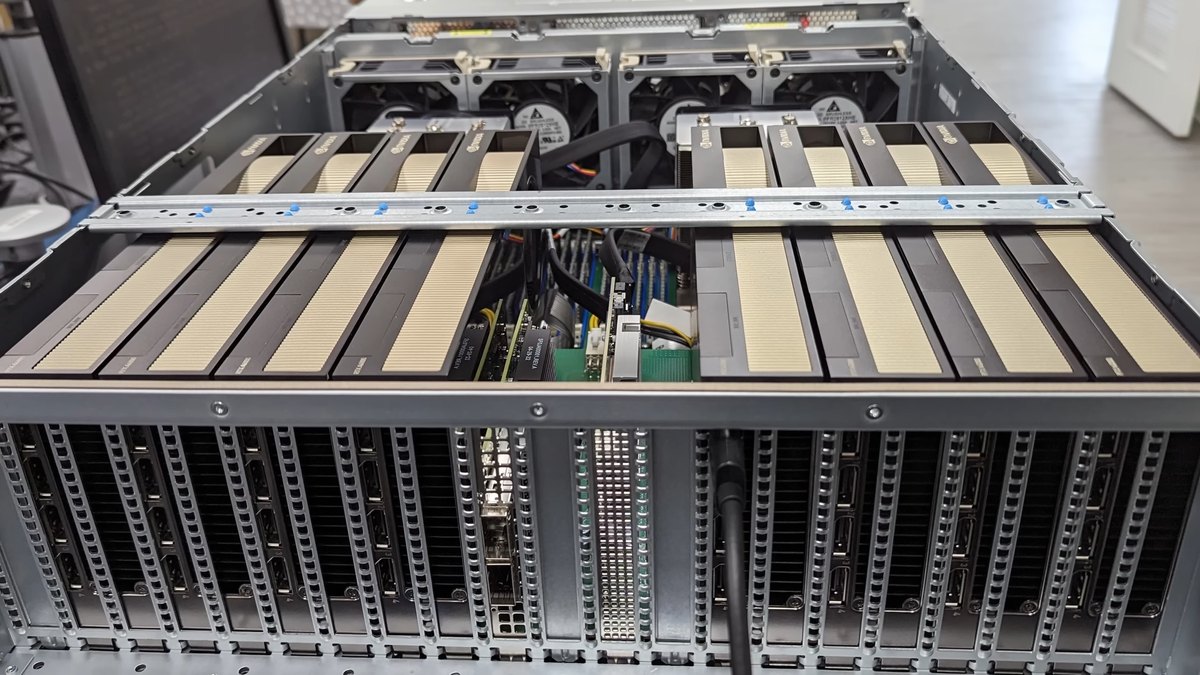
Top photo: Robert.Harker / CC BY-SA 3.0 via Wikimedia Commons