Is Now Assist Working for ServiceNow in 2027?
By ServiceNow's own numbers, its AI business is working, but the company no longer reports Now Assist as a stand-alone line, so "Now Assist" itself cannot be graded on its own. In Q2 2026 it said ServiceNow AI crossed $1 billion in annual contract value, and on October 28, 2026 it raised its year-end AI ACV target to $1.7 billion, up 70% from the start of the year (Q3 2026 release).
The core business is healthy too: Q3 2026 subscription revenues were $3,988 million, up 21% year over year, and the company guided full-year 2026 subscription revenues to $15,780 - $15,790 million. Our verdict, which is analysis and not investment advice: yes on momentum, not yet provable on Now Assist specifically. All figures come from ServiceNow's SEC-filed earnings releases, each with its period.
What ServiceNow reported for AI in 2026
ServiceNow (NYSE: NOW) sells Now Assist, its generative AI add-on, inside a wider AI portfolio. All figures below are from its quarterly earnings releases, filed with the SEC as Exhibit 99.1 (Q1) (Q2) (Q3).
- AI ACV target, Q3 2026 releaseRaised to $1.7 billion for year-end 2026, up 70% from the beginning of the year (the target started the year at $1 billion).
- AI ACV milestone, Q2 2026ServiceNow AI crossed $1 billion in annual contract value in Q2 2026.
- Now Assist, Q1 2026Customers spending over $1 million in annual contract value grew over 130% year over year.
- Agentic AI use, Q3 2026Year-to-date consumption in production up more than 13x year over year.
- Agentic deployments, Q2 2026Increased ninefold in nine months, per the CEO.
The Q1 2026 release is the last one of the three that names Now Assist as its own metric. In the Q2 release, Now Assist appears as one ingredient of ServiceNow Otto, "a new unified AI experience that combines the intelligence of Now Assist, Moveworks, and AI Experience" (Q2 2026 release). From Q2 onward the headline measure is total AI ACV.
Subscription revenue: is AI showing up in the core numbers?
Subscription revenues and backlog by quarter, as reported:
- Q1 2026. Subscription revenues of $3,671 million, up 22% (19% in constant currency); current remaining performance obligations (cRPO) of $12.64 billion (Q1 release).
- Q2 2026. Subscription revenues of $3,877 million, up 24.5% (23% in constant currency); cRPO of $13.20 billion, up 21%. 123 transactions over $1 million in net new ACV, growing nearly 40% (Q2 release).
- Q3 2026. Subscription revenues of $3,988 million, up 21% (20.5% in constant currency); cRPO of $13.65 billion, up 20.5%. 19 transactions over $5 million in net new ACV, over 135% growth, and 680 customers with more than $5 million in ACV (Q3 release).
- Free cash flow. Q3 2026 free cash flow was $822 million, and the full-year 2026 free cash flow margin target was raised by 100 basis points to 36 percent.
- Guidance. Q4 2026 subscription revenues of $4,245 - $4,255 million and full-year 2026 subscription revenues of $15,780 - $15,790 million (Q3 release).
The Q1 release says the early close of the Armis acquisition "accelerates our subscription revenue growth trajectory" (Q1 release), so part of the 2026 growth is not organic AI demand. ServiceNow does not break out how much.
Our analysis: is Now Assist working?
- What supports "yes". The company has raised its AI ACV target twice in 2026, from $1 billion to $1.7 billion, and says AI net new ACV is exceeding its own expectations. Large Now Assist deals were growing quickly in Q1 2026. Core subscription growth stayed above 20% in every quarter listed.
- What is missing. The Q2 and Q3 releases do not give a Now Assist ACV, deal count or attach rate. Because AI ACV now blends Now Assist with other AI products, an outsider cannot tell whether the original Now Assist add-on, the product the question asks about, is the part driving the growth.
- Scale check. AI ACV of $1 billion at Q2 2026 sits beside full-year subscription revenues guided at $15,780 - $15,790 million. ACV and revenue are different measures, so this is a rough sense of proportion rather than a share. AI is still a small part of the business.
- What would change our view. A restored Now Assist-specific disclosure, an AI share of ACV, or a slowdown in the quarterly cRPO growth rate, which was 21% in Q2 and 20.5% in Q3 against 18.5% guided for Q4.
The longer-term claim to hold ServiceNow to
At its May 4, 2026 Financial Analyst Day, ServiceNow outlined long-term targets of $30 billion+ in subscription revenues and 30% of ACV from AI by 2030 (Q2 2026 release). That is the yardstick for 2027: AI ACV would have to keep compounding well beyond the $1.7 billion year-end 2026 target. These are company targets, not guarantees.
Questions people ask
How much AI annual contract value does ServiceNow have?
ServiceNow said its AI crossed $1 billion in ACV in Q2 2026 and raised its year-end 2026 AI ACV target to $1.7 billion on October 28, 2026 (Q2 release) (Q3 release).
What were ServiceNow's subscription revenues in Q3 2026?
$3,988 million, up 21% year over year and 20.5% in constant currency, for the quarter ended September 30, 2026 (Q3 release).
Does ServiceNow still report Now Assist separately?
Not as a headline figure in the Q2 and Q3 2026 releases. Q1 2026 cited Now Assist customers over $1 million in ACV growing over 130%, while Q2 and Q3 use total AI ACV (Q1 release) (Q3 release).
What is ServiceNow guiding for 2026?
Full-year 2026 subscription revenues of $15,780 - $15,790 million and a 36% free cash flow margin (Q3 release).
Sources
- ServiceNow Q3 2026 earnings release (SEC Exhibit 99.1) · Q3 2026 revenue, cRPO, AI ACV target, guidance
- ServiceNow Q2 2026 earnings release (SEC Exhibit 99.1) · Q2 2026 results, AI crossed $1 billion ACV, Otto, 2030 targets
- ServiceNow Q1 2026 earnings release (SEC Exhibit 99.1) · Q1 2026 results and Now Assist $1 million+ customer growth
Figures come from the cited SEC filings as read on October 31, 2026, and ServiceNow's later results may differ. We are not affiliated with ServiceNow. The verdict is our analysis and is not investment advice.
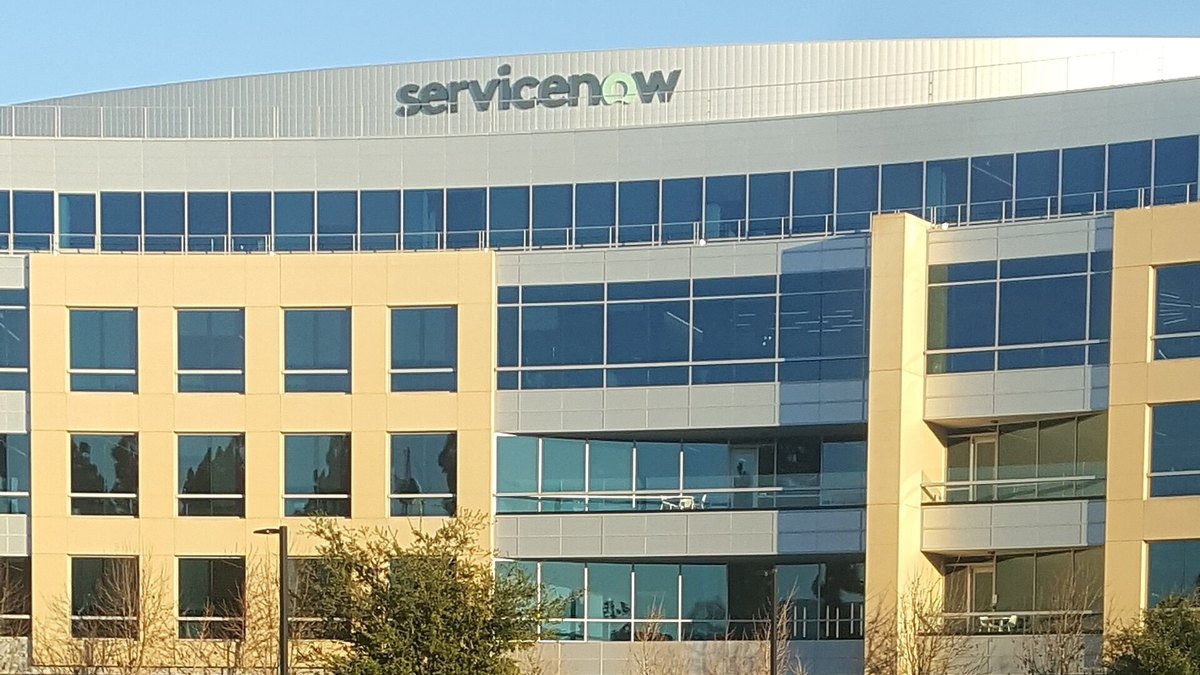
Top photo: Kazuho Okui / CC BY 2.0 via Wikimedia Commons