How Does ServiceNow Defend Against Microsoft Power Platform in 2027?
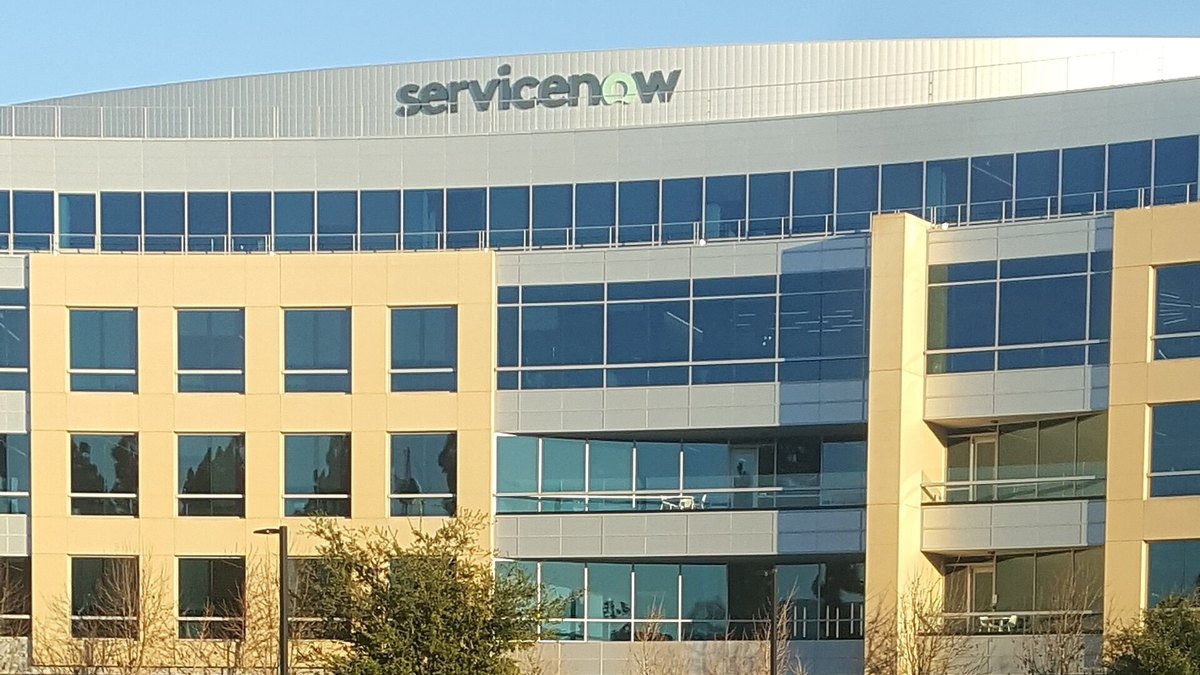
ServiceNow's public answer is that it sells a governed enterprise platform for workflows and AI agents, not just a place to build apps, and it points to results it reports each quarter: subscription revenues of $3,877 million in Q2 2026, up 24.5% (ServiceNow Q2 2026 release), and a renewal rate it reported at 98% in earlier periods (10-Q). No public source shows who is winning the head-to-head, because Microsoft does not publish Power Platform revenue or market share.
The two companies come at this from different directions. Microsoft sells Power Platform as part of the Microsoft Cloud, with Power Apps from a free developer plan up to $20.00 per user per month (Microsoft Power Apps). ServiceNow lists Microsoft among its competitors in its annual report (ServiceNow 10-K), but neither company ranks the other.
Everything below separates what each company says from our analysis, which is labeled as ours. This is not investment advice.
What ServiceNow says about its platform
ServiceNow's 10-K says the ServiceNow AI Platform "connects people, processes and data to break down silos", that its Creator products "allow organizations to build and customize workflows at scale", and that App Engine lets organizations "create enterprise-class workflows using low-code and no-code development tools" (10-K). It also says customers can "rapidly deploy thousands of out-of-the-box ServiceNow AI agents".
The company's Q2 2026 release reports that CEO Bill McDermott said "agentic deployments of ServiceNow AI increased ninefold in just nine months", and that the company ended the quarter with 658 customers with more than $5 million in ACV, up from 603 at the end of 2025 (Q2 2026, Q4 2025). In the Q4 2025 release, the company said Now Assist net new ACV more than doubled year over year.
What Microsoft says about Power Platform
Microsoft describes Power Platform as a way to "build and scale intelligent apps, agents, and automation with an AI platform" (Microsoft Power Platform). The family includes Power Apps, Power Automate, Power BI, Copilot Studio and Power Pages.
- Power Apps. Pitched as "full-stack applications, governed at enterprise scale and powered by AI". The free developer plan lets you build and test; the premium plan is listed at $20.00 per user per month, paid yearly (Power Apps).
- Power Automate. Listed at $15.00 per user per month for the premium plan, with over 1,400 prebuilt, certified connectors named in its FAQ (Power Automate).
- Customer scale, as Microsoft tells it. Microsoft's pages say HEINEKEN built 10,000+ applications with Power Apps and that Accenture has more than 200,000 people using apps built on Power Platform every month. These are customer stories chosen by Microsoft, not market-wide data.
Microsoft also says on the Power Apps page that it is a Leader in the Forrester Wave for low-code platforms for professional developers (Q2 2025) and in the 2025 Gartner Magic Quadrant for Enterprise Low-Code Application Platforms (Power Apps). Treat that as the vendor's own claim.
What the financial disclosures show, and what they do not

- ServiceNow subscription revenues, Q2 2026$3,877 million, up 24.5% (23% in constant currency); current remaining performance obligations $13.20 billion, up 21% (release)
- ServiceNow subscription revenues, full-year 2025$12,883 million, up 21% (release)
- ServiceNow renewal rate98% for the three months ended March 31, 2025, calculated as 100% minus attrition (10-Q); a call summary lists 98% for Q4 2025 (GuruFocus via Yahoo Finance)
- Microsoft, quarter ended June 30, 2026Microsoft Cloud revenue $59.3 billion, up 27%; Dynamics 365 revenue up 13% (Microsoft release)
- Microsoft Power Platform revenue or usersNot given in the earnings release, which does not mention Power Platform or Copilot Studio
The gap in that last row is the key limit on this question. ServiceNow's growth and renewals are measured and published. Microsoft's release reports Microsoft Cloud and Dynamics 365 but, as of the quarter ended June 30, 2026, no Power Platform line (Microsoft earnings release). Microsoft's Q3 fiscal 2026 call reported over 20 million paid Microsoft 365 Copilot seats (CIO Dive), which is a different product.
Our analysis: where the overlap is
Both vendors now describe the same three things: low-code app building, workflow automation and AI agents under governance. That is where they overlap. The pitches differ in where they start. ServiceNow starts from enterprise workflows across IT, employee and customer service and sells a single platform. Microsoft starts from the productivity and cloud stack many companies already license and sells Power Platform as an addition to it.
For a buyer, that suggests the practical question is less which tool can build an app and more which one owns the workflow of record and the data behind it. Neither company's public numbers settle that, and a team already deep in Microsoft licensing faces a different cost picture than a ServiceNow-first enterprise.
Our analysis: what could change by 2027
- Whether Microsoft starts disclosing Power Platform. A published revenue or user line would be the first hard comparison point.
- Whether ServiceNow keeps its renewal rate near 98%. The 10-Q calculates it as 100% minus attrition, so a drop would show up as customer loss.
- Agent adoption. ServiceNow reports agentic deployments up ninefold in nine months; Microsoft's equivalent in Copilot Studio is not broken out.
- Independent analyst placements. Both vendors cite analyst recognition; read the latest reports yourself rather than relying on either vendor's summary.
Questions people ask
Does Microsoft publish Power Platform revenue?
Not in the Q4 fiscal 2026 earnings release we read, which reports Microsoft Cloud revenue of $59.3 billion and Dynamics 365 growth of 13% but does not mention Power Platform (release).
Does ServiceNow name Microsoft as a competitor?
Its 10-K lists Microsoft among enterprise software vendors it competes with, alongside Oracle, SAP, Salesforce and Workday (10-K). It does not single out Power Platform.
What is ServiceNow's renewal rate?
It was 98% for the three months ended March 31, 2025, and a Q4 2025 call summary lists 98% (10-Q, GuruFocus). The Q2 2026 release we read did not report one.
Which costs less, ServiceNow or Power Platform?
We cannot say. Microsoft publishes per-user prices such as $20.00 per user per month for Power Apps premium (Power Apps); we found no comparable public ServiceNow price list, and real deals depend on licensing and scope.
Sources
- ServiceNow Q2 2026 results (8-K) · Subscription revenues, cRPO, customers over $5 million ACV, executive quotes
- ServiceNow Q4 2025 results (8-K) · Full-year 2025 subscription revenues, Now Assist
- ServiceNow 10-Q, March 31, 2025 · Renewal rate and how it is calculated
- ServiceNow 10-K, fiscal 2025 · Platform, Creator, App Engine, AI agents, competition
- GuruFocus call summary on Yahoo Finance · Q4 2025 renewal rate (secondary summary)
- Microsoft Power Platform · Product description and customer stories
- Microsoft Power Apps · Pricing, governance claims, analyst claims
- Microsoft Power Automate · Pricing and connectors
- Microsoft FY26 Q4 earnings release · Microsoft Cloud and Dynamics 365 figures
- CIO Dive on Microsoft Q3 FY26 · Copilot paid seats
Figures were read from the linked pages on October 18, 2026. Company claims are the companies' own, and sections labeled as our analysis are our opinion. This is not investment or purchasing advice.