What AI Agent Frameworks Should You Know in 2027?
Know these seven: LangGraph, CrewAI, Microsoft Agent Framework, the OpenAI Agents SDK, the Claude Agent SDK, Google's Agent Development Kit (ADK) and LlamaIndex. Six of the seven are MIT licensed and Google ADK is Apache-2.0; all are Python-first. The two older names you will still hear, AutoGen and Semantic Kernel, have been folded into Microsoft Agent Framework: the AutoGen repository is archived and Semantic Kernel's README now points to its successor.
The quickest way to choose is by what you already run. Use the SDK from your model vendor if you are committed to one model family, Microsoft Agent Framework if you are a .NET or Azure shop, LangGraph if you need explicit control over long-running stateful flows, CrewAI for role-based agent teams, and LlamaIndex if your agents mostly work on documents.
Facts below were read from each project's official GitHub page on October 22, 2026. GitHub star counts change daily and are not a measure of quality; no framework publishes a reliable adoption number, so none is claimed here.
LangGraph
LangGraph describes itself as a low-level orchestration framework for building, managing and deploying long-running, stateful agents. It comes from the LangChain ecosystem but can be used on its own. It is MIT licensed and showed 43.7k stars.
Its pitch is control: you define the flow of your agent explicitly rather than letting a prompt decide everything. The README also promotes Deep Agents, a higher-level package built on LangGraph, for teams that want less plumbing.
CrewAI
CrewAI is an open-source Python framework for orchestrating role-playing, autonomous agents into multi-agent workflows. It is MIT licensed, requires Python 3.10 to below 3.14, and showed 60.0k stars. The mental model, a crew of agents with roles, is easy to explain to non-engineers, which helps for internal pilots.
Microsoft Agent Framework (successor to AutoGen and Semantic Kernel)
Microsoft Agent Framework is described as a framework for building, orchestrating and deploying AI agents and multi-agent workflows with support for Python and .NET. It is MIT licensed and showed 14.3k stars; Go support lives in a separate repository.
It matters for naming. AutoGen is marked as archived and no longer maintained, with no bug fixes, security fixes or new features, and new users are pointed to Agent Framework. Semantic Kernel now opens with the notice that it is now Microsoft Agent Framework, described as its enterprise-ready successor at version 1.0. Both link migration guides, so if you inherited code on either, plan a migration rather than a new build on the old names.
OpenAI Agents SDK
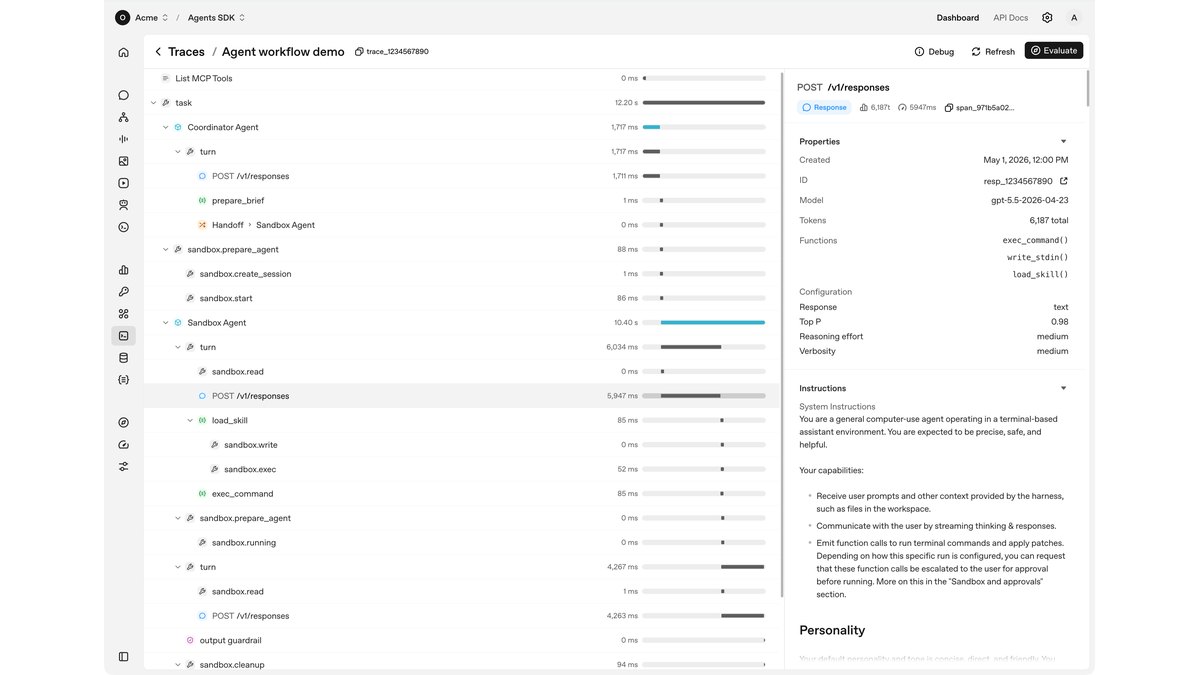
The OpenAI Agents SDK is a lightweight framework for multi-agent workflows, MIT licensed, with 30.2k stars. Its building blocks are agents (a model with instructions, tools, guardrails and handoffs), handoffs and agents-as-tools for delegation, guardrails, human-in-the-loop, sessions and built-in tracing. It also lists sandbox, realtime and voice agents.
Despite the name, it is described as provider-agnostic: it supports the OpenAI Responses and Chat Completions APIs and works with 100+ other LLMs. Install is pip install openai-agents.
Claude Agent SDK
The Claude Agent SDK for Python wraps the Claude Code CLI, which is bundled with the package. It gives you query(), an async function that streams response messages, ClaudeSDKClient for interactive conversations, custom tools run as in-process MCP servers, and hooks that run at points in the agent loop. The code is MIT licensed, but use of the SDK is governed by Anthropic's Commercial Terms of Service, so read those. It requires Python 3.10+ and showed 8.3k stars. A migration note covers the older name, Claude Code SDK.
Google Agent Development Kit (ADK)
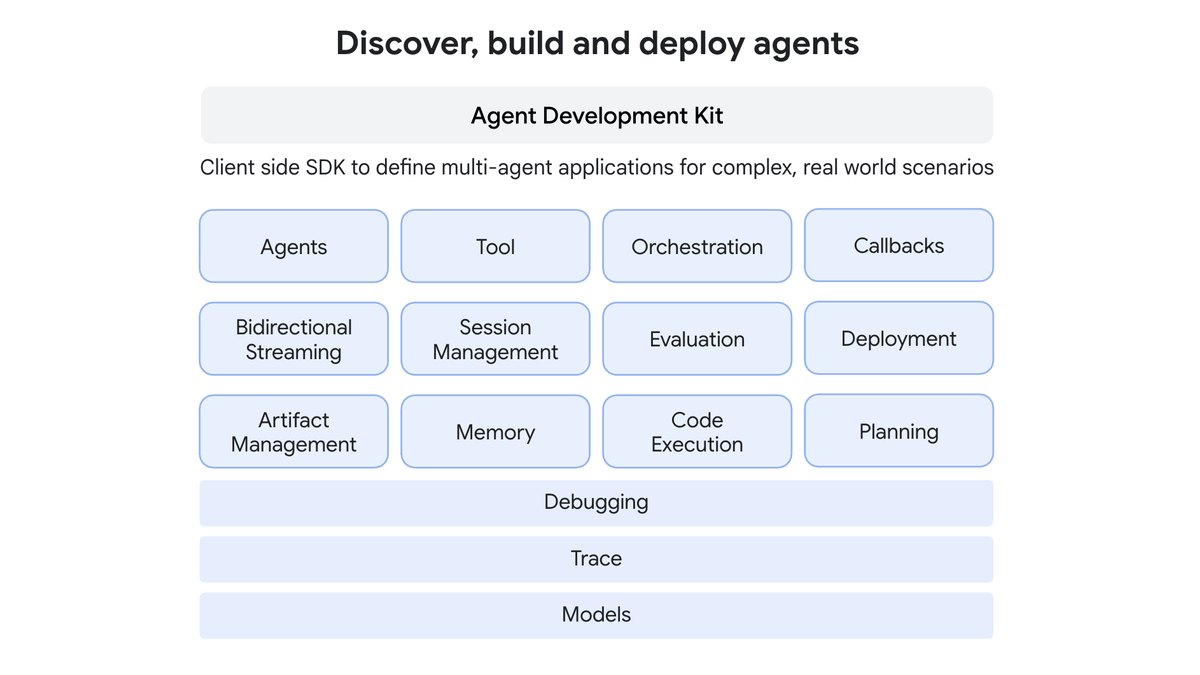
ADK is a code-first toolkit for building, evaluating and deploying agents. It is Apache-2.0 licensed, requires Python 3.11+ and showed 22.0k stars. The README also lists ADK for Java, Kotlin, Go and TypeScript. Its docs split agents into LLM agents for reasoning and workflow agents (SequentialAgent, ParallelAgent, LoopAgent) that act as deterministic controllers, and it deploys to Cloud Run or Vertex AI Agent Engine.
LlamaIndex
LlamaIndex is MIT licensed with 52.6k stars. Its README calls the framework an open-source framework to build agentic applications and describes document agents built with Workflows. Note the positioning: the project describes itself as a document processing platform and says its focus has shifted toward document parsing. That makes it the natural pick when your agent's main job is reading contracts, PDFs or knowledge bases.
How to choose
- Already committed to one model vendor? Start with that vendor's SDK (OpenAI Agents SDK, Claude Agent SDK or Google ADK). Check the license terms and what the SDK assumes about your runtime.
- Microsoft, .NET or Azure stack? Microsoft Agent Framework supports Python and .NET; migrate off AutoGen and Semantic Kernel.
- Need explicit, resumable control of state? LangGraph.
- Want a team-of-roles model? CrewAI.
- Agents mostly read documents? LlamaIndex.
Prototype the same small task in two candidates before committing; the frameworks change quickly and none of these pages publish a head-to-head benchmark, so do not trust anyone claiming one without a method. If your interest is the business side of agents rather than the code, see how agentic AI is changing the GTM stack and RevOps.
Questions people ask
Is AutoGen still maintained?
No. Its GitHub page says the project is archived and no longer maintained, and recommends Microsoft Agent Framework for new users, per the AutoGen repository.
What happened to Semantic Kernel?
Its README says it is now Microsoft Agent Framework, the enterprise-ready successor, and links a migration guide, per the Semantic Kernel repository.
Which AI agent framework is most popular?
No official adoption figure is published. GitHub stars read on October 22, 2026 ranged from 8.3k to 60.0k across these projects, but stars are a rough signal and the archived AutoGen repo still shows 61.5k.
Are these frameworks free?
The code is open source: MIT for six of them and Apache-2.0 for Google ADK. You still pay for model usage, and the Claude Agent SDK is additionally governed by Anthropic's Commercial Terms of Service.
Can I use the OpenAI Agents SDK with other models?
Its README describes it as provider-agnostic and says it works with 100+ other LLMs, per the project page.
Sources
- LangGraph on GitHub · Description, license, stars
- CrewAI on GitHub · Description, license, Python versions, stars
- Microsoft Agent Framework on GitHub · Description, license, migration guides
- AutoGen on GitHub · Archived notice and successor
- Semantic Kernel on GitHub · Successor notice
- OpenAI Agents SDK on GitHub · Concepts, provider support, tracing UI image
- Claude Agent SDK (Python) on GitHub · Features, license, requirements
- Google ADK on GitHub · Description, license, language ADKs
- Google ADK documentation · Agent types and components diagram
- LlamaIndex on GitHub · Description, license, positioning
Facts and star counts were read from the linked official pages on October 22, 2026 and change often. The two images are from the OpenAI Agents SDK README and the Google ADK documentation. This is not an endorsement or a benchmark.