What Is the Challenger Sale Methodology and When Does It Work Best in 2027?
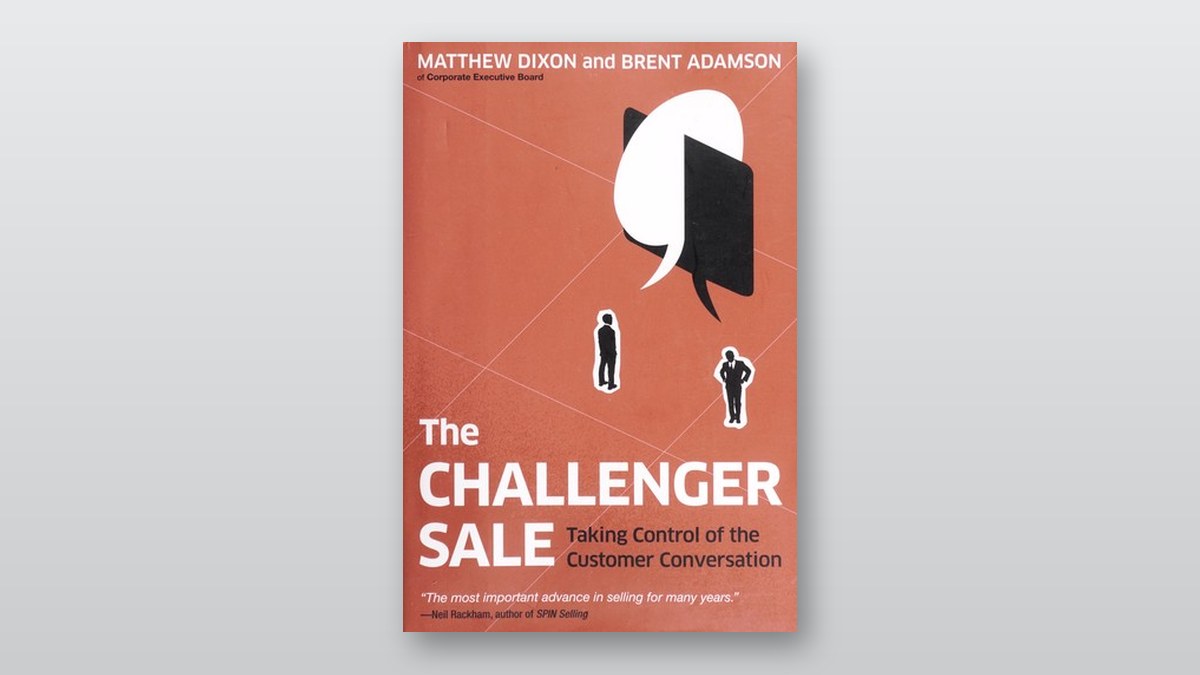
The Challenger Sale is a B2B selling model from Matthew Dixon and Brent Adamson's 2011 book. It says the best reps in complex deals teach the buyer something new about their business, tailor that message to each stakeholder, and take control of the sale, instead of mainly building relationships.
It works best when deals are complex, several people have a say, and buyers are comfortable with the status quo. It works worst in small, fast, transactional sales and for reps who have no real insight to teach. The research behind it found the Challenger edge was small in simple deals and widened as complexity grew, so in 2027 the question is not whether the model is good but whether your deals look like the ones it was built for.
The headline numbers vary by source: about 40 percent of top performers were Challengers overall and 54 percent in complex sales, per a 2026 write-up. We could not read Gartner's own page, so treat the exact percentages as secondhand.
Where the Challenger Sale comes from
Penguin Random House lists The Challenger Sale by Matthew Dixon and Brent Adamson as published by Portfolio on November 10, 2011. Its argument is that classic relationship-building is a weak approach for complex business-to-business deals, and that one rep profile, the Challenger, is the only one that consistently delivers high performance. The authors also say these traits can be taught to average reps.
The research came from the Corporate Executive Board (CEB), which Gartner acquired in 2017, according to Laxis. A December 2011 review by Donal Daly says it began with original research on 700 sales people and was then extended to a global analysis of 6,000 sales professionals in large, complex B2B sales. Laxis puts the second study at roughly 6,000 reps across about 90 companies.
Teach, Tailor, Take Control
The model is three moves, and per Laxis skipping any one weakens it.
- Teach. Lead with a commercial insight, a point of view the buyer did not have that connects to money they are leaving on the table or risk they carry, and leads back to something you do uniquely well. A fact any competitor could also deliver on is not teaching.
- Tailor. Frame the same insight for each stakeholder: margin and risk for a CFO, throughput for a VP of Operations.
- Take Control. Keep the deal pointed at the buyer's outcome. That includes talking about money directly and pushing back on a buying process that is set up to stall. It is not the same as being aggressive.
Laxis also describes the book's six-step structure for delivering an insight: Warmer, Reframe, Rational Drowning, Emotional Impact, A New Way, and Your Solution. The product comes last, after the buyer feels the problem.
The five rep profiles
Every rep in the study landed in one of five profiles, per Daly. Most people blend several, with one dominant.
- Hard Worker. Makes the extra calls and follows up, but grinds rather than reframes.
- Relationship Builder. Warm and focused on being liked. The profile many teams assumed would win.
- Lone Wolf. Confident and instinctive. Can post big numbers but is hard to scale or manage.
- Reactive Problem Solver. Detail-oriented and reliable, but waits for problems to come to them.
- Challenger. Knows the buyer's business, holds a strong point of view, and teaches, pushes and reframes.
On the numbers, Laxis reports Challengers made up about 40 percent of top performers overall, 54 percent in complex deals, and Relationship Builders only about 7 percent. A January 2012 CustomerThink post by Todd Youngblood gives 39% for Challengers and 7% for Relationship Builders among super-star reps, but it does not name the originator of the data. A Georgia State University Sales Lab post says one profile made up nearly 40% of top sellers, in a post about the Challenger model. The sources agree on the shape, not on one exact figure.
Where the Challenger approach works best
Laxis says it fits complex B2B: long cycles, several stakeholders, high switching costs and informed buyers, where explaining the product adds little and reframing the question is the way to stand out. Daly's review makes the same point from the research: when selling complex solutions the highest-performing reps were Challengers and the lowest were Relationship Builders.
- Complex, multi-stakeholder deals. Tailoring has a job to do when several people judge the same offer by different priorities.
- Status-quo buyers. Buyers who see no reason to change need a reframe of the problem before any product comparison. This is our reading of the model, not a statistic.
- Crowded markets. When buyers have already read the comparisons, an insight that reshapes their question is what separates you.
Where it does not work
Laxis says it backfires in simple, transactional sales where the buyer knows what they need, giving home services, telecom renewals and most B2B deals under about $25,000 as examples. The CEB data itself showed the edge was thin in easy deals: Laxis notes the profiles performed about the same there.
- Low-trust or early relationships. Laxis says the best reps blend both styles and earn the right to challenge by first listening well enough to know which reframe will land.
- Reps without real insight. Teach and Tailor only work if the rep understands the buyer's world, and Laxis says that understanding comes from the calls, not a template. A borrowed slide that a competitor could also present is not an insight.
- Stale insights. Laxis warns a great reframe has a short shelf life, because competitors copy good ones and buyers get smarter. Plan to refresh it.
- Hard to embed. Daly names embedding the discipline in the daily running of a sales organization as the real challenge for adopters.
How it compares with SPIN, MEDDICC and solution selling
These are not strict rivals. They answer different questions, and several sources describe teams combining them.
- SPIN Selling. A question-based method: Situation, Problem, Implication, Need-payoff. Per Wikipedia, it drew on research that studied 35,000 sales calls in over 20 countries across 12 years, and the book came out in 1988. SPIN draws out needs through questions; Challenger leads with a point of view. Daly notes that SPIN author Neil Rackham wrote the foreword to The Challenger Sale.
- MEDDIC and MEDDICC. A qualification framework, not a conversation style. Dialpad describes it as pioneered in the 1990s by Jack Napoli and Dick Dunkel at PTC, for complex sales with lengthy cycles and multiple stakeholders. Umbrex lists Metrics, Economic Buyer, Decision Criteria, Decision Process, Identify Pain and Champion, with later variants adding Paper Process and Competition. It tells you whether a deal is real; Challenger tells you how to talk to the buyer.
- Solution selling. Per Supered, Michael Bosworth built it in the 1980s and wrote it up in his 1994 book. The rep diagnoses the buyer's problem before presenting the product, and Supered says its weak point is trusting the buyer's own diagnosis. Laxis frames consultative selling as starting with listening, while Challenger starts with teaching.
- Used together. Umbrex says high-performing teams pair MEDDPICC with SPIN for discovery, Challenger for insight-led reframes, Strategic Selling for stakeholder mapping and Solution Selling for business-case design.
A practical rollout checklist
These are our recommendations, built on the sourced conditions above. Where a step comes from a source, it is named.
- Sort your deals first. List which deals are complex and multi-stakeholder and which are simple and transactional. Aim the model at the first group; the research found little edge in the second.
- Build one insight from your own deals. Laxis suggests looking across your last 10 to 15 deals and asking what the losers had in common that the buyer did not see coming. That pattern is your commercial insight.
- Check it is not generic. If a competitor could say the same thing, it is trivia, not teaching.
- Tailor per stakeholder. Write one version of the insight for each role in the buying group, such as finance, operations and end users.
- Set rules for taking control. Decide how reps raise price and how they respond to a stalling process, so control is calm and prepared, not pushy.
- Earn the right to challenge. Keep listening in early or low-trust conversations and challenge once you know which reframe will land.
- Review real calls. Understanding comes from the calls, so listen back and note where a buyer's assumption showed itself.
- Refresh the insight. Revisit it regularly, since a reframe loses its edge as competitors copy it.
- Pair it with qualification. Use MEDDICC-style qualification to test whether a deal is real, as Umbrex describes.
Questions people ask
What is the Challenger Sale in one sentence?
A B2B selling approach from Matthew Dixon and Brent Adamson's 2011 book in which reps win complex deals by teaching buyers something new, tailoring it to each stakeholder and taking control of the sale.
What are the five Challenger rep profiles?
The Hard Worker, the Relationship Builder, the Lone Wolf, the Reactive Problem Solver and the Challenger, per Donal Daly's December 2011 review of the book.
What share of top performers were Challengers?
Laxis reports about 40 percent overall and 54 percent in complex sales. Todd Youngblood's 2012 CustomerThink post gives 39%, and a Georgia State University Sales Lab post says one profile made up nearly 40% of top sellers. We could not verify the figures against Gartner's own page.
When does the Challenger Sale not work?
Laxis says it backfires in simple, transactional sales such as many home services, telecom renewals and B2B deals under about $25,000, where a reframe adds friction. It also needs reps who have a real, current insight to teach.
How is Challenger different from SPIN and MEDDICC?
SPIN is a question method for drawing out needs, MEDDICC is a qualification framework, and Challenger leads with an insight that reframes the buyer's problem. Umbrex says strong teams pair them.
Is the Challenger Sale still relevant in 2027?
No source we read measures 2027 directly. Laxis, writing in 2026, says the model fits complex B2B deals with informed buyers and that insights must be refreshed as competitors copy them. That condition, not the calendar year, decides fit.
Sources
- Penguin Random House: The Challenger Sale · Publisher, date and the book's central claim
- CustomerThink: Donal Daly's book review (December 13, 2011) · Research sample, five profiles, complex-sale finding
- Laxis: The Challenger Sales Methodology Explained · Teach, Tailor, Take Control, percentages, fit and limits
- CustomerThink: Todd Youngblood (January 19, 2012) · Share of super-star reps by profile
- Georgia State University Sales Lab · Sample size and the nearly 40% figure
- Wikipedia: Neil Rackham · SPIN Selling research and publication year
- Dialpad: MEDDIC sales methodology · MEDDIC origin and use in complex sales
- Umbrex: MEDDIC / MEDDPICC · MEDDPICC elements and pairing with other methods
- Supered: Solution Selling · Solution selling origin and weak point
This explainer is written in our own words and does not reproduce the book. Facts were read from the linked pages on October 21, 2026. Percentages come from secondary write-ups, so read the book and Gartner's research for primary detail.
Top photo: Book cover via Open Library