The Challenger Sale vs SPIN Selling: Which Closes Better in 2027?
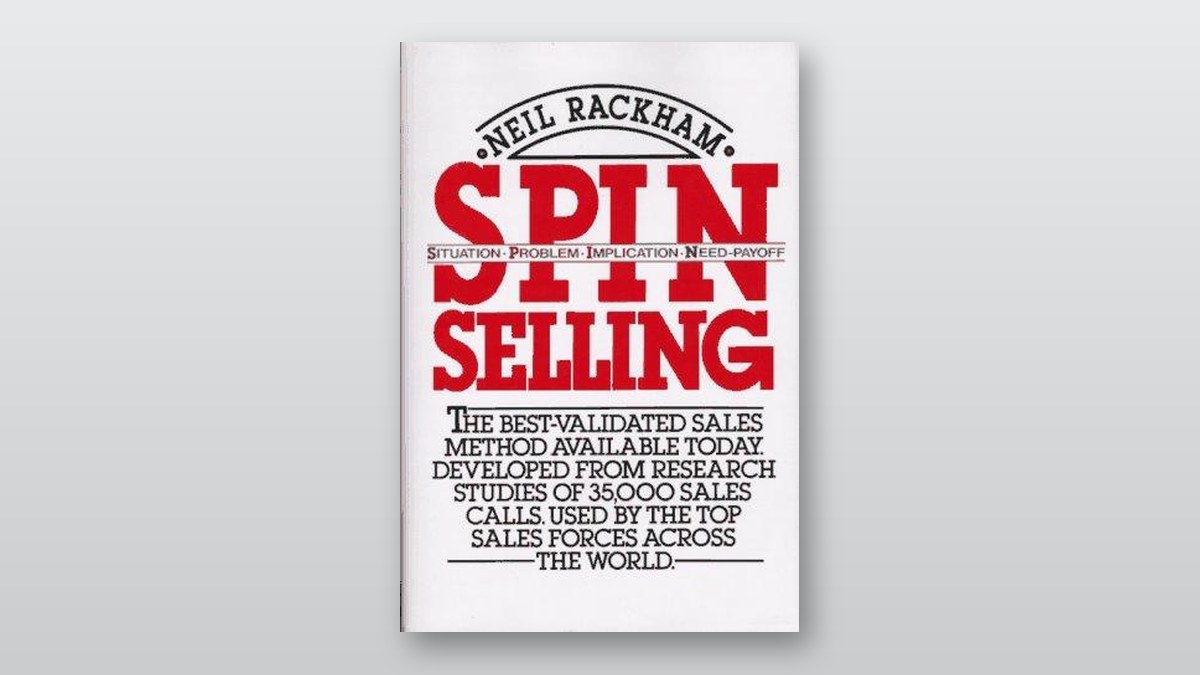
Neither book has a verified head-to-head win rate, so neither can be said to "close better" in general. The difference is in how they get to the close. The Challenger Sale (Matthew Dixon and Brent Adamson, Portfolio, 2011) closes by leading: the rep brings the buyer a new insight, tailors it to each stakeholder and takes control of the process, including talking about price and pushing back on a stalling buying process. SPIN Selling (Neil Rackham, McGraw-Hill, 1988) closes by asking: a sequence of Situation, Problem, Implication and Need-payoff questions lets the buyer state the value, and the book's publisher description is openly skeptical of classic closing techniques.
A practical rule: when buyers are stuck in the status quo and several people must agree, the Challenger moves speak to closing directly. When buyers are open but have not felt the cost of their problem, SPIN's discovery questions are the closer. Many teams use both. This page compares the two fairly; for the full detail of each, see our SPIN Selling summary and our Challenger Sale explainer.
The two books at a glance
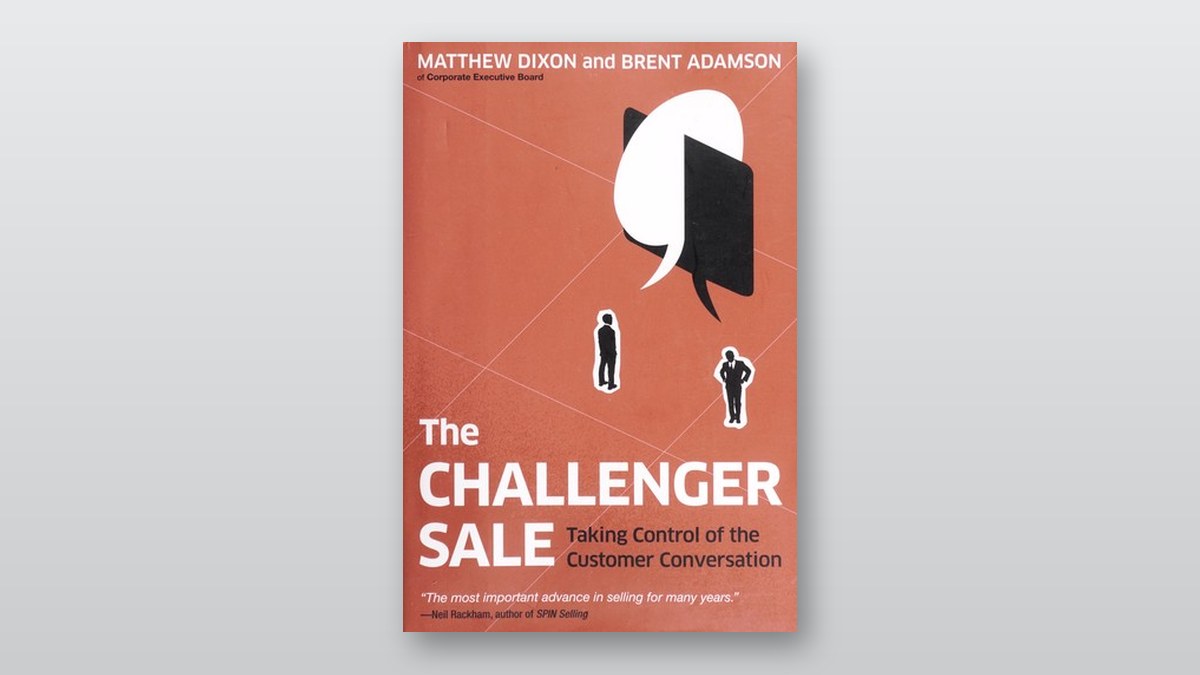
- The Challenger SaleMatthew Dixon and Brent Adamson with colleagues at CEB, published by Portfolio (Penguin) on November 10, 2011, 240 pages per Wikipedia and Penguin Random House.
- SPIN SellingNeil Rackham, McGraw-Hill, 1988, per Wikipedia's Rackham profile. Inc. ranked it No. 1 in its 2013 list of top how-to-sell books.
Both target complex B2B sales rather than quick transactions. They differ on what the seller should do when the buyer is not yet convinced.
The research each book rests on
The Challenger Sale comes from Corporate Executive Board (CEB) research, with Gartner acquiring CEB in 2017. Laxis puts the study at roughly 6,000 sales reps across about 90 companies and says Challengers were about 40% of top performers overall and about 54% in complex deals. We could not read Gartner's own pages, so treat those percentages as secondhand. Wikipedia says the study found reps fall into five profiles and that the challenger is the highest performer.
SPIN Selling comes from Rackham's Huthwaite research. The Routledge listing says the team studied more than 35,000 sales calls by 10,000 salespeople in 23 countries over 12 years, while Wikipedia describes a team of 30 researchers and calls in more than 20 countries. Country counts differ between sources.
How each method approaches the close
- Challenger: take control. Laxis describes Take Control as holding the process steady toward the buyer's outcome: discussing money directly and pushing back on a buying process that is set up to stall. It stresses that this is confidence, not aggression.
- Challenger: teach first. The rep leads with a commercial insight the buyer did not have, which reframes the problem so that a decision becomes necessary rather than optional.
- SPIN: let the buyer make the case. Problem, Implication and Need-payoff questions get the buyer to describe what the problem costs and what solving it is worth, so the proposal answers a need they have voiced.
- SPIN: skeptical of closing techniques. The Routledge description lists the claim that closing increases your chance of success among statements it calls false, and says techniques built for low-value sales often fail in big ones.
Put simply, the Challenger approach adds momentum toward a decision through insight and process control, while SPIN tries to make pressure unnecessary by building the buyer's own case. Neither source claims one is universally faster.
Where each one fits
- Challenger fits complex, multi-stakeholder deals with buyers comfortable with the status quo. Laxis says it backfires in simple, transactional sales, giving B2B deals under about $25,000 as an example, where the Challenger edge was small and grew with complexity.
- SPIN fits large, costly, slow sales with real risk for the buyer. The Routledge listing frames the research around major sales rather than low-value ones.
- Overlap. Both are built for complexity, so the real choice is rarely deal size. It is what is blocking the deal: a buyer who does not see why change is worth it (Challenger territory) or one who has not worked out what the problem costs (SPIN territory). This is our reading, not a published finding.
Harvard Business Review's 2012 article by Adamson, Dixon and Nick Toman opens with the point that B2B customers no longer need sellers the way they used to, which is the context in which Challenger-style insight selling was pitched.
Using both on a real deal: an original example
Imagine a team selling a forecasting platform to a mid-size company. The scenario is invented for illustration and is not from either book.
- Open with an insight. The rep shows the CFO a pattern the company had not noticed in its own forecast misses (Challenger: teach and tailor).
- Ask the SPIN questions. The rep then asks what a miss does to hiring plans and board confidence, and what earlier visibility would be worth, so the buyer names the value.
- Control the process. The rep asks what must be true for a decision, who else must sign and how long legal review takes, and says so plainly if the buying process looks stalled.
- Check the close in the CRM. Inspect whether each deal has a stated buyer-voiced need and a mapped decision path before forecasting it.
Limits and criticisms
The percentages behind the Challenger profile vary by source and come from secondary write-ups. Rackham himself, in an interview summarized in our SPIN Selling summary, says the results came from the whole coaching and research process, not only the four question types, and that the data was noisy.
Both books are also dated: SPIN is from 1988 and Challenger from 2011, and neither tests modern buying committees or self-serve buying. No source we read gives a verified win-rate comparison, so any claim that one "closes" better is an opinion.
So which should you pick?
If your deals stall because buyers see no reason to change, start with the Challenger moves and read our Challenger explainer. If deals stall because buyers like you but cannot articulate the cost of their problem, start with SPIN and read our SPIN summary. If you are not sure, review ten lost deals and see which of those two problems shows up.
Questions people ask
What is the main difference between The Challenger Sale and SPIN Selling?
The Challenger Sale has the rep teach a new insight, tailor it and take control of the sale. SPIN Selling has the rep ask four types of question so the buyer states the value. See Laxis and the Routledge listing.
Which closes better, Challenger or SPIN?
No source we read gives a verified head-to-head win rate, so neither can be called the better closer in general. Fit depends on what is blocking the deal.
Who wrote each book and when?
The Challenger Sale: Matthew Dixon and Brent Adamson, Portfolio, November 10, 2011, per Wikipedia. SPIN Selling: Neil Rackham, McGraw-Hill, 1988, per Wikipedia.
What research are they based on?
CEB research of roughly 6,000 reps across about 90 companies for Challenger, per Laxis; more than 35,000 sales calls by 10,000 salespeople over 12 years for SPIN, per Routledge.
Does SPIN Selling recommend closing techniques?
The publisher description lists the idea that closing increases your chance of success among statements it calls false for major sales. See Routledge.
Can you use both methods together?
Yes. Teams often use Challenger-style insight to open the conversation and SPIN-style questions to let the buyer state the value. Neither book prohibits this, and no source we read tests the combination.
Sources
- The Challenger Sale (Wikipedia) · Authors, publisher, date, pages and five-profile finding
- Penguin Random House: The Challenger Sale · Publisher record
- Laxis: Challenger Sales Methodology · Study size, percentages, Take Control and where it fails
- Harvard Business Review: The End of Solution Sales · Authors, date and context
- Routledge: SPIN-Selling · Research size, closing statement and question types
- Neil Rackham (Wikipedia) · Publisher, year, research team and Inc. ranking
This comparison is an independent explainer in our own words and does not reproduce either book. Facts were read from the linked pages on October 22, 2026; percentages come from secondary sources and no verified win-rate comparison is published.
Top photo: Book cover via Open Library